

Healthcare Freefall: Telluride mother’s roadside birth underscores shrinking access to OB care in Colorado
Editor’s Note: Colorado’s healthcare system is entering a period of accelerating instability — a “tsunami,” as multiple leaders describe it — driven by collapsing hospital finances, shrinking Medicaid reimbursements, disappearing services and a political fight over who is responsible for this unraveling. Healthcare Freefall is a multipart series examining how Colorado arrived at this moment, what H.R. 1 will do next and why communities across the state are bracing for deeper shocks.
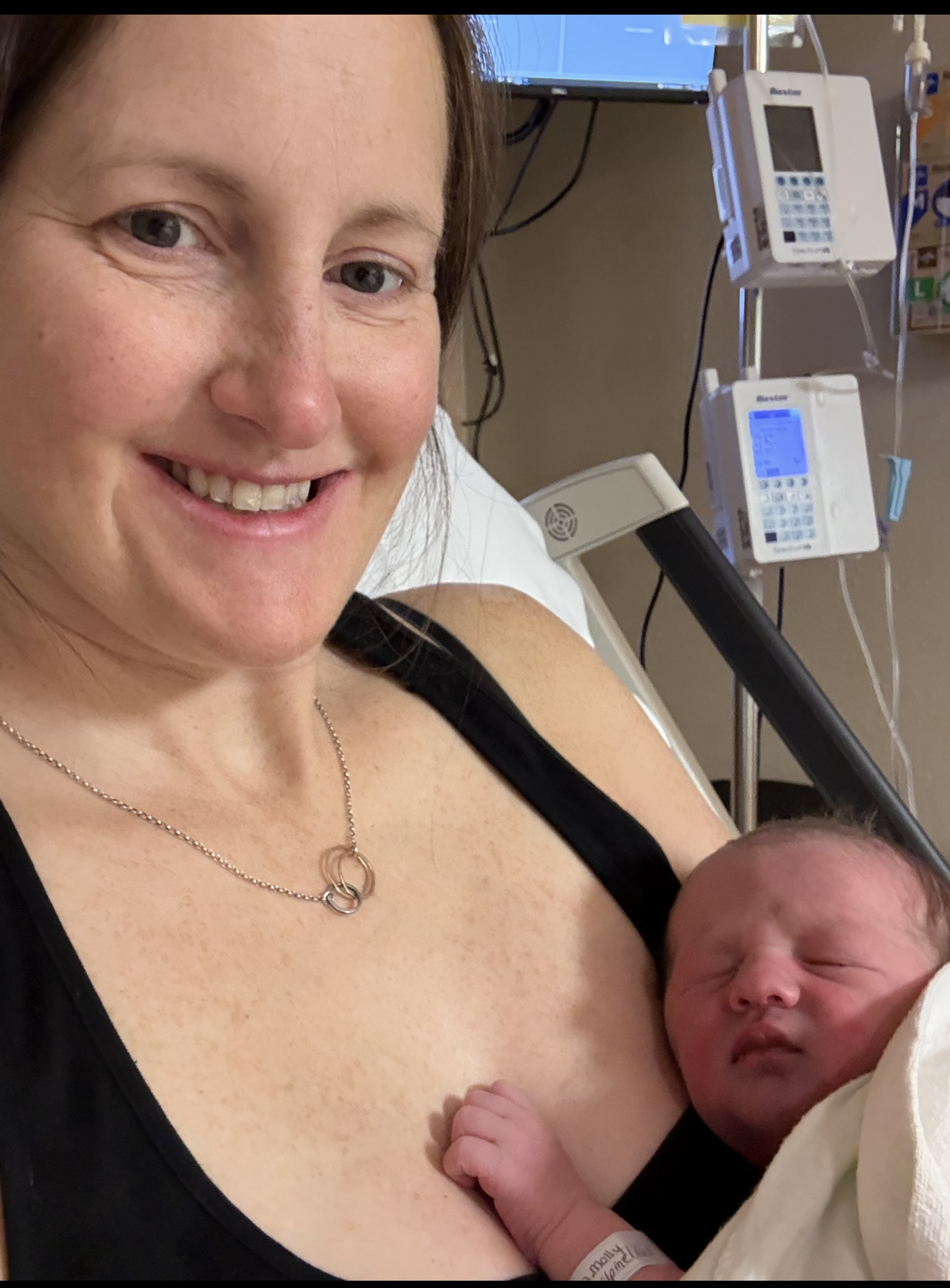
When contractions started at 2 a.m. on a December morning in 2024, Molly Norton didn’t rush.
In a previous pregnancy, Norton had developed high blood pressure and was induced. Her labor progressed so quickly that just 45 minutes passed between her water breaking and her first son’s birth. She never actually experienced early labor. She and her husband returned home to Telluride with a healthy baby.
She made sure to tell her new OB-GYN team that her first baby had arrived extremely fast.
“The doctors told me that he came quickly because of the induction,” Norton said of her firstborn, Sunny.
Now pregnant again, she and her husband left their Telluride home two hours after the first contractions.
They made it only 20 minutes down the road. On a hill overlooking Ridgway, Henry was born. Paramedics arrived within minutes and took Norton and her newborn to Montrose Regional Health.
In both her pregnancies, Norton faced a familiar dilemma — the nearest labor and delivery options were all far from home: 1.5 hours to Montrose, two hours to Durango or two-and-a-half hours to Grand Junction.
For many women in rural Colorado, pregnancy begins with a simple but daunting calculation: how far they’ll have to travel for prenatal care and a safe place to give birth.
Norton’s journey to motherhood had already been shaped by loss. After several miscarriages and feeling unsupported by her OB-GYN in Montrose, she had switched to a provider in Durango when she became pregnant with Sunny, her first son. That meant months of two-hour drives, alone, on mountain roads.
“My husband didn’t have a job that was flexible,” she said. “Making the drive by myself got old really fast.”
By 2024, pregnant again, Norton knew Durango was no longer realistic. She had started a new job at Telluride Ski Resort and couldn’t spend full days traveling for appointments. Friends and neighbors were reporting good experiences with a new provider in Montrose, so she made the switch.
“A part of me is embarrassed,” she said after giving birth on the road. “If I had known, or had an indication, that it was going to be that fast, I would have gone to the ER in Telluride. In hindsight, I don’t understand why it was downplayed so much — that my oldest was born so quickly. It clearly wasn’t the induction.”
People across the country face economic barriers to healthcare, but in rural communities those challenges are intensified by distance.
“What we are seeing in women’s health is access to the service being an issue,” said Chris Hall, CEO of Remote Area Medical, a nonprofit that provides free healthcare clinics nationwide. “Whether that’s geographic or cost, barriers to healthcare create issues. We’ve seen patients putting off care because they have to pay their mortgage. They sacrifice their healthcare to live life.”

Remote Area Medical is a nonprofit that delivers healthcare in locations nationwide, including with its fleet of mobile clinics. (Photo: Courtesy of Remote Area Medical)
Hall said Remote Area Medical (RAM) has seen more patients with some form of insurance since 2012, but coverage doesn’t guarantee access.
“There are still barriers,” he said. “We’ve seen that there’s no difference in the ability to access care between states that have expanded Medicaid coverage and those that haven’t.”
RAM offers dental, vision and medical services, along with pap smears and mammograms. Patients often travel from other states to reach a clinic. At a recent event in Knoxville, Tenn., patients came from 11 states.
That pattern is familiar to Dr. Shannon Miller, an OB-GYN at St. Mary’s Hospital in Grand Junction. As of 2026, one in four labor and delivery patients travel from outside Mesa County.
“Mesa County covers a huge area, and a large amount of our patients are traveling 45 minutes plus to reach us,” Miller said. “I counsel patients to take that into consideration. Any concerns you have during your pregnancy, you have to account for the drive time.”
Winter added another layer of uncertainty, with mountain passes often hazardous or closed.
“Across the country, it’s harder to get evaluated by a specialist,” Miller said. “And in rural areas, there are just fewer doctors.”
Colorado has seen multiple labor and delivery closures in recent years.
Memorial Regional Health in Craig closed its ward in 2020. Delta Health and Rangely District Hospital followed in 2025, citing provider shortages, financial strain and declining birth rates.
Nationally, more than 293 rural hospitals have stopped providing obstetrics since 2011, and another 200 have closed entirely. A study by The Chartis Center for Rural Health found that 46% of rural hospitals operate at a loss, and 432 are vulnerable to closure — affecting more than 46 million rural residents.
The study warned of expanding care “deserts” for essential services like obstetrics and chemotherapy. In Colorado, between 21% and 30% of rural hospitals have stopped offering OB care since 2011.
To help bridge the gap, St. Mary’s expanded virtual appointments for low-risk pregnancies and reserves prenatal slots for new patients. The hospital is the only specialist center serving eastern Utah and the Western Slope of Colorado, with a Level 3 NICU, a full OB-GYN team, 24/7 anesthesia and a strong midwifery program.
“Rural areas don’t have access to the same resources,” Miller said. “While rural healthcare providers help out with prenatal care, we do see patients who have to change providers at a late stage when they become high risk.”
For families, months of long drives mean financial strain — gas costs, missed work and childcare challenges. Some patients relocate to Grand Junction for the final weeks of pregnancy, often paying steep prices for short-term housing.
“My pie-in-the-sky dream would be to have all our healthcare facilitated here, nearby,” Norton, the Telluride mother, said. “There’s no reason that can’t be done here, in Telluride. It would be ideal to cut out those drives for simple, 15-minute checkups. And I wish I had been better educated, or prepared, or my medical team would have given more consideration to my history.”
Read more from the Healthcare freefall series:
Longer drives, fewer options for maternity care in Colorado
Telluride mother’s roadside birth underscores shrinking access to OB care in Colorado
Breast cancer survivor shares strain of rural treatment travel
Once built on federal investment, rural hospitals today fight to survive
Subsidy cuts, insurance gaps reshape how Coloradans will seek care

Democratic candidate in Colorado’s 4th CD urges long-term water planning
Marianne Goodland
marianne.goodland@coloradopolitics.com
Updated 14 minutes ago
The Democrat hoping to become the next representative of Colorado’s 4th Congressional District on Thursday made her case on the final day of Colorado Water Congress in Steamboat Springs. Eileen Laubacher, who spent 34 years in the U.S. Navy and...

Castle Rock council declines to censure member accused of misconduct
Nicholas Fogleman
nicholas.fogleman@denvergazette.com
Updated 23 hours ago
A Castle Rock Town Council meeting Tuesday became consumed by allegations that a councilmember attempted to trade a town policy decision for the withdrawal of a recall effort against him. The allegations against Councilmember Mark Davis surfaced during public comment...

Proposal to cap Colorado income tax rate qualifies for November ballot
Thelma Grimes
thelma.grimes@coloradopolitics.com
Updated 19 hours ago
Election officials on Thursday confirmed that the proposal to cap the state’s income tax at the current rate submitted signatures and voters will consequently decide its fate this November. The fight over tax rates is part of the tug and...

Healthcare Freefall: Longer drives, fewer options for maternity care in Colorado
Thelma Grimes
thelma.grimes@coloradopolitics.com
Updated 1 day ago
Editor’s Note: Colorado’s healthcare system is entering a period of accelerating instability — a “tsunami,” as multiple leaders describe it — driven by collapsing hospital finances, shrinking Medicaid reimbursements, disappearing services and a political fight over who is responsible for...
Healthcare freefall: Breast cancer survivor shares strain of rural treatment travel
Hap Fry, Special to The Gazette
hap-fry@gazette.com
Updated 1 day ago
Editor’s Note: Colorado’s healthcare system is entering a period of accelerating instability — a “tsunami,” as multiple leaders describe it — driven by collapsing hospital finances, shrinking Medicaid reimbursements, disappearing services and a political fight over who is responsible for...
Judge grants partial injunction to GEO in fight against state health inspection law
Kyla Pearce
kyla.pearce@gazette.com
Updated 2 days ago
A judge ruled Thursday that The GEO Group does not have to follow parts of a new state law requiring more frequent health and safety inspections at the U.S. Immigration and Customs Enforcement processing center in Aurora. Under the order...
Parker man faces 20 years to life for serial sexual assaults
Nicholas Fogleman
nicholas.fogleman@denvergazette.com
Updated 2 days ago
A 25-year-old Parker man who sexually assaulted three women in 2025 pleaded guilty Wednesday and will serve 20 years to life in prison. Javier Rodriguez-Andrade pleaded guilty to charges stemming from three sexual assaults involving women ages 19 to 24. ...
Douglas County moves to Stage 1 fire restrictions following recent rain
Nicholas Fogleman
nicholas.fogleman@denvergazette.com
Updated 2 days ago
Douglas County has downgraded its fire restrictions from Stage 2 to Stage 1 on Thursday following recent rainfall and moderate fire conditions, according to the Douglas County Sheriff’s Office. The change applies to unincorporated Douglas County, as well as the...
Democratic gubernatorial candidate Phil Weiser promises to appoint rural outreach director, water adviser
Marianne Goodland
marianne.goodland@coloradopolitics.com
Updated 1 day ago
Democratic gubernatorial candidate and current Attorney General Phil Weiser told the Colorado Water Congress Thursday he intends to appoint a rural outreach director and a water policy adviser should he win the election in November. Weiser’s speech at the Steamboat...
Man charged in Northglenn homicide of wife
Matt Kyle
matt.kyle@denvergazette.com
Updated 2 days ago
A man has been formally charged with murder and burglary relating to a homicide last week in Northglenn. Alexei Munive-Rodriguez, 48, was arrested Sunday after he was at large following the homicide, which occurred Friday. Police were dispatched around 10:30...
PREV
PREVIOUS

Appeals court upholds Park County trophy hunting conviction
Colorado’s second-highest court clarified on Thursday that a defendant may stand convicted under the state’s trophy hunting laws if he abandons a bear carcass but returns later to remove the meat. Under Colorado law, it is a felony to detach or remove the trophy parts of big game, such as the head or hide, “with […]
Colorado voters will decide fate of 'right to hunt' proposal
Colorado’s election office said Thursday that a proposal to add a constitutional right to hunting and fishing has qualified for the November ballot. Backed by the International Order of T. Roosevelt, a group dedicated to preserving the North American Model of Wildlife Conservation, Initiative No. 302 would amend the Colorado Constitution to include language establishing […]