

Democratic gubernatorial candidate Phil Weiser promises to appoint a rural outreach director and a water adviser.
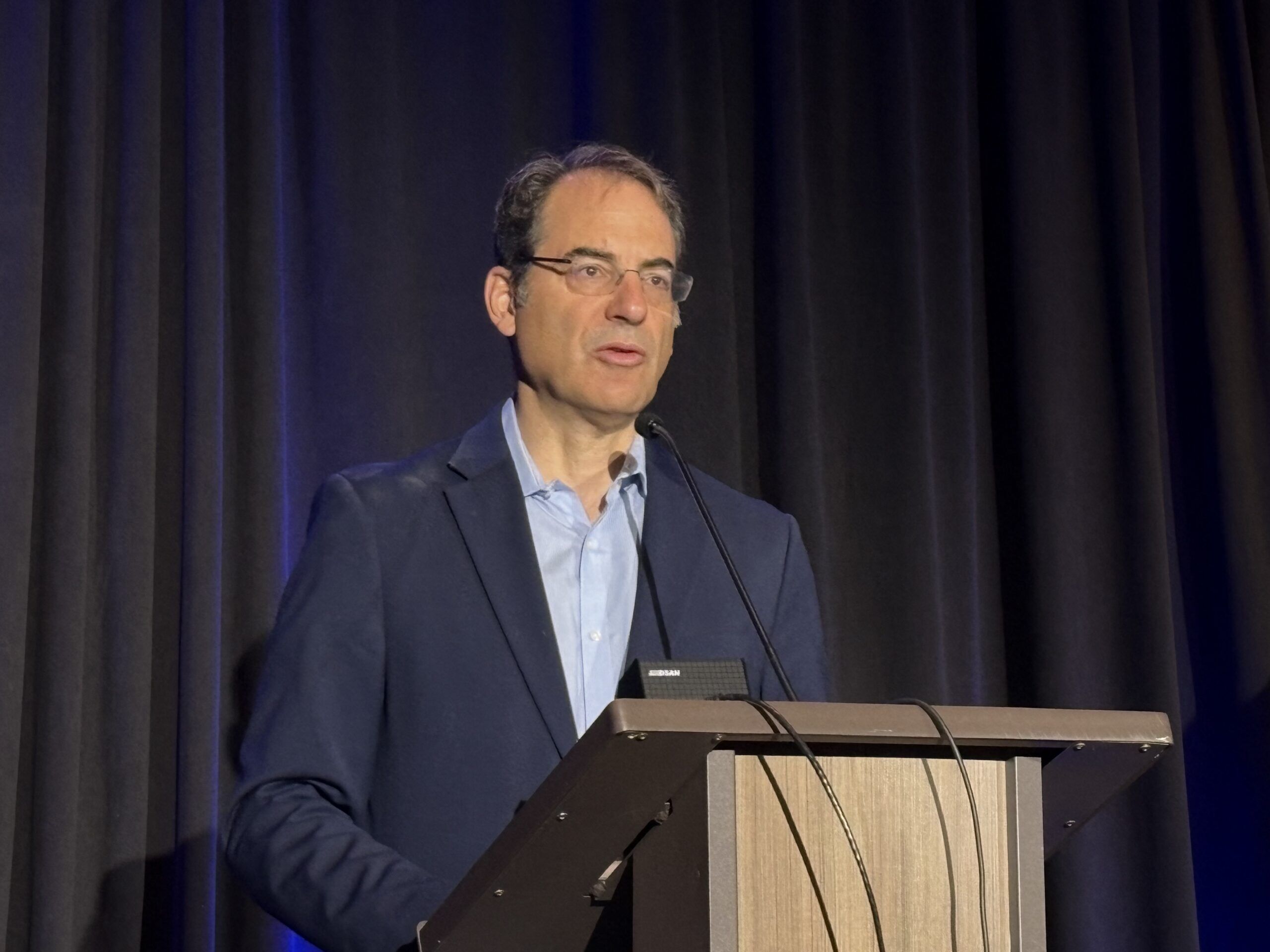
Democratic gubernatorial candidate and current Attorney General Phil Weiser told the Colorado Water Congress Thursday he intends to appoint a rural outreach director and a water policy adviser should he win the election in November.
The news was well-received by conference attendees. “Incredible!” said one. Another pointed out Weiser already has someone in his office doing rural outreach, so it’s a welcome continuation of what he’s already doing.
Weiser’s speech at the Steamboat Springs event covered his work on water issues throughout his years as attorney general, including the lawsuit filed by Nebraska seeking eminent domain over Colorado lands to build the Perkins Canal; the negotiations over the Colorado River and the resolution of a long-standing lawsuit on compact compliance with the Rio Grande.
He’s attended the Water Congress conferences every year since becoming attorney general eight years ago.
Weiser also took aim at efforts to divert water from the San Luis Valley and pipe it to Douglas County, a project backed by former Gov. Bill Owens and Renewable Water Resources. “Over my dead body,” Weiser said, to applause from the audience.
That’s a stance he’s had as attorney general and said he would continue opposition to that project as governor.
Weiser noted that he’s doubled the capacity of the attorney general’s office to address water issues. “We’ve got the best, with all respect [to the] other lawyers here, water law firm in the states,” Weiser said.
The Rio Grande lawsuit, known as Texas v. New Mexico/Colorado, concluded in June when the U.S. Supreme Court approved a settlement regarding groundwater use.
The looming issue is now the lawsuit filed by Nebraska over a land grab from Colorado landowners in Sedgwick County to build a canal in Perkins County, Nebraska. The U.S. Supreme Court took on the case in June.
“I don’t see their claims” as having a strong chance of winning, he said. Colorado complies with the compact and is not interfering with Nebraska’s efforts to build the canal.
However, he noted, Nebraska “has not chosen to do so for the last hundred years for a very good reason. It doesn’t make sense.”
He said he will defend Colorado’s rights as attorney general and will continue to do so as governor.
“This is an important principle for water in Colorado, whether it’s Nebraska or the Colorado River, which is we’re not going to walk away from our hard-earned rights” and operate under the rule of law.
As to the Colorado River, Weiser said the Department of the Interior’s involvement is not ideal and that the proposal isn’t entirely clear, although he does see it as progress that highlights the work ahead.
“It’s not ideal to have these operational decisions affected by uncertainty, and we do want to get to, as reliable tools, a transparent process and respect for the law of the river,” he said.
Weiser also paid homage to the late John Stulp, who was Colorado’s first water czar under former Gov. John Hickenlooper and former commissioner of agriculture.
The work Stulp did on putting together the state water plan put Colorado in an important position but added there’s still a lot of work to follow through on the plan’s commitments.
Weiser said he intends to prioritize drought resilience as governor to protect communities and ensure basins can make reasoned, sustainable decisions. “I’m not going to be afraid to make the right deal. I’m also not going to be afraid to challenge the wrong deal,” he said.
Weiser outlined the team he hopes to assemble as governor, beginning with the departments of natural resources and agriculture, where he said water would be a central focus. He also plans to appoint a water-policy adviser “worthy of the legacy built by John Stulp.”
Conserving water will be essential, Weiser said and that will require building tools for conservation, along with more flexible strategies. He spoke in support of a new $100 million federal investment in conservation for the Upper Colorado River Basin states, similar to the system conservation pilot programs of the past decade.
That program has been criticized in the past for failing to demonstrate any water savings for the money spent. Weiser said the goal of the new program, another pilot, would be to ensure farmers, ranchers and irrigation districts are fairly compensated and that those efforts will stabilize reservoirs.
But “as we do this, we’re going to make sure that we’re credited appropriately for any savings,” Weiser said.
Other initiatives include expanding water reuse — an effort he said is being championed by former Fort Collins mayor and lawmaker Jeni James Arndt, who is also being discussed as a possible candidate to lead the Department of Natural Resources — as well as creating incentives for more drought-resistant crops and encouraging homeowners to conserve through xeriscaping.
Weiser said the state’s water plan remains underfunded and that water infrastructure also lacks the investment it needs. He added that he’s committed to making those investments.
Weiser was the only candidate to appear at the Water Congress this week and take questions from the audience.
In response to a question about protecting San Luis Valley water, he said removing water from the valley would be a “death sentence” for its fragile ecosystem.
He added, “It’s not how we manage water in Colorado. We cannot undermine agriculture to take a shortcut. We’ve got to do the hard work of creating a delicate system where all users make shared sacrifices, make smart decisions and build resilience. The shortcut of sacrificing the San Luis Valley is unacceptable, and I won’t let it happen.”
Another question focused on his plans for rural Colorado, citing the recent disincorporation of Hartman in Prowers County after the town could no longer maintain its water system. The audience member suggested the Department of Local Affairs “step it up” to better support rural communities.
Weiser noted that he intends to appoint a rural outreach director in his administration, as well as a water adviser. “I need all of you to be in touch with us and to make sure that you know that your pain points are our pain points,” he said.
“When you talk about the pain you’re talking about right now, we need a state government that is listening to you, that’s responsive to you and one that “gets stuff done,” he said.
Weiser’s Republican challenger, Victor Marx, addressed the Water Congress on Wednesday. Independent gubernatorial candidate Greg Lopez did not speak at the annual event.

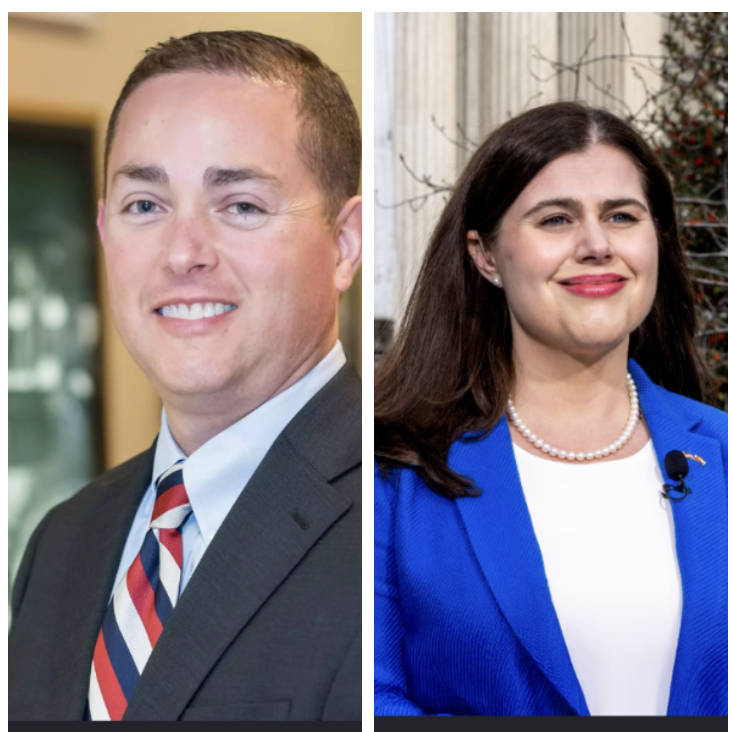
Attorney general candidates present priorities at Colorado Water Congress
Marianne Goodland
marianne.goodland@coloradopolitics.com
Updated 2 hours ago
The two major-party candidates for attorney general — Republican Michael Allen, the district attorney for Teller and El Paso counties and Democratic Secretary of State Jena Griswold — appeared at the Colorado Water Congress on Thursday to outline their water...

Denver named finalist for 2028 Democratic Convention site
Thelma Grimes
thelma.grimes@coloradopolitics.com
Updated 3 hours ago
The Mile High City is competing with Boston and Philadelphia The list of cities being considered to host the 2028 Democratic National Convention has narrowed even further, with Denver making the cut as one of the final three along with...
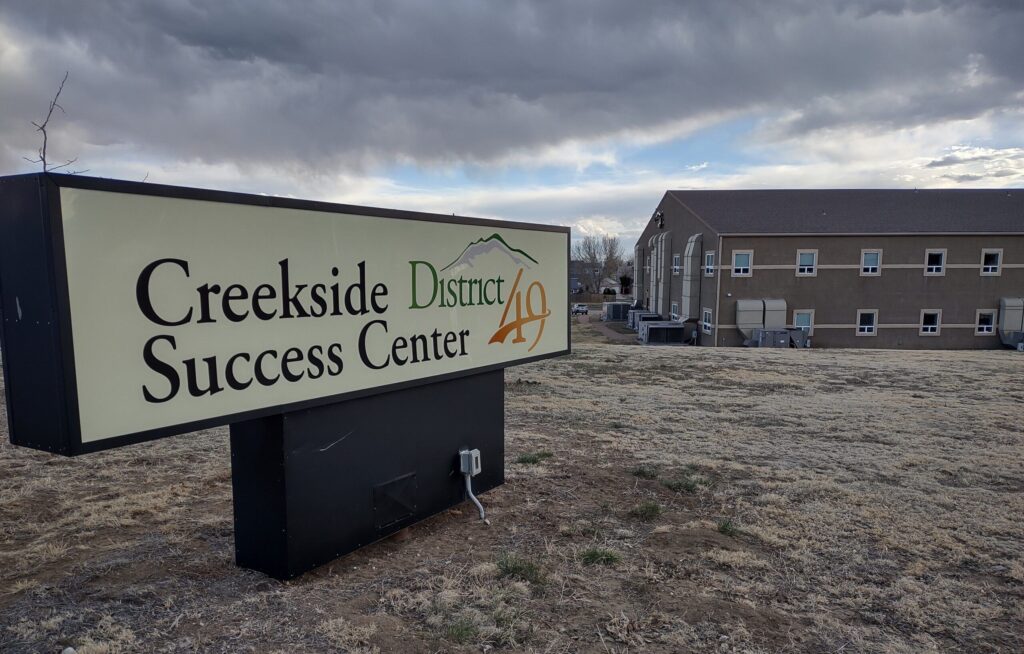
District 49 dissolves longtime provider of special services
Eric Young
eric.young@gazette.com
Updated 4 hours ago
A longtime education service provider that has been subject to recent public and government scrutiny is shutting down. School District 49’s Board of Education approved the dissolution of the Education ReEnvisioned Board of Cooperative Education Services (ERBOCES) during a special...
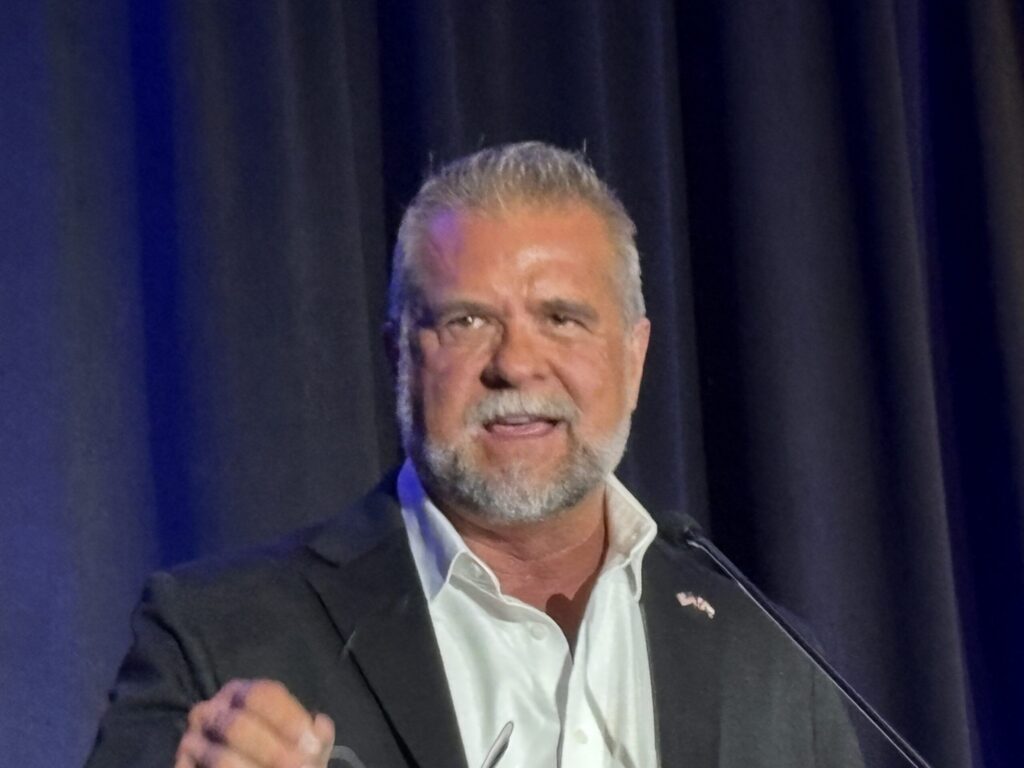
GOP gubernatorial candidate Victor Marx pushes aggressive water-storage expansion at Colorado Water Congress
Marianne Goodland
marianne.goodland@coloradopolitics.com
Updated 5 hours ago
Victor Marx, the Republican nominee for governor, took the spotlight Wednesday during the opening day of the Colorado Water Congress, laying out how he says the state should approach its water future. Marx told the standing-room-only audience in Steamboat Springs...
Colorado AG sues GEO Group over noncompliance with tuberculosis investigation
Kyla Pearce
kyla.pearce@gazette.com
Updated 20 hours ago
The Colorado Attorney General’s Office on Wednesday filed a lawsuit against GEO Group, which operates the Aurora ICE Processing Center, alleging the company failed to comply with a state tuberculosis investigation. Weiser’s lawsuit demands that GEO provide “critical information” needed...
U.S. Rep. Lauren Boebert stresses storage, forest health and Upper Basin rights at Colorado Water Congress
Marianne Goodland
marianne.goodland@coloradopolitics.com
Updated 21 hours ago
Republican U.S. Rep. Lauren Boebert used her brief Wednesday appearance at Colorado Water Congress to tout her record on delivering water projects for the state and her district. Boebert, who is running for her second term representing Colorado’s 4th Congressional...
Colorado judge blasts state forensics lab in dismissing child sex case
Jenny Deam
jenny.deam@gazette.com
Updated 18 hours ago
In a potentially widely consequential action, a Weld County district judge dismissed a child sexual assault case, citing the ongoing scandal at the Colorado Bureau of Investigation’s forensic lab that “has left a dark mark on the history of Colorado...

Denver to form data-center regulation group ahead of 2027 moratorium deadline
Matt Kyle
matt.kyle@denvergazette.com
Updated 5 hours ago
As Denver evaluates how to regulate data-center development, the city is launching a website and forming a resident-expert panel to guide the process. Denver currently has a moratorium on new data center construction through May 2027. The working group and...
Colorado officials urge stronger water safety after 8 drownings and multiple Front Range rescues
Elizabeth Pond
elizabeth.pond@denvergazette.com
Updated 7 hours ago
At least eight people have drowned in Front Range waters since mid-March, including two at Eleven Mile Reservoir, three at Cherry Creek Reservoir, one at Rockbridge Lake and two at Lake Pueblo State Park. In the wake of these deaths,...

Vehicle registration crackdown across Front Range starts next week
Nick Smith
nick-smith@coloradopolitics.com
Updated 1 day ago
Colorado drivers with expired tags or unregistered vehicles still have time to get registered before a scheduled enforcement crackdown starts next week. According to an announcement from the Colorado Springs Police Department, a multi-agency enforcement effort will happen across the...
PREV
PREVIOUS

Attorney general candidates present priorities at Colorado Water Congress
The two major-party candidates for attorney general — Republican Michael Allen, the district attorney for Teller and El Paso counties and Democratic Secretary of State Jena Griswold — appeared at the Colorado Water Congress on Thursday to outline their water priorities. Griswold attended the Thursday session after originally being scheduled to speak on Wednesday at […]

Divided appeals court upholds warrantless DNA collection in Colorado cold case, cautions of government overreach
Colorado’s second-highest court upheld the warrantless collection of a suspect’s DNA from a discarded soda can as constitutional on Thursday, while warning about potential abuse of DNA privacy in the absence of further guardrails. By 2-1, a three-judge Court of Appeals panel concluded that neither the U.S. nor Colorado constitutions required law enforcement to obtain […]