

Using housing and cash, ‘the program’ exploits Colorado’s homeless for Medicaid millions
Editor’s Note: This story is part of a series. Read about how home health in Colorado is a complex setup and about the group On Going HHC.
They call it “the program.”
For the past four years, dozens of homeless people in the Denver metro area have been recruited to live rent-free in suburban houses sprinkled across Aurora — not the stereotypical homeless shelter-type housing one might think, but rather neat homes in middle-class communities with mortgages.
But living there comes with a hitch: a requirement that participants be on Medicaid and have at least one prescribed medication — all must first visit the same doctor to get a cursory exam and a prescription — administered by a home health company for which the doctor is medical director, according to interviews of more than a dozen people who participated.
And lest the free housing not be enough inducement to attract and keep the homeless in place, there is a thrice-weekly payment of $50 with no strings attached or rules on how or where to spend it. The money is called a “donation” and was first paid in cash for months, then came in digital payments via a cellphone app, and now is in gift cards that many recipients say they convert to cash.
Sometimes, program participants didn’t even live in one of the houses, receiving their “home health” benefit — and the payments — at locations that included McDonald’s restaurants, coffee shops and even motel rooms, according to interviews.

Several recipients said they agreed to participate in the “home-health” program only because of the payments they received. Nearly all said they stayed because of them.
Federal law prohibits any type of payment to Medicaid recipients if it influences them to choose one provider over another. State officials who oversee the federal Medicaid program confirmed at least two investigations have been launched into the newspaper’s findings.
A four-month Denver Gazette investigation into the inner workings of the program found an exploitive system, in which homeless people were encouraged to recruit others they knew to join them, an enticement that was sweetened with promises of payments of up to $500 for each successful referral. Several said they were kept at bay with threats of being returned to the streets if they told anyone, other than potential recruits, about the program.
Medicaid has paid that Aurora-based agency, On Going Home Health Care, nearly $24 million since it began operating in 2022 with payments that have steadily increased yearly, federal records show. The Medicaid payments to the agency have ranged from about $900 to more than $1,500 per week for each person in the program, records show.
It’s unclear how much of the total $24 million was for services provided to those participants or what health care services they were actually provided for those dollars. Nearly all participants who spoke with The Denver Gazette described it as only counting pills and taking basic vitals, such as blood pressure and temperature. Several residents said they were not taking any medications before joining the program and questioned any actual need for them.

On Going Home Heath Care owners refused to discuss the program with a reporter, with one associate of that company questioning the newspaper’s interest.
“So, what’s the problem?” he asked.
A congressional committee in March expressed concerns that Colorado’s Medicaid program “may be similarly vulnerable” to the fraud, waste and abuse found in other states, such as Minnesota, where authorities found falsified records and phantom claims tallying millions of dollars.
A variety of experts raised eyebrows when told by The Denver Gazette how the program operates, questioning how it could be permissible under state or federal regulations. One expert said if the homeless “feel exploited, then it’s a significant problem.”
Several participants told The Denver Gazette that they did.
The Colorado Department of Health Care Policy and Financing confirmed it is investigating and several residents have said they’ve been contacted by federal and state authorities.
The money program participants received was ostensibly from a church — Maranatha Indonesian-American Seventh-Day Adventist Church in Aurora — created in 2024 by people with ties to the home health agency. It only recently began holding services in space rented from a different, unrelated denomination in Aurora, according to public records and interviews.
No one listed in public records as the leaders or incorporators of the church responded to efforts by The Denver Gazette to reach them for comment on this report.
So as not to lose their Medicaid eligibility, the homeless who lived in the houses said they were dissuaded from getting a job — the houses are far from public transportation and retail shopping for it to even be feasible — and said they were repeatedly warned not to miss an appointment with On Going HHC because they would not receive the $50 “donation” if they did not attend.
For anyone who did miss an appointment, they said they were told by workers — nurses for the home-health agency and the people who provided the payments — that they were not complying with the program and faced eviction.
‘Just be at home … take your meds’
Program participants described a straightforward recruiting process.
“You need to see the doc, become a patient, and then you’re approved to be in the program,” said Jeremy Stout, a 44-year-old Las Vegas native who’s been homeless off-and-on for years. “Once approved, you can live there and collect the donation money. I was happy to do it. You don’t even have to take the meds.”
The only way residents were told they could get the donation money, however, was to physically be at the house whenever the nurses or employees from On Going HHC arrived. Through interviews, The Denver Gazette was able to identify at least seven Aurora houses where this occurred, each with about eight people in residence, none of them the owners. It’s unclear whether such an arrangement is required to carry any state or local license or safety certification. State officials said they are reviewing the matter.

The houses are not owned by the home health agency or the church, according to county property tax, assessor and recorder records. The owners of record — at least two of them licensed health care professionals — either could not be found or did not respond to efforts by The Denver Gazette to reach them.
Employees from a different Aurora business — with the name Better Living — visited the houses almost daily and were typically the ones to parcel out the cash payments or gift cards, according to interviews. Like the church, the Better Living business’ incorporators are tied to the owners of On Going HHC, records show. Efforts to reach the owners of Better Living were unsuccessful.
Residents said they were given “house rules” by the church and Better Living that laid out the purpose of being there.
“In the spirit of Christ’s love and service, this home exists to provide a safe, respectful, and sheltered environment for individuals experiencing homelessness,” according to a copy of the rules filed with eviction court papers for one of the residents. “Our goal is to support each resident’s journey toward stability, self-sufficiency and dignity.”
Any drug offenses would be met with a reduction in the weekly donation the resident would be given, according to the document.
Not seeing a home health worker meant no money, according to interviews, text messages and recordings residents shared of their conversations with the workers.
“Just be at home and see (the) nurses and take your meds. … And see the doctor. That’s it,” one of the nurses texted one of the homeless women in the program, copies of which were provided to The Denver Gazette. “But you need to see me in order to keep you in the program.”
On another day, the same nurse was even more succinct in her text message: “You have to be home no matter what. … Or you will get kicked out from the program.”
Texted one of the workers who provided the so-called donations: “This appointment (with the nurses) is very important. If you want to keep your funding from the church, we need to have that done. Just follow the program.”
The Denver Gazette reviewed nearly a dozen Medicaid payment histories provided to it by program participants — each showing weekly payments that ranged from about $900 to more than $1,500 being paid by Medicaid to On Going HHC — and matched them to dozens of Cash App receipts of donations the people received in the same time period totaling thousands of dollars over the past two years.
One woman said she referred at least six acquaintances into the program and the referral money she was to receive was instead given to the owner of a used car she wanted to purchase. Another said she relied on the referral funds to cover her first month’s rent when she left the program.
It varied who made the Cash App payments to the participants, but none were directly from On Going HHC or its ownership, according to the receipts reviewed by The Denver Gazette.
Residents said the workers who visited them often displayed a lavish lifestyle, wearing expensive jewelry, designer clothing and accessories, and drove pricey cars, such as a new Land Rover with the custom license plate: GOD5GFT.
On their personal social media, several of the workers at On Going HHC, Better Living and the Maranatha church posted photographs of themselves and others enjoying meals at expensive restaurants, primo seats at local professional sporting events, matching new cars, resort vacations in exotic locales and high-end gifts.
“I mean, Gucci bags and designer sunglasses and slick cars around homeless people?” asked one of the program participants. “Like, who doesn’t notice that, right?”
Family ties knit businesses together
Records lay out the connections between Maranatha Church and On Going HHC.
On Going HHC was founded in 2019 by Seska Bell, Kopila Dhungana and Roy Gultom, each putting up just $300. They are embroiled in an ownership dispute with each other in Arapahoe County District Court.
The incorporators of Maranatha SDA, records show, include Devi Latul, a 31-year-old who is Seska Bell’s daughter, and Youdy Paduli, who is also the church’s registered agent.
Latul did not respond to messages left at telephone numbers listed to her.
Bell and Dhungana refused to comment about the church or its role in the program when contacted by The Denver Gazette. Gultom said while he was an SDA member, he was not a member of that congregation.
The church’s original address, according to its incorporation papers, was on South Kalispell Way in Aurora, which is shared by Better Living, a business that oversees the seven properties that house the homeless, according to court records tied to evictions from those houses.

That address is owned by Paduli, who is also the registered agent for Better Living. He is married to Michelle Paduli, according to the couple’s two bankruptcy cases, the last filed in 2019 in Colorado.
The Padulis together worked as a host home provider for about nine years for the same company as Seska Bell, the couple’s 2019 bankruptcy records show.
The Padulis’ son, Matthew, is a licensed practical nurse and his wife, Tabitha, is a registered nurse for On Going HHC, her state license records show.
The Padulis’ daughter, Sara, is also a registered nurse for On Going HHC, state license records show.
Efforts to reach the Padulis were unsuccessful.
The business, Better Living, is led by its president, Jefry Ulaan, who, according to his bankruptcy records from 2014, was a former truck driver who struggled to keep his business, MicroTransport, afloat.
Ulaan is Seska Bell’s brother.
He did not respond to Denver Gazette messages left at telephone numbers listed for him.
‘This investigation is ongoing’
Records show Medicaid payments to On Going HHC were frequently preceded by payments to Family Medicine of the Rockies, an Aurora clinic whose owner, Dr. Arthur Ferrer, was identified by every program participant interviewed by The Denver Gazette as the one who provided the prescriptions they were to take.
Dr. Ferrer is On Going HHC’s medical director, according to his son, Ian Ferrer, who is the clinic’s administrator.
Each program participant interviewed by The Denver Gazette described being taken to see Ferrer by someone associated with the program — they said they were not allowed to go on their own or to any other doctor — and then later received medicine he prescribed. They said universally it was the program workers — it was unclear if they were nurses or other employees, such as a nurse’s aide — who retrieved the medications from a grocery store pharmacy across the street from On Going HHC’s office.
Ian Ferrer said his father never required any of the homeless participants to use only his clinic, that the requirement would have been from On Going HHC. Additionally, Dr. Ferrer insisted any medical advice, including prescriptions, would only come after an in-person visit.
According to the interviews, the prescriptions often were of common medicines that would not be harmful to a healthy person. They included albuterol, an inhalant that helps with breathing difficulties, and prescription-strength ibuprofen, a pain-reliever found in a number of over-the-counter medications, such as Motrin. Others were more serious, such as Xanax, the brand name for benzodiazepine, which is frequently used to treat anxiety or panic disorders, and amitriptyline, an antidepressant.
Several residents said they were not taking any prescribed medications at the time they entered the program and did not undergo any special diagnostic tests before being given a prescription. Each said their appointment with Dr. Ferrer, which often included the routine taking of temperature and blood pressure, lasted no longer than about 15 minutes.
Ian Ferrer said any prescription Dr. Ferrer wrote was medically necessary based on the exams. He would not speak to specific allegations by any patient because of confidentiality rules.
Medicaid rules require that anyone receiving home heath assistance have a plan of care that is signed by a doctor and appoints the agency that will administer it. Those plans would include a list of prescribed medications and any instructions on how to administer them.
Ian Ferrer said Dr. Ferrer signed every one of the required plans of care that named On Going HHC as the homeless person’s service provider, estimating that those amounted to “about 20 or 30 a month.” In all, Ian Ferrer said On Going HHC accounted for about half of the plans of care Dr. Ferrer signed.
Any prescription Dr. Ferrer wrote “was always medically necessary,” Ian Ferrer said. “It depends on the complexity of the medical issues, but most were relatively healthy and don’t need anything past a physical.”
One resident, Stout, said he told Ferrer he had trouble sleeping while at a La Quinta motel in Aurora, where the program had been keeping him while he waited for a room to open up at one of the houses. Stout said he was given a prescription normally used for depression, but sometimes insomnia.
What Stout said he hadn’t told Dr. Ferrer was that his insomnia was because there were three other people living with him in the two-bed motel room, including a couple that frequently kept him awake at night.

He said he didn’t know any of the people who were in the motel room with him.
“I just wanted to get some sleep is all,” he told The Denver Gazette.
Federal rules prohibit Medicaid recipients to be given anything of value that could influence their selection of a particular provider, such as a home care service.
When asked about the program and offered details of The Denver Gazette’s findings, state health care officials reacted firmly and opened their own inquiry.
“While the great majority of Medicaid providers and members follow state and federal guidelines appropriately, HCPF takes allegations of suspected fraud, waste and abuse very seriously and refers them to law enforcement when appropriate,” HCPF spokesman Marc Williams wrote in an email to The Denver Gazette. “This investigation is ongoing.”
Short doctor visit, 2 prescriptions
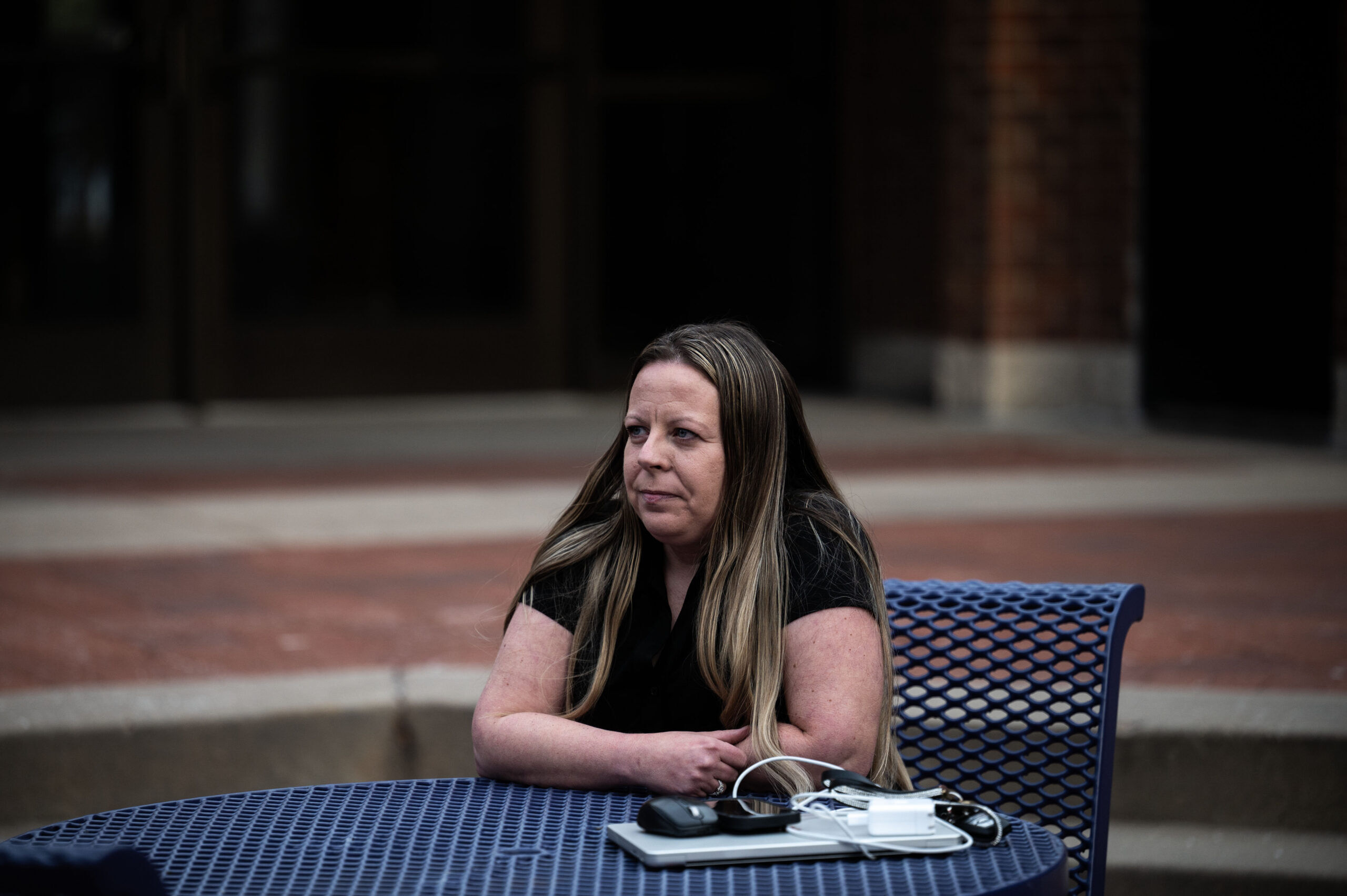
It was May 2025, still chilly outside, and Kelli Swainson didn’t relish the idea of having to find a new place to live.
The south Denver house she leased was owned by her boss at a roofing company and he wanted to sell it. To boot, she said he told her he was restructuring his Greenwood Village business and was letting her go from an office manager job she held off and on for about a dozen years.
The shock made her wish she had stayed in her former apartment on Capitol Hill, but the house made life with her 9-year-old son feel a little more secure.
But, just like that, Swainson, 43, said they were “staring at being homeless.”
Struggling and living paycheck to paycheck, the Aurora native and aspiring graphic artist said she had few options.
The boyfriend of a woman she had met had described to Swainson a unique situation in Aurora that at first, she said, seemed a little too good to be true.
“He was staying in a big fancy house over there and it was pretty wow,” she recalled. “And he talked about the program, that you didn’t have to pay rent and how you got like $50 three times a week just for being in that program and everyone is kept in the same house to avoid them having to drive anywhere.”
Swainson said she asked her friend, “What is this program?”

“I didn’t know what it was supposed to be,” she said. “He told me that I just needed to go to a doctor’s appointment, get some meds, that I’d get the money and live in the house for free.”
When Swainson was taken to Dr. Ferrer, she said her first visit took “fewer than five minutes” and was merely to ask her what medications she’d previously taken, not about any that she might currently be taking.
“Basically, he asked me what meds I was on in the past and prescribed them without any exam or professional doctor things they do at all,” Swainson said.
Ian Ferrer did not respond to The Denver Gazette when it left a voice message seeking to speak with Dr. Ferrer about Swainson’s comment. Ian Ferrer previously had refused to comment about any specific patient’s comments because of confidentiality rules.
The two prescriptions she said Ferrer gave to her: gabapentin for pain from an old ankle injury she had suffered two years earlier, and propranalol, a blood pressure medication that could treat hand tremors she’s had since childhood.
Swainson said it was made clear to her by Jeremy Stout, the one who recruited her, that “I needed to be on at least two meds to be in the program, that one wasn’t good enough.”
Swainson admitted it sounded strange, especially since she wasn’t on any medication at the time — the old ankle injury was already long-healed, albeit poorly, and the mild hand tremors, known as “essential tremors,” weren’t ever a big deal.
On Going HHC billed Medicaid more than $915 every week from May through September 2025 that an employee counted Swainson’s pills, payment records show.
“I’m no idiot, I’m pretty intelligent, observant and not dumb,” she said, explaining that her son was allowed to live with her and was not part of the program. “I thought there had to be something wrong with this picture, but I was looking at being homeless and had no solution of where to go whatsoever.”
Swainson paused to pull a tissue from a pocket to wipe an eye.
“I was down and had to do something,” she said with a soft shrug. “I had to deal with it.”
Coming Monday: How a program ostensibly designed to help the homeless instead pressed to evict the whistleblowers.


Two more wolves killed by Colorado wildlife staff
Marianne Goodland
marianne.goodland@coloradopolitics.com
Updated 6 hours ago
Two yearling wolves from the Copper Creek and Three Creeks packs in Pitkin and Rio Blanco counties, respectively, were killed by Colorado Parks and Wildlife staff on Monday. That brings to 19 the number of wolves that have died under...

U.S. Rep. Lauren Boebert calls Trump’s 90-day wolf-delisting review ‘real progress’
Marianne Goodland
marianne.goodland@coloradopolitics.com
Updated 5 hours ago
President Donald Trump has directed Interior Secretary Doug Burgum to launch a 90-day review on whether gray wolves and Mexican wolves should be removed from Endangered Species Act protections. The order drew mixed reactions for Colorado’s wolf-reintroduction effort, with ranchers...
Disgraced ex-CBI analyst Missy Woods sentenced to prison in DNA scandal
Jenny Deam
jenny.deam@gazette.com
Updated 7 hours ago
A Jefferson County district court judge on Tuesday sentenced a disgraced former Colorado Bureau of Investigation DNA analyst to a decade in prison for altering and deleting data in scores of criminal cases over several years. Jefferson County District Judge...

Jason Crow endorses Democrats up and down Colorado’s ballot, chips in $100K for campaign efforts
Ernest Luning
ernest.luning@coloradopolitics.com
Updated 7 hours ago
Democratic U.S. Rep. Jason Crow on Tuesday formally endorsed more than 60 Democrats running up and down Colorado’s ballot and said he’s putting $100,000 into statewide and county campaigns and organizing programs to drive turnout in the fall election. Crow,...

With its water source dry, a southeast Colorado town’s clock is ticking
Savannah Eller
savannah-eller@coloradopolitics.com
Updated 14 hours ago
The Cucharas is not a mighty river, but the people of La Veta knew they had a problem brewing when it ran dry at the beginning of June. “We’re getting by,” said La Veta Mayor Doug Brgoch. “It’s not great.”...

Fort Carson soldiers run Indonesian exercise, refine communications tech
Mary Shinn
mary-shinn@coloradopolitics.com
Updated 14 hours ago
Fort Carson soldiers are overseeing an expansive military exercise in Indonesia while honing new communications technology for the Army. More than 4,700 personnel are participating in the annual training, known as Super Garuda Shield 2026, taking place across several regions...

Parenting from prison: Inmates hope to be present in their children’s lives, while physically absent
Marianne Goodland
marianne.goodland@coloradopolitics.com
Updated 12 hours ago
The room was decorated with balloons, the tables sparking bright with colors as the smell of pizza and cake wafted through the air. As did music. This was, after all, a father-daughter dance. Except this was not a typical father-daughter...

Colorado House ethics committee issues ‘stern letter’ to Democrat over caucus funds mismanagement
Marianne Goodland
marianne.goodland@coloradopolitics.com
Updated 7 hours ago
The Colorado House ethics committee on Friday voted unanimously to issue a “stern letter” to Rep. Mandy Lindsay, D-Aurora, regarding her mismanagement of House Democratic caucus funds. The committee further voted to request that Lindsay resign as Democratic Caucus co-chair...

Secretary of Energy, congressmen push for reliable power over renewable outside CSU coal power plant
Brennen Kauffman
brennen-kauffman@coloradopolitics.com
Updated 14 hours ago
U.S. Secretary of Energy Chris Wright said Friday that the Trump administration would continue to fight against state efforts to close coal power plants, including the Ray Nixon Power Plant outside of Colorado Springs. Wright was joined by Colorado Republican...

State seeks $50K penalty against GOP candidate Victor Marx over alleged campaign finance violations
Deborah Grigsby
deborah.smith@denvergazette.com
Updated 7 hours ago
Republican gubernatorial candidate Victor Marx is looking at more than $50,000 in fines in what the Elections Division of the Office of the Secretary of State calls “unprecedented” campaign finance violations. The state has not imposed that fine yet, and...
PREV
PREVIOUS

'The program': Medicaid for home health in Colorado is complex setup
Editor’s Note: This story is part of a series. Read about how “the program” exploits Colorado’s homeless using housing and cash and about the group On Going HHC. Read the other articles here. Home health care in Colorado is a complicated business. To provide the service, agencies must be certified and licensed through the Department […]

Troubled waters: An uncertain rafting season gets underway in Colorado
On the last day of May, along the Arkansas River that he has been paddling for 30-plus years, Mike Harvey found himself in a kayak he would not typically use this time of year: his racing boat, which is longer, narrower and lighter. It was better suited for this very atypical start to summer. The […]