

Annual count finds fewer homeless people in Denver
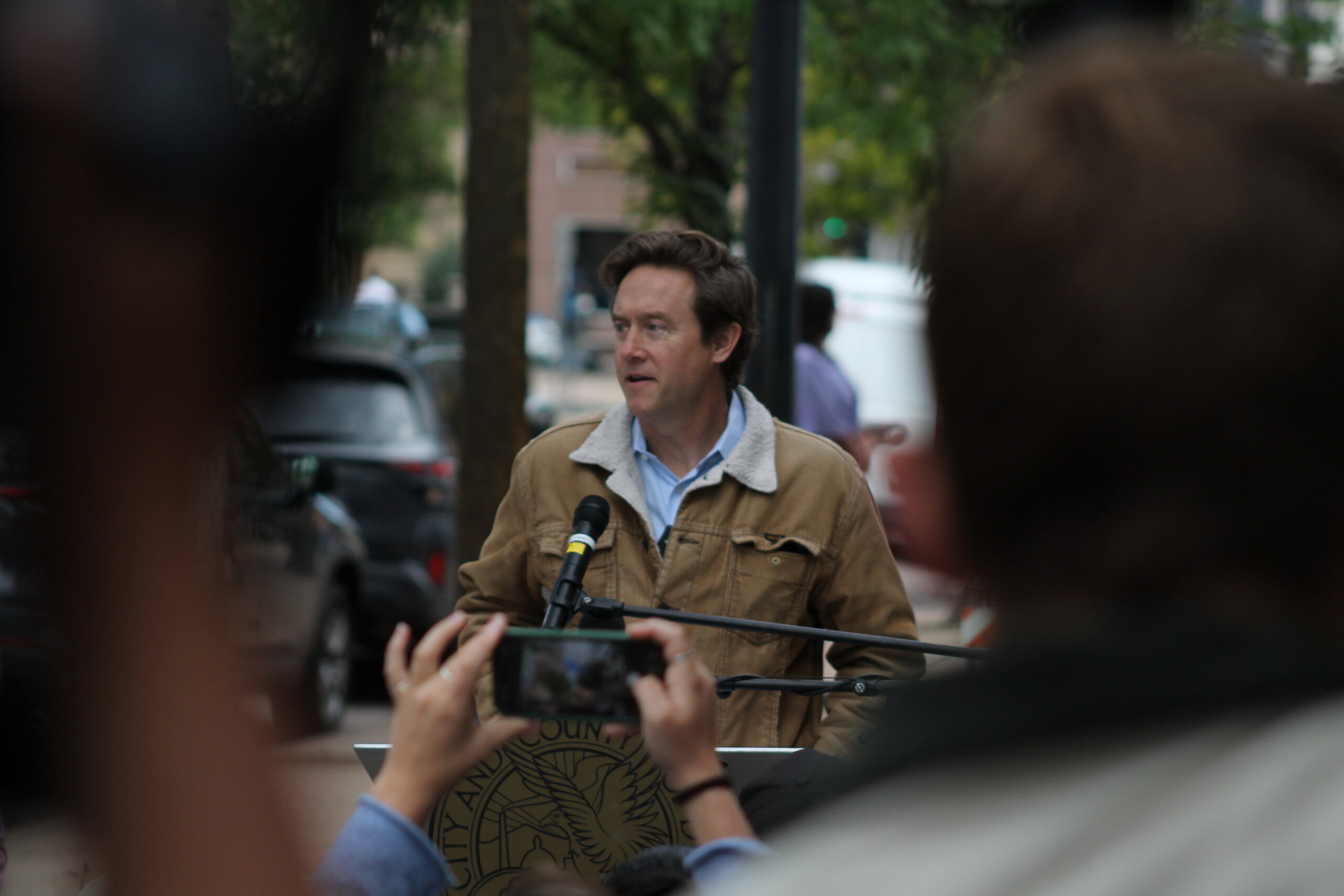
Overall homelessness in Denver went down by 12.5% this year, the first year-to-year reduction in nine years, according to an annual count.
Street homelessness is also at a nine-year low, decreasing by 64% since 2023, when Denver Mayor Mike Johnston took office, city officials said.
Johnston, who campaigned on eliminating homelessness in his first term as mayor, has made the issue a focus of his administration, spending roughly $178 million on various programs since taking office, an amount higher than previously budgeted.
About $55 million was spent on homeless initiatives in 2025, according to a spokesperson for the mayor’s office. For 2026, $35 million has been budgeted.
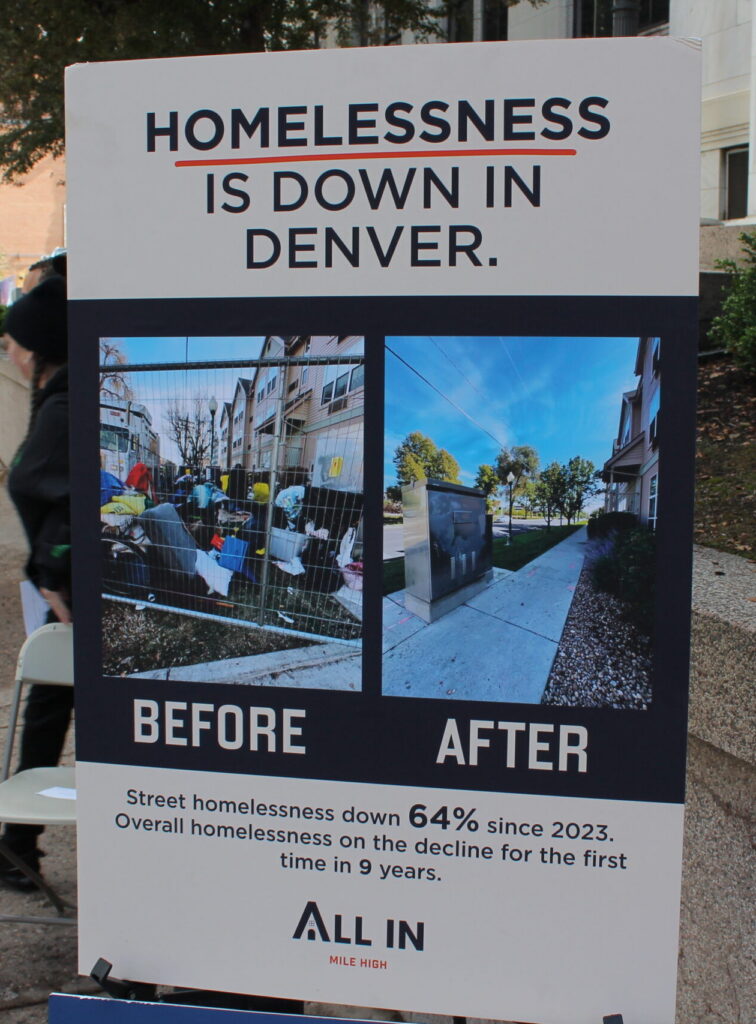
The announcement of the annual count comes on the heels of the annual statewide report on homelessness released Monday by the Metro Denver Homeless Initiative. That report found homelessness across metro Denver decreased 1.3% in 2025.
The numbers that Johnston’s office pointed to Wednesday are sourced from the annual Point-In-Time count, which takes a snapshot of homelessness on a single night in January. The 2026 PIT count shows decreases of about 8% in metro Denver and 12.5% in Denver proper.
While the PIT count numbers may be promising, “Colorado’s State of Homelessness Report 2025” by the Metro Denver Homeless Initiative is regarded as a more comprehensive look at homelessness.
The PIT count only looks at homelessness on a single night and the numbers can be skewed by a number of factors, such as participation or weather, while the statewide report relies on data compiled over the entire year.
The 2025 PIT count found 10,774 people who were homeless in Denver, both sheltered and unsheltered. While the number of street homelessness decreased, overall homelessness was up compared to 2024, with more people in shelters.
The 2026 survey counted 9,950 homeless people, a decrease of 7.6%. In Denver proper, those numbers went from 7,327 people in 2025 to 6,411 in 2026.
Street homelessness — defined as people not staying in a shelter — also went down 34% compared to last year, with 518 people counted during the PIT count.
However, due to sub-freezing temperatures on the day of the count, Jan. 26, cold weather shelters were activated, meaning more people may have been staying outside on nights with warmer weather.
Comparing those numbers to the statewide report, the PIT count shows a much smaller number of homeless people. The statewide report counted 35,601 people in metro Denver, compared to the 9,950 counted in the PIT report.
Additionally, family homelessness and youth homelessness went up in 2025, according to the PIT data.
At a news conference Wednesday morning, Johnston pointed to these numbers as evidence his administration’s homeless initiatives are working.
“This year’s results show historic reductions in homelessness in every major category,” Johnston said. “That means overall, we see 30% fewer people entering homelessness in the first place. Our efforts at prevention are working.”
Johnston said the city’s efforts to reduce homelessness involve a range of city leaders, including from the faith and nonprofit communities. They also include Urban Alchemy, which operates the Aspen shelter.
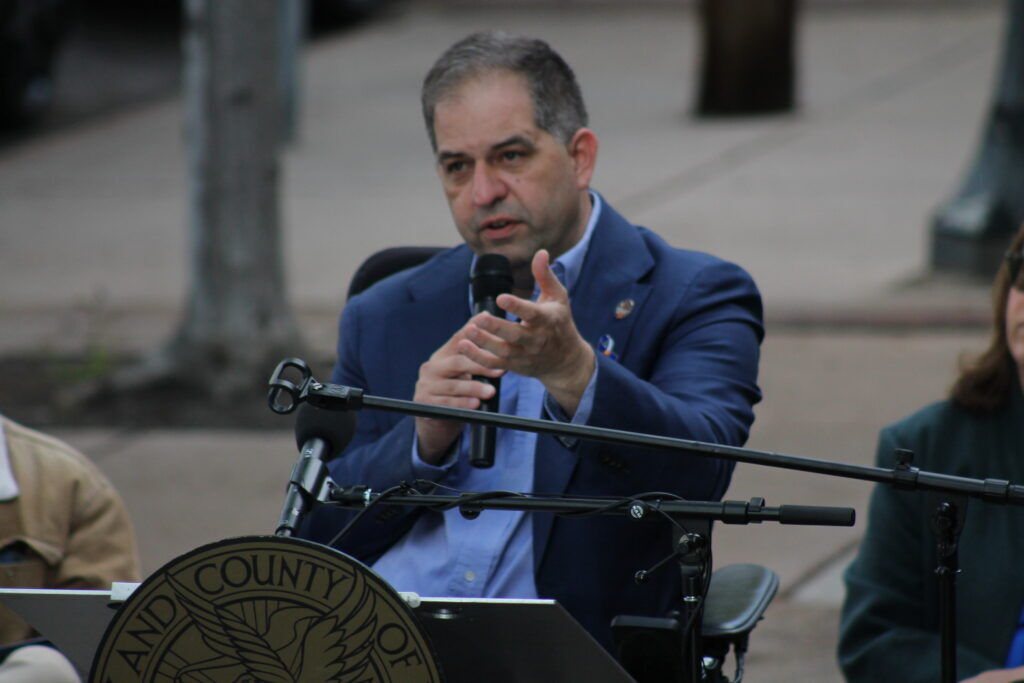
Since taking office, Johnston has led efforts to add roughly 1,000 shelter beds, which has included purchasing hotels to convert into shelters.
At the news conference, two former residents of such shelters spoke highly of their experiences staying there.
Ny’isha Murray, who stayed at the 289-bed Aspen shelter, said her time at Aspen brought stability and support into her life and helped to free her from homelessness.
“They got us up out of there,” Murray said. “I give them all the credit in the world.”


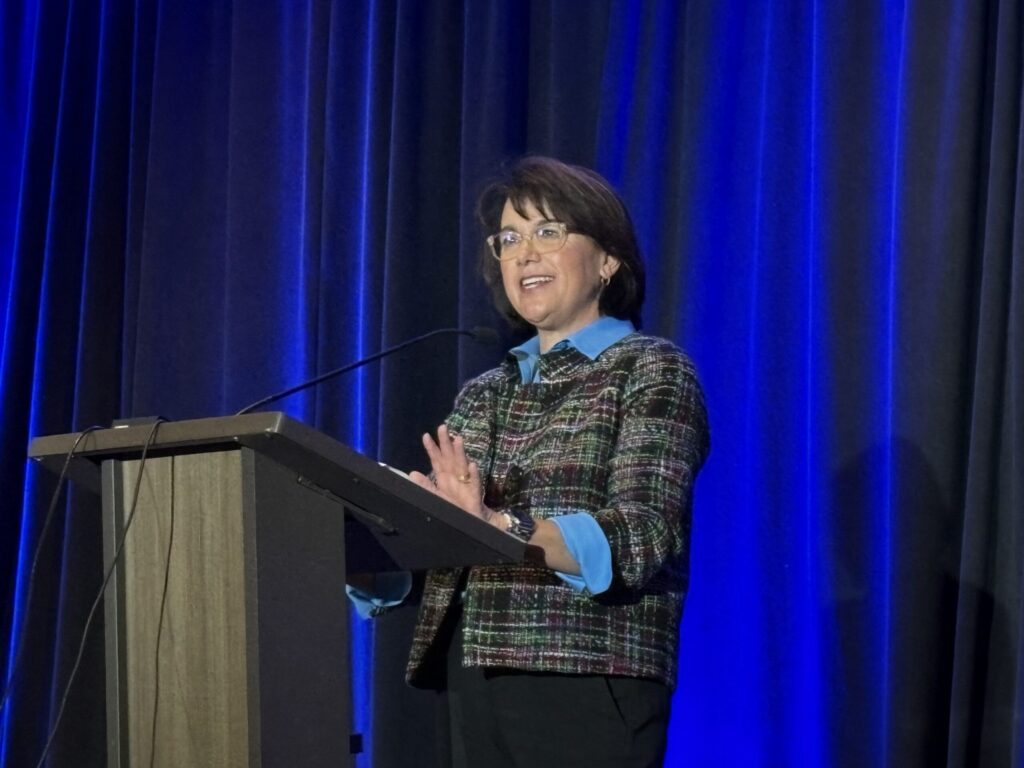
Democratic candidate in Colorado’s 4th CD urges long-term water planning
Marianne Goodland
marianne.goodland@coloradopolitics.com
Updated 5 hours ago
The Democrat hoping to become the next representative of Colorado’s 4th Congressional District on Thursday made her case on the final day of Colorado Water Congress in Steamboat Springs. Eileen Laubacher, who spent 34 years in the U.S. Navy and...

Castle Rock council declines to censure member accused of misconduct
Nicholas Fogleman
nicholas.fogleman@denvergazette.com
Updated 2 days ago
A Castle Rock Town Council meeting Tuesday became consumed by allegations that a councilmember attempted to trade a town policy decision for the withdrawal of a recall effort against him. The allegations against Councilmember Mark Davis surfaced during public comment...

Proposal to cap Colorado income tax rate qualifies for November ballot
Thelma Grimes
thelma.grimes@coloradopolitics.com
Updated 1 day ago
Election officials on Thursday confirmed that the proposal to cap the state’s income tax at the current rate submitted signatures and voters will consequently decide its fate this November. The fight over tax rates is part of the tug and...

Healthcare Freefall: Telluride mother’s roadside birth underscores shrinking access to OB care in Colorado
Rachael Wright, Special to Colorado Politics
rachael.wright@coloradopolitics.com
Updated 14 hours ago
Editor’s Note: Colorado’s healthcare system is entering a period of accelerating instability — a “tsunami,” as multiple leaders describe it — driven by collapsing hospital finances, shrinking Medicaid reimbursements, disappearing services and a political fight over who is responsible for...

Healthcare Freefall: Longer drives, fewer options for maternity care in Colorado
Thelma Grimes
thelma.grimes@coloradopolitics.com
Updated 2 days ago
Editor’s Note: Colorado’s healthcare system is entering a period of accelerating instability — a “tsunami,” as multiple leaders describe it — driven by collapsing hospital finances, shrinking Medicaid reimbursements, disappearing services and a political fight over who is responsible for...

Healthcare freefall: Breast cancer survivor shares strain of rural treatment travel
Hap Fry, Special to The Gazette
hap-fry@gazette.com
Updated 14 hours ago
Editor’s Note: Colorado’s healthcare system is entering a period of accelerating instability — a “tsunami,” as multiple leaders describe it — driven by collapsing hospital finances, shrinking Medicaid reimbursements, disappearing services and a political fight over who is responsible for...

Judge grants partial injunction to GEO in fight against state health inspection law
Kyla Pearce
kyla.pearce@gazette.com
Updated 2 days ago
A judge ruled Thursday that The GEO Group does not have to follow parts of a new state law requiring more frequent health and safety inspections at the U.S. Immigration and Customs Enforcement processing center in Aurora. Under the order...

Parker man faces 20 years to life for serial sexual assaults
Nicholas Fogleman
nicholas.fogleman@denvergazette.com
Updated 3 days ago
A 25-year-old Parker man who sexually assaulted three women in 2025 pleaded guilty Wednesday and will serve 20 years to life in prison. Javier Rodriguez-Andrade pleaded guilty to charges stemming from three sexual assaults involving women ages 19 to 24. ...

Douglas County moves to Stage 1 fire restrictions following recent rain
Nicholas Fogleman
nicholas.fogleman@denvergazette.com
Updated 3 days ago
Douglas County has downgraded its fire restrictions from Stage 2 to Stage 1 on Thursday following recent rainfall and moderate fire conditions, according to the Douglas County Sheriff’s Office. The change applies to unincorporated Douglas County, as well as the...

Democratic gubernatorial candidate Phil Weiser promises to appoint rural outreach director, water adviser
Marianne Goodland
marianne.goodland@coloradopolitics.com
Updated 2 days ago
Democratic gubernatorial candidate and current Attorney General Phil Weiser told the Colorado Water Congress Thursday he intends to appoint a rural outreach director and a water policy adviser should he win the election in November. Weiser’s speech at the Steamboat...
PREV
PREVIOUS

Denver teacher fired after 'same-gender' kissing skits in French class
An administrative law judge has recommended the dismissal of a teacher at Northeast Early College — a high school in the Denver Public Schools district — after finding classroom activities and personal disclosures to students amounted to “incompetence and neglect of duty,” setting up a final vote by the school board. After meeting in executive […]

Aurora eyes raising taxes to pay for infrastructure projects
Aurora voters could decide this November whether to raise sales taxes for the first time since 1993 to help pay for infrastructure, transportation and public safety improvements. The city’s Infrastructure Task Force recommended that the City Council approve a bond program supported by sales and use tax increases to fund Build Up Aurora projects. On […]