

Colorado lawmakers eye 5% ‘fee’ on online gaming ‘skins,’ other game features

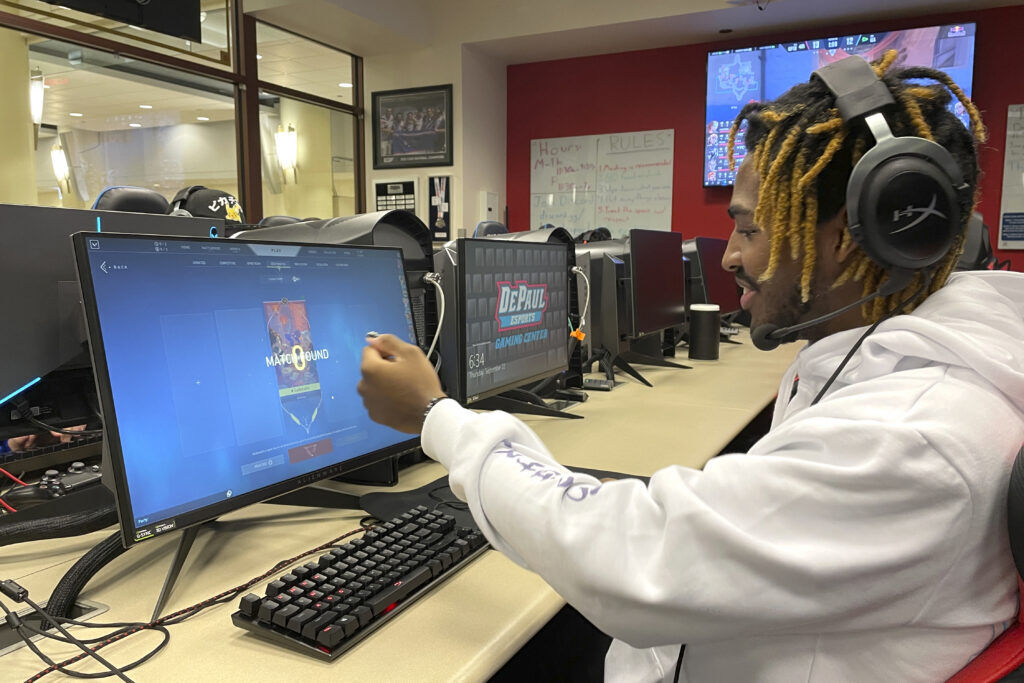
Colorado lawmakers are seeking to impose a new fee on online game purchases, in particular targeting “add-on transactions,” referring to features or enhancements that players can buy.
Sponsors said they want to earmark the new revenue toward youth mental health services.
The sponsors are pushing the new revenue source amid a budget deficit and at a time when Colorado lawmakers are increasingly relying on “fees,” rather than taxes, to fund government programs.
The debate is also occurring just as policymakers, parents, and the tech industry are grappling over issues of privacy rights, parental control and state intervention in consumer matters.
Supporters argued that the measure would hold gaming platforms accountable for design features that can contribute to anxiety, depression, and compulsive spending in kids, while opponents — including industry groups and state officials — warned the proposal could violate federal law, raise privacy concerns, and unfairly burden players who may not benefit from the services it funds.
Sponsored by Reps. Sean Camacho, D-Denver, and Yara Zokaie, D-Fort Collins, House Bill 1148 would establish three “enterprises” — state-owned businesses — to fund in-school counseling services, before and after-school programs, and an “education rights” enforcement program for students with disabilities.
The bill passed on a 38-25 vote in the House, with all Republicans and four Democrats voting in opposition. Its next stop is the Senate, where it is sponsored by Sens. Judy Amabile, D-Boulder, and Dylan Roberts, D-Frisco.
The enterprises would be funded through the fee on “add-on” transactions in online games — the bill says it applies to products or features that “reasonably likely to be accessed by youth” — like Minecraft and Roblox.
The fee starts at 5%. After October 2027, the new enterprise system can adjust the amount.
The fee would, for example, apply to “skins” or outfits — the cosmetic item that changes an avatar’s appearance; expansion packs, experience boosters and battle passes. “Skins” typically cost between $5 and $20, though rare ones could cost more.
Games like Minecraft and Roblox are intentionally designed to engage and addict kids, Zokaie told the House Finance Committee last week. She said features like rewards, in-game purchases, and algorithmic recommendations lead to longer playing times, which studies have linked to increased sleep disruption, lower academic performance, and higher rates of anxiety and depression in kids.
“As a parent, this is something that I grapple with, and it’s also something I hear from other parents who describe to me how powerless they feel against the design choices of multi-billion dollar companies,” Zokaie said. “They tell me they’re doing everything that they know how to do, but it is not enough, and ask what more can be done.”
“House Bill 1418 is one of those things,” the Democrat added.
Federal cuts to programs like the Youth Mental Health Corps and a strained state budget have left many youth mental health services underfunded despite ever-increasing demand, Zokaie said.
Creating “enterprises” to fund services like the Youth Mental Health Corps is a way the state can increase funding for such critical services, said the bill’s backers, who also suggested they may be looking at a “dedicated state revenue source” for programs.
The legality of “enterprises” under the Taxpayer’s Bill of Rights has been upheld in the courts, Camacho maintained.
The state “enterprises” are exempt from TABOR unless they receive 10% or more of their revenue in grants from state and local governments.
Under state law, enterprise fees must directly benefit the individuals paying them.
‘The burden of paying for a complex societal issue‘
Some critics argued that adults who play games marketed to children would be forced to pay fees for services they don’t qualify for and that many kids would be paying for services they don’t need or use.
“This bill places the burden of paying for a complex societal issue on a single industry and a single group of consumers,” said Aaron Segel of the Entertainment Software Association.
If the bill passes, gaming companies would need to collect players’ geolocation data to confirm they live in Colorado, creating significant privacy concerns.
“We share your goal of improving youth mental health and recognize the urgency of that challenge,” said Segel. “However, House Bill 1418 is not an effective or appropriate solution.”
The measure “raises significant concerns” for the state’s Behavioral Health Administration, said Ryan Templeton, the agency’s policy and external affairs director.
The state needs “legal and reliable funding mechanisms” for youth mental health services because, if they go away due to a lawsuit or lack of funding, Colorado kids may be worse off than they were before, he said.
Aside from concerns over TABOR, Templeton said the bill may violate the Internet Tax Freedom Act, a 1998 law that prohibits governments from taxing the internet or online activity. Furthermore, Templeton said, the bill could be unconstitutional under the Equal Protection and Dormant Commerce Clauses.
“We are not opposed to the programs that these funds support — it’s the mechanism,” Templeton clarified. “We’re concerned that it’s not legally a viable way to fund these programs.”
Screentime leads to ‘compulsive spending tendencies’
Supporters focused on the mental health impacts of online gaming, saying the matter is urgent and needs state investment.
Heather Tritten of the Colorado Childrens’ Campaign referenced the organization’s annual Kids Count report, which found that more than a quarter of high school students statewide reported persistent feelings of sadness and hopelessness, and 11% seriously considered suicide.
“There has been a rapid expansion of the body of research linking screen time to compulsive spending tendencies, decreased outdoor time, increased aggression, and decreased empathy,” Tritten said. “Colorado kids need and deserve a dedicated, durable funding stream for mental health supports, especially one that doesn’t put extra strain on the General Fund.”
“HB 1418 creates that funding stream. HB 1418 is the kind of solution Colorado should be proud to lean on,” Tritten said.
Andrea Stojsavljevic of Children’s Hospital Colorado said American teens spend an average of five hours a day on social media and pointed to research saying just three hours of scrolling doubles the risk of poor mental health.
Online gaming platforms also serve as a form of social media for younger kids, who can create profiles and chat with friends — and strangers — even if they aren’t old enough to have phones, she said.
While gaming can have positive impacts, such as offering social connection, stress release, and cognitive benefits, excessive use has been found to be detrimental to both mental and physical health, Stojsavljevic said.
“The rationale behind House Bill 1418 is that platforms profiting from addictive design and targeting should contribute to programs that counteract their negative impacts,” she said.
Enterprise fees surge as more of Colorado’s budget escapes TABOR limits
More than 30 years after Colorado voters approved the Taxpayer’s Bill of Rights, a growing share of state spending now falls outside the voter-approved limits intended to restrain government growth.
A new report shows that fee-funded “enterprises” — state-owned businesses exempt from TABOR’s revenue cap — have expanded dramatically.
At its core, TABOR limits the government’s ability to raise revenue. Political subdivisions must obtain voter approval for any tax increase, and it requires dollars above the TABOR limit to be refunded to residents. Numerous efforts have been made to repeal TABOR since its enactment. As recently as November 2020, voters rejected efforts to significantly overhaul or repeal it.
Indeed, that tug-and-pull among TABOR, taxes and fees has manifested in big fights at the ballot box and at the state Capitol. Broadly speaking, groups have sought to increase state revenue — such as the current efforts to raise up to $4 billion by eliminating Colorado’s flat income tax rate and raising taxes on higher-income earners — while others have pushed to bring down the income tax rate.
A 2025 report by the Common Sense Institute said fee-based enterprises generated $742 million in 1994, the year TABOR went into effect. Thirty years later, that revenue had ballooned by nearly 3,400% to $25.8 billion.
In 1996, 46% of total state spending was exempt from the TABOR spending cap. Almost 30 years later, in 2024, nearly three-quarters of the state’s spending is now TABOR-exempt, amounting to about $9,000 per Coloradan, the group said.


Colorado chamber: 2026 legislative session marked ‘significant progress’ for business
Marissa Ventrelli
marissa.ventrelli@coloradopolitics.com
Updated 18 hours ago
This year’s legislative session produced some big wins for the state’s business environment, according to the Colorado Chamber of Commerce’s annual report. The report measured the progress in the chamber’s legislative agenda across policy areas like labor and employment, technology...
Rep. Jeff Crank thinks Democrats are too focused on Trump, not enough on Colorado Springs | Vince Bzdek
Vince Bzdek
vince.bzdek@gazette.com
Updated 2 days ago
For U.S. Rep. Jeff Crank, who’s unopposed in the Republican primary for the 5th Congressional District but the main target of both candidates in the lively Democratic primary, the big question in the midterms is not who will stand up...

July 1 brings new Colorado rules on gun ammo, wildfire-risk scoring, wildlife enforcement
Marissa Ventrelli
marissa.ventrelli@coloradopolitics.com
Updated 3 days ago
Colorado will usher in a new set of laws on July 1 that affect everything from ammunition sales to insurance transparency and wildlife trafficking enforcement. Here is a look at some of the state’s new laws: Ammunition sales House Bill...

When having fun gets a little, or a lot, messy | NONPROFIT REGISTER
Joanne Davidson Special to Colorado Politics
joanne-davidson-special-to-colorado-politics@coloradopolitics.com
Updated 6 days ago
CHILDREN’S MUSEUM OF DENVER AT MARSICO CAMPUS Denver News: If your child’s definition of a good time is to dive head-first into a giant mound of mud, or to dance their hearts out in pools of fluffy foam, consider paying a visit...

A graduated tax plan could undercut Colorado’s business competitiveness, analysis warns
Marissa Ventrelli
marissa.ventrelli@coloradopolitics.com
Updated 5 days ago
A proposal to move Colorado to a graduated income tax — taxing individuals and businesses at different rates based on their earnings — could generate more than $2 billion in its first year, but it could also weaken the state’s...

Central City Flower Girls: A treasured tradition marks its 94th year | NONPROFIT REGISTER
Joanne Davidson Special to Colorado Politics
joanne-davidson-special-to-colorado-politics@coloradopolitics.com
Updated 4 days ago
CENTRAL CITY OPERA Central City News: The 94th presentation of the Central City Flower Girls got off to its usual booming start, thanks to a perfectly timed dynamite blast that reverberated from an undisclosed location within earshot of the Teller House Garden. The window-rattling boom may startle those unfamiliar with the time-honored tradition, but it generates knowing...

Colorado State Shooting Association files constitutional challenge to firearms dealer law
Marissa Ventrelli
marissa.ventrelli@coloradopolitics.com
Updated 1 week ago
A firearms group has filed a lawsuit challenging a recently signed law expanding regulations for firearms dealers in Colorado. House Bill 26-1126 clarifies that firearms dealers must hold both a federal and state license to operate. The bill also allows the...

Grand Junction roundtable spotlights public access while Interior faces scrutiny over targeted land sales
Scott Weiser
scott.weiser@gazette.com
Updated 6 days ago
U.S. Health and Human Services Secretary Robert F. Kennedy Jr. and Interior Secretary Doug Burgum joined Bureau of Land Management Director Steve Pearce in Grand Junction Wednesday for a roundtable focused on linking public land access to improved physical activity...

Debutante Cotillion celebrates a rich past, exciting futures | NONPROFIT REGISTER
Joanne Davidson Special to Colorado Politics
joanne-davidson-special-to-colorado-politics@coloradopolitics.com
Updated 1 week ago
OWL CLUB OF DENVER Denver News: For the past several months, the Owl Club of Denver has filled its social media platforms with salutes to, and testimony from, the women who, following their presentation at the club’s annual Debutante Cotillion, have gone on to excel, achieve and...

58th Le Bal de Ballet gave its honorees an evening in Wonderland | NONPROFIT REGISTER
Joanne Davidson Special to Colorado Politics
joanne-davidson-special-to-colorado-politics@coloradopolitics.com
Updated 2 weeks ago
DENVER BALLET GUILD Denver News: In its 58th year, Le Bal de Ballet honored 58 college-bound teens: 35 debutantes and 23 Young Men of Distinction, all of whom have graduated high school with top grades and impressive achievements in sports, campus life and community service. They were...
PREV
PREVIOUS

TABOR showdown: Senate moves bill forward, Advance Colorado prepares for legal action
Despite objections from legislative staff and Republican opposition, Senate Democrats on Friday moved forward with a proposal to reroute $306 million in taxpayer refunds. Already, critics are preparing to sue over the proposal that seeks to take $300 million in Taxpayer’s Bill of Rights refunds over the next two years to cover what Democratic lawmakers believe […]

It's almost Sine Die and it can't come soon enough | Capitol M | Week of May 9, 2026
The lighter side of the state Capitol, usually. At first, May the Fourth might have been a bit of a disappointment. Usually, there’s a lot of Star Wars foolishness on this particular day, but early on, it was low-key. The Senate had nothing. But the House stepped it up, with Rep. Jenny Willford donning the […]