

Colorado sees surge in new business filings, but economy still faces major risks

New business filings in Colorado grew in the first quarter of the year, despite several concerning economic trends across the state, according to a new report released Monday.
There were nearly 55,000 new businesses registered in the state during the first three months of the year, up 12.3% year-over-year, the report from the University of Colorado Boulder said. The state also saw business renewals rise 16.2% compared to last year.
New business filings is an economic measurement tracking entrepreneurial activity in the state. A new business — from large companies setting up an office to a new storefront opening or a cleaning worker setting up their own practice — is required by law to register with the Colorado’s Secretary of State’s Office.
As business filing trends are seasonal, the first quarter of the year typically sees more activity.
But this surge of business filings is “extraordinary,” said Brian Lewandowski, CU Boulder economist, during a media call. The first quarter saw the highest level of new filings in the history of the report since it began tracking state data in 2005.
Meanwhile, two key measurements to track businesses that are behind on their state registrations or have decided to close down is a “mixed bag,” Lewandowski said, though it seems to look optimistic.
Delinquencies, which track businesses that are late to renewing their filings, rose by 9.4% compared to last year. Dissolutions, businesses that have closed, fell by 10.5%.
But over the last few quarters, delinquencies haven’t been trending toward more dissolutions — meaning businesses could just be late to filing.
“I think this is really positive, because we see a rise in good-standing entities and a rise in delinquencies,” Lewandowski said. “But it looks like they are getting those delinquencies resolved and they are not dissolving their businesses.”
Entities in good standing rose 3.7% year-over-year, the report said.
“This latest report shows strong growth in new entity filings and renewals, alongside continued growth in entities in good standing and a decline in dissolutions,” said Colorado Secretary of State Jena Griswold in a news release. “The employment market continues to be uncertain, however, and the state must continue to prioritize affordability so working Coloradans aren’t left behind.”
3 worrisome trends
The business filings are a brighter spot for Colorado’s economy, as other trends show either slow growth or losses.
Lewandowski said it’s hard to decipher why there has been an unusual surge in business filings, as new registrations don’t include data for why someone is starting a business, though recently, higher filing activity has been attributed to people starting businesses as a means of earning a second income.
Last year, Griswold, a Democrat opposed to President Donald Trump’s economic policies such as tariffs, said it could be a sign that more people are scared of the future of the economy and are looking for additional sources of money.
“People could be opening up businesses because they are trying to supplement their incomes, whether they are working hourly or salary jobs, and they feel that they need to bring more resources in or because their paycheck just isn’t stretching far enough,” Griswold said.
Colorado’s economy is facing three major risks: a national economy that grew slower than expected, a contracting job market and the spike in energy prices that could reignite high inflation.
The U.S. economy’s gross domestic product grew by 0.5% between the third quarter of 2025 to the fourth quarter, down from 4.4% in the third quarter.
Earlier this month, newly updated federal data showed Colorado’s job market contracted in 2025. The state lost 11,700 jobs at an annual rate of -0.4%. The state was ranked 39th for its growth in January 2026, the CU Boulder report said.
Other than the healthcare sector, most industries in the state recorded year-over-year declines.
“In 2025, we had five negative months of employment growth,” Lewandowski said. “Just to demonstrate how dominated the growth was by one industry, healthcare, if we remove the healthcare growth, then we actually had 10 months of losses in 2025 instead of five months of losses.”
Another new concern is the U.S.-Israel war in Iran, which has led gas prices to rise 64% in Colorado between January and April, according to CU Boulder. Lewandowski said it’s unprecedented for the state to see this rapid rise in gas and oil prices as quickly as it has, and it’s already showing up in recent inflation numbers.
Inflation in the Denver-Aurora-Lakewood metropolitan area rose 4.2% in March, a high not seen since November 2023.
Historically, when prices stay this high for six months or more, it puts the economy at high risk of recession, said Richard Wobbekind, CU Boulder economist. It might take another quarter to see the effects the high gas prices have on the wider economy.
“So that’s, of course, what we’re going to worry about in terms of the macro picture,” Wobbekind said. “We don’t have that concern right now, assuming that this is not going to go on forever.”

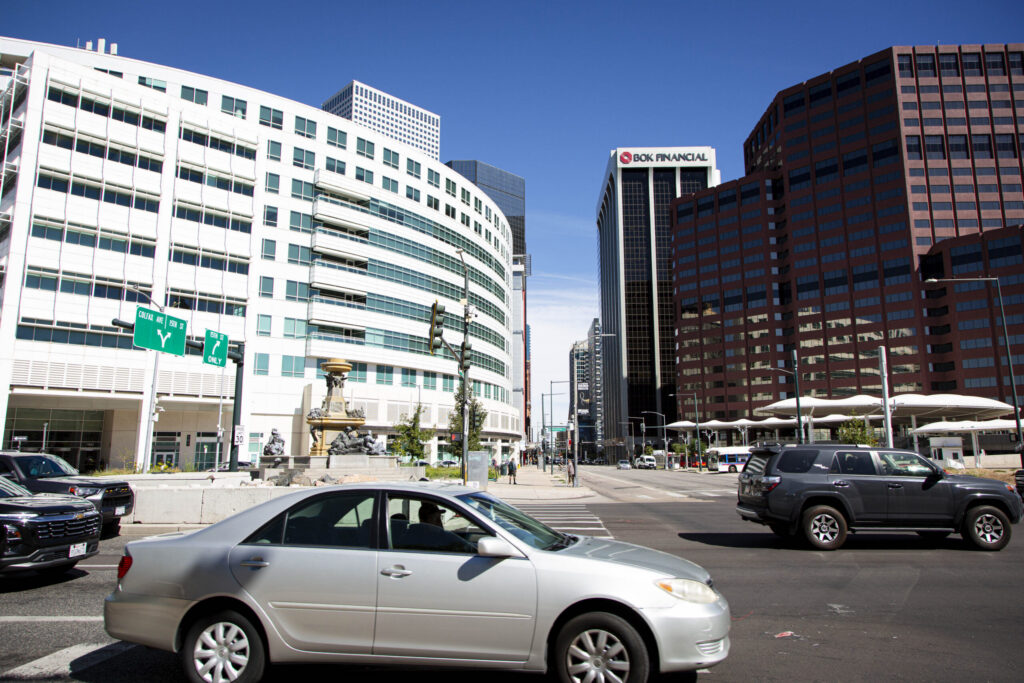
Ikon Pass company Alterra to move into former Denver Post building, create downtown ‘outdoor hub’
Bernadette Berdychowski
bernadette.berdychowski@denvergazette.com
Updated 4 days ago
What was once the home of two of Colorado’s longest-running daily newspapers could soon become a central location for the state’s ski resort and outdoor companies, city and state leaders said Thursday. Alterra Mountain Co. is moving its headquarters to...
‘Until Every Woman Thrives’ campaign receives a $10 million investment | NONPROFIT REGISTER
Joanne Davidson Special to Colorado Politics
joanne-davidson-special-to-colorado-politics@coloradopolitics.com
Updated 5 days ago
WOMEN’S FOUNDATION OF COLORADO COLORADO HEALTH FOUNDATION Denver News: A $10 million gift from the Colorado Health Foundation will enhance “Until Every Woman Thrives,” a comprehensive campaign launched by the Women’s Foundation of Colorado in 2024 to transform lives, deepen relationships and amplify the impact of various...

Voices of Our Youth Gala celebrated the impact a mentor can have | NONPROFIT REGISTER
Joanne Davidson Special to Colorado Politics
joanne-davidson-special-to-colorado-politics@coloradopolitics.com
Updated 2 days ago
BIG BROTHERS BIG SISTERS OF COLORADO Denver News: When chief executive officer Elycia Cook extended an invitation to the 2026 Big Little Gala, Voices of Our Youth, it came with a note advising that it would be an evening that was “Very...

Amazon buys 70 acres in Aurora
Bernadette Berdychowski
bernadette.berdychowski@denvergazette.com
Updated 6 days ago
Amazon purchased 70 acres of land in Aurora with plans to build a distribution center, according to city and county records. The e-commerce giant bought a parcel at 825 N. Lisbon St. from a company tied to Northpoint Development for...

Colorado’s EV charging map nearly complete, state says
Scott Weiser
scott.weiser@gazette.com
Updated 1 day ago
Gov. Jared Polis and the Colorado Department of Transportation released a statement calling the state’s public fast-charging network nearly built out. The Aug. 27 news release reports there are now 486 DC fast-charging locations and 83% of the state highway...

PUC adds weekly comment after killing private talks
Scott Weiser
scott.weiser@gazette.com
Updated 1 week ago
The Colorado Public Utilities Commission will take public comment at the start of every commissioner’s weekly meeting beginning Sept. 9 as part of its new transparency mandate, the commission announced, expanding a slot previously limited to the second Wednesday of...

Healthcare Freefall: AI arms race hits rural healthcare as hospitals fight to keep up
Thelma Grimes
thelma.grimes@coloradopolitics.com
Updated 1 week ago
Editor’s Note: Colorado’s healthcare system is entering a period of accelerating instability — a “tsunami,” as multiple leaders describe it — driven by collapsing hospital finances, shrinking Medicaid reimbursements, disappearing services and a political fight over who is responsible for...
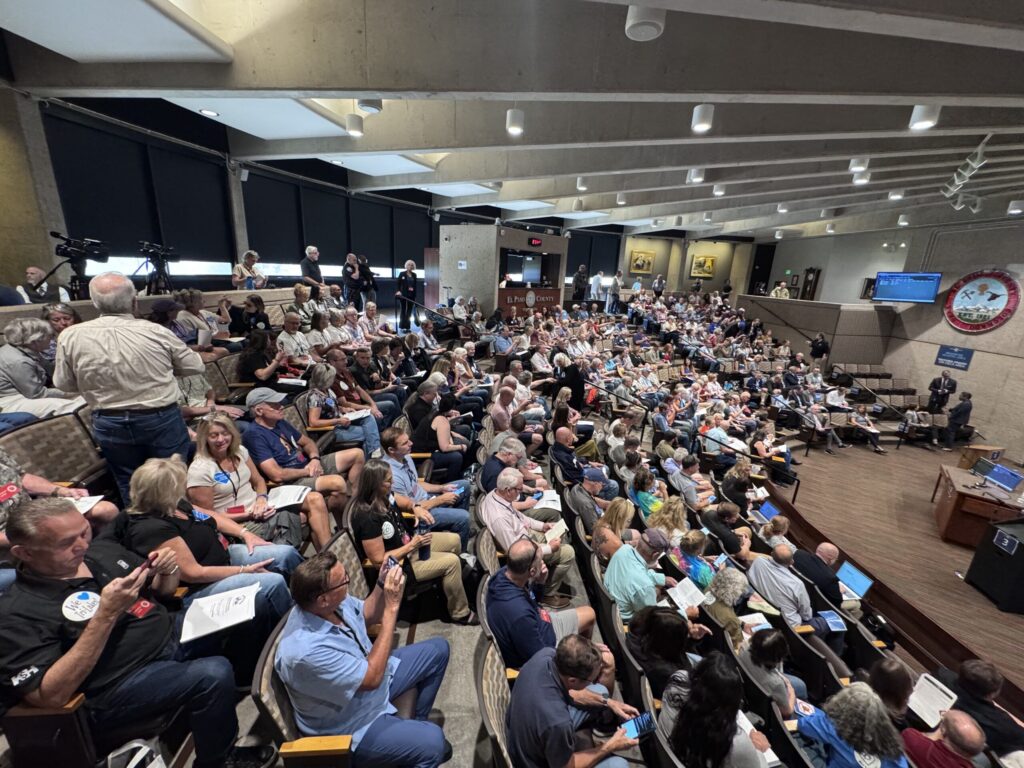
El Paso County upholds Buc-ee’s zoning appeal, clearing way for administrative approval
Savannah Eller
savannah-eller@coloradopolitics.com
Updated 1 week ago
A packed, daylong meeting on Thursday resulted in a win for the Texas travel center chain Buc-ee’s, with El Paso County commissioners voting 4-1 to approve the developer’s zoning appeal. “I think the burden of proof has been met here,”...

Healthcare freefall: Economic ripple effects grow as Colorado hospitals face financial strain
Thelma Grimes
thelma.grimes@coloradopolitics.com
Updated 1 week ago
Colorado’s hospital systems aren’t just a network of clinics and emergency rooms — they are also one of the state’s largest economic engines. So some 10 hospitals identified at any given time as vulnerable to closure, the alarm extends far...

Castle Pines council approves annexation policy, opposes citizen ballot initiative
Nicholas Fogleman
nicholas.fogleman@denvergazette.com
Updated 7 days ago
Castle Pines approved its first annexation policy Tuesday while pushing back against a citizen ballot initiative that would create additional hurdles for developments seeking annexation into the city. In March, the city placed a moratorium on annexations until an official...
PREV
PREVIOUS

What we know about nearly a dozen scientists who went missing, died, or were murdered
The Trump administration is probing concerns surrounding nearly a dozen scientists said to be connected to highly secretive space research whose deaths and disappearances are under increasing scrutiny. President Donald Trump called the situation “pretty serious stuff” last Thursday, revealing he had just attended a meeting about the scientists and promised the government would probe […]

Colorado body reviews redistricting proposals as battle heats up nationwide
With 60 proposals on the April 15 agenda, Colorado’s title board wrapped up its final initial hearing for the 2026 election cycle, sending forward a slate of measures that could reshape workers’ compensation and reignite partisan battles over congressional redistricting. After the title board approves the wording of a proposed initiative, supporters must collect 124,000 […]