

Colorado counties cannot challenge state law restricting immigration contracts, appeals court says
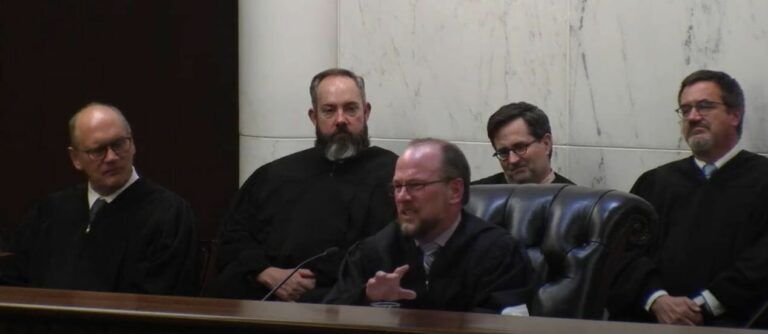
Colorado’s second-highest court ruled on Thursday that counties lack standing to challenge a 2023 state law that restricts their ability to contract with the federal government or private entities for immigration detention.
A three-judge Court of Appeals panel agreed with a trial judge that the Colorado Constitution provides the legislature with broad power to enact laws, subject only to the limitations of the state or federal constitutions.
Douglas County, which brought the appeal, “essentially argues that it is an autonomous legal entity that is allowed to determine — free from the General Assembly’s oversight — what types of services it may provide, including whether it may provide immigration detention services to the federal government,” wrote Judge Timothy J. Schutz in the April 9 opinion. “The County is mistaken.”
Case: Douglas County v. State of Colorado
Decided: April 9, 2026
Jurisdiction: Denver
Ruling: 3-0
Judges: Timothy J. Schutz (author)
Rebecca R. Freyre
Jaclyn Casey Brown
The lawsuit, originally filed in 2024, included Douglas, El Paso, Mesa, Rio Blanco, Elbert, and Garfield counties as plaintiffs, as well as their elected sheriffs. The complaint also sought to declare two laws unconstitutional:
- A 2019 measure prohibiting law enforcement from detaining someone solely on the basis of an administrative request from federal immigration authorities
- A 2023 law restricting the types of contracts that local governments can enter into with the federal government or private entities for immigration detention purposes
Broadly, the laws fell into the category of “sanctuary” policies that limit or prohibit local cooperation with federal immigration authorities. Recently, a federal judge in Colorado joined his counterparts elsewhere in concluding the federal government cannot coerce states into assisting with immigration enforcement, although voluntary cooperation remains on the table.
The question in the counties’ lawsuit, in contrast, is whether the state legislature could bar them from voluntarily assisting the federal government.
The Colorado Constitution, in part, provides that nothing in it prohibits the state “or any of its political subdivisions from cooperating or contracting with one another or with the government of the United States to provide any function, service, or facility lawfully authorized.”
But in a December 2024 order, then-Denver District Court Judge David H. Goldberg concluded the constitutional language did not preclude the legislature from defining what is “lawfully authorized.”
“Because the federal government is prohibited from mandating that a state complies with a federal civil immigration detainer request, Defendant is free to determine the extent, if at all, the State will comply with civil immigration detainer requests and whether the State will enter into or renew immigration detainment agreements,” he wrote.
Goldberg dismissed the lawsuit, finding the counties lacked standing to challenge the laws.
Only Douglas County and its sheriff chose to appeal, focusing only on the 2023 law involving detention-related contracts.
“The Plaintiffs have sufficiently alleged that they have suffered an injury in fact due to the bill denying the Plaintiffs’ right to freely and voluntarily contract with the Federal Government,” argued the county’s attorneys.
The Court of Appeals panel agreed with Goldberg that local governments do not have an “unfettered” right to enter into contracts with the federal government if the legislature has provided otherwise.
“Equally important, the County’s argument fails to recognize the state’s broad power to determine what services a county may perform and what services it may not,” wrote Schutz.
The case is Douglas County et al. v. State of Colorado.


New rules for private judges in Colorado include discipline oversight, campaign contributions
David Migoya
david.migoya@gazette.com
Updated 6 hours ago
The Colorado Supreme Court recently determined the state’s private judges — retired jurists appointed to oversee civil cases that rarely get public scrutiny — can now make political contributions freely and without reserve, overruling a prohibition that had been in...
Appeals court finds Prowers County judge incorrectly analyzed firetruck collision lawsuit
Michael Karlik
michael.karlik@coloradopolitics.com
Updated 10 hours ago
Colorado’s second-highest court directed a Prowers County judge last month to take a second look at whether a firetruck operator and the county itself can be held liable for a collision with a motorist. Donald Williamson was driving through a...
Appeals court reverses assault convictions after jury received no definition of ‘harm’
Michael Karlik
michael.karlik@coloradopolitics.com
Updated 11 hours ago
Colorado’s second-highest court reversed an Arapahoe County defendant’s assault convictions last week, concluding the trial judge neglected to define a key, ambiguous term for jurors. Police officers arrested David Cristobal Aragon at a house party for allegedly violating a restraining...

Colorado lawmakers propose changes to family court procedures | Bills in Brief
Marissa Ventrelli
marissa.ventrelli@coloradopolitics.com
Updated 1 day ago
Colorado lawmakers introduce hundreds of bills each year. Bills in brief cuts through the noise by explaining which proposals matter, what’s at stake, and how decisions at the Capitol could affect everyday life across the state. Colorado lawmakers from both parties are...
Federal judge partially allows second World Cup trafficking lawsuit to move forward
Michael Karlik
michael.karlik@coloradopolitics.com
Updated 1 day ago
A federal judge allowed some claims to move forward last month against companies operating out of Colorado that allegedly participated in a human trafficking venture involving Filipino laborers who constructed facilities for the 2022 World Cup in Qatar. There are...
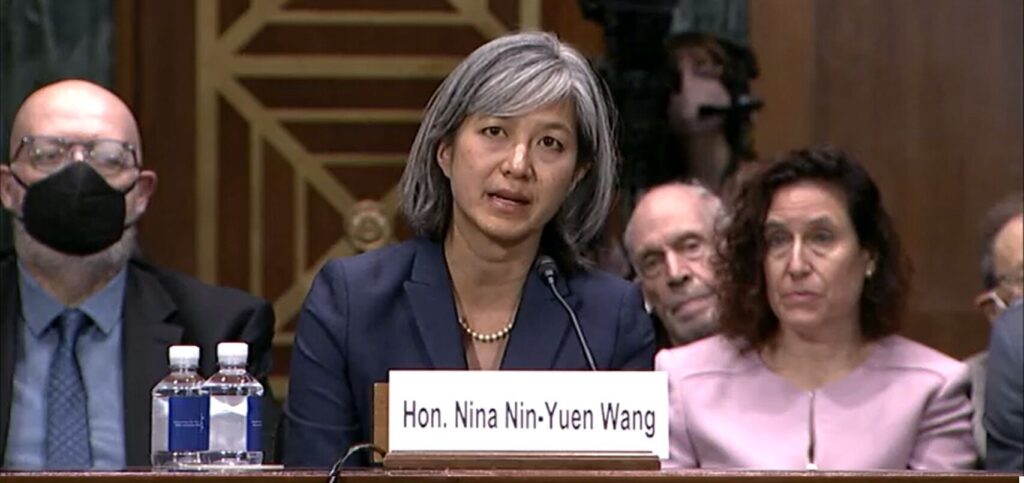
Federal judge dismisses lawsuit seeking to force Colorado secretary of state to screen out scam filings
Michael Karlik
michael.karlik@coloradopolitics.com
Updated 1 day ago
A federal judge dismissed a lawsuit last week that sought to require Colorado’s secretary of state to verify corporate filings in the state’s database to reduce the risk of future fraud. Bernard Butts of Florida, who was 83 when he...
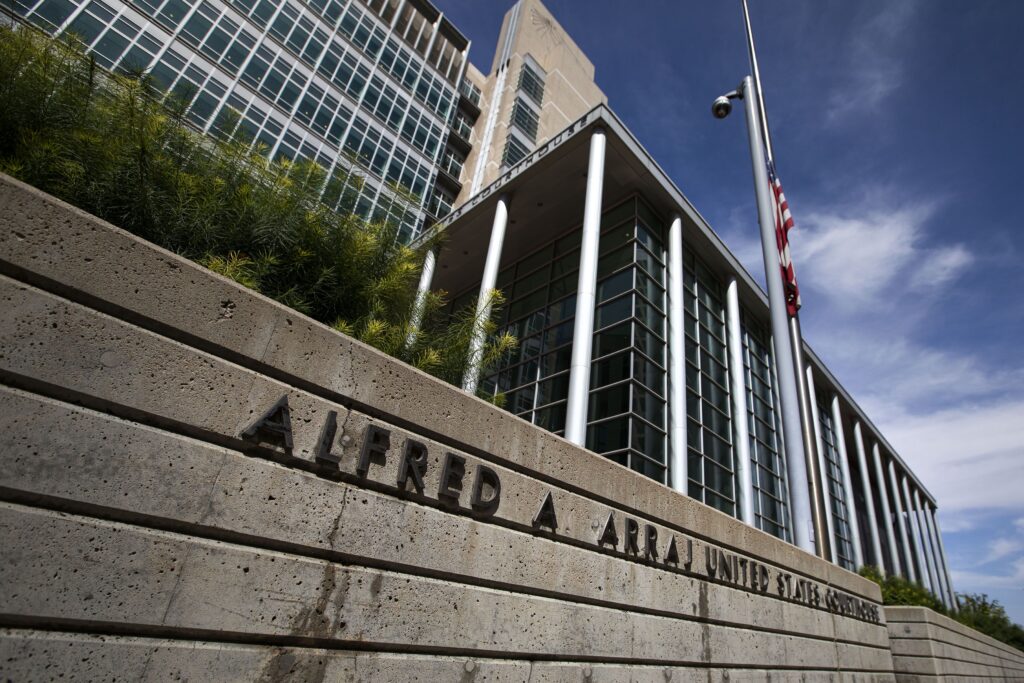
Federal judge finds no constitutional violation by Huerfano County well inspectors
Michael Karlik
michael.karlik@coloradopolitics.com
Updated 1 day ago
A federal judge concluded last month that two Huerfano County employees did not engage in an unconstitutional search when they approached the plaintiffs’ camper within 40 feet to investigate a potential code violation. In July 2021, the county’s building inspector,...

Federal judge warns of increasingly inadequate immigration bond hearings
Michael Karlik
michael.karlik@coloradopolitics.com
Updated 5 hours ago
A federal judge ordered the immediate release of a man in immigration custody last week and, seemingly for the first time in Colorado, warned that the government is increasingly conducting inadequate bond hearings for detainees. Colorado’s federal trial court is facing...

10th Circuit upholds dismissal of Barry Morphew’s civil lawsuit against prosecutors, investigators
Michael Karlik
michael.karlik@coloradopolitics.com
Updated 2 days ago
The Denver-based federal appeals court agreed on Monday that Barry Morphew, who now stands accused for a second time of murdering his wife, failed to state viable claims against the government officials involved in his first, unsuccessful prosecution. Morphew was...
Federal judge blocks evidence from Aurora police’s unconstitutional search
Michael Karlik
michael.karlik@coloradopolitics.com
Updated 2 days ago
A federal judge ruled last month that prosecutors cannot use firearm evidence against a defendant because Aurora police searched him without having any reasonable basis to believe he was armed and dangerous. In evaluating the constitutionality of the search, U.S....
PREV
PREVIOUS

Wayne Williams joins city as Colorado Springs Mayor Mobolade's new chief of staff
Wayne Williams will be the next chief of staff for Colorado Springs Mayor Yemi Mobolade, turning the two former election opponents into partners in city government. The two officially announced the hire Thursday, citing Williams’ decades of experience with city, county and state government as skills he would bring to the administration. Williams will not […]

Appeals court reverses assault convictions after jury received no definition of 'harm'
Colorado’s second-highest court reversed an Arapahoe County defendant’s assault convictions last week, concluding the trial judge neglected to define a key, ambiguous term for jurors. Police officers arrested David Cristobal Aragon at a house party for allegedly violating a restraining order, but he had a series of seizure-like episodes that required transportation to the hospital. […]