

Appeals court finds Prowers County judge incorrectly analyzed firetruck collision lawsuit
Colorado’s second-highest court directed a Prowers County judge last month to take a second look at whether a firetruck operator and the county itself can be held liable for a collision with a motorist.
Donald Williamson was driving through a green light in Lamar when he crashed into a firetruck operated by John Owens Jr. Afterward, Williamson sued Owens and the county for negligence.
The defendants invoked the Colorado Governmental Immunity Act, which broadly shields government entities and employees from lawsuits. There are exceptions, including for emergency vehicle operators who fail to follow the conditions outlined in the law. Those include slowing down and using lights or sirens.
District Court Judge Tarryn L. Johnson held a hearing to determine if the defendants were entitled to immunity. She believed Williamson had to clear a relatively low hurdle to show that Owens seemingly proceeded through the red light in violation of the conditions for immunity.
Determining outright if Owens complied with the law “does seem like it would usurp the jury’s power and the jury’s determination of the factual issue,” Johnson said. “This is not a mini-trial.”
She concluded that immunity did not apply and that Williamson’s lawsuit could proceed.
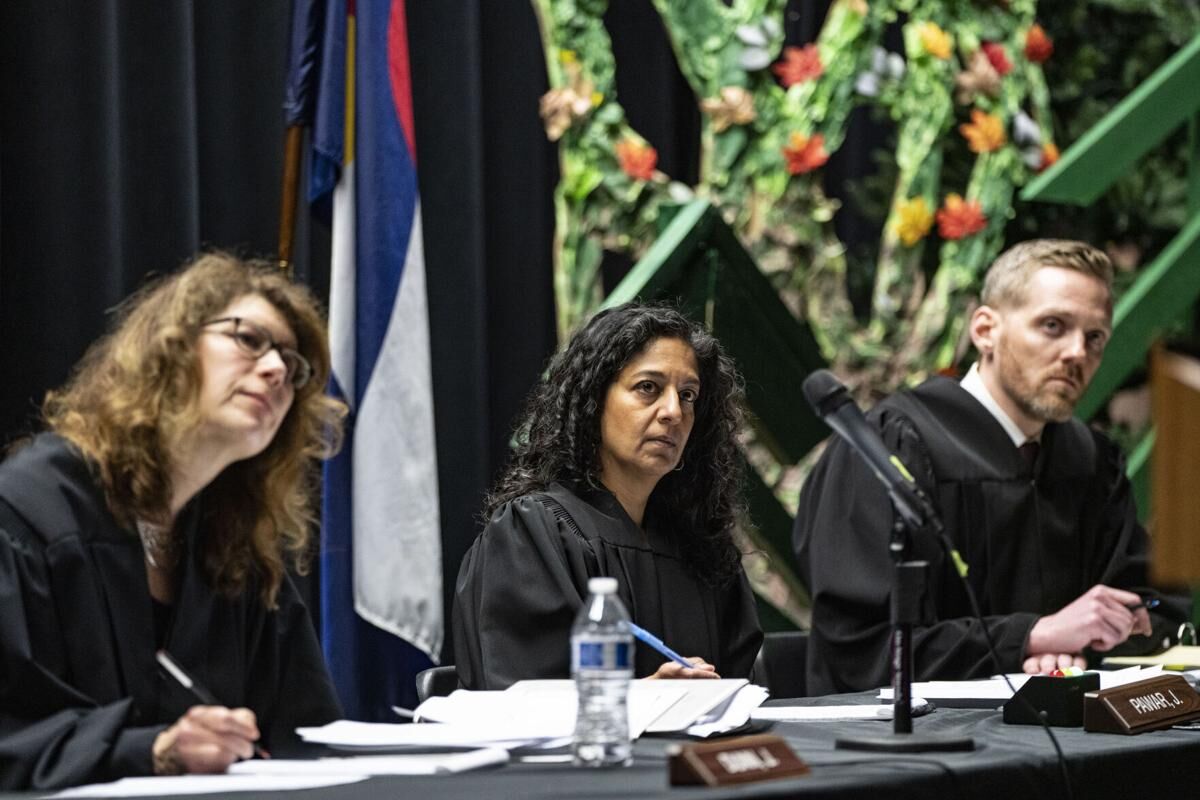
The defendants appealed, and a three-judge Court of Appeals panel found fault with how Johnson approached the immunity issue.
Case: Williamson v. Owens
Decided: March 19, 2026
Jurisdiction: Prowers County
Ruling: 3-0
Judges: Neeti V. Pawar (author)
Sueanna P. Johnson
Christina F. Gomez
Judge Neeti V. Pawar wrote in the panel’s March 19 opinion that Johnson needed to definitively say whether Owens proceeded through the intersection in compliance with the conditions in state law.
“By failing to make this determination, the court relieved Williamson of his burden to prove his version of the disputed facts,” Pawar wrote.
She elaborated that Johnson had not acknowledged the evidence that the firetruck’s siren was blaring and had declined to consider photographs of the crash scene.
“As defense counsel argued, photographs of the accident scene showed how the collision occurred, including the relative speeds of the vehicles involved. They were therefore relevant to whether Owens sufficiently slowed down,” wrote Pawar. “By excluding relevant evidence, the court failed to fulfill its duty to resolve the parties’ factual disputes and to base its legal conclusion on a well-developed record.”
The panel directed Johnson to re-evaluate whether Owens’ operation of the firetruck complied with the immunity law’s requirements, after accounting for all relevant evidence.
The case is Williamson v. Owens et al.

Judge dismisses lawsuit seeking records from Colorado Opportunity Caucus
Marianne Goodland
marianne.goodland@coloradopolitics.com
Updated 2 hours ago
A lawsuit seeking to obtain records from Democratic lawmakers affiliated with the Colorado Opportunity Caucus has been thrown out by a Denver District Court judge. On July 17, Judge Ericka Englert dismissed the April lawsuit filed by progressive activist Derrick...
Colorado Springs mother Deborah Nicholls’ murder conviction overturned
Nick Smith
nick-smith@coloradopolitics.com
Updated 19 hours ago
A Colorado Springs mother convicted in 2008 of murdering her three children in a house fire might get a new trial after a judge ruled that prosecutors withheld key evidence that could have impacted the jury’s verdict. Deborah Nicholls, whose...
Colorado court overturns illegal $7,000 restitution order
Michael Karlik
michael.karlik@coloradopolitics.com
Updated 19 hours ago
Colorado’s second-highest court overturned a Weld County defendant’s obligation to pay more than $7,000 in crime victim restitution on Thursday because a trial judge failed to issue a legally compliant restitution order at the time of sentencing. In Colorado, as...

Appeals court rejects former DougCo commissioner’s legal fee claim
Nicholas Fogleman
nicholas.fogleman@denvergazette.com
Updated 5 hours ago
The Colorado Court of Appeals rejected a former Douglas County commissioner’s bid for reimbursement of attorney fees she incurred while responding to multiple investigations into her conduct. The dispute stemmed from a 2019 anonymous letter sent to county officials alleging...
Appeals court orders second look at Denver Water’s immunity for cyclist’s injury
Michael Karlik
michael.karlik@coloradopolitics.com
Updated 19 hours ago
Colorado’s second-highest court ordered another look at a bicyclist’s negligence lawsuit against Denver Water on Thursday, concluding that a trial judge needed to evaluate the utility’s potential immunity using the state Supreme Court’s new guidance. Joseph A. “Joey” Scott alleged...
Labels, duration not definitive proof of ‘intimate relationship,’ Colorado court rules in domestic violence case
Michael Karlik
michael.karlik@coloradopolitics.com
Updated 19 hours ago
Colorado’s second-highest court clarified on Thursday that the length of a couple’s relationship and the labels they attach to it are not conclusive evidence of whether it is an “intimate relationship” that can give rise to a domestic violence prosecution....

Colorado AG urges Supreme Court to let Boulder climate lawsuit proceed
Marissa Ventrelli
marissa.ventrelli@coloradopolitics.com
Updated 22 hours ago
Colorado Attorney General Phil Weiser has filed a court brief with the U.S. Supreme Court in a lawsuit brought by Boulder city officials seeking to hold oil companies liable for their environmental impact. The case began in 2018, when the...
10th Circuit says landowner cannot sue ex-Routt County judge for statements in decision
Michael Karlik
michael.karlik@coloradopolitics.com
Updated 2 days ago
A Routt County landowner cannot sue a former judge for his allegedly inaccurate statements in a case where the landowner was not a party, the Denver-based federal appeals court decided on Wednesday. Anne Fitzsimmons, who lives in Germany, owns a...
Defendant’s competency in question in El Paso County case involving slain Army police officer
Nick Smith
nick-smith@coloradopolitics.com
Updated 1 day ago
It will be another 60 days before a 4th Judicial District court determines if a man charged in the shooting death of an Army police officer is competent to proceed in his case. Judge Erin Sokol granted a request Wednesday...
Parole, appeals deadlines and restitution: Colorado justices accept cases
Michael Karlik
michael.karlik@coloradopolitics.com
Updated 3 days ago
The Colorado Supreme Court announced on Monday that it will determine how a defendant’s parole-eligibility date should be calculated in instances where a new trial results in a sentence being imposed retroactively to the date of the original, since-overturned sentence....
PREV
PREVIOUS

Appeals court reverses assault convictions after jury received no definition of 'harm'
Colorado’s second-highest court reversed an Arapahoe County defendant’s assault convictions last week, concluding the trial judge neglected to define a key, ambiguous term for jurors. Police officers arrested David Cristobal Aragon at a house party for allegedly violating a restraining order, but he had a series of seizure-like episodes that required transportation to the hospital. […]

Republican Ron Hanks plans ‘grassroots’ primary challenge to US Rep. Jeff Hurd in Colorado’s 3rd CD
Colorado Republican Ron Hanks, a former state lawmaker, plans to challenge first-term U.S. Rep. Jeff Hurd in the 3rd Congressional District primary by seeking a spot on the June ballot at the GOP’s district assembly in Pueblo on Friday, Colorado Politics has learned. Hanks, who lost the nomination to Hurd in the 2024 primary in […]