

Appeals Court rules Douglas County violated open meeting laws
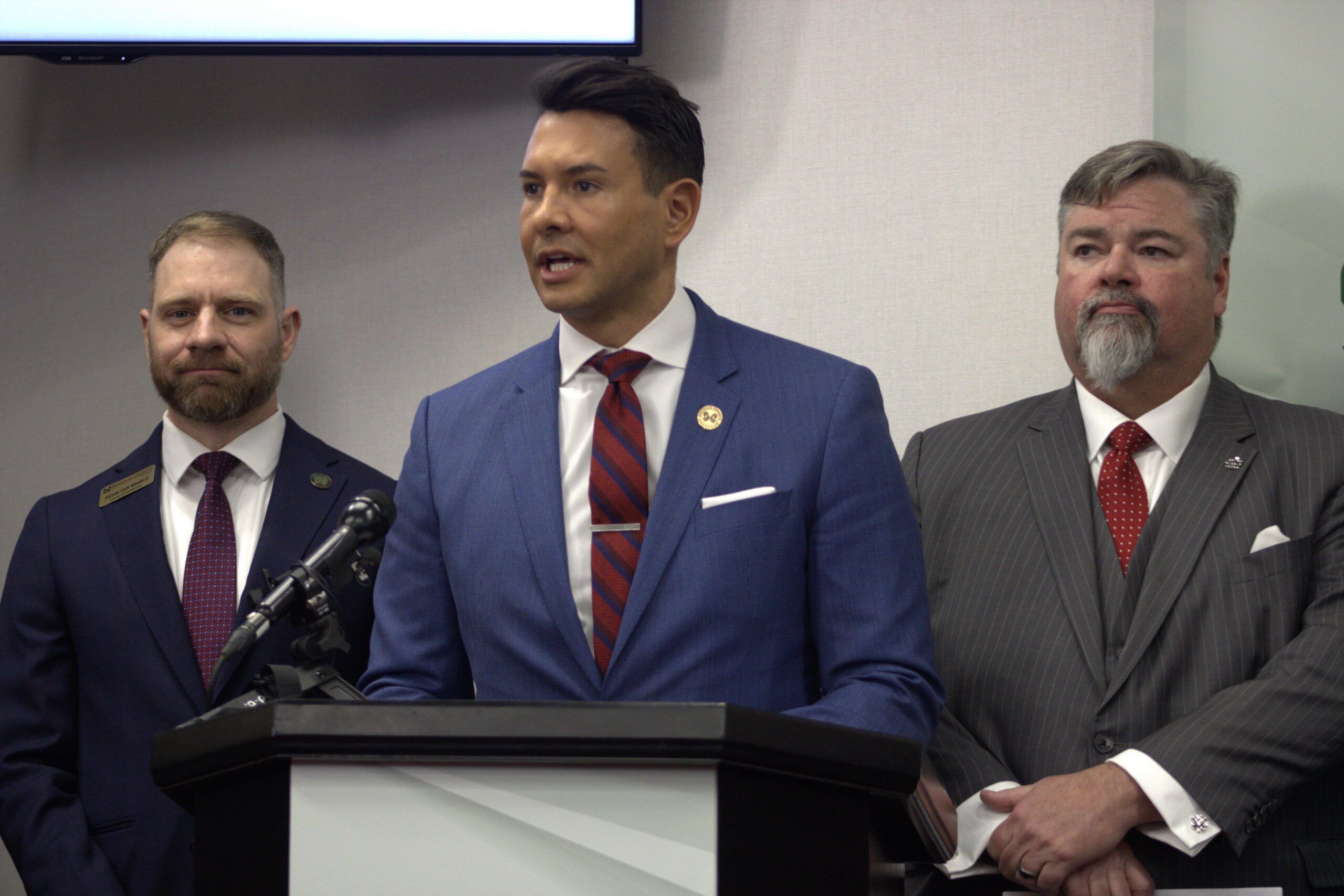
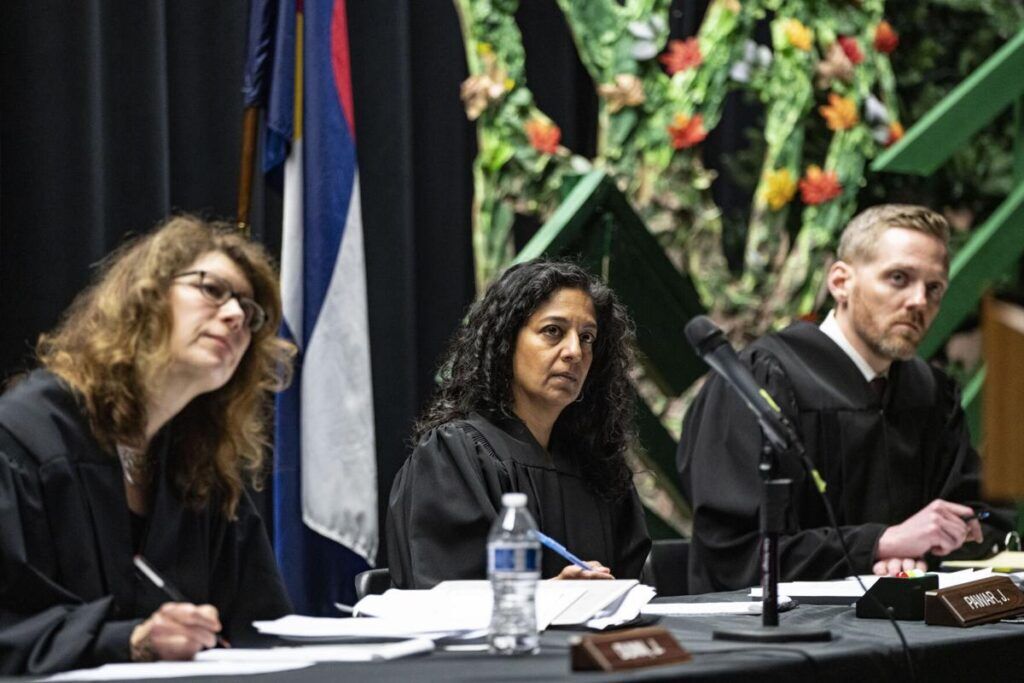
The Colorado Court of Appeals ruled that Douglas County Commissioners violated Colorado open meeting laws in a series of closed meetings leading up to the county’s failed home rule special election.
The Thursday ruling reversed a trial court’s denial of a preliminary injunction, finding the meetings were subject to open meeting laws and plaintiffs demonstrated a likelihood of success on the merits of the case.
The dispute stems from 11 “closed, unnoticed” meetings held by the county commissioners between December 2024 and April 2025, as well as three executive sessions related to the county’s efforts to hold a home rule special election, according to court documents.
Under Colorado law, the public must be notified and able to attend “any meeting of a public body where public business is discussed,” with exceptions for attorney-client privileges.
In April 2025, former county Commissioner Lora Thomas, state Rep. Bob Marshall and Julie Gooden filed a lawsuit alleging these meetings either failed to notify and allow the public to attend or follow strict statutory requirements for closed meetings.
The trial court previously concluded that the meetings were not subject to open meeting laws, denying an injunction which would have canceled the June 2025 home rule special election, which was rejected by 71% of voters.
The appeals court disagreed, determining that both the “closed, unnoticed” meetings and executive sessions involved discussions tied to policymaking, including strategies to promote the home rule measure and resolutions. The court said those discussions fell within the scope of the open meeting laws.
“Consequently, the court’s conclusion that none of these meetings were “a part of the policy-making process” is clearly erroneous,” the decision stated.
The court also found that the county violated open meeting laws by failing to follow strict procedural requirements for three executive sessions.
“The county attorney confirmed that no minutes reflecting a vote to convene an executive session existed, and that he neither recorded the executive sessions nor provided a signed attestation that no recording was necessary due to attorney-client privilege,” the decision stated. “Accordingly, we conclude that the BOCC’s failure (by its own admission) to strictly comply with the statutory requirements to convene an executive session violated (open meeting laws).”
The court ruled that whether the county continues to violate open meeting requirements remains an “active controversy” and remanded the case to the trial court to determine whether further violations have occurred and if injunctive relief is warranted.
“Douglas County remains steadfast in its commitment to transparency and adherence to Colorado open meeting laws and is pleased that the Appellate Court also did not issue an injunction,” a statement on the county website said. “The County is currently weighing whether to return to the Trial Court, where it can present further evidence of its compliance with the law or request additional review by the Colorado Supreme Court.”
The case will return to trial court, where a hearing to determine whether the Board of County Commissioners has continued to violate open meeting laws will be held, according to court documents.

10th Circuit provides guidance on police searches of cloud-based data
Michael Karlik
michael.karlik@coloradopolitics.com
Updated 2 days ago
The Denver-based federal appeals court provided guidance to law enforcement agencies on Monday for ensuring that searches of cloud-based accounts comply with the Fourth Amendment’s requirements. A three-judge panel of the U.S. Court of Appeals for the 10th Circuit noted...
Federal judge releases man after 2 immigration judges disobey order
Michael Karlik
michael.karlik@coloradopolitics.com
Updated 2 days ago
A federal judge released a man from immigration detention on Thursday after two different immigration judges disobeyed his order in the same case. “At this point, the Court has granted Respondents two bites at the apple to prove detention of...
New rules for private judges in Colorado include discipline oversight, campaign contributions
David Migoya
david.migoya@gazette.com
Updated 1 day ago
The Colorado Supreme Court recently determined the state’s private judges — retired jurists appointed to oversee civil cases that rarely get public scrutiny — can now make political contributions freely and without reserve, overruling a prohibition that had been in...
Appeals court finds Prowers County judge incorrectly analyzed firetruck collision lawsuit
Michael Karlik
michael.karlik@coloradopolitics.com
Updated 3 days ago
Colorado’s second-highest court directed a Prowers County judge last month to take a second look at whether a firetruck operator and the county itself can be held liable for a collision with a motorist. Donald Williamson was driving through a...
Appeals court reverses assault convictions after jury received no definition of ‘harm’
Michael Karlik
michael.karlik@coloradopolitics.com
Updated 3 days ago
Colorado’s second-highest court reversed an Arapahoe County defendant’s assault convictions last week, concluding the trial judge neglected to define a key, ambiguous term for jurors. Police officers arrested David Cristobal Aragon at a house party for allegedly violating a restraining...
Colorado counties cannot challenge state law restricting immigration contracts, appeals court says
Michael Karlik
michael.karlik@coloradopolitics.com
Updated 3 days ago
Colorado’s second-highest court ruled on Thursday that counties lack standing to challenge a 2023 state law that restricts their ability to contract with the federal government or private entities for immigration detention. A three-judge Court of Appeals panel agreed with...

Colorado lawmakers propose changes to family court procedures | Bills in Brief
Marissa Ventrelli
marissa.ventrelli@coloradopolitics.com
Updated 4 days ago
Colorado lawmakers introduce hundreds of bills each year. Bills in brief cuts through the noise by explaining which proposals matter, what’s at stake, and how decisions at the Capitol could affect everyday life across the state. Colorado lawmakers from both parties are...
Federal judge partially allows second World Cup trafficking lawsuit to move forward
Michael Karlik
michael.karlik@coloradopolitics.com
Updated 4 days ago
A federal judge allowed some claims to move forward last month against companies operating out of Colorado that allegedly participated in a human trafficking venture involving Filipino laborers who constructed facilities for the 2022 World Cup in Qatar. There are...
Federal judge dismisses lawsuit seeking to force Colorado secretary of state to screen out scam filings
Michael Karlik
michael.karlik@coloradopolitics.com
Updated 3 days ago
A federal judge dismissed a lawsuit last week that sought to require Colorado’s secretary of state to verify corporate filings in the state’s database to reduce the risk of future fraud. Bernard Butts of Florida, who was 83 when he...
Federal judge finds no constitutional violation by Huerfano County well inspectors
Michael Karlik
michael.karlik@coloradopolitics.com
Updated 4 days ago
A federal judge concluded last month that two Huerfano County employees did not engage in an unconstitutional search when they approached the plaintiffs’ camper within 40 feet to investigate a potential code violation. In July 2021, the county’s building inspector,...
PREV
PREVIOUS

Former Parker police sergeant arrested for unlawful sexual conduct
A former Parker Police Department sergeant was arrested Friday after being charged with multiple counts of “unlawful sexual conduct,” according to department officials on Monday. The department placed Sgt. Troy Brienzo, 31, on investigative leave on Jan. 7 after an “alleged incident,” according to a PPD news release in February. He resigned on Feb. 13. […]
Colorado legislators propose $46.8 billion budget, driven by Medicaid costs
The six-member panel of legislators in charge of crafting the state budget has now turned over its plan to the Colorado legislature, proposing to spend $1.5 billion more for the Medicaid program. The increase is driven by Medicaid costs, which forced the Joint Budget Committee to make cuts elsewhere. All told, House Bill 26-1410 proposes […]