

10th Circuit grants rare all-judges’ review of Colorado banking regulation

The Denver-based federal appeals court announced on Thursday that it will hold a rare all-judges review of a recent decision that permits Colorado to require out-of-state banks to abide by the state’s maximum interest rates when they lend to in-state residents.
Even more unusually, it is the second full-court hearing the U.S. Court of Appeals for the 10th Circuit has granted in a Colorado case recently. Next month, the judges will hear oral arguments in a criminal sentencing appeal originally decided by a three-judge panel in October.
Coincidentally, Judge Gregory A. Phillips, a Barack Obama appointee from Wyoming, authored the majority opinions under review in each case.
In the federal appellate courts, the vast majority of cases are decided in panels. Courts will occasionally vote to have all judges hear a case, known as an “en banc” review. Historically, the 10th Circuit receives approximately 190 requests per year, but grants fewer than one on average.
A key feature of en banc review is a circuit court’s ability to overrule prior precedents established in panel decisions, which are binding on the court itself. The chances for full-court review are better when there is a conflict between decisions, or the 10th Circuit is an outlier on a specific issue, with ramifications beyond the case being litigated.
In November, by a 2-1 vote, a panel overturned a trial judge’s injunction blocking Colorado from enforcing its interest rate cap against members of three finance industry groups. After the plaintiffs and multiple outside entities argued the decision would sow chaos in the interstate banking system, the 10th Circuit granted their request on April 2 to hear the case en banc.
Eleven of the court’s 12 full-time judges will participate in the hearing. Judge Scott M. Matheson Jr., an Obama appointee from Utah, has recused from the case without explanation.

Throughout the litigation, Colorado’s ability to impose its own maximum interest rates on out-of-state, state-chartered banks has hinged on the question of where a loan is “made.”
Amid rampant inflation in 1980, Congress passed Section 521, which allowed state-chartered banks to lend at interest rates up to their state’s cap or slightly above the federal rate, whichever was higher. The purpose was to ensure state-chartered banks in states with low interest rate ceilings could still afford to lend money and compete with nationally chartered banks.
However, a second provision, Section 525, granted states the power to opt-out and ensure state-chartered banks charged interest rates in line with their state’s law. The opt-out applies to loans “made in” the state.
In 2023, Colorado lawmakers chose to opt out through House Bill 1229. The state joined Iowa and Puerto Rico as the only other jurisdictions in the opt-out category. The bill’s sponsors explained the goal was to prevent out-of-state banks from “hopping around” Colorado’s consumer lending laws by charging higher interest rates for financial products than Colorado law allows for its institutions.
The National Association of Industrial Bankers, a trade group based in Utah, sued Colorado in conjunction with other industry associations over HB 1229. The groups sought to avoid letting Colorado apply its own ceilings on interest rates, which are somewhat lower than those elsewhere, to banks chartered by other states that lend to Colorado consumers.
In June 2024, U.S. District Court Chief Judge Daniel D. Domenico issued a preliminary injunction barring Colorado from applying its caps to the plaintiffs when they made loans from outside of Colorado to Colorado residents. He rejected the state’s argument that loans “made in” a state referred to either the bank’s state or the borrower’s state. Instead, the language referred to the bank’s location.
But a three-judge 10th Circuit panel overturned his injunction in November.
“We acknowledge that this decision may cause some immediate uncertainty,” wrote Phillips for himself and Judge Richard E.N. Federico, a Joe Biden appointee from Kansas. However, he stressed that the only question the panel answered was whether a specific federal law authorized Colorado’s interest rate policy, and not whether constitutional or other statutory provisions blocked the state’s legislative choice.
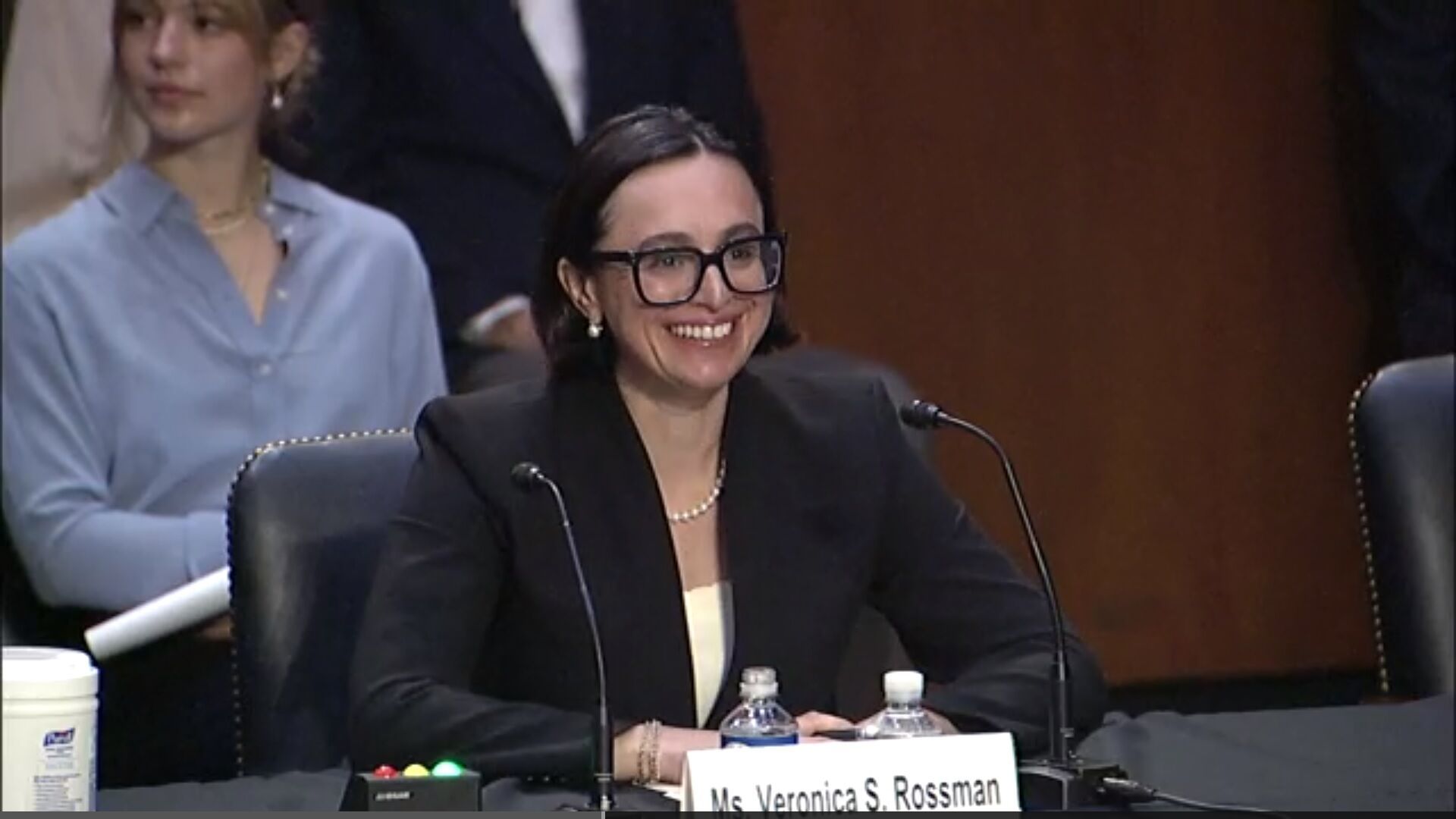
Judge Veronica S. Rossman, writing in dissent, believed the majority incorrectly interpreted the law and caused a “practical problem.” Now, the relevant interest rate for a loan is either the one in the borrower’s state or the one in the lender’s home state, with the potential for conflict.
“I struggle to see how this patchwork approach — which abides a level of disuniformity Congress never intended — will be administrable in our world of interstate, online banking,” wrote Rossman, a Biden appointee from Colorado.
The plaintiffs quickly sought en banc review, arguing states have never had the right to regulate other states’ banks. Republican-led states and the Office of the Comptroller of the Currency submitted supportive briefs, warning that Colorado’s law would inject uncertainty into Congress’ banking framework.
The Federal Deposit Insurance Corporation, which previously supported Colorado’s view, reversed course and also asked the 10th Circuit to block the state’s law.
“Most lending by out-of-state state-chartered banks to Colorado consumers falls well below Colorado’s interest rate caps and would be unaffected by Colorado’s opt out,” responded the Colorado Attorney General’s Office in urging the 10th Circuit to decline full-court review. “Colorado permits lenders to charge 36% on the first $1000 financed and 21% on larger loans and open-end credit. It is only a few state-chartered banks that partner with high-cost fintech lenders to evade Colorado’s interest rate protections that will be affected.”
The 10th Circuit’s order granting en banc review listed several questions for the parties to address, most of which pertain to the meaning of loans “made in” a state.
The case is National Association of Industrial Bankers et al. v. Weiser et al.

Federal judge sides with Mesa County school district in ex-student’s First Amendment claims
Michael Karlik
michael.karlik@coloradopolitics.com
Updated 12 hours ago
A federal judge concluded last week that Mesa County Valley School District 51 and three of its administrators did not violate the First Amendment rights of a former student when they imposed minor discipline in response to disruptive behavior. In...

Colorado Supreme Court intervenes in 4 ongoing cases
Michael Karlik
michael.karlik@coloradopolitics.com
Updated 16 hours ago
The Colorado Supreme Court recently moved to intervene in four ongoing cases, including two criminal prosecutions, a civil lawsuit, and a child welfare proceeding. At least four of the court’s seven members must agree to hear a case outside of...

Federal judge releases man immediately as consequence for immigration judge disobeying orders
Michael Karlik
michael.karlik@coloradopolitics.com
Updated 16 hours ago
A federal judge ordered a man’s immediate release from immigration detention on Thursday after finding an immigration judge disregarded his prior orders requiring a bond hearing. For the past year, Colorado’s federal district court has faced a flood of “habeas corpus”...

Denver judge denies Gov. Polis request to dismiss ICE-related records case
Marianne Goodland
marianne.goodland@coloradopolitics.com
Updated 17 hours ago
A year after blocking the release of state records to federal immigration agents, a Denver judge has now denied Gov. Jared Polis’ effort to end the lawsuit at the center of the dispute. The lawsuit filed against the governor in...
Colorado justices accept appeals on Netflix taxation, children pursuing neglect cases
Michael Karlik
michael.karlik@coloradopolitics.com
Updated 14 hours ago
The Colorado Supreme Court announced on Monday that it will decide whether Netflix subscriptions are subject to the state’s sales tax as “tangible personal property.” At least three of the court’s seven members must agree to hear an appeal. The...
Letecia Stauch murder conviction in stepson Gannon’s death overturned by Colorado appeals court
Nick Smith
nick-smith@coloradopolitics.com
Updated 22 hours ago
An El Paso County woman convicted of killing her stepson in 2020, shoving his body in a suitcase, then dumping it in Florida, is getting a new trial. The Colorado Court of Appeals published a 52-page ruling on Thursday, stating...
Colorado appeals court orders new sentencing for Tina Peters, upholds convictions
Michael Karlik
michael.karlik@coloradopolitics.com
Updated 2 days ago
Colorado’s second-highest court determined on Thursday that a trial judge improperly sentenced former Mesa County clerk Tina Peters based upon her exercise of protected speech, while at the same time upholding her convictions. The three-judge Court of Appeals panel also...

Judge rules that Colorado law makes it too hard for parties to bar unaffiliated voters from primaries
Ernest Luning
ernest.luning@coloradopolitics.com
Updated 2 days ago
A federal judge ruled in favor of the Colorado Republican Party late Tuesday, saying that a portion of the state law that allows unaffiliated voters to cast ballots in party primaries is unconstitutional because it imposes an unrealistic burden on...

10th Circuit upholds regulator’s methodology for Tri-State exit fees
Michael Karlik
michael.karlik@coloradopolitics.com
Updated 2 days ago
The Denver-based federal appeals court upheld a regulatory agency’s methodology for calculating the fee owed by entities seeking to withdraw from Tri-State Generation and Transmission Association last week. Tri-State is a Westminster-based cooperative that provides and transmits electricity to member...
Federal judge proposes sanctions against Mike Lindell’s lawyers for continued fake citations
Michael Karlik
michael.karlik@coloradopolitics.com
Updated 3 days ago
A federal judge is once again pursuing sanctions against lawyers for MyPillow CEO Mike Lindell for continuing to cite to court cases that do not exist, likely based on the faulty output of artificial intelligence tools. Last year, a jury...
PREV
PREVIOUS
Colorado appeals court orders new sentencing for Tina Peters, upholds convictions
Colorado’s second-highest court determined on Thursday that a trial judge improperly sentenced former Mesa County clerk Tina Peters based upon her exercise of protected speech, while at the same time upholding her convictions. The three-judge Court of Appeals panel also concluded that President Donald Trump’s attempted pardon of Peters for state-level convictions last year was […]

Letecia Stauch murder conviction in stepson Gannon's death overturned by Colorado appeals court
An El Paso County woman convicted of killing her stepson in 2020, shoving his body in a suitcase, then dumping it in Florida, is getting a new trial. The Colorado Court of Appeals published a 52-page ruling on Thursday, stating that the conviction of Letecia Stauch, 42, is reversed because the trial court committed “structural […]