

Modernizing Pinnacol is about its members, not politics | IN RESPONSE

By Akasha Absher
While we share the passion for protecting Colorado’s workers expressed in a recent op-ed from the perspective of trial attorneys and union representatives, the piece paints a picture of Pinnacol Assurance that is more rooted in 1915 than our 21st-century reality (“Colorado’s workers can’t afford a privatized Pinnacol | OPINION,” March 17). Their characterization of Pinnacol’s evolution misses a fundamental truth: Pinnacol’s success is not due to its status as a “political subdivision.” It is because we operate as a member-owned mutual insurance company with an unwavering duty to the people we serve.
Following a full separation from the state, we would continue to operate under the same member-owned structure — the very framework that enabled Pinnacol to become a national industry and civic leader, and the state’s top-rated workers’ compensation insurer by workers.
For more than two decades, Pinnacol has operated as a mutual insurer, owned by its members and operating independently of the state. In fact, the state walked away from its financial risk in Pinnacol nearly a quarter-century ago. The state has no oversight of Pinnacol’s operational processes, and we have no outside shareholders. No “profits” leave the system to line the pockets of Wall Street; instead, the equity belongs to Pinnacol’s members.
Every dollar we generate stays in the system to provide rate stability and safety services for Colorado’s small businesses, industry-leading care for injured workers, and scholarships for their children.
Today, independent national benchmarks rank Pinnacol among the top 50 property and casualty insurers in the nation for performance — a distinction held by fewer than 2% of carriers nationwide. We achieved that status through a fiduciary duty to our members — a duty filled by employers and their workers, not the government. Our members want their employees well taken care of because they know a healthy workforce is a productive one. As a member-owned company, a full separation from the state doesn’t change the accountability that we have as a steward for those we serve.
The suggestion that our evolution is driven by a “profit motive” or “private equity” is a fundamental misunderstanding of our structure. We are not seeking to be sold, nor are we welcoming to outside investors. We stand in firm opposition to such scenarios, as they would lead to higher costs and declining service for our members and their employees.
Our goal is simple: to adapt to a 21st century workforce that no longer stops at the Colorado border.
Opponents claim a full separation is a “gamble.” In reality, the gamble is staying stagnant. According to the U.S. Census Bureau, Colorado has the highest remote-work rate of any state in the country. Our state’s workforce is dispersing across state lines at historic rates and most employers in Colorado now have employees in multiple states. Our outdated structure prevents us from seamlessly protecting workers across state lines. Because Pinnacol is a political subdivision, it cannot obtain licenses to operate in all other states. Instead, we must rely on “clunky” and expensive third-party arrangements to follow Colorado’s employers — more than 95% of Colorado employers in this scenario choose a carrier other than Pinnacol
Our own home-grown, top-performing carrier is being forced out of the market, leaving a majority of Colorado businesses and their workers without access to the protection they deserve. In any other industry, a market leader’s inability to meet customer needs would be seen as a failure of policy.
We aren’t looking to “exit” our responsibility to Colorado; we are looking to live into it. However, we are not willing to pursue modernization at any cost. Our first and final loyalty is to our members and the workers we protect. Removing an excessive amount of member-generated funds to solve short-term state budget challenges would be a breach of our mission. If a deal compromises our capital strength or rate stability, we will not support it. Our financial stewardship was built by Colorado employers, and we owe it to them to act in their best interest.
When we prioritize members over political winds, Colorado’s workers and employers win.
Akasha Absher is chair of the Pinnacol Board of Directors.


Jena Griswold’s record: corruption, incompetence | Dick Wadhams
Dick Wadhams
dick-wadhams@coloradopolitics.com
Updated 2 days ago
There is no statewide elected official going back decades who is as breathtakingly corrupt and incompetent as Secretary of State Jena Griswold, who is now running for attorney general of all things. And compliant ruling Democrats know it. Their silence...

Kiros exudes why Colorado’s political times are a-changin’ at annual Denver Dems gala | Miller Hudson
Miller Hudson
miller-hudson@coloradopolitics.com
Updated 2 days ago
Among Colorado’s few remaining bipartisan rituals are county and state party dinners. I was particularly intrigued by last week’s Denver Democratic Party’s 2026 Annual Gala, a “New Deal for a New Era.” Their glossy program featured an artist’s Technicolor rendering...

Livestock grazing regulations need flexible updates | Rachel Gabel
Rachel Gabel
rachel-gabel@coloradopolitics.com
Updated 2 days ago
The Bureau of Land Management last updated their livestock grazing regulations the year I graduated from high school. I am 49. Assessing rangeland health can’t be done once and not revisited. This year is a prime example that managers must...

Taxpayers donate to tax increase campaign | Jon Caldara
Jon Caldara
jon-caldara@coloradopolitics.com
Updated 3 days ago
Give the man his due. President Donald Trump has undeniable talents. Colorado politicians are learning. Chief among The Don’s skills is taking the self-serving, ethically dubious behavior of previous politicians and putting it on steroids. Or, to borrow from the...
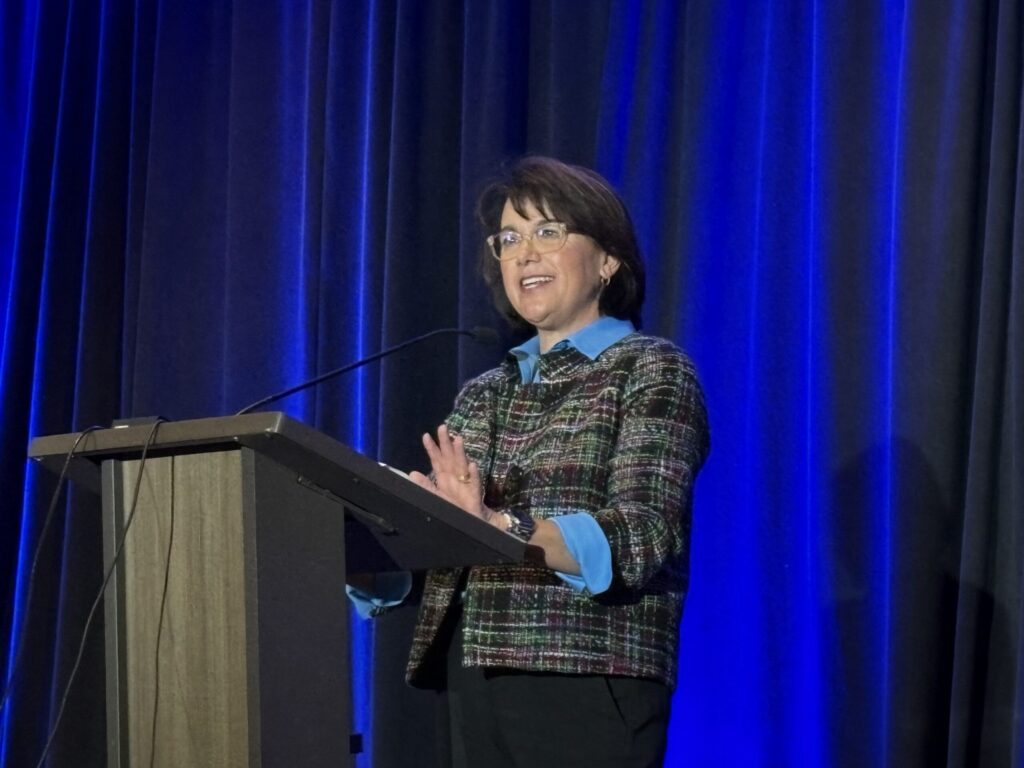
Democratic candidate in Colorado’s 4th CD urges long-term water planning
Marianne Goodland
marianne.goodland@coloradopolitics.com
Updated 1 day ago
The Democrat hoping to become the next representative of Colorado’s 4th Congressional District on Thursday made her case on the final day of Colorado Water Congress in Steamboat Springs. Eileen Laubacher, who spent 34 years in the U.S. Navy and...

Proposal to cap Colorado income tax rate qualifies for November ballot
Thelma Grimes
thelma.grimes@coloradopolitics.com
Updated 18 hours ago
Election officials on Thursday confirmed that the proposal to cap the state’s income tax at the current rate submitted signatures and voters will consequently decide its fate this November. The fight over tax rates is part of the tug and...
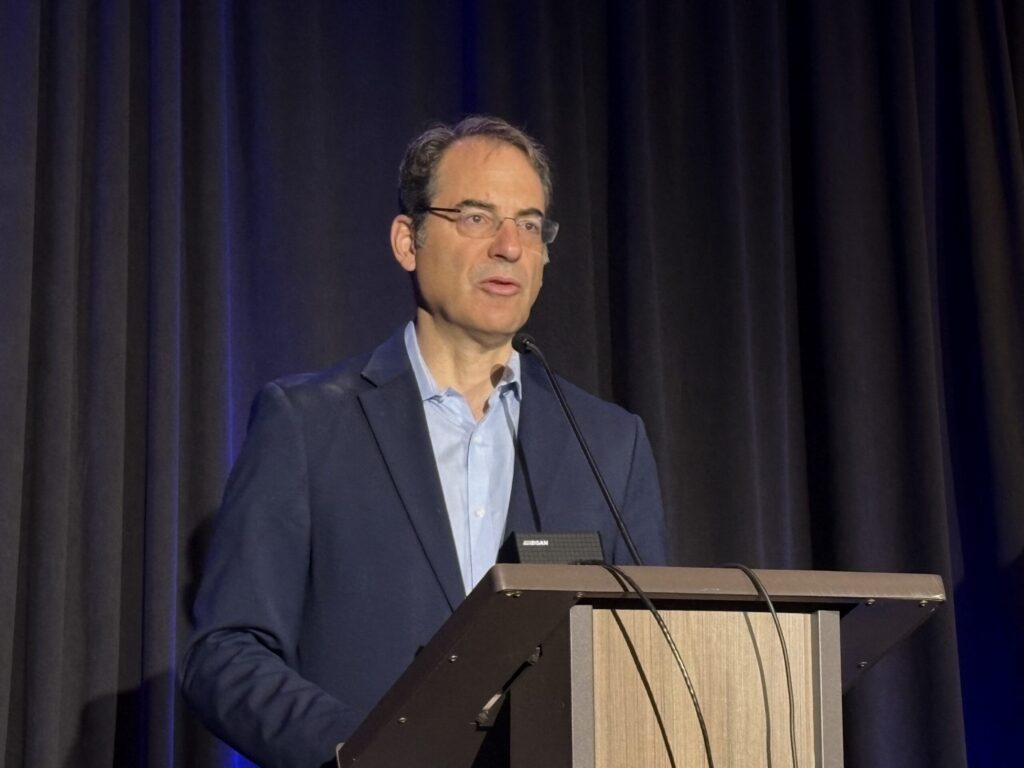
Democratic gubernatorial candidate Phil Weiser promises to appoint rural outreach director, water adviser
Marianne Goodland
marianne.goodland@coloradopolitics.com
Updated 3 days ago
Democratic gubernatorial candidate and current Attorney General Phil Weiser told the Colorado Water Congress Thursday he intends to appoint a rural outreach director and a water policy adviser should he win the election in November. Weiser’s speech at the Steamboat...
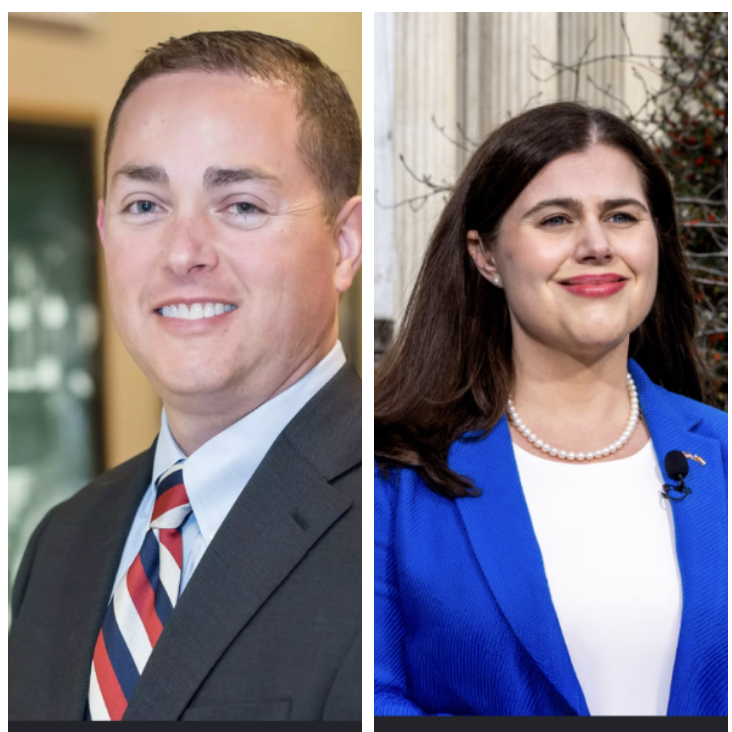
Attorney general candidates present priorities at Colorado Water Congress
Marianne Goodland
marianne.goodland@coloradopolitics.com
Updated 2 days ago
The two major-party candidates for attorney general — Republican Michael Allen, the district attorney for Teller and El Paso counties, and Democratic Secretary of State Jena Griswold — on Thursday outlined their priorities at the Colorado Water Congress. Griswold attended...
State money diversion scheme the unsurprising downfall of ERBOCES scam | Paula Noonan
Paula Noonan
paula-noonan@coloradopolitics.com
Updated 4 days ago
Falcon School District 49, aka El Paso County School District 49, has finally cut bait, thrown the fishing pole into the lake and sunk the canoe. The longtime enabler of the Education Reenvisioned BOCES’ (ERBOCES) schemes to fund private Christian...
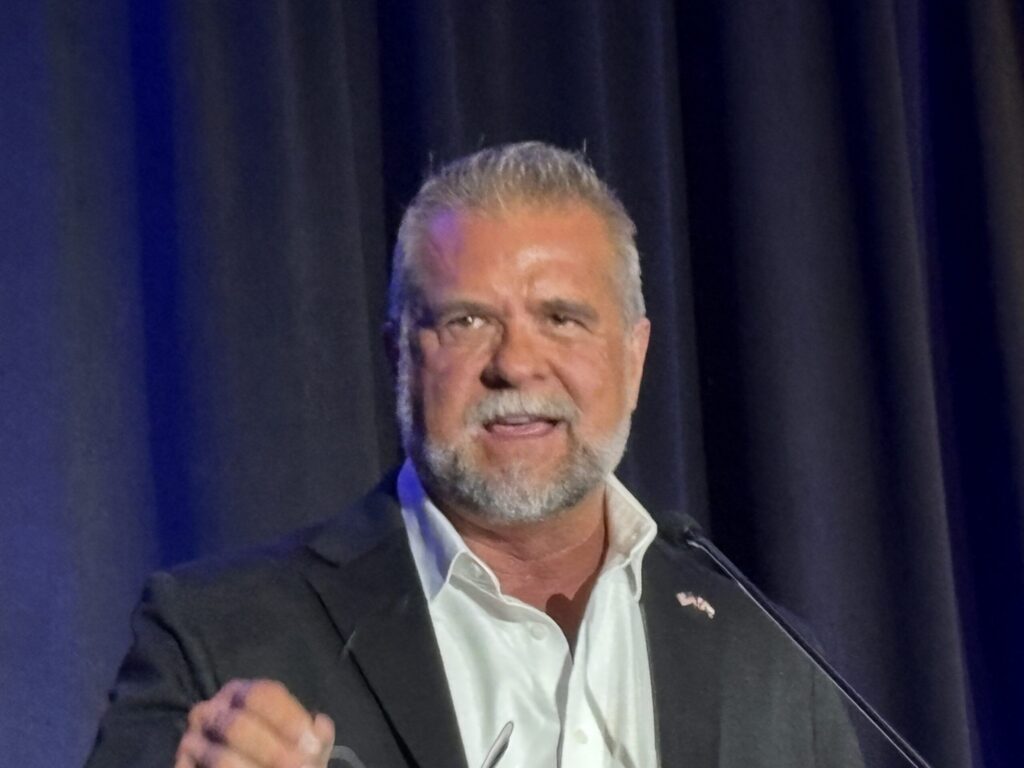
GOP gubernatorial candidate Victor Marx pushes aggressive water-storage expansion at Colorado Water Congress
Marianne Goodland
marianne.goodland@coloradopolitics.com
Updated 4 days ago
Victor Marx, the Republican nominee for governor, took the spotlight Wednesday during the opening day of the Colorado Water Congress, laying out how he says the state should approach its water future. Marx told the standing-room-only audience in Steamboat Springs...
PREV
PREVIOUS

Colorado lawmakers mull renaming César Chávez Day to Farm Workers Day
A Colorado House committee has voted to rename the March 31 state holiday from César Chávez Day to Farm Workers Day, following a national shift prompted by sexual abuse allegations against the labor leader. The State, Civic, Veterans, and Military Affairs Committee on Monday heard and passed House Bill 1339, sponsored by House Majority Leader […]

What exactly makes you a public figure? | Hal Bidlack
Well, once again, this non-lawyer columnist is going to jump in the deep end of legal scholarship and will explore a recent Colorado Court of Appeals decision. Buckle up. In yet another terrific Colorado Politics Court Crawl article, we learned about quite a few cases that the Appeals Court has ruled upon. Recall that only […]