

Colorado lawmakers pass bill negating road-funding ballot measure
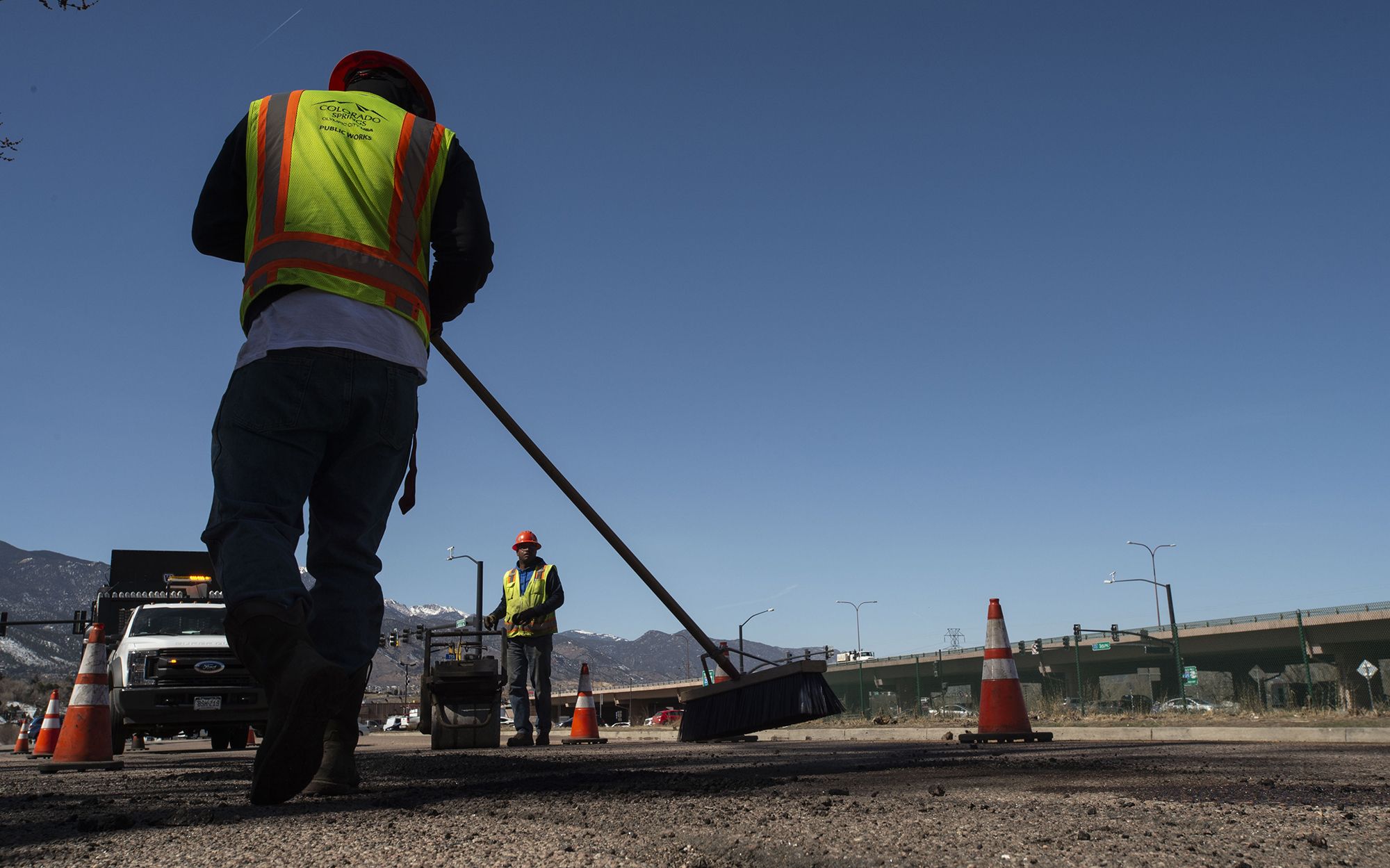
Colorado lawmakers on Wednesday approved a last‑minute amendment to a bill crafted to counter a ballot measure requiring that public funds collected for “road transportation” go to “road transportation,” setting up a high‑stakes clash over street funding and public services.
House Bill 1430 would only go into effect if Initiative No. 175 passes in November.
That initiative would require that transportation revenues be spent only on building and repairing roads and bridges, safety improvements, transportation planning and engineering, as well as on Colorado State Patrol operations.
About 67% of the revenue affected already comes from dollars dedicated to highways under the Highway Users Tax Fund.
To date, the initiative has gathered about 75% of the required signatures to qualify for the ballot.
House Bill 1430 — sponsored by Reps. Andrew Boesenecker, D-Fort Collins, and Emily Sirota, D-Denver, and Sens. William Lindstedt, D-Broomfield, and Judy Amabile, D-Boulder — would negate the initiative by reducing excise taxes on fuel, certain registration fees, and road usage fees from 2027 to 2030.
Backers of the initiative wondered about how much feedback sponsors sought, insinuating the House bill was crafted without input from the road construction industry. They also said it would counteract the will of the people.
Meanwhile, supporters of the legislation argued that Initiative No. 175 is too vague and could result in serious funding cuts to some of the state’s most critical services in order to cover infrastructure repair costs.
Lindstedt said he believes it is “the best option given the circumstances we’re under, to protect public services in this state.”
Lindstedt and Amabile introduced a third-reading amendment to the bill on Wednesday, the final day of the legislative session, which they say the backers of Initiative No. 175 support.
The amendment would establish an enterprise — a government-owned business — to hold the funds intended for road maintenance. Enterprises are exempt from the Taxpayer’s Bill of Rights revenue limits.
Lindstedt and Amabile called the amendment a “showing of good faith.”
Unpersuaded, Republicans contended the bill would override the will of the voters if they decided to pass 175.
“I think it will send a very bad message, not only about the lack of concern for the quality of the roads of this state, but it will also send a very bad message about this legislature’s view of the ability of the citizens of this state to make their views known on important issues and to vote on them,” said Sen. John Carson, R-Highlands Ranch. “Essentially, what this bill says is, ‘Have your vote, have your discussion, but it’s not gonna mean anything in the end.’”
Sen. Barbara Kirkmeyer, R-Brighton, noted that the amendment would reallocate about $7 million in existing fees to the new enterprise but it would not generate additional revenue to fix the state’s roads.
“Creating an enterprise, to me, is not the way to be going about this either, because that’s still going against the initiative that is out there and it’s still infringing, in my mind, on people’s First Amendment rights to petition their government,” she said.
The House bill’s sponsors estimated that Initiative No. 175 would divert more than $700 million in state funds from areas like K-12 and higher education, the Department of Motor Vehicles, and the Peace Officer Standards and Training cash fund solely to roads. They said it would also divert money away from other critical services, such as health care.
Boesenecker earlier argued the ballot measure’s language does not make clear that increasing road funding means taking funds from elsewhere.
“Nobody would argue that we need to better fund roads in our state,” he told Colorado Politics. “However, if you’re going to propose that the voters are being asked to do this for the price of nothing, of course, the voters are going to say yes.”
“But if you ask, ‘What if it may close the hospital?’ That’s a very big question,” Boesenecker said.
Backers of Initiative 175, including the Colorado Contractors Association, countered that the bill undermines the will of the voters, who, they said, have overwhelmingly expressed a desire for additional funding to maintain and improve roads.
Tony Milo, the group’s executive director, said the state’s crumbling roads are costing each Colorado driver more than $2,000 per year in time sitting in traffic and wear-and-tear on their cars.
A recent report by the Reason Foundation ranked Colorado’s highway system 42nd in the nation in terms of overall cost-effectiveness and condition. The state’s rural and urban interstate pavement conditions, meanwhile, ranked 46th and 45th in the U.S., respectively.
“If Colorado would just invest a small percentage of its budget annually to improve roads, it would save lives, improve congestion, create thousands of jobs, and save thousands of dollars of wear and tear on Coloradans’ cars,” Milo said.
Milo characterized the bill as the legislature’s attempt to circumvent the will of the voters before they’ve even had a chance to cast their ballots.
The measure passed on a 22-13 vote, with all Republicans and Democratic Sen. Dylan Roberts of Frisco voting against it.


Colorado Democrat John Hickenlooper lands support from trio of local labor unions
Ernest Luning
ernest.luning@coloradopolitics.com
Updated 48 minutes ago
Three local labor unions endorsed U.S. Sen. John Hickenlooper’s bid for reelection this week, calling the Colorado Democrat a proven champion of the state’s workers and their rights. Hickenlooper’s campaign announced endorsements on Tuesday from SMART Sheet Metal Workers Local...
Colorado Democrats tout 2026 session wins as Republicans criticize budget choices
Marissa Ventrelli
marissa.ventrelli@coloradopolitics.com
Updated 1 hour ago
Colorado lawmakers wrapped up the 2026 legislative session on Wednesday with Democrats highlighting policy wins on affordability, health care, and public safety, while Republicans argued that the majority’s budget decisions worsened the state’s financial and business climate. Lawmakers passed about...
Legislative wrap-up: Lawmakers pass 120 bills in 2026 session
Marissa Ventrelli
marissa.ventrelli@coloradopolitics.com
Updated 2 hours ago
The 2026 legislative session wrapped with lawmakers approving roughly 120 bills, though how many will ultimately be signed by Gov. Jared Polis remains uncertain. Beyond high‑profile debates over artificial intelligence policy and the state budget, legislators advanced major measures on...
Colorado legislators pass bill that sponsors say would strengthen sex crime victim protections
Jenny Deam
jenny.deam@gazette.com
Updated 29 minutes ago
A Colorado bill that supporters say would strengthen victim protections and mandate law enforcement training on how trauma can affect survivors of sex crimes and domestic violence is on its way to Gov. Jared Polis’ desk for signing. Senate Bill...

Which Colorado candidate for governor will commit to the ‘public’ in public education? | Paula Noonan
Paula Noonan
paula-noonan@coloradopolitics.com
Updated 23 hours ago
The General Assembly finished its work with a flurry, not a whimper. The Joint Budget Committee (JBC) managed to outplay Gov. Jared Polis with its final amendments to the School Finance Act. Polis is all in on “innovation” with public...

As the AI age evolves, Colorado must step up to protect our kids | GUEST COLUMN
Colorado Politics
colorado-politics@coloradopolitics.com
Updated 24 hours ago
By Ann O’Leary Artificial intelligence is creating new opportunities for young people to learn, create, explore and build confidence. It is opening new doors for students in Denver, on the eastern plains and on the western slope. But as our...

Strengthening Colorado’s mental-health workforce | GUEST COLUMN
Colorado Politics
colorado-politics@coloradopolitics.com
Updated 6 hours ago
By Kyle Brown and Lindsay Gilchrist More than 1.2 million Coloradans live with a diagnosed mental health condition, and in 2023, one in five people seeking care were unable to get the treatment they needed. Overwhelmingly, insurance delays and inadequate...

Colorado legislature wraps up tough budget year
Thelma Grimes
thelma.grimes@coloradopolitics.com
Updated 23 hours ago
Colorado lawmakers are wrapping up their work on Wednesday, closing out a year defined by the lack of fiscal flexibility, woes over Medicaid spending and a staccato of action on a host of issues, ranging from artificial regulation to a...

AI’s rapid growth spurs regulatory reaction in Colorado
Marissa Ventrelli
marissa.ventrelli@coloradopolitics.com
Updated 55 minutes ago
The 2026 legislative session was marked by a major push to regulate artificial intelligence, a technology advancing at breakneck speed. Colorado is at the forefront of AI policy, becoming the first state to pursue regulation on “algorithmic discrimination” by passing...

Bill on firearm barrel sales withdrawn after veto threat from Colorado governor
Marissa Ventrelli
marissa.ventrelli@coloradopolitics.com
Updated 1 day ago
A bill that would require firearm barrels to be sold in person by a federally licensed firearms dealer was pulled by its sponsors, who said they were all but told that Gov. Jared Polis would veto the measure. Sponsored by...
PREV
PREVIOUS

Which Colorado candidate for governor will commit to the 'public' in public education? | Paula Noonan
The General Assembly finished its work with a flurry, not a whimper. The Joint Budget Committee (JBC) managed to outplay Gov. Jared Polis with its final amendments to the School Finance Act. Polis is all in on “innovation” with public school money, even if innovation includes jiu-jitsu lessons for private school students. He didn’t want […]

Colorado legislators pass bill that sponsors say would strengthen sex crime victim protections
A Colorado bill that supporters say would strengthen victim protections and mandate law enforcement training on how trauma can affect survivors of sex crimes and domestic violence is on its way to Gov. Jared Polis’ desk for signing. Senate Bill 26-095 recently passed unanimously in the Senate and was mostly unopposed in the House, where […]