

Colorado justices weigh fairness concerns after defendant prevailed despite ghosting case
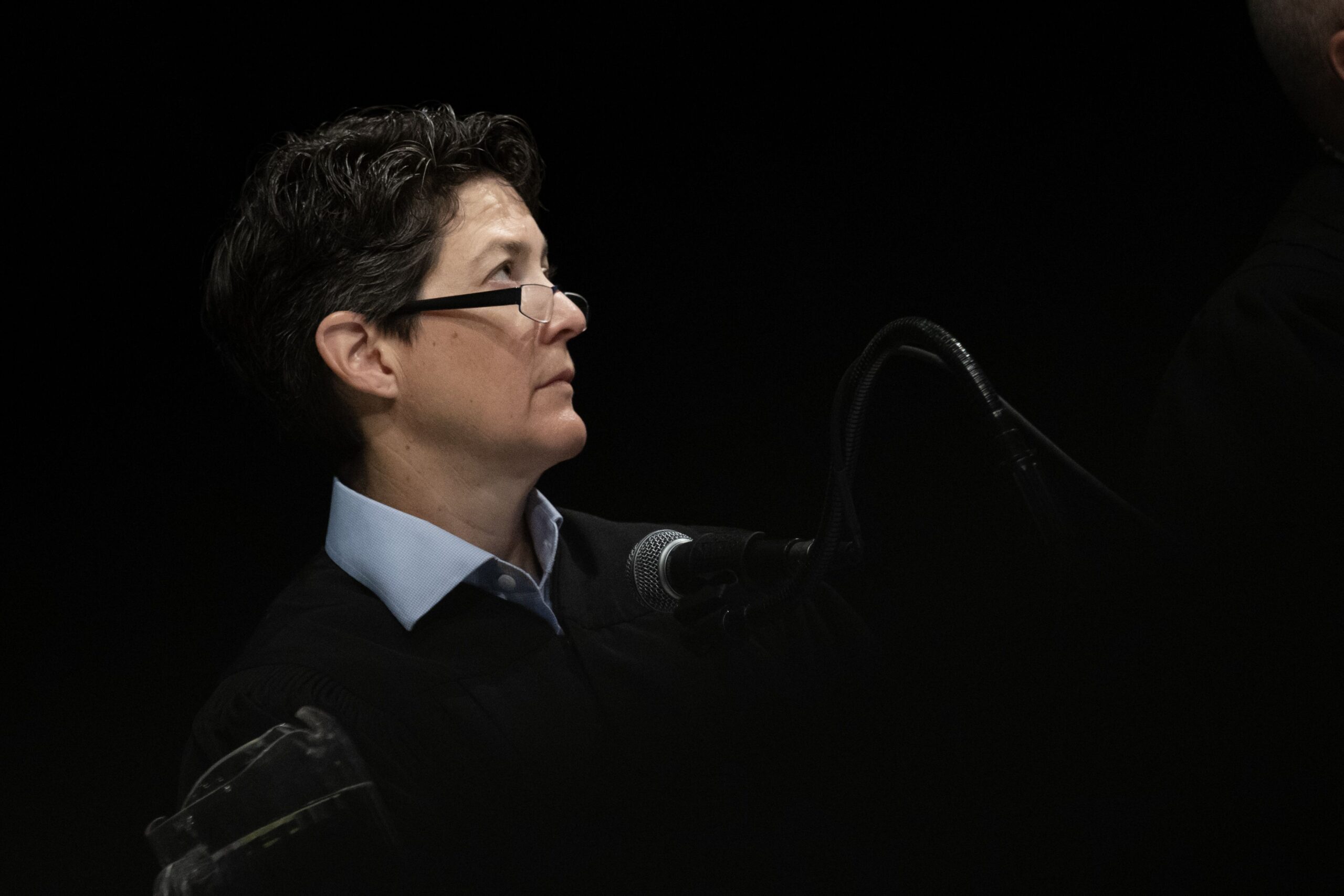
Members of the Colorado Supreme Court struggled on Tuesday to balance the need for one defendant to shield itself against a plaintiff’s claim that its employee sexually assaulted her child, and the fact that the employee legally admitted the allegations against him by failing to participate in nearly all of the civil case.
A plaintiff identified as J.B. filed suit against Metro Taxi on behalf of her child, E.B., who is a disabled adult. J.B. alleged taxi driver Jesus Ortiz sexually assaulted E.B. while driving her to her day program. Prosecutors criminally charged Ortiz and a jury acquitted him.
Ortiz did not respond to the civil lawsuit, where he was also a defendant, and the clerk entered a default against him. Legally, the default established Ortiz’s liability.
However, at the trial against Metro Taxi, the judge allowed Ortiz to testify. He maintained he did not assault E.B. Although jurors were told the default meant Ortiz had admitted to the allegations, the jury found in Metro Taxi’s favor, that Ortiz did not assault E.B., and that E.B. did not suffer damages. A judge then overturned the default judgment and, later, the case resolved in Ortiz’s favor.
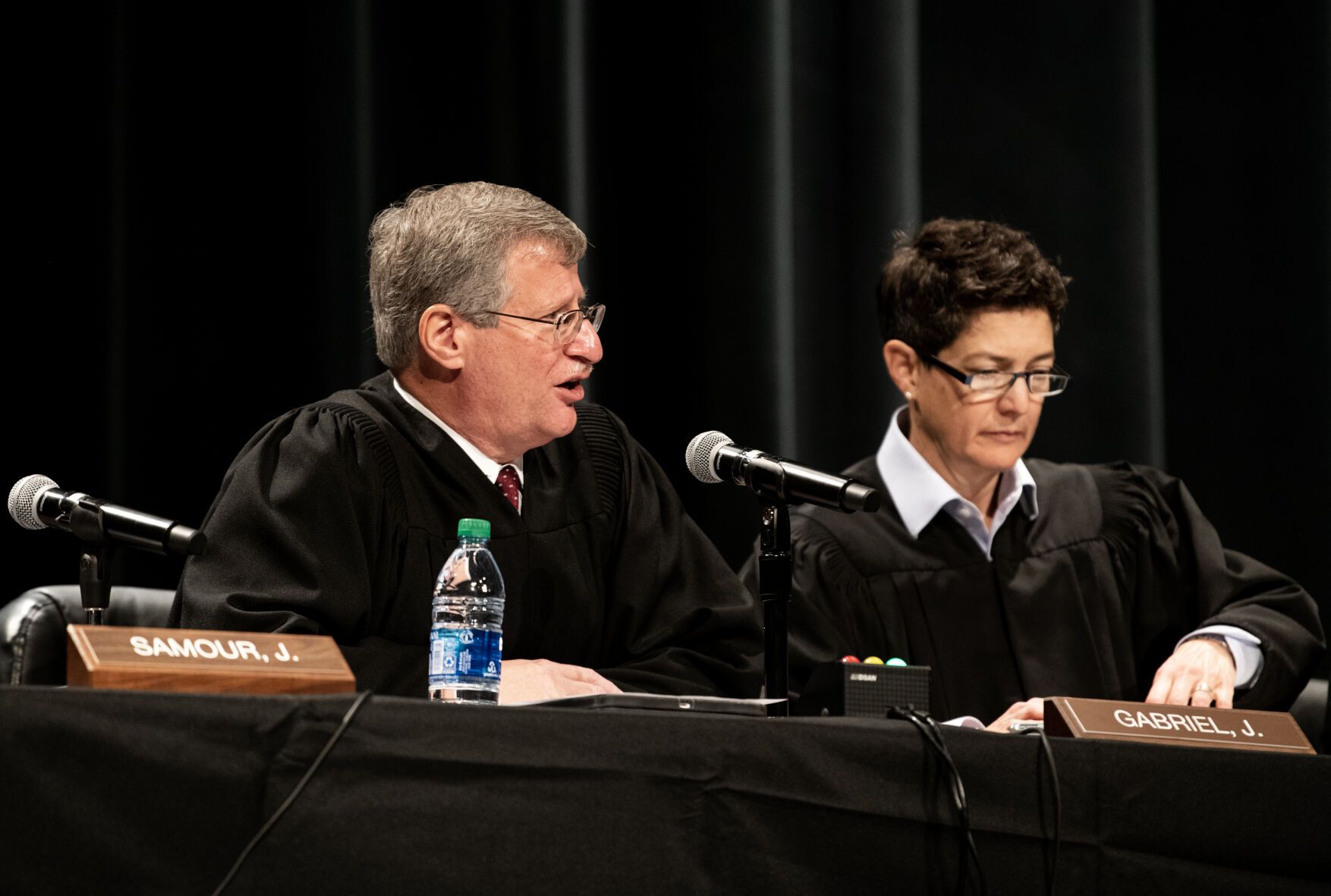
“This case has caused me to think about what is fair. Because there’s fairness to your client,” Chief Justice Monica M. Márquez told Metro Taxi’s attorney during oral arguments. “There’s fairness to Mr. Ortiz. There’s fairness to the plaintiff. I understand that for your client’s purposes, the fact that the key witness here had defaulted ought not to somehow prejudice your ability to put on your defense.”
Yet, Ortiz “was allowed to essentially capitalize on that testimony and the jury verdict that resulted from it,” she continued.
“How is it that Mr. Ortiz can get the benefit of this verdict when the jury’s told repeatedly that this was not a trial about him?” added Justice Richard L. Gabriel.
Previously, the Court of Appeals addressed whether it was proper for Ortiz to testify at the trial against Metro Taxi, whether a judge could overturn the default judgment following the verdict, and whether Ortiz could ultimately prevail despite his default.
By 2-1, a three-judge appellate panel upheld the outcome.
Judge Lino S. Lipinsky de Orlov noted that Metro Taxi “followed the rules” and deserved to present evidence from a key witness — Ortiz.
“J.B. had a full opportunity to litigate the most fundamental fact underlying J.B.’s claim against Ortiz — whether Ortiz sexually assaulted E.B.” wrote Lipinsky for himself and Judge Rebecca R. Freyre. “After hearing J.B.’s evidence, the jury rejected the evidence supporting her assertion that E.B. was sexually assaulted.”
Judge Timothy J. Schutz dissented, arguing the central problem was that jurors were told Ortiz’s default meant he admitted the allegations, and the trial judge still asked them to decide whether Ortiz committed an assault.
“Yet, the court gave the jury no guidance on how it was to resolve this inconsistency,” Schutz wrote. The result was “a profound reward: a judgment entered in Ortiz’s favor without ever having to face a trial on the merits of E.B.’s claims against him.”

On appeal to the Supreme Court, J.B.’s attorney argued that she did everything right, and the law imposes a consequence for Ortiz’s failure to participate.
But Metro Taxi also followed the rules, interjected Gabriel.
“Help me understand how it could be that we could prevent a non-defaulting defendant from putting on their best defense,” he said.
“Isn’t your objection more precisely the fact that Mr. Ortiz was allowed to testify the way he did?” asked Justice Carlos A. Samour Jr.
“Yes. I think, fundamentally, a defaulting defendant shouldn’t be able to come in and testify contrary to their default,” said attorney D. Dean Batchelder for J.B.
“So, the evidence (of no assault) can come in, but not through Mr. Ortiz?” asked Justice Maria E. Berkenkotter.
In response to questioning, Batchelder acknowledged Ortiz had actually appeared at the first trial, which resulted in a mistrial because Ortiz improperly spoke to jurors. J.B.’s attorneys did not try to take Ortiz’s deposition before the second trial months later.
But “what’s the incentive for that if default has entered and the plaintiffs are preparing for trial and thinking only about Metro’s liability, not anticipating that they will have to litigate a case against Mr. Ortiz?” wondered Márquez.
“With all due respect to the chief justice’s concerns about fairness, this is how it goes in court after court around the country,” said attorney Keith Bradley, representing Ortiz. “That’s the normal way.”
Leaving the default judgment intact against Ortiz would contradict the jury’s findings of no assault, he added.
“What would be your response if the jury had come back with a large verdict for $1 million against Metro Taxi?” asked Justice Brian D. Boatright. “It feels like the rule should be the same whether it’s a large verdict or a zero. You’re trying to say he gets the advantage of the trial because it worked out well.”
The case is J.B. v. MKBS, LLC et al.

Federal judge to consider sanctioning ex-Colorado judicial discipline director
Michael Karlik
michael.karlik@coloradopolitics.com
Updated 3 hours ago
A federal judge ordered Colorado’s former head of judicial discipline on Wednesday to explain why she should not sanction him for making inaccurate statements about the defendants in his lawsuit against the Colorado Supreme Court and related entities. U.S. District...

Federal judge green-lights trial against Denver officer over race-based enforcement
Michael Karlik
michael.karlik@coloradopolitics.com
Updated 24 hours ago
A federal judge green-lit a jury trial last week on a man’s claim that a Denver police officer engaged in racially selective enforcement of the law by arresting him for video recording at a police station, while not arresting a...

Federal judge says 8 years in solitary confinement not grounds to reduce man’s sentence
Michael Karlik
michael.karlik@coloradopolitics.com
Updated 24 hours ago
A federal judge concluded earlier this month that a man’s eight years allegedly spent in solitary confinement did not justify granting his request for a sentence reduction. However, U.S. District Court Senior Judge William J. Martínez signaled his willingness to...

10th Circuit rejects ‘potential for violence’ when police arrest vehicle occupant’s romantic partner
Michael Karlik
michael.karlik@coloradopolitics.com
Updated 1 day ago
The Denver-based federal appeals court rejected the idea on Tuesday that a vehicle occupant poses a danger to police solely because they are romantically involved with another occupant who officers are arresting. By 2-1, a three-judge panel of the U.S....

Colorado justices grill debt collector about compliance with law
Michael Karlik
michael.karlik@coloradopolitics.com
Updated 21 hours ago
The Colorado Supreme Court repeatedly pressed a debt collection company last week to explain how its lawsuit against a Boulder woman for an unpaid credit card balance complied with the specific requirements that state lawmakers have created. Portfolio Recovery Associates,...
Appeals court agrees defendant’s speech constitutionally protected against El Paso County judge
Michael Karlik
michael.karlik@coloradopolitics.com
Updated 1 day ago
Colorado’s second-highest court agreed last week that a defendant’s critical statements toward an El Paso County judge were constitutionally protected and could not form the basis of a retaliation charge. A three-judge Court of Appeals panel concluded that, in context,...
Colorado justices, 4-3, order new murder trial due to wrongfully excluded evidence
Michael Karlik
michael.karlik@coloradopolitics.com
Updated 2 days ago
The Colorado Supreme Court agreed on Monday that a trial judge incorrectly faulted a defendant for refusing to cooperate in a mental health examination, even though the state’s hospital was the entity that botched its responsibility to evaluate her during...

Overdose deaths from opioids dip in America — but not in Colorado, study says
Jacob Mauk
jacob.mauk@denvergazette.com
Updated 2 days ago
Overdose deaths from opioids rose in Colorado, diverging from the national trend, which has been decreasing, according to a new study from a think tank. In its new report, the Common Sense Institute said synthetic opioid overdose deaths in Colorado...
Error-prone Douglas County judge triggers another reversal of criminal convictions
Michael Karlik
michael.karlik@coloradopolitics.com
Updated 2 days ago
Colorado’s second-highest court overturned a defendant’s Douglas County convictions on Thursday due to the error of a judge whose actions have triggered a disproportionate number of reversals to convictions and sentences in recent years. Since 2021, the Court of Appeals...

Federal judge formalizes injunction blocking USDA’s ‘pilot project’ for Colorado food assistance
Michael Karlik
michael.karlik@coloradopolitics.com
Updated 1 day ago
A federal judge formalized his order on Monday to prevent the U.S. Department of Agriculture from requiring Colorado to participate in a food assistance “pilot project,” finding that it violates the law, the U.S. Constitution, and “the bounds of reasoned...
PREV
PREVIOUS
House Ethics Committee to begin hearing on Weinberg complaint
The House Ethics Committee on Tuesday will begin a hearing requested by Rep. Ron Weinberg, R-Loveland, tied to an ethics complaint filed against him by Rep. Brandi Bradley, R-Roxborough Park. The ethics committee had found probable cause on two issues contained in the Bradley complaint: inappropriate comments made to female lawmakers, in two separate incidents; […]

Boebert challenger Eileen Laubacher joins lawsuit aimed at blocking her from Democratic assembly
A Denver District Court judge on Thursday permitted Democratic congressional candidate Eileen Laubacher to join a lawsuit filed by one of her primary opponents seeking to prevent Laubacher from participating in the party’s assembly process in a bid to qualify for Colorado’s primary ballot. Laubacher is one of four Democrats running for the nomination to […]