

10th Circuit distances itself from prior decision making it easier to toss prisoner lawsuits

The Denver-based federal appeals court distanced itself March 4 from its own recent decision that made it easier for prison officials to end civil lawsuits by transferring incarcerated plaintiffs between facilities.
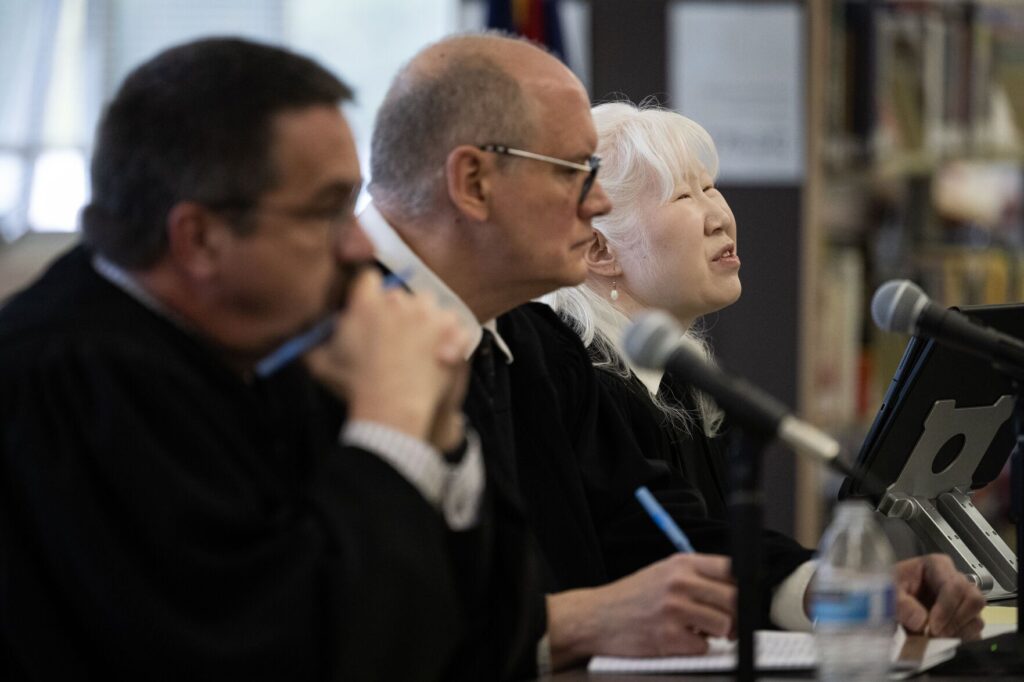
A three-judge panel of the U.S. Court of Appeals for the 10th Circuit agreed that Gov. Jared Polis could be sued over state prison policies that allegedly infringed upon a Native American man’s religious exercise. However, the panel also addressed why it was allowing Rodney Douglas Eaves’ claims to proceed after his prison transfer, despite the 10th Circuit having thrown out a highly similar lawsuit almost exactly two years earlier.
Eaves’ sworn statement to the 10th Circuit “tells us his conditions of confinement at the (Sterling Correctional Facility) are substantially the same as they were at the (Bent County Correctional Facility),” wrote Senior Judge Bobby R. Baldock in the March 4 opinion. “Because Defendant Governor has submitted nothing to contradict this view, the record points in only one direction … (Colorado) continues to subject Plaintiff post transfer to at least some of the allegedly unlawful conditions of confinement from which he seeks relief.”
Case: Eaves v. Polis
Decided: March 4, 2026
Jurisdiction: U.S. District Court for Colorado
Ruling: 3-0
Judges: Bobby R. Baldock (author)
Robert E. Bacharach
Joel M. Carson III
In describing the circumstances under which a plaintiff’s transfer to a new prison enables a lawsuit to continue, Baldock indicated Eaves’ case was different from the March 2024 decision of Bacote v. Federal Bureau of Prisons. In contrast to Eaves, wrote Baldock, plaintiff Michael Bacote Jr.’s case involved “uncertainty surrounding plaintiff’s new conditions of confinement” after his transfer.
However, the narratives offered by both Eaves and Bacote of their post-transfer conditions communicated an almost identical message: Prison officials continued to violate their rights at the new facility as they had at the original facility. The 10th Circuit chose to accept Eaves’ description while casting aside Bacote’s, for reasons that were not entirely clear.
Bacote, who has an intellectual disability and a history of mental illness, spent seven years litigating claims that the Federal Bureau of Prisons violated his constitutional rights. Specifically, he alleged his “extreme isolation” at the highly secure U.S. Penitentiary, Administrative Maximum Facility in Florence (ADX) amounted to cruel and unusual punishment, given his mental condition.
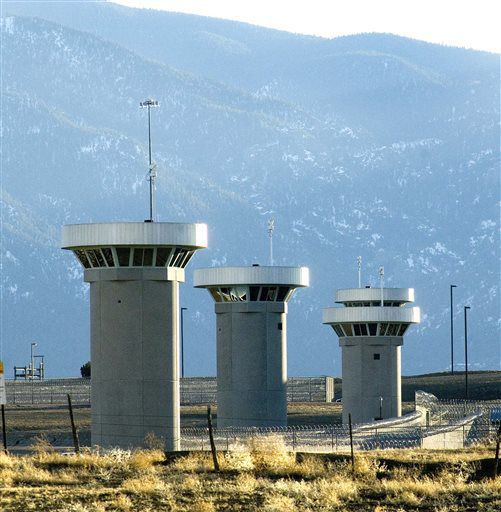
During the litigation, the Bureau of Prisons transferred Bacote from ADX to Allenwood Penitentiary in Pennsylvania. The 10th Circuit cited the transfer as grounds to dismiss Bacote’s case, with his only option being to file a new lawsuit in the district where he now resided.
Although Bacote’s lawyers submitted a statement from Bacote on appeal describing the conditions at Allenwood, the 10th Circuit panel refused to consider it.
“Plaintiff asks us to issue judgment without any information about his current conditions of confinement,” wrote Judge Joel M. Carson III. “From what conditions would our judgment provide Plaintiff relief? Which qualities of Plaintiff’s current incapacitation should we hold improper? We do not know the answers to these questions because Plaintiff has not provided them in a complaint.”
Carson, who also sat on the panel that decided Eaves’ appeal, acknowledged that the 10th Circuit’s opinion could create a blueprint for prison officials to transfer plaintiffs intentionally as a means of ending constitutional rights lawsuits. But he believed that would be a “misinterpretation” of the ruling and declined to address that scenario.
Days before the decision in Bacote’s case, the Colorado Attorney General’s Office filed its appeal on behalf of Polis in Eaves’ lawsuit. Previously, then-U.S. Magistrate Judge Kristen L. Mix allowed some of Eaves’ religious exercise claims to proceed against the governor and other defendants who allegedly prevented Eaves from carrying out the key components of his Sac and Fox tribal faith.
Among other things, Mix concluded Polis was not immune from being sued because he possessed “the requisite connection” to the prison policies that allegedly violated Eaves’ rights.
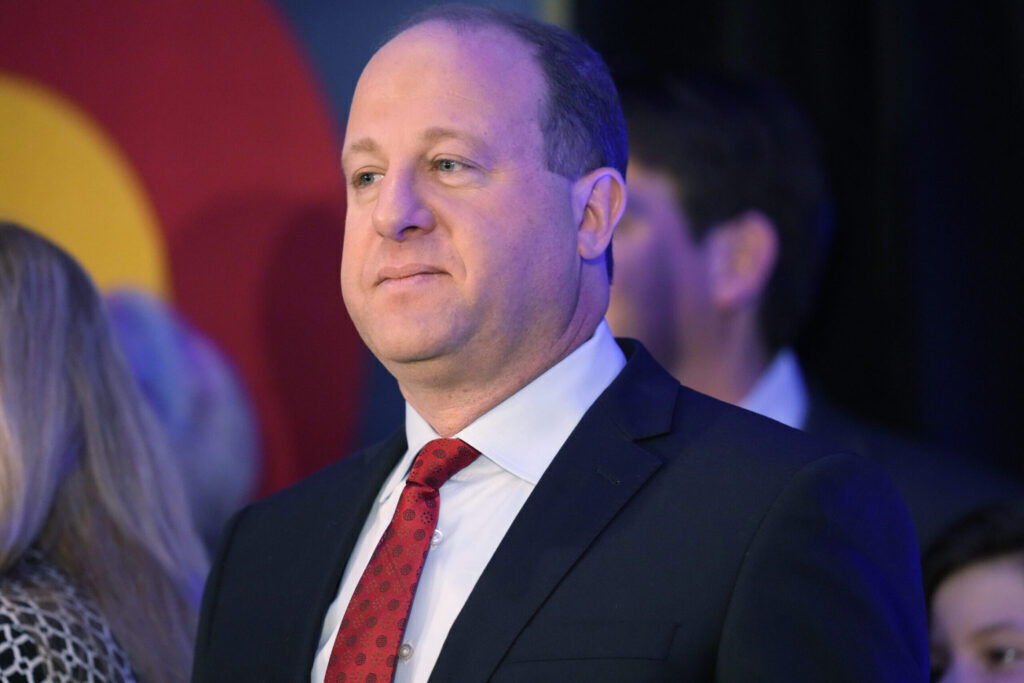
Polis appealed to the 10th Circuit. However, less than one day before the November 2024 oral arguments, First Assistant Attorney General LeeAnn Morrill notified the appellate panel that Eaves’ case may be moot. She explained that Eaves was no longer at the Bent County Correctional Facility and had been moved more than one year prior to the Sterling Correctional Facility.
The judges addressed the last-minute revelation during the arguments.
“It really irritates me to prepare for this case and last night, or this morning, we get a notice that we might be arguing about a completely different case,” said Baldock.
“I share this court’s irritation, to be perfectly clear, with Mr. Eaves for failing to bring the fact of his custody to this court’s attention,” responded Morrill. “And I think the governor’s lack of awareness further illustrates the fact that he is not involved in the day-to-day operations of any prison in Colorado.”
Judge Robert E. Bacharach, on the other hand, did not believe the transfer doomed Eaves’ case.
“You’re telling us, let’s say the night before oral argument, that months ago, August, he was transferred to Sterling and that we should assume that his religious rights as a member of the Sac and Fox Tribe might be being honored at Sterling,” he said. “You’re not telling us they are. You’re not telling us one way or the other.”
The panel then directed Eaves and the state to submit additional arguments about the effect of the transfer. Eaves’ lawyers argued his case was unlike Bacote’s because there was no “dearth of information” about his current conditions of confinement.
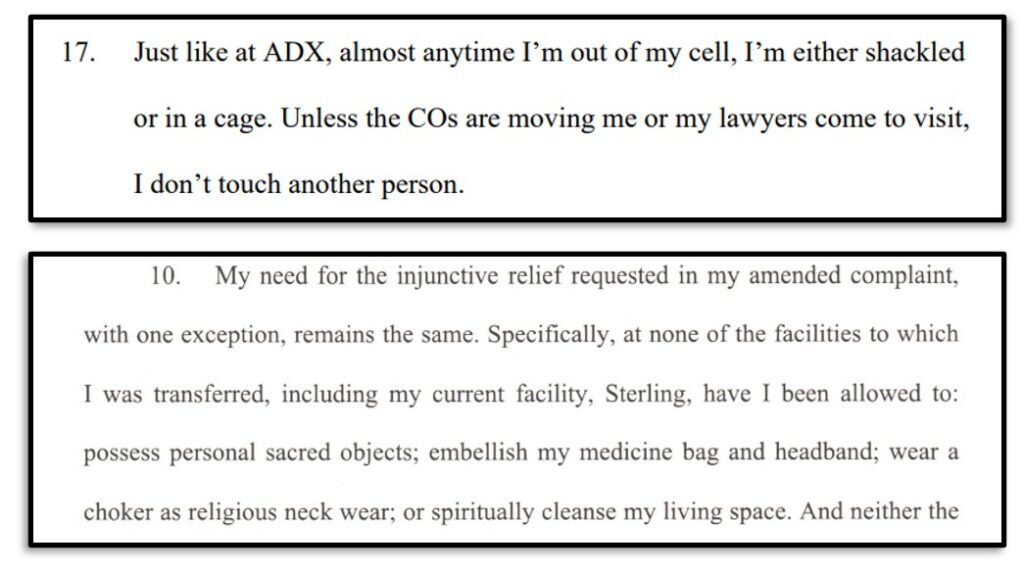
They attached a statement from Eaves, who explained that he largely experienced the same deprivations of his religious exercise at Sterling as he had at his original facility.
However, many of Eaves’ descriptions were as detailed as Bacote’s were in his own case. For example:
- Bacote said prison officials were denying him access to the grievance process at his new facility, “just like at ADX”
- “Like at ADX, I’m still in solitary confinement,” Bacote added
- Eaves said his need for court intervention “remains the same” because his current facility was still largely denying him access to sacred objects and access to the physical “faith grounds”
- Access to the grounds “is sporadic and there has been no development of a plan to allow me access to the faith grounds at least once a week,” Eaves said
Although the 10th Circuit disregarded Bacote’s descriptions and concluded it was “without any information about his current conditions of confinement,” Eaves’ panel accepted his statement and believed it suggested a continuing violation of his rights.
“The present appeal is readily distinguishable from Bacote because here Plaintiff’s post-judgment affidavit indicates ‘a cognizable danger of recurrent violation exists beyond a mere possibility’,” wrote Baldock.
Student attorneys with the University of Denver’s Civil Rights Clinic, who represented Bacote and who continue to work on his case, said they were frustrated with the 10th Circuit’s “factual misunderstandings” of their client’s circumstances. They added that Bacote has yet to receive the disability accommodations he sought through his lawsuit.
“There are remarkable similarities in the two declarations, but, unfortunately, the panel that issued the Bacote decision refused to allow Mr. Bacote to supplement the record with the facts about his current confinement conditions. In contrast, the Eaves panel clearly accepted and considered the additional factual averments Mr. Eaves offered,” said Chloe Peters. “While we ultimately cannot know why the two different panels reached such different results in the two cases, we are glad that the court distinguished Mr. Bacote’s case to reach the correct result for Mr. Eaves.”
Lawyers for Eaves did not respond to a request for comment.
The case is Eaves v. Polis et al.


Colorado’s chief federal judge breaks with colleagues on issue of mandatory immigration detention
Michael Karlik
michael.karlik@coloradopolitics.com
Updated 1 hour ago
Chief Judge Daniel D. Domenico broke with his peers on Colorado’s U.S. District Court last week in siding with the government’s argument about the broad scope of its immigration detention authority. In an April 15 order finding that a man...

Colorado Democratic bill would allow lawsuits against federal officials, drawing warnings from local critics
Marissa Ventrelli
marissa.ventrelli@coloradopolitics.com
Updated 1 hour ago
Colorado Democrats are considering a bill that would let people sue federal, state, and local officials for alleged constitutional violations — a change supporters say would check government power, while critics warn it could trigger a surge of lawsuits against...

10th Circuit agrees Frontier must pay TSA for security fees
Michael Karlik
michael.karlik@coloradopolitics.com
Updated 24 minutes ago
Frontier Airlines must pay nearly $5.4 million to the Transportation Security Administration after it improperly held onto security-related fees paid by certain customers, the federal appeals court in Denver ruled on Monday. The TSA argued that federal law and regulations...
Appeals court upholds convictions despite juror’s dishonesty about criminal history
Michael Karlik
michael.karlik@coloradopolitics.com
Updated 8 hours ago
Colorado’s second-highest court declined to order a new trial last week for a Boulder County defendant, despite a juror’s concealment of his own prior conviction until after the verdict. A jury found Kasey James Arrington guilty of kidnapping and sex-related...
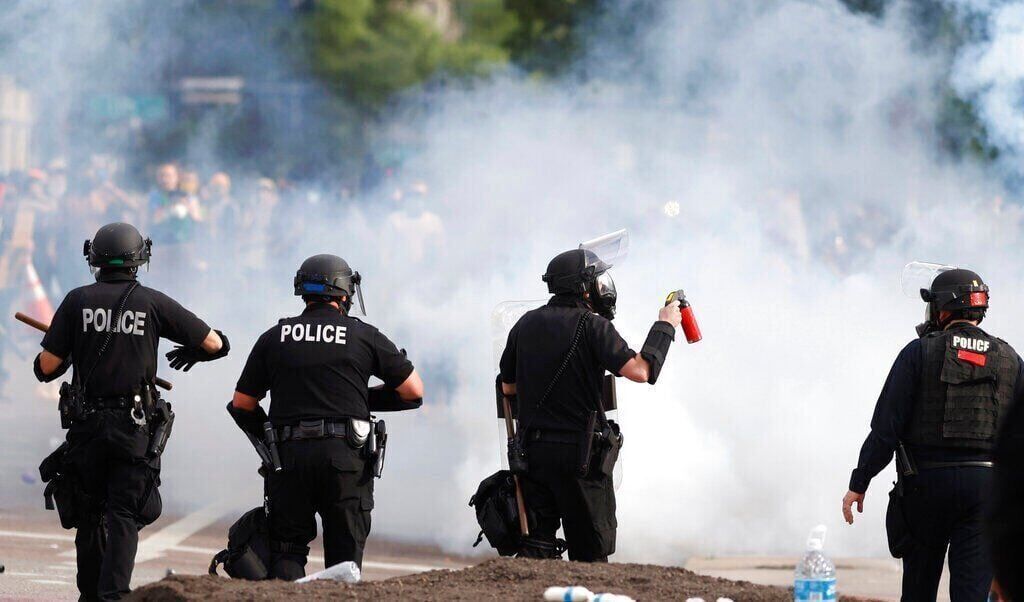
10th Circuit upholds verdict against Denver, officer for protest-related violations
Michael Karlik
michael.karlik@coloradopolitics.com
Updated 4 hours ago
The Colorado-based federal appeals court on Tuesday turned aside multiple challenges to a 2022 jury verdict that found Denver and one of its officers violated the constitutional rights of protesters and were liable for $14 million. In the first of...
Divided 10th Circuit takes no issue with surprise police encounter with suspect
Michael Karlik
michael.karlik@coloradopolitics.com
Updated 22 hours ago
Police officers who unexpectedly encountered a Durango-area man while they were preparing to search his nearby home did not commit a constitutional violation by seizing his phone during the ensuing traffic stop, the Denver-based federal appeals court ruled last week....

10th Circuit rules State Farm not required to pay benefits in I‑25 swerving crash
Michael Karlik
michael.karlik@coloradopolitics.com
Updated 1 day ago
The Denver-based federal appeals court concluded last week that two vehicle occupants who were injured while swerving to avoid a man in the middle of Interstate 25 are not entitled to insurance benefits. Plaintiffs Stephanie Mazur and Julia Wunder were...
U.S. Supreme Court will hear challenge from Colorado Catholic preschools on state funding exclusion
Lindsay Whitehurst
lindsay.whitehurst@associatedpress.com
Updated 2 days ago
WASHINGTON (AP) — The Supreme Court will hear from Catholic preschools that say Colorado violated their religious rights by excluding them from a state-funded “universal” pre-kindergarten program over their admission policies. The court agreed on Monday to take up the...
DougCo commissioners challenging open meetings violation
Nicholas Fogleman
nicholas.fogleman@denvergazette.com
Updated 2 days ago
The Douglas County Board of Commissioners is challenging a recent court decision that found the board violated Colorado Open Meetings Law. County commissioners filed a petition Thursday seeking a rehearing from the Colorado Court of Appeals. On April 2, the...
Colorado justices, lawyers speak with rural students through outreach program
Michael Karlik
michael.karlik@coloradopolitics.com
Updated 4 days ago
Members of the Colorado Supreme Court appeared before students from eight rural schools on Thursday to hear a pair of cases, field questions, and mark the first time the state’s newest justice participated in the long-running program. “I had such...
PREV
PREVIOUS

Democrat Dwayne Romero jumps in primary to challenge Republican Jeff Hurd in Colorado’s 3rd CD
The Democrat who has been running for nearly a year to unseat Republican U.S. Rep. Jeff Hurd in Colorado’s 3rd Congressional District got some company in the primary this week. Dwayne Romero, a Snowmass Village business owner and decorated Army combat veteran, announced his candidacy on Tuesday, the same day precinct caucuses kicked off the […]

Colorado Democrats, Republicans fight over ballot fiscal information
Republicans and Democrats clashed anew over legislation that would require identifying which programs would see a funding reduction if a ballot measure passed, with the former saying it’s yet another way for the government to control the campaign narrative and the latter insisting it provides transparency to voters. House Bill 1084, sponsored by Denver Democratic […]