

Appeals court finds state wrongly blocked ex-worker’s evidence in termination challenge
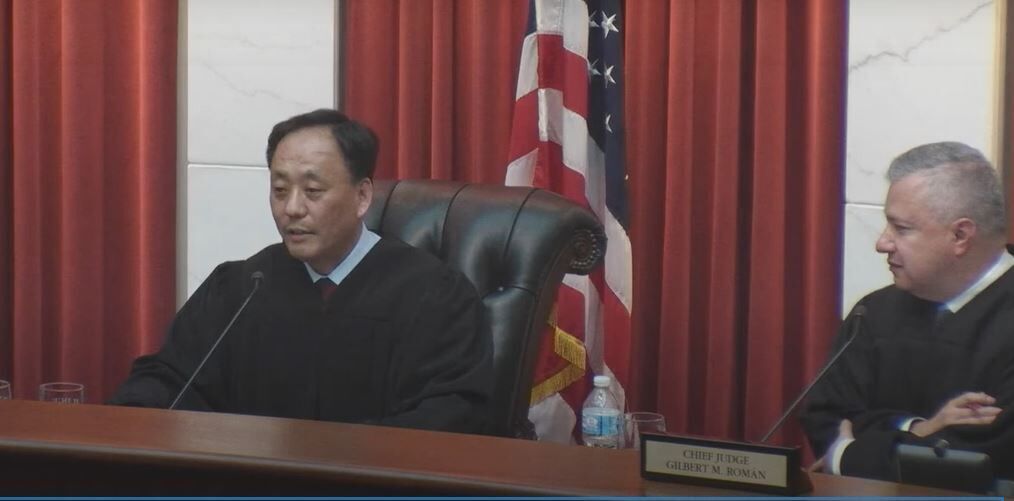
Colorado’s second-highest court ruled last week that the Colorado State Personnel Board wrongly blocked a former employee from submitting documentation to challenge his termination, even though he followed the board’s instructions to obtain the materials.
Eric Strumpf was the budget and business operations director for the Colorado Department of Corrections. He requested emergency sick leave in November 2023 and used various leave programs to extend his absence until May 2024. At that point, the department terminated his employment.
Strumpf appealed his discharge, arguing that the government terminated him in violation of the Americans with Disabilities Act because it did not engage in the requirement to provide reasonable accommodations. An administrative law judge held a two-day evidentiary hearing and ultimately ruled in favor of Strumpf’s employer.
Strumpf then turned to the State Personnel Board. The notice issued to Strumpf indicated he would be “responsible for having the transcript prepared” if he wished. To create a transcript of the evidentiary hearing, it “must be prepared by a disinterested, recognized transcriber.”
In response to an email from Strumpf asking for clarification, a board employee told Strumpf he “may use a certified transcription service of your choice.”
Strumpf paid a company to create a transcript of the administrative law judge’s proceedings, but the corrections department moved to block it because it was not prepared by a court reporter. The State Personnel Board agreed and issued a decision upholding the administrative law judge’s ruling, based on the written arguments and the original decision.
Representing himself before the Court of Appeals, Strumpf argued he followed instructions, only for the personnel board to adopt an overly restrictive interpretation of the transcription requirement.
In response, the personnel board pointed to its rules requiring a “neutral and certified court reporter” to prepare transcripts.
“The Board had an established rule; Mr. Strumpf had a full and fair opportunity to comply with the rule; and Mr. Strumpf failed to do so,” wrote the Colorado Attorney General’s Office.
Case: Strumpf v. Department of Corrections
Decided: February 12, 2026
Jurisdiction: State Personnel Board
Ruling: 3-0
Judges: David H. Yun (author)
Matthew D. Grove
Karl L. Schock
But a three-judge Court of Appeals panel found the board’s position problematic. Specifically, the board’s requirement for a court reporter to prepare the transcript conflicted with the other instructions it gave Strumpf — including that he could use a service of his choice.
“We thus conclude that, under the circumstances of this case, where Strumpf followed all the instructions he received from the Board regarding the preparation of transcripts, the Board abused its discretion by excluding the transcripts,” wrote Judge David H. Yun in the Feb. 12 opinion.
Because neither the State Personnel Board nor the appellate panel could address Strumpf’s underlying argument without the transcript of the evidentiary hearing, the Court of Appeals ordered the board to reconsider its decision.
The case is Strumpf v. Department of Corrections.


Parenting from prison: Inmates hope to be present in their children’s lives, while physically absent
Marianne Goodland
marianne.goodland@coloradopolitics.com
Updated 12 hours ago
The room was decorated with balloons, the tables sparking bright with colors as the smell of pizza and cake wafted through the air. As did music. This was, after all, a father-daughter dance. Except this was not a typical father-daughter...
Appeals court confirms Colorado judges can compel electronic records from out of state
Michael Karlik
michael.karlik@coloradopolitics.com
Updated 2 days ago
Colorado’s second-highest court clarified on Thursday that judges are empowered to compel out-of-state companies to produce electronic records under state law. El Paso County jurors convicted Mischa Jargowsky on three counts of money laundering and one violation of Colorado’s organized...
10th Circuit upholds finding of no racial discrimination against family at Denver Chili’s
Michael Karlik
michael.karlik@coloradopolitics.com
Updated 3 days ago
The Denver-based federal appeals court agreed on Wednesday that a Black plaintiff failed to show that a Chili’s manager’s request for her family to provide valid payment at the outset of their meal amounted to racial discrimination. Markesha Futrell-Smith filed...

Appeals court reinstates Mesa County defendant’s request for DNA testing under new Colorado law
Michael Karlik
michael.karlik@coloradopolitics.com
Updated 4 days ago
Colorado’s second-highest court revived a Mesa County defendant’s petition for DNA testing in his three-decade-old attempted murder case on Thursday, concluding that a trial judge wrongly interpreted a recent Colorado law in dismissing the request outright. Jurors convicted Billy Joe...
Appeals court reverses Denver juvenile’s conviction due to improper expert testimony
Michael Karlik
michael.karlik@coloradopolitics.com
Updated 2 days ago
Colorado’s second-highest court reversed a juvenile defendant’s conviction for unlawful sexual contact on Thursday after an expert witness’s testimony improperly suggested the child victim was telling the truth. The defendant, identified as S.H-S., was around 16 years old when he...

Judge orders home confinement for Barry Morphew
Dennis Huspeni
dennis.huspeni@gazette.com
Updated 5 days ago
An Alamosa County district judge has ordered home confinement for Barry Morphew, who is accused of murdering his wife. Barry Morphew, 59, faces a first-degree murder charge in the death of his wife, Suzanne Morphew, who disappeared Mother’s Day weekend...
Appeals court says jury does not need to view porn to determine if it’s ‘obscene’
Michael Karlik
michael.karlik@coloradopolitics.com
Updated 3 days ago
Colorado’s second-highest court ruled for the first time on Thursday that a jury does not always need to view pornographic material to determine if it meets the criteria for obscenity. Mesa County jurors found Shayla Ann Simpson guilty of child...
10th Circuit disagrees Sterling officer had no basis to arrest motorist who lacked insurance details
Michael Karlik
michael.karlik@coloradopolitics.com
Updated 5 days ago
The Denver-based federal appeals court disagreed on Tuesday with a trial judge’s decision to bar evidence from a pat-down search from being used against a defendant. Federal prosecutors obtained an indictment of Jorge Sigala-Baray for being a felon in possession of a...

Colorado Springs officers’ tasing, threats prompt federal judge to block use of suspect’s statements
Michael Karlik
michael.karlik@coloradopolitics.com
Updated 6 days ago
A federal judge blocked the government last month from using some of a defendant’s statements as evidence, reasoning that the defendant made them involuntarily as Colorado Springs officers tased him five times and one officer threatened to kill him. Officers...

Appeals court rejects CDOT employee’s discrimination, retaliation claims
Michael Karlik
michael.karlik@coloradopolitics.com
Updated 3 days ago
Colorado’s second-highest court agreed last week that a Colorado Department of Transportation employee had not shown that his employer discriminated and retaliated against him due to his religion and national origin. Ayman Salloum, who described himself as a 70-year-old Muslim...
PREV
PREVIOUS
National redistricting fight reaches Colorado with ballot measures targeting GOP-held congressional districts
A Democratic-aligned group backed by the House Majority PAC filed four versions of a 2026 ballot measure Tuesday that would temporarily suspend Colorado’s independent congressional redistricting commission and redraw the state’s map in an effort to flip three Republican-held U.S. House seats in 2028. The group Coloradans for a Level Playing Field is pushing for […]

Colorado's chief justice exceeds average number of dissents with 4-plus months left in term
Since the start of the Colorado Supreme Court’s 2025-2026 term in September, Chief Justice Monica M. Márquez has now exceeded her average number of dissenting opinions, with more than four months remaining before the court breaks for the summer. The Supreme Court has issued 27 new opinions since Labor Day, which is roughly in line […]