

A crash course in the insanity of American health care costs for the average Coloradan | Hal Bidlack
My regular reader (Hi, Jeff!) might have noticed I have missed a couple of columns recently. These absences stem from a bit of a medical crisis in the family. A couple weeks ago, my youngest, who in addition to running a water testing laboratory, has ridden horses for more than 30 years and is a professional trainer of people and horses, had a fall.
A bad fall.
For years, people who want to learn how to ride and eventually go to horse shows and jump over things come to her, and other people bring their recalcitrant and (sometimes) mean horses to her so she can ride them and teach them how to be productive members of the horse world. In more than 30 years, though she had a fall or two, she never broke a bone.
Until two weeks ago.
She was riding in the arena of the small ranch she lives on with a couple other housemates who are also horse people, and a feral cat popped into view. The details are murky, but the horse she was riding was startled and jumped sideways and my daughter found herself on the ground, with, as she so colorfully put it, “one elbow too many” on her left arm. She snapped the upper bone, which I do not find humerus.
Happily, she had her fancy earbuds in, and they detected the fall and asked if she wanted her phone to autodial 911. Instead, she told the phone to call her housemate, who appeared immediately, even as the horse that threw her (whom I now call “gluestick”) raced around in concern, looking for a grown up.
So, I’ve been up at her place, north of Fort Collins, quite a bit in the last two weeks, tending to her needs and being there for her during a long surgical procedure that ended up with a 7-inch plate and seven screws holding her bone, once again, in one piece. I’m happy to report she continues to improve and expects to be back at work, albeit with a sling, this week.
Now, I must explain having spent more than 25 years on active duty with the Air Force, and now being a military retiree, I’ve never given a thought to the costs of health care for me or my family. But as my daughter is in her 30s, she is long past being covered by my military health care. So, I was in for a series of shocks regarding costs. You know, the kind of shocks you folks, my kindly readers, have had to deal with your whole lives, if you haven’t been in the military.
When I took my kid to the first appointment, I was surprised when they asked for a copay of almost $100. She has insurance through her employer, but there are still lots of costs. She has a $2,500 annual deductible, and I assumed that once she hit that level of spending, the insurance would kick in.
Not so much.
She had several copays, including on meds (which the military hands out for free), and copays for more doctor’s visits. Her surgery resulted in a new bill of an additional $9,000. I thought that was what the deductible was for, but apparently, you pay the deductible and specific fees for things like operations. Happily, she’s a good saver and can handle the costs (and of course, I was always there as a backup, if needed) but I remained shocked.
In other words, I saw the health care system for the first time the way you all see it every day. And, my friends, as you likely know, it’s nuts.
Frankly, I remain amazed by people who oppose the Affordable Care Act. Back in 2008, when I ran for the U.S. Congress, I was quite the radical, at least to some, by supporting Barack Obama’s health care plan, which would eventually become the ACA or, more colloquially, “Obamacare.” Today, having seen what can happen when a cat jumps the wrong way, I’m now fully on board for a national health care system.
Simply put, our spending per person is way out of whack with other nations. In fact, we spend roughly twice as much per capita as similar western nations. There are lots of reasons for this, and of course, it’s complicated, but there are experts out there like my friend Laura Packard, who is a national expert and whom I touched base with on this column. She has a weekly podcast on heath care costs, and I recommend it.
Back in the 1930s, when Medicare was first put forward (against huge opposition from the conservatives who called it “communist.” Today their tune has changed), the thought was the plan would gradually grow to include more people (disabled, younger, children of disabled parents) until, in many minds, it would become a national policy that covered everyone.
Can you imagine if we’d kept to that schedule? Sure, the health insurance companies would be gone, but I’m not at all sure that would be a bad thing. Most importantly, we’d see an end to the roughly 40% of personal bankruptcies that come from medical bills. In my own life, I know of a person who fell on ice while walking a neighbor’s dog and ended up with a personal bankruptcy due to the medical bills, and I think that is just wrong.
So, though I readily admit there is much I don’t know about health care costs today, it is clear we just can’t go on this way, as it hurts too many people. Given the United States is the only developed country without a national health care system, we should ask ourselves which is the more likely?
A) We are smarter than every other developed country?
Or
B) We are not.
I’m betting on B.
Hal Bidlack is a retired professor of political science and a retired Air Force lieutenant colonel who taught more than 17 years at the U.S. Air Force Academy in Colorado Springs.


Too much Tina | Jon Caldara
Jon Caldara
jon-caldara@coloradopolitics.com
Updated 3 days ago
Really? This much hullabaloo over Tina Peters? We enjoy being distracted by the silliest things, don’t we? Our governor’s commutation of Peters’ sentence is just that — a silly thing. Just as it was nonsensical for the “Free Tina Peters”...

Gazette, Centennial Institute cosponsoring Republican gubernatorial debate Tuesday
The Gazette
the-gazette@coloradopolitics.com
Updated 4 hours ago
The Gazette and the Centennial Institute are cosponsoring a Republican gubernatorial debate Tuesday at Colorado Christian University, featuring candidates state Rep. Scott Bottoms, a Colorado Springs pastor, and longtime GOP insider state Sen. Barb Kirkmeyer. Candidates will field questions on...
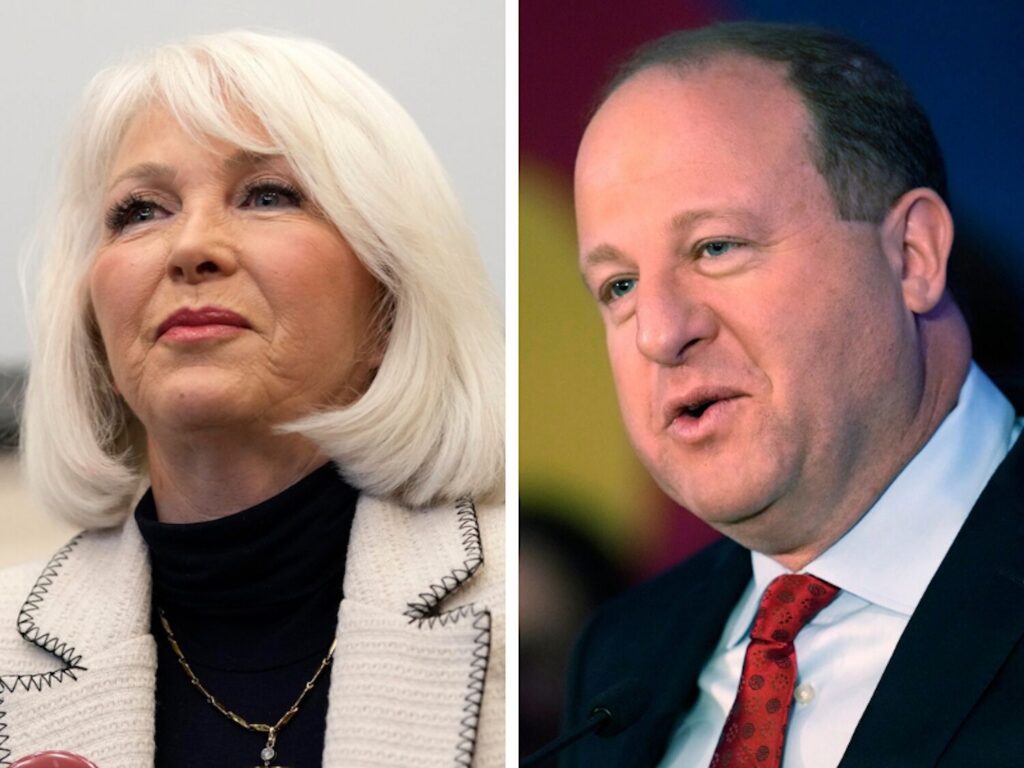
Tina Peters thanks Polis for shortening her sentence, calls Colorado Democrats’ censure a ‘travesty’
Ernest Luning
ernest.luning@coloradopolitics.com
Updated 2 days ago
Two days after the Colorado Democratic Party formally condemned Gov. Jared Polis over his decision last week to shorten Tina Peters’ prison sentence for tampering with election equipment, Peters heaped praise on the term-limited Democrat and slammed his party for...

Trump administration releases $40 million for Colorado water project
Marianne Goodland
marianne.goodland@coloradopolitics.com
Updated 2 days ago
The Trump administration on Friday released $40 million, clearing the way for a water district and its partners to finish funding the purchase of some of the state’s most senior Colorado River water rights, Gov. Jared Polis announced. Federal funding...

Attorney general candidate Doshi puts ‘Hetal to the metal’ in Colorado Democrat’s 1st TV ad
Ernest Luning
ernest.luning@coloradopolitics.com
Updated 1 day ago
Democratic attorney general candidate Hetal Doshi makes clear how to pronounce her first name in the former federal prosecutor’s first TV and digital ad, which launched statewide on Friday, just over two weeks before ballots start going out to Colorado...

Colorado governor signs into law proposal to close gaps in court competency system
Marissa Ventrelli
marissa.ventrelli@coloradopolitics.com
Updated 2 days ago
Gov. Jared Polis has signed a bill that supporters say would close gaps in Colorado’s criminal justice system for people whose charges are dismissed after they are found incompetent to stand trial. “This is a major step forward to keep...

As street camera use surges, Colorado legislators grapple with law enforcement, privacy implications
Marissa Ventrelli
marissa.ventrelli@coloradopolitics.com
Updated 3 days ago
In Boulder, the Flock camera system helped authorities locate the car of the suspect in the firebombing that killed a woman and injured 29 others in June last year. The car had contained explosives, authorities said. In Columbine Valley, authorities...

Colorado is too wealthy to keep cutting basic services | GUEST COLUMN
Colorado Politics
colorado-politics@coloradopolitics.com
Updated 3 days ago
By Kathy White and Lydia McCoy Colorado is a wealthy state. It may be hard to believe right now because so many of us are feeling the strain. Costs are high. Many families are struggling to keep up. There is...

Denver, Boulder prosecutors call congressional immigration probe ‘political theater’
Marissa Ventrelli
marissa.ventrelli@coloradopolitics.com
Updated 3 days ago
Elected officials in Denver and Boulder are pushing back after the U.S. House Judiciary Committee opened an investigation into their immigration policies, as part of a broader probe targeting “sanctuary” jurisdictions nationwide. On May 20, U.S. Rep. Jim Jordan, R-Ohio,...
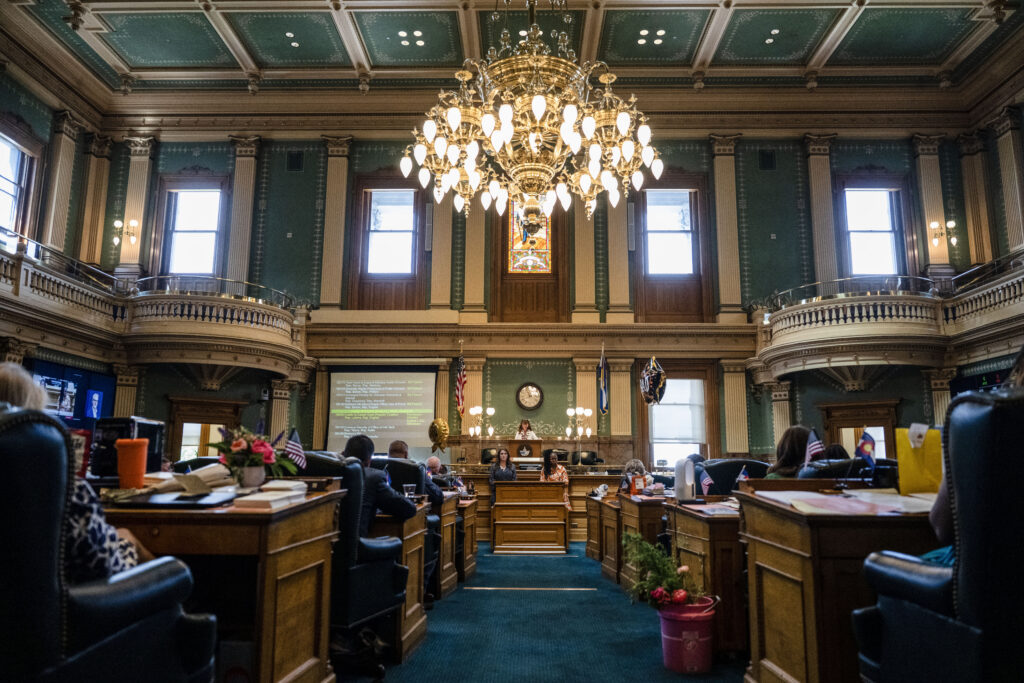
Legal filings escalate tensions in Colorado House District 6 Democratic primary
Marianne Goodland
marianne.goodland@coloradopolitics.com
Updated 2 days ago
With the Colorado primary just weeks away, the Democratic race in Denver’s House District 6 has erupted into dueling complaints and legal challenges, underscoring the district’s long‑running divide between moderates and progressives. In Denver’s House District 6, the Democratic primary...
PREV
PREVIOUS

The unintended consequences of 'puppy prohibition' in Colorado | OPINION
By Alyssa Miller-Hurley When a Colorado family decides to bring a new puppy into their home, they deserve a process guided by transparency and legal protection, not one that forces them into the “wild west” of the unregulated internet. As the legislature considers House Bill 26-1011, lawmakers should look beyond the bill’s intent and grapple […]

Veteran policy advisor Mara Sheldon joins Holland & Knight
Mara Sheldon, who has spent more than three decades in public policy and strategic communication, has joined Holland & Knight as a senior policy advisor in its public policy and regulation practice group. Sheldon represented the state Colorado at the federal level with the National Governor’s Association and has been a conduit for the state […]