

Colorado justices find portion of anti-SLAPP law unconstitutional

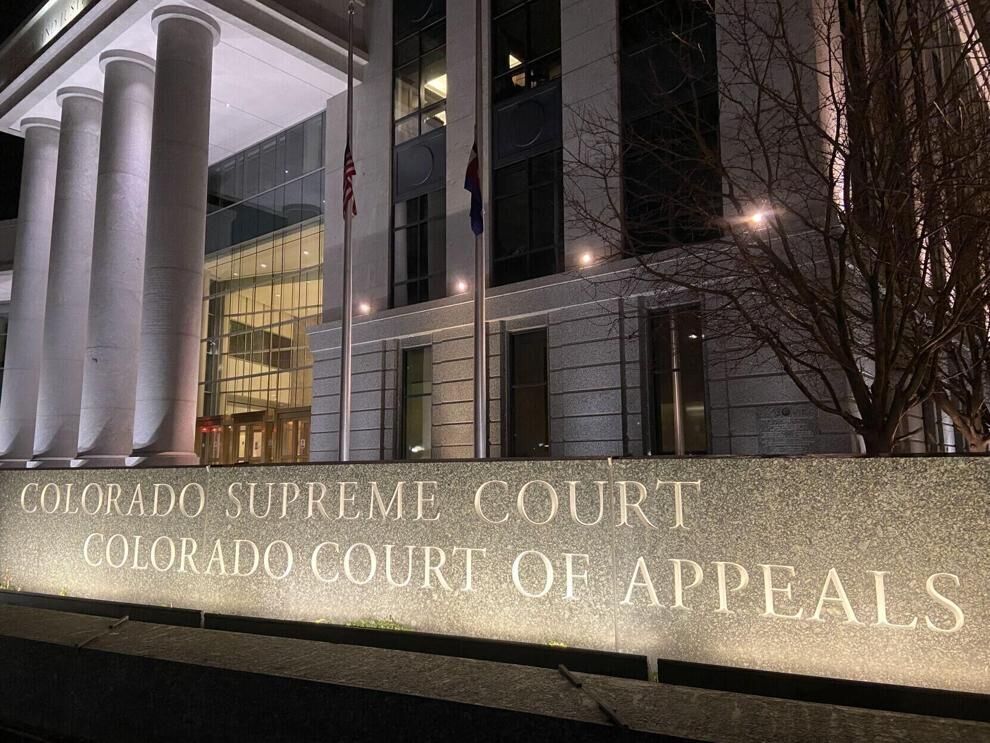
The Colorado Supreme Court ruled on Monday that a 2019 law designed to protect the exercise of First Amendment rights conflicts with the state constitution in certain scenarios involving appeals from county courts.
Known as the “anti-SLAPP” law, which stands for “strategic lawsuits against public participation,” the legislature provided a mechanism for quickly disposing of litigation arising from a person’s rights to free speech and to petition the government. When a judge rules on a defendant’s motion to dismiss under the anti-SLAPP law, any appeal goes to the Court of Appeals.
But what happens when a lawsuit implicating those rights is filed in county court, where appeals of final decisions are constitutionally required to go to through the district courts or the Supreme Court?
In those situations, the anti-SLAPP law’s pathway is unconstitutional, concluded the Supreme Court. However, if a county judge’s decision on an anti-SLAPP motion does not end the case, the appeal can still go directly to the Court of Appeals.
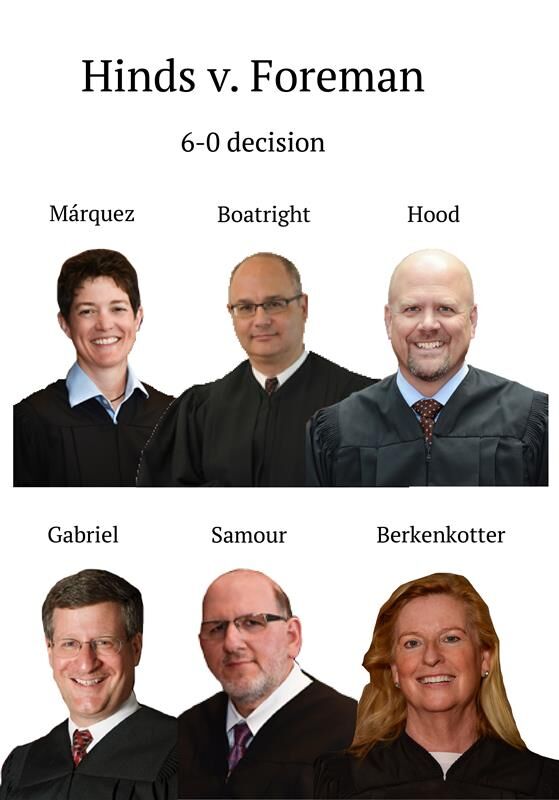
“Ultimately, consideration of a simpler, arguably less confusing, appeal process for review of county court rulings in this context is a matter best left to the legislature, not this court,” wrote Justice Maria E. Berkenkotter in the Feb. 2 opinion.
In 2023, Rebeca Hinds filed a lawsuit in Chaffee County against her neighbor, Corinne Foreman-Rash. She claimed Rash defamed her by making false statements to police. Rash filed a motion to dismiss under the anti-SLAPP law and a county judge granted it, finding Hinds had not satisfied all components of her defamation claim.
Hinds appealed to the Court of Appeals, but a three-judge panel assigned to the case noticed a problem. Because the Colorado Constitution and state law direct appeals of final decisions to the district courts or Supreme Court, the Court of Appeals seemingly could not be the first stop for Hinds’ anti-SLAPP appeal out of county court.
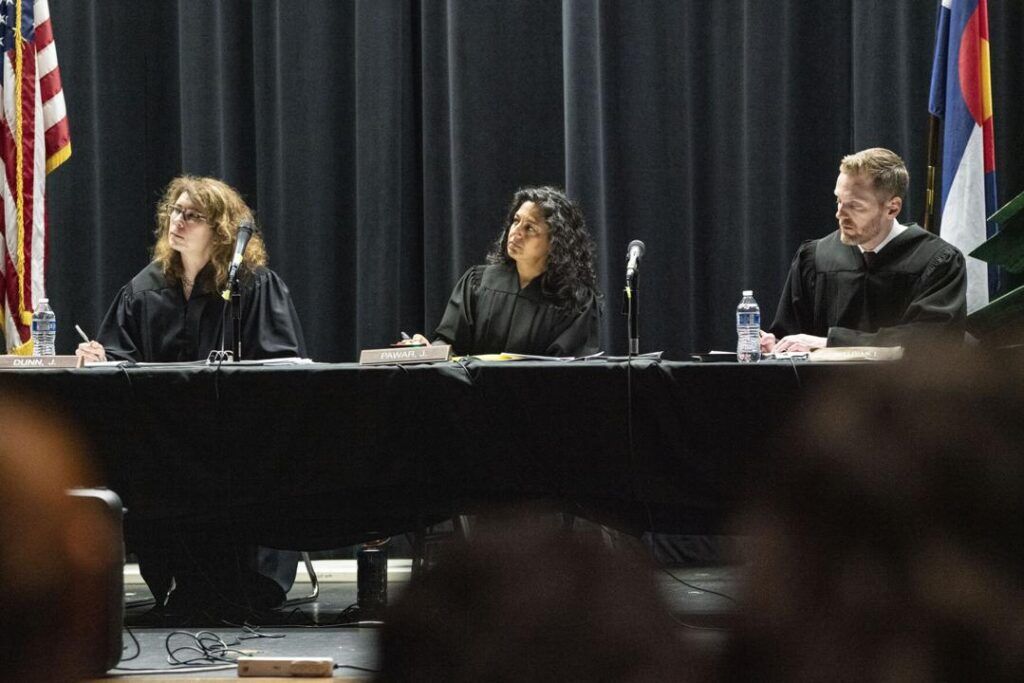
“The county court has entered an order with an unclear path of appeal,” wrote Judges Stephanie Dunn, Neeti V. Pawar and Pax L. Moultrie in an August 2024 order. The judges asked Hinds and Rash to provide their thoughts about how the appeal should proceed in light of the anti-SLAPP law’s seeming conflict with the constitution.
Hinds argued the Court of Appeals should conclude that county courts cannot hear anti-SLAPP motions, and asked that her lawsuit be reinstated as if the dismissal had never happened. Rash responded that the legislature cannot override the constitution, and the Court of Appeals should reject the appeal because it had no power to hear it.
Instead, the panel did something different.
“This case comes to this Court via a strange pathway,” the appellate judges wrote to the Supreme Court, invoking a little-used mechanism allowing the Court of Appeals to transfer a case to the state’s highest court. “Without clarity on which court has jurisdiction over these matters, not only are the parties’ rights jeopardized if they fail to seek timely appellate review … but courts across Colorado are at risk of wasting judicial resources.”
Ultimately, the Supreme Court agreed with Rash that the Court of Appeals cannot be the first court to review a county judge’s anti-SLAPP order when that decision ends the case. However, the appellate court can still hear appeals of anti-SLAPP orders that do not resolve the litigation.
“We recognize that the path we carve here is not an elegant solution to the conundrum,” wrote Berkenkotter. “But the General Assembly’s choice to authorize a party to appeal this type of order when it does not end the particular action in which it is entered squares with … the Colorado Constitution.”
At the same time, the justices recognized Hinds “could not reasonably have anticipated that her appeal should have been filed in the district court.” The Supreme Court permitted her to refile her appeal of the anti-SLAPP decision in the correct court.
The case is Hinds v. Foreman.

Federal judge green-lights excessive force, retaliation claims for trial against Fort Collins officers
Michael Karlik
michael.karlik@coloradopolitics.com
Updated 1 day ago
A federal judge green-lit a jury trial last week against multiple Fort Collins police officers on claims that they used excessive force on one man who was standing unarmed in his underwear, and retaliated against another man for exercising his...

10th Circuit revives wage violation lawsuit against Papa John’s operator
Michael Karlik
michael.karlik@coloradopolitics.com
Updated 2 days ago
The Denver-based federal appeals court on Tuesday reinstated a former Papa John’s delivery driver’s lawsuit alleging violations of federal and state wage law. Steve Mighell worked for one month at a Denver Papa John’s location in summer 2023. He alleged...
Colorado appeals judge’s delays in releasing opinions noted by performance commission
Michael Karlik
michael.karlik@coloradopolitics.com
Updated 2 days ago
The citizen-led performance commission that provides guidance to voters about whether to retain members of Colorado’s second-highest court raised concerns by judges and attorneys that Judge Elizabeth L. Harris sometimes struggles with releasing opinions promptly. Harris, who joined the Court...

Colorado judge explores sanctions against DOJ, ICE for rearresting man 4 days after release on bond
Michael Karlik
michael.karlik@coloradopolitics.com
Updated 3 days ago
A federal judge in Colorado is considering sanctions against the government after immigration agents rearrested a man four days after an immigration judge found him suitable for release on bond. On July 28, U.S. Magistrate Judge N. Reid Neureiter ordered...
Divided disciplinary panel censures Montezuma County judge after agreement reached
Michael Karlik
michael.karlik@coloradopolitics.com
Updated 3 days ago
A disciplinary panel formally imposed a public censure, suspension, and further training on Montezuma County Court Judge Ian J. MacLaren on Tuesday by a 2-1 vote. Under constitutional Amendment H, which voters adopted in November 2024, MacLaren was set to...
Colorado’s Western Slope magistrate judges describe unique role in federal judiciary
Michael Karlik
michael.karlik@coloradopolitics.com
Updated 4 days ago
Two of Colorado’s federal judges stationed on the Western Slope spoke to lawyers on Wednesday about their unique roles, the ways their workloads differ, and the need for more criminal defense lawyers to take cases outside the Front Range. “Here...

Denver sues Philip Morris, other tobacco companies over cigarette butt litter
Deborah Grigsby
deborah.smith@denvergazette.com
Updated 3 days ago
Denver is demanding that some of the biggest tobacco companies in the world pay for the cleanup of discarded cigarette butts on its streets, following a similar campaign that cities in other states have pursued. Denver’s lawsuit, filed this week...

Federal judge rules that request for bond hearing not necessary to challenge immigration detention
Michael Karlik
michael.karlik@coloradopolitics.com
Updated 3 days ago
A federal judge in Colorado ruled last week that it is not mandatory for a person to seek a bond hearing with an immigration judge before they challenge the lawfulness of their detention in federal court. For the past year,...

Boulder Valley School District introduces new policies following antisemitism lawsuit
Marissa Ventrelli
marissa.ventrelli@coloradopolitics.com
Updated 3 days ago
The chief of Boulder Valley School unveiled new policies for the 2026-2027 school year following a lawsuit filed on behalf of a student alleging antisemitic harassment. In June, the Anti-Defamation League filed a federal civil rights complaint against the school...

Colorado NRA chapter seeks injunction against new gun‑training requirement
Marissa Ventrelli
marissa.ventrelli@coloradopolitics.com
Updated 4 days ago
The Colorado chapter of the National Rifle Association is seeking an injunction to stop the state from enforcing a new law that took effect earlier this month. The new law requires anyone buying or selling certain firearms to first complete...
PREV
PREVIOUS

Colorado lawmakers contemplate avenue for people to sue ICE agents
Colorado legislators are considering a proposal to allow a “cause of action” by individuals injured in an immigration enforcement action. Lawmakers on the Senate Judiciary Committee will hear the proposal this afternoon. The bill would also allow for “legal or equitable relief or any other appropriate relief” if an agent “violates” the U.S. Constitution while […]

Colorado legislators eye giving inmates more earned time to ease prison overcrowding
Colorado lawmakers are proposing several changes to a state law that sponsors say would help ease overcrowding and reduce strain on state facilities. The proposal would mandate data reporting, as well require certain actions, including transitioning inmates from community corrections, considering “alternate sanctions” for technical parole violations, and giving inmates more earned time. In 2018, […]