

TABOR and the Colorado Constitution’s fiscal Gordian Knot | Miller Hudson

A corporate president advised me once there are two kinds of lawyers: “those who tell you why you can’t do things and those who figure out how to get things done anyway.” He only hired the latter. Since the adoption of the TABOR amendment in 1992, the Colorado legislature has opted for counsel from the “this is how we avoid strictures on revenues and spending” tribe.
Their inventiveness has proven impressive, shrinking general fund expenditures restricted by TABOR from 70% of the state’s budget to just a third over 30 years. How was this achieved? There was no single silver bullet. In fact, with the introduction of a grab bag of fiscal mechanisms, including fees, TABOR enterprises, lease-back agreements, opportunity grants and opaque accounting legerdemain, the state budget has become inscrutably byzantine. Other than members of the Joint Budget Committee (JBC), you would be hard put to find one legislator out of a dozen who actually understands their annual “long bill.”
TABOR tendrils are found at the root of the budget challenges currently facing the legislature. As recently noted by Lydia McCoy, chief executive at the Colorado Center on Law and Policy, TABOR was crafted to address a set of economic conditions that have long since changed dramatically. Sales taxes were a major contributor to local government funding in an economy where 70% of purchases consisted of retail sales while just 30% were services and exempt from taxation. Today this ratio has reversed, and the sales tax is now a shriveling source of fiscal support as population growth plus inflation, which determine permissible TABOR expenditures, have been outgrowing revenues. Similar distortions in property tax administration have triggered two special sessions of the General Assembly to craft emergency ballot questions as band-aid budgetary remedies during the past few years.
These problems, of course, having been placed into the state constitution are premised on the notion that economic circumstances remain constant. This presumption is false. As the 2026 session convenes, at least two parallel constitutional budget “fixes” are being advanced. Each will further balkanize the appropriations process, placing shackles atop the handcuffs currently imposed by TABOR. Since final language is not yet available for either, it is difficult to critique them accurately, but their thrust is clear. Also lurking in the weeds is a progressive restructuring of the state income tax.
The easier of the pair to understand is “Restore Our Roads” Colorado (ROR). A campaign funded primarily by Colorado contractors together with rural interests, we will soon see ROR volunteers circulating petitions to place Proposition 175 on November’s ballot. I wouldn’t be surprised to find them appearing on gas station counters across the state in the next few weeks. Operationally, Prop 175 asks voters to earmark revenues from car and auto-related sales for a protected fund exclusively dedicated to highway maintenance, cordoning these dollars away from whatever priority CDOT may wish to assign to transit or capital construction projects.
It would be easy to dismiss this initiative as a self-serving raid on the treasury to benefit the Colorado contractors who would be re-paving our roads, but the dismal condition of state highways is not an imaginary issue. Ranked somewhere near 47th in the nation, Colorado roads are a mess. This became evident during CDOT’s program review before the Joint Transportation Committee last week where rural legislators pummeled Shoshanna Lew with complaints. CDOT needs an additional $350 million annually merely to maintain the status quo, which is miserable, much less restore rural roadways that soon will have to be rebuilt rather than repaved. If “Restore Our Roads” succeeds, as they may, it will open the door to campaigns for additional earmarks submitted to voters at future elections. Why not higher education, mental health services, health care or a myriad of other special pleading? Ballot-box budgeting can’t possibly turn out well and further undermines representative democracy.
The second proposal that may find its way to this year’s ballot is being developed by the JBC. Though it won’t create any new dollars to satisfy the $850 million shortfall they face in 2026, this proposal will create room under the TABOR spending cap that could then be filled with dollars that would otherwise return to taxpayers. Conceptually, it seeks voter approval to fence off K-12 (possibly pre-school) expenditures outside TABOR limits, including the significant portion of total costs currently transferred by the state from the general fund. This would create significant room beneath the state’s TABOR cap, when K-12 dollars are dumped into this newly created budgetary artifact. Once again, Colorado public school funding has eroded for 30 years, leaving Colorado dead last in the nation for starting teacher salaries. Nothing to brag about. Estimates are this maneuver would only purchase three to four years relief before both schools and the state will start slamming into fiscal walls again. If successful, it isn’t difficult to identify other exclusion schemes that could be contrived for higher education or social services. Without voter approval, however, count on a special session in November to rewrite the budget.
If you have come of voting age in the 21st century, it probably seems as though Colorado has been in a chronic budgetary crisis for as long as you can recall. That’s because it’s been struggling with TABOR effects. Most voters know this constitutional provision allows them to vote on tax increases. It does do that, but buried in its 5,000 words are another two dozen fiscal directives. Both of the 2026 Democratic candidates for governor indicate they would like to retain the voter approval provision while reforming the remainder of TABOR. Easier said than done. In a classic example of slamming the barn door shut after the horses have fled, the legislature asked voters to limit all future ballot questions to a “single subject” shortly after TABOR passed. Therefore, it would now require several dozen separate questions to “fix” TABOR while preserving voter approval of tax hikes.
In 2009, the legislature created an interim “Committee on Long-Term Fiscal Stability” that met over the summer seeking budgetary recommendations. One of the few benefits of our digital age is I could exhume my testimony, titled: “TABOR and the Colorado Constitution’s Fiscal Gordian Knot.’’ My remarks opened with, “Establishing long term fiscal stability for Colorado’s state government is not a question of precise design so much as it is one of flexible process. Today’s economic balance, however perfect, can never anticipate tomorrow’s changes.” True then and true today. I went on to propose the Gordian Knot solution being sought could be found by asking voters to move all revenue and expenditure provisions currently in the constitution into statute. Not a lawyer myself, I’ve encountered a shift in legal opinion from “that won’t work, Miller” to “that just might work.”
Absolutely nothing would change immediately but would place fiscal policy within reach of legislative remedy. I further testified, “Whatever one believes about the adequacy of state revenues or the appropriate size of Colorado’s government, restoration of full control over the state budget is a goal that can and should be supported by both Republican and Democratic legislators.” Admittedly, following voter approval the next legislative session might well become something of a rugby scrum as many sacred oxen would be at risk of goring. Everything from GOCO grants to old-age pensions and more have secured their own sheltered constitutional niches which they will not want removed. That’s a political given. A few powerful legislative lacunae may have to be left alone. This suggestion achieved little purchase in 2009, but, perhaps, in our 17th year of permanent crisis, it deserves another look.
Miller Hudson is a public affairs consultant and a former Colorado legislator.

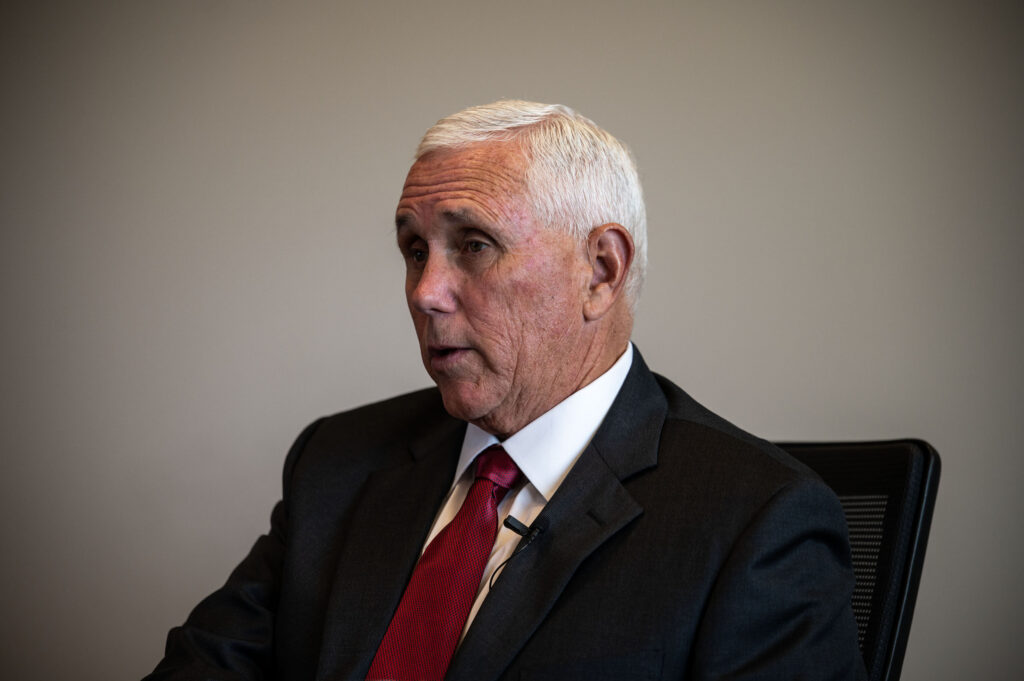
Q&A with Mike Pence | Former vice president says GOP’s populist turn from conservatism isn’t permanent
Ernest Luning
ernest.luning@coloradopolitics.com
Updated 17 hours ago
Former Vice President Mike Pence says he’s concerned that the Republican Party has taken a populist turn away from bedrock conservative principles during President Donald Trump’s second term, but he believes the party will return to its roots when Trump...

Republican Victor Marx taps George Markert as his lieutenant governor pick in Colorado’s gubernatorial race
Ernest Luning
ernest.luning@coloradopolitics.com
Updated 14 hours ago
Colorado Republican gubernatorial nominee Victor Marx named George Markert, a retired Marine colonel, as his running mate for lieutenant governor Friday morning, saying the former U.S. Senate candidate will bring “exceptional character, proven leadership and a lifetime of serving others”...

Pueblo mayor, council concoct Trumpian Texas Two-Step | Dennis Maes
Dennis Maes
dennis-maes@coloradopolitics.com
Updated 2 days ago
Several weeks ago, an article was published positing Pueblo Mayor Heather Graham is a disciple of the calamitous Donald Trump school of governance — specifically as it related to questionable ethical practices and the misuse of public funds. Recently, Graham...

Colorado can’t afford to turn its back on proven public safety technology | GUEST COLUMN
Colorado Politics
colorado-politics@coloradopolitics.com
Updated 2 days ago
By Samuel G. Michael I recently saw a report that said Colorado is leading the way in artificial intelligence adoption for businesses. Across our state, more business owners and employees than ever before use AI for their everyday functions —...
Colorado lawmakers start crafting strategy to manage $200 million in federal rural health funds
Marissa Ventrelli
marissa.ventrelli@coloradopolitics.com
Updated 2 days ago
Members of the Colorado legislature’s new Commission on Medicaid raised concerns Wednesday about the federal Rural Health Transformation Program created under H.R. 1. The bipartisan, bicameral commission, created in the last legislative session to guide implementation of Medicaid changes under...

Democrat Jessica Killin’s internal poll shows dead heat with U.S. Rep. Jeff Crank in Colorado’s 5th CD
Ernest Luning
ernest.luning@coloradopolitics.com
Updated 2 days ago
Jessica Killin, the Democratic nominee in Colorado’s 5th Congressional District, is in a statistical tie with Republican U.S. Rep. Jeff Crank, according to an internal poll released this week by Killin’s campaign. The poll of likely general election voters, conducted...

Colorado’s 72-hour social media warrant law takes effect Aug. 12
Marissa Ventrelli
marissa.ventrelli@coloradopolitics.com
Updated 2 days ago
A law requiring social media platforms to respond to search warrants within 72 hours goes into effect on Aug. 12. Senate Bill 011 also requires platforms to create a staffed hotline for Colorado law enforcement agencies to contact regarding pending...

As education conflicts abound across Colorado, who puts the kids first? | Paula Noonan
Paula Noonan
paula-noonan@coloradopolitics.com
Updated 3 days ago
Elected school boards and the Colorado Department of Education (CDE) have hit the headlines with fired superintendents, superintendent resignations, failures of oversight, and misdirected dollars. Cherry Creek School District’s superintendent was fired. Jefferson County Schools’ superintendent found a less stressful...
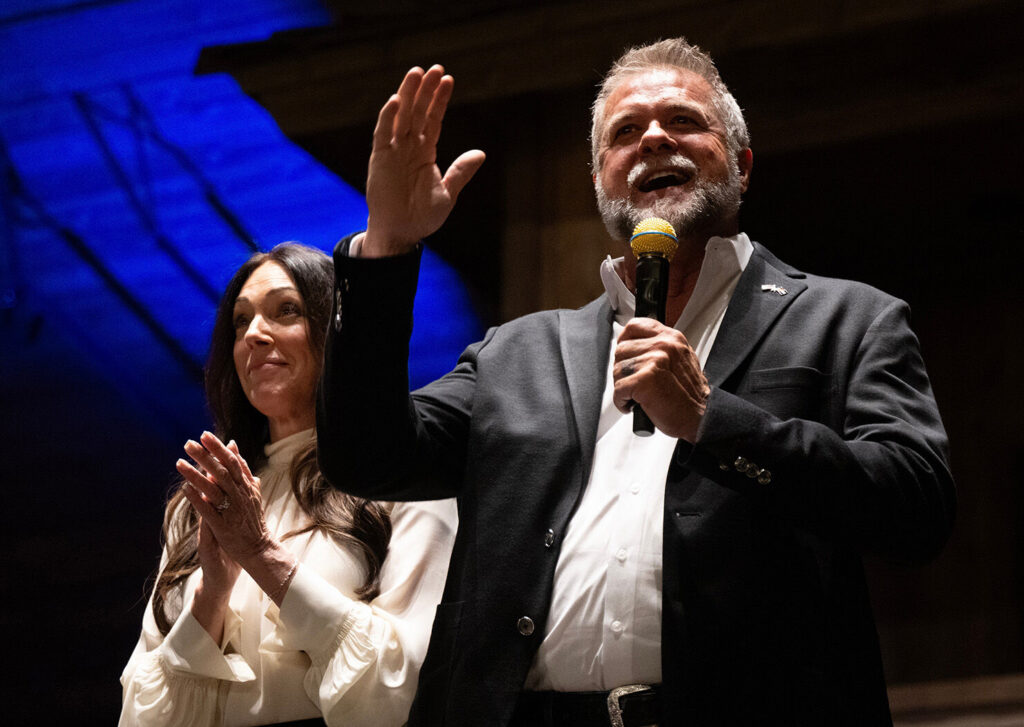
Victor Marx says he’ll only debate Phil Weiser once in Colorado governor’s race — without a moderator
Ernest Luning
ernest.luning@coloradopolitics.com
Updated 2 days ago
Colorado Republican gubernatorial nominee Victor Marx said on Tuesday that he will participate in only one debate with Attorney General Phil Weiser before the November election — and he challenged the Democratic nominee to hold the event without a moderator....

Clock is ticking on Colorado’s new AI rules | PODIUM
Colorado Politics
colorado-politics@coloradopolitics.com
Updated 3 days ago
By Aashis Luitel On Jan. 1, organizations using covered automated systems must begin complying with Senate Bill 26-189, Colorado’s new Automated Decision-Making Technology Act. They can identify those systems and start building the processes the statute clearly requires. What they...
PREV
PREVIOUS

Fierce, capable women at the Super Bowl of livestock shows | Rachel Gabel
The first cattle to show in the CoBank Arena in the Sue Anschutz-Rodgers Livestock Center at the National Western Stock Show were the Herefords of the Catch-a-Calf program. Anschutz is an ardent supporter of the program and a big fan of a burly Hereford, so it was fitting. She was ringside watching in her signature […]

If only walls could talk in Colorado governor’s office | Dick Wadhams
Restoring the office of the governor in the Colorado State Capitol to its historic glory was a worthy project despite its cost. There is probably never a good time to spend $2.4 million on such a restoration but it is important to maintain the Capitol as the very symbol of the state that generations have […]