

Could Denver’s refusal to approve Key Lime Air contract be a risky move?

The Denver City Council recently voted down a contract to expand Key Lime Air’s operations at Denver International Airport, citing disagreement with the company’s suspected operation of federal deportation flights on behalf of U.S. Immigration and Customs Enforcement.
But in doing so, could the city be rolling the dice with federal grant money the airport needs for runway repairs and other federal assets?
It’s not likely, a source in the aviation industry with knowledge of federal grant assurances told The Denver Gazette on Wednesday.
The contract rejected by the council was for a 1,200-square-foot expansion of the company’s current ground lease so that personnel could store equipment in their own space rather than in a common storage area shared by other operators on the ramp.
“It wouldn’t necessarily impede their ability to do business and to operate on the airport,” the source said of the rejected contract.
And that’s the key.
Key Lime Air first started operations out of DIA as a cargo carrier in 2006, eventually launching passenger service in 2015.
However, because Key Lime has an existing contract with DIA and is already doing business at the airport, claiming the lack of an individual equipment storage area as prohibitive to the company’s business would be a stretch, the source explained.
“Our grant agreements with the federal government are that we have to provide equal access,” District 2 Councilmember Kevin Flynn said on Monday. “We can’t kick Key Lime Air out of the airport, but we can make them pay to use the piece of concrete that they want to use.”
In general, public-use airports and the entities that own and operate them are prohibited from denying potential tenants or operators the opportunity to do business based on a variety of factors, including regulatory obligations, discriminatory practices, and preferential treatment that confers a competitive advantage, among others.
“This decision does not affect our normal passenger and flight operations at Denver International Airport,” Key Lime President and CEO Cliff Honeycutt told The Denver Gazette in an email. “All flights will continue as scheduled.”
Under the Federal Aviation Administration’s grant programs, such as the Airport Improvement Program, the agency provides millions in grants to public-use airports and some private airports for large projects to improve safety, capacity, and operations.
Projects like construction or upgrades, runways, taxiways, lighting and certain types of airfield equipment would be eligible.
Airports that take federal funding from the FAA are not allowed to discriminate against an operator because of political viewpoints, essentially because such matters have little to do with safe airport operations.
Even if there are ramifications from the council’s decision, some council members suggested the risk is worth it.
“I think there are a lot of ways that the airport will try to say that we can’t do this,” District 11 Councilmember Stacie Gillmore said. “Well, I think we need to test those waters, and this might impede some FAA grant dollars that Denver International Airport might get.”
According to public records, DIA has received substantial grant funding from the FAA over the years, with major awards including $60 million in 2022, $22 million in 2023, and $26.6 million in 2024.
Federal grant performance periods can span multiple years.
When asked, a spokesperson for DIA told The Denver Gazette the airport had no comment on the matter.
The Denver City Attorney’s Office also declined to comment.

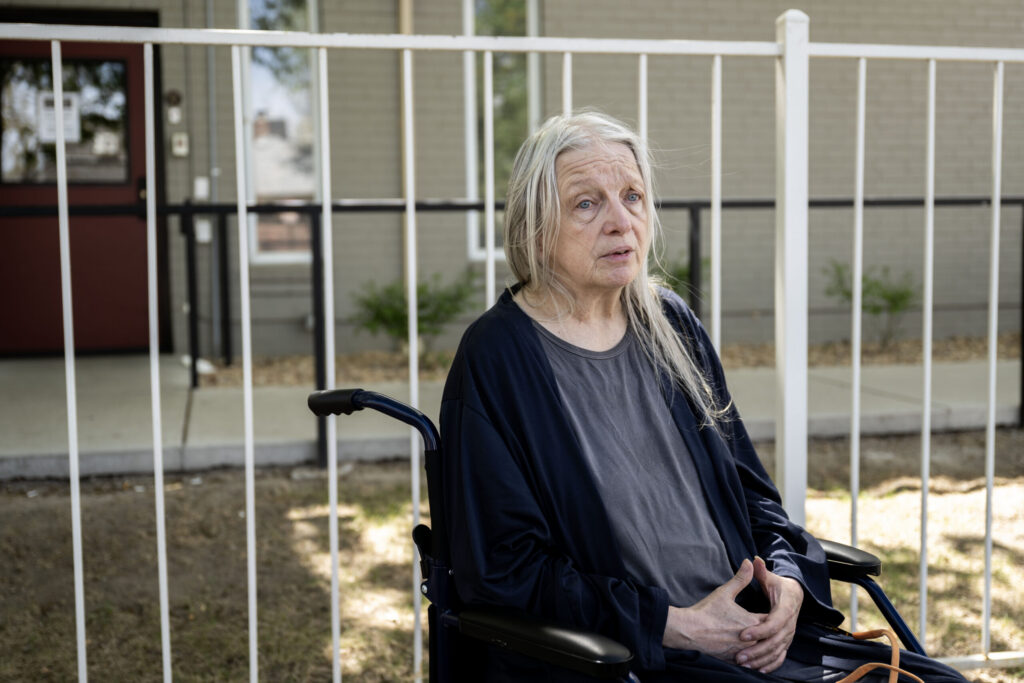
Assisted-living facility in Colorado faced minimal fine after death of 73-year-old man
Jenny Deam
jenny-deam@coloradopolitics.com
Updated 17 hours ago
On Jan. 6, just after 8:30 p.m., Robert Dutkevitch rolled his wheelchair onto the smoking patio outside The Argyle assisted-living facility in Denver. Minutes later, the 73-year-old suddenly slumped in his chair, his head lolling to the side. He then...

Such hubris never before seen in Colorado | Jon Caldara
Jon Caldara
jon-caldara@coloradopolitics.com
Updated 2 days ago
The great 19th-century historian Lord Acton said it best: “Power tends to corrupt, and absolute power corrupts absolutely.” Acton was building on the teachings of his mentor, Homer Simpson, who put it more plainly: “The more power you have, the...

Governor OK’s funding for summer food assistance for Wyoming kids | OUT WEST ROUNDUP
The Associated Press
the-associated-press@coloradopolitics.com
Updated 3 days ago
WYOMING Governor funds kids’ summer meals Gov. Mark Gordon secured funding for a summer food assistance program for kids and directed its implementation through an executive order. After the Wyoming legislature declined to fund the SUN Bucks program—designed to provide...

Trump says suspect was armed with multiple weapons at White House correspondents’ dinner
Alanna Durkin Richer
alanna.durkin.richer@associatedpress.com
Updated 12 hours ago
WASHINGTON (AP) — President Donald Trump is addressing reporters at the White House after he and other top leaders of the United States were evacuated from an annual dinner of White House correspondents on Saturday night after a shooting incident...
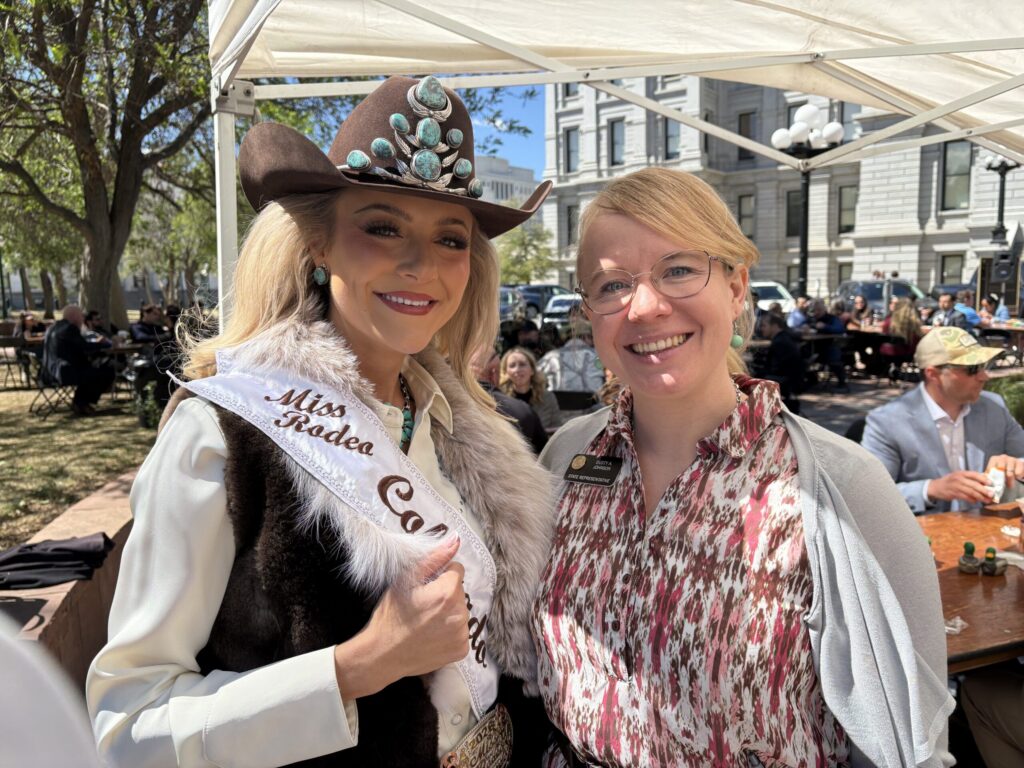
Mountain Lion/Pheasant Green Chile a hit! | Capitol M | Week of April 25, 2026
Marianne Goodland
marianne.goodland@coloradopolitics.com
Updated 12 hours ago
The lighter side of the state Capitol, although if you were eating at the barbecue Thursday, you are probably not any “lighter.” With the arrival of spring comes outdoor barbecues at the state Capitol, and the most unusual is the...

Domestic violence rises in Colorado, state rep. seeks to fight back | A LOOK BACK
Rachael Wright, Special to Colorado Politics
rachael.wright@coloradopolitics.com
Updated 3 days ago
Forty-Five Years Ago This Week: A bill sponsored by Rep. Jeanne Faatz’, R-Denver, House Bill 81-1336, was the final compromise bill intended to counteract the rising tide of domestic violence in Colorado. According to FBI figures, 40,000 women in 1980...
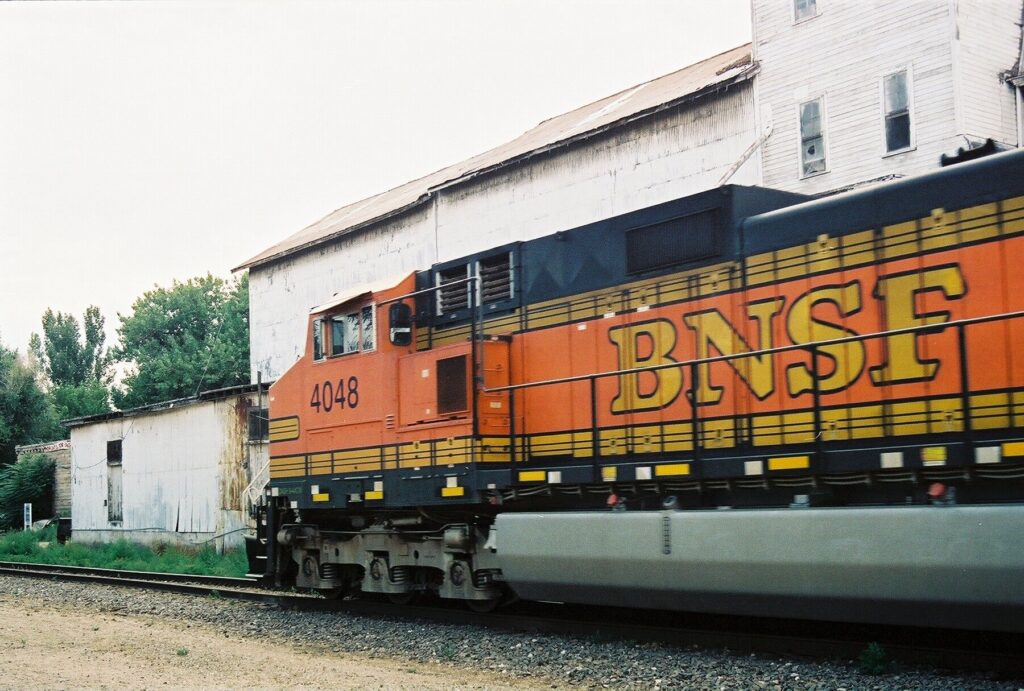
Passenger train service from Denver to Fort Collins? | Cronin and Loevy
Tom Cronin Bob Loevy
tom-cronin-bob-loevy@coloradopolitics.com
Updated 9 hours ago
A “Joint Service” plan is being developed that would bring passenger rail service from Denver north to Fort Collins by 2029. The passenger trains would be paid for with existing funds from the Denver Regional Transportation District (RTD) and other...

Colorado candidates square off up and down the ballot ahead of primary election
Ernest Luning
ernest.luning@coloradopolitics.com
Updated 2 days ago
With just over two months to go until ballots are counted in Colorado’s primary, candidates are squaring off in high-stakes contests for their party’s nominations in statewide and congressional races approaching the midterm election. For the first time in memory,...

Colorado Politics Calendar Apr. 27-May 3
Rachael Wright, Special to Colorado Politics
rachael.wright@coloradopolitics.com
Updated 4 days ago
CoPo’s weekly political calendar will help you find political and public-policy events throughout Colorado. It includes candidate and issue campaign events, public policy meetings, court hearings, state and local party conventions, assemblies, debates, rallies, parades, speaking engagements, traveling dignitary appearances,...

The applicability of Hungary’s election to our politics | SONDERMANN
By Eric Sondermann
by-eric-sondermann@coloradopolitics.com
Updated 5 days ago
American conservatives, largely synonymous these days with MAGA save for a few lonely voices of courage and dissent, have plenty to lament. Their domination of the political landscape is waning. Various special elections hither and yon have presented bright, flashing...