

Trump targets Colorado AI law with executive order, setting stage for legal fight
Colorado’s 2024 effort to regulate artificial intelligence is facing a direct challenge from the Trump administration.
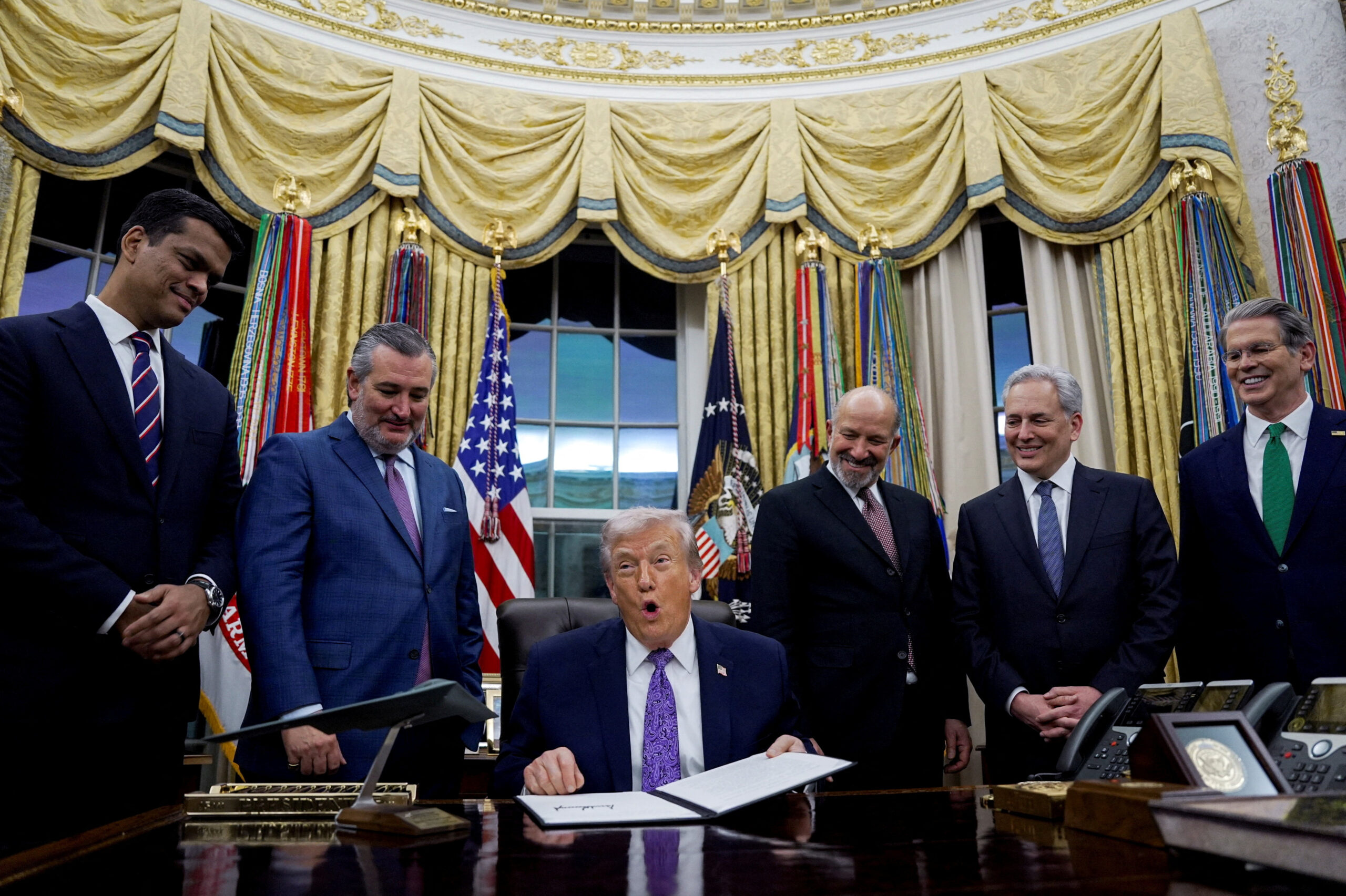
President Donald Trump signed an executive order on Thursday to block states from enforcing their own AI laws. Trump also announced the creation of a legal task force to challenge state AI laws that the order said are inconsistent with a federal policy that dictates a “minimally burdensome national policy framework for AI.”
Trump cited Colorado’s law as part of the problem, stating, “the new Colorado law banning ‘algorithmic discrimination’ may even force AI models to produce false results in order to avoid a ‘differential treatment or impact’ on protected groups.”
The executive order notes that allowing states to produce their own regulations — often cited during the debate over the Colorado law, in 2024 and 2025 — would create “a patchwork of 50 different regulatory regimes that makes compliance more challenging, particularly for start-ups.”
The order also stated that allowing states to have their own regulatory frameworks could violate interstate commerce, since AI regulation may extend beyond an individual state’s borders.
Those points were raised as concerns in Colorado during the march toward Senate Bill 24-205. But consumer groups, citing the potential for artificial intelligence to make discriminatory decisions in employment, medical treatment, banking and insurance, and education, pushed for Colorado’s law.
Gov. Jared Polis signed SB 24-205 into law in May 2024, but, in a nod to his roots in the entrepreneurial sector, he did so with misgivings and directed the law’s sponsors to address concerns that it could affect an industry “fueling critical technological advancement.”
“Government regulation that is applied at the state level in a patchwork across the country can have the effect to tamper innovation and deter competition,” the governor wrote in his signing statement.
Colorado is believed to be the first state in the nation to enact a law addressing algorithmic discrimination. That law, modified in the August 2025 special session, now has an implementation date of June 30, 2026.
The changes sought by Polis have not materialized. A task force that included lawmakers worked for most of 2024 and into 2025 to develop a fix that failed in the waning days of the 2025 session. A similar effort in August resulted only in a delay in implementation.
The governor tasked another group, this time without lawmakers, to develop the fix, with the hope of legislation in the 2026 session, which starts next month.
At the federal level, AI regulation has been on paper rather than in law.
In the 118th Congress, more than 150 bills on artificial intelligence regulation were introduced, according to the Brennan Center for Justice. Not one passed.
As of Sept. 25, more than 120 have been introduced in the 119th Congress, all still pending.
The Brennan Center said those bills would seek to put restrictions on the use of AI systems; require those systems to be evaluated; require transparency, notice and labeling; establish a regulatory authority to oversee AI, protect consumers through liability measures, and more.
Polis, through a spokesperson, told Colorado Politics Friday that “Congress doesn’t need to ask AI to know that the time for meaningful action is now. We need Congress to pass a comprehensive, nationwide regulatory structure that provides important consumer protections while fostering innovation. I’m very frustrated by the lack of action in Congress on this important issue.”
Polis said he is encouraged by the state’s AI Policy Working Group, which is working to reach consensus on a new bill to be introduced in 2026 to avoid losing BEAD [broadband] funding and to determine an approach that works for Colorado.
“The longer Congress dithers, the more patchwork approach we will see,” Polis added.
The closest Congress came to any AI regulation was through H.R. 1, the budget bill signed on July 4. Sen. Ted Cruz, R-Texas, sought to include a moratorium on state regulation of AI in the Senate version of the bill. Ultimately, the Senate rejected the amendment on a 99-1 vote.
Last week, an effort to put AI regulation into the National Defense Authorization Act also failed.
Trump announced an AI action plan a week after signing H.R. 1. It stated AI was too important “to smother in bureaucracy” at the state or federal level, but added that the federal government should not “interfere with states’ rights” to pass laws so long as those laws didn’t restrict innovation.
One report referred to the action plan as “blustery” and intended to oppose most AI regulation.
In signing the executive order issued Thursday, Trump cited the need to maintain U.S. AI supremacy over China. That’s despite the president, just three days ago, allowing Nvidia to sell certain H200 products, more powerful than the company’s H200 chips, to China, a move seen as boosting China’s AI capabilities.
Colorado Senate Majority Leader Robert Rodriguez was the sponsor of SB 24-205 and bills in the 2025 regular session and August special session.
He told Colorado Politics on Friday that he was “very honored the fight against the very wealthy” went all the way to the president and that Trump specifically mentioned his bill. “It’s a feather in my cap, I guess,” he said.
Rodriguez predicted lawsuits over Trump’s executive order and questioned whether the president has the authority to override state law.
“I’m sure the venture capital people are very excited about the executive order, but we’ll see what happens,” he added.
Jason Hopfer, a lobbyist for the Colorado Independent Artificial Intelligence Coalition, told Colorado Politics his members believe “Colorado needs to defend a law that works, not one that doesn’t. We are focused on fixing Colorado’s AI law so it works,” Hopfer said.
Rodriguez cited federal inaction as a part of the motivation for Colorado’s law and some of the others that followed in 2025, such as California’s Senate Bill 53, which took two years to win approval.
Industry and tech people don’t want to be regulated, Rodriguez said, but “we can’t just sit around and wait for the feds to do nothing. States have always had to take the lead,” he said.
Rodriguez also noted the bipartisan concerns that have emerged in the past day regarding the executive order.
Florida Gov. Ron DeSantis reportedly said it would be up to Congress, not the president, to act, a statement made before the executive order. DeSantis also told Politico that an executive order could not preempt state action, although Congress could take those steps.
Utah Gov. Spencer Cox has taken a similar position, recently telling NPR that he was “worried about federal incursion into states’ abilities to regulate AI.” Cox cited how social media companies have used the Internet to “utterly destroy” kids and families and their mental health. “AI’s going to be worse,” he said.
Democrats have universally condemned the executive order, with many calling it unconstitutional.
California U.S. Rep. Don Beyer is a co-chair of the bipartisan AI caucus, and called the order “an attempt to kill responsible safety reforms passed by states, which would create a lawless Wild West environment for AI companies that puts Americans at risk. This is a terrible idea.”
If there are lawsuits over the executive order, as Rodriguez and others anticipate, don’t be surprised if Colorado is among the plaintiffs.
Attorney General Phil Weiser sent a letter to Congressional leaders on Nov. 25 regarding a Congressional moratorium on state regulation of artificial intelligence.
Part of Weiser’s concern was a threat from Trump to withhold funding from Colorado over its AI law, as outlined in a draft executive order circulated last month. Trump reiterated that threat on Thursday, threatening to pull broadband funding from states that did not comply with the executive order.
“[A]ttempts by the federal government to coerce policy change through intimidation and the illegal withholding of funds are unlawful and unconstitutional,” Weiser wrote. “If the administration proceeds to adopt this draft order, we will again turn to the courts to defend the rule of law and protect the people of Colorado.”

Business leaders see ‘cracks’ in Colorado, while governor insists state is ‘competitive’
Marianne Goodland
marianne.goodland@coloradopolitics.com
Updated 2 days ago
How does Colorado get back to the climate in the early 2000s, when there was collaboration between state government, companies and colleges and universities? That was the question posed to Gov. Jared Polis and a panel convened Tuesday by the...

Denver stops new data centers for 12 months
Deborah Grigsby
deborah.smith@denvergazette.com
Updated 22 hours ago
Denver just slammed on the brakes on new data centers Monday after members of the Denver City Council voted unanimously to impose a one-year moratorium on permits and site development plan applications for data centers as the proposed primary use. Close to...

Gala’s purpose: to raise funds to protect Colorado’s open lands | NONPROFIT REGISTER
Joanne Davidson Special to Colorado Politics
joanne-davidson-special-to-colorado-politics@coloradopolitics.com
Updated 2 days ago
COLORADO OPEN LANDS Lakewood News: Wendell Fleming perhaps said it best in her explanation of the “why” behind the Lakewood-based nonprofit, Colorado Open Lands: “It’s not enough to just love this state … we have to preserve it. We have to preserve it not just for us, but for the...

Colorado’s proposed battery laws target fire risks, raise enforcement, cost questions
Scott Weiser
scott.weiser@gazette.com
Updated 2 days ago
Colorado lawmakers have created one of the nation’s most comprehensive battery stewardship systems to keep lithium-powered devices and vehicles from turning garbage trucks and landfills into fire hazards. The bill, Senate Bill 26-003, which awaits Gov. Jared Polis’ signature, establishes...

Girls and their bright futures were celebrated at annual luncheon | NONPROFIT REGISTER
Joanne Davidson Special to Colorado Politics
joanne-davidson-special-to-colorado-politics@coloradopolitics.com
Updated 3 days ago
GIRLS INC. OF METRO DENVER Denver News: With United Airlines as the presenting sponsor, My Bold Future, the annual fundraising luncheon hosted by Girls Inc. of Metro Denver, provided a figurative takeoff to success for the 2026 scholarship recipients and a smooth landing for the...

Colorado Cost of Living: Moving closer to downtown Denver
Deborah Grigsby
deborah.smith@denvergazette.com
Updated 3 days ago
As the mid-morning sun spills through a small window in Elizabeth Nagle’s small Denver apartment, her 12-year-old dog, Freya, gnaws intently on a small toy rabbit. On her table sits a retro, portable record player and a plate of small...
Cast announced for 2026 Dancing with the Denver Stars | NONPROFIT REGISTER
Joanne Davidson Special to Colorado Politics
joanne-davidson-special-to-colorado-politics@coloradopolitics.com
Updated 5 days ago
CLEO PARKER ROBINSON DANCE Denver News: Thirteen civic leaders, including Kourtny Garrett, president and chief executive officer of the Downtown Denver Partnership; Nick Lopez, CEO of the Latin American Education Foundation; and CBS Colorado anchor/reporter Kelly Werthmann, have agreed to take part in the...

AI’s rapid growth spurs regulatory reaction in Colorado
Marissa Ventrelli
marissa.ventrelli@coloradopolitics.com
Updated 7 days ago
The 2026 legislative session was marked by a major push to regulate artificial intelligence, a technology advancing at breakneck speed. Colorado is at the forefront of AI policy, becoming the first state to pursue regulation on “algorithmic discrimination” by passing...

Award-winning musician Jon Batiste wows Symphony in the City audience | NONPROFIT REGISTER
Joanne Davidson Special to Colorado Politics
joanne-davidson-special-to-colorado-politics@coloradopolitics.com
Updated 1 week ago
COLORADO SYMPHONY Denver News: The Colorado Symphony has enjoyed several defining moments over the past several months, most notably its New York tour, featuring critically acclaimed concerts at Radio City Music Hall and Carnegie Hall. The orchestra added further notoriety on May 9 when Jon...

Colorado lawmakers kill both major data center bills
Scott Weiser
scott.weiser@gazette.com
Updated 1 week ago
Colorado lawmakers killed competing bills aimed at regulating large data centers, meaning regulation of the facilities is left in the hands of the Colorado Public Utilities Commission for now. The action leaves the state without new statewide rules even as...
PREV
PREVIOUS

Denver City Council to consider rezoning for NWSL stadium land deal
The Denver City Council will hold a public hearing to consider rezoning for the Denver Summit FC stadium site in the Baker neighborhood. The hearing is focused on Council Bill 25-1541, which proposes changing the land’s zoning classification to permit construction of the stadium. The address cited in the rezoning request is 709 S. Delaware […]
Colorado commission makes new access-to-justice recommendations after renewed listening tour
Adding judges to handle caseloads. Expanding authority for paraprofessionals in civil cases. Allowing self-represented litigants to file electronically. Making the judiciary’s website user-friendly. Those were among the recommendations advanced by the Colorado Access to Justice Commission in a report released Friday, following 22 listening sessions earlier this year. The report was a follow-up to a similar […]