

Colorado commission makes new access-to-justice recommendations after renewed listening tour
Adding judges to handle caseloads. Expanding authority for paraprofessionals in civil cases. Allowing self-represented litigants to file electronically. Making the judiciary’s website user-friendly.
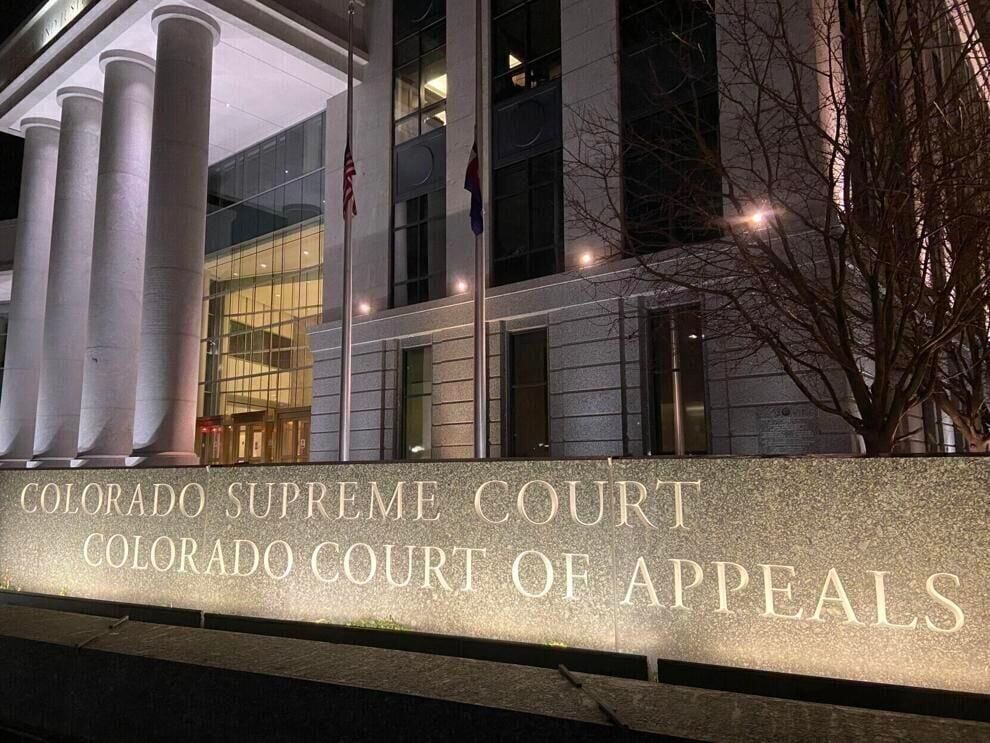
Those were among the recommendations advanced by the Colorado Access to Justice Commission in a report released Friday, following 22 listening sessions earlier this year. The report was a follow-up to a similar project in 2021, when the commission documented multiple areas of concern for litigants seeking access to the civil justice system, which, unlike the criminal system, affords no constitutional right to legal counsel.
“Housing instability, family law challenges, language and technology barriers, and scarce legal help — especially in rural and low-income communities — continue to shape people’s experiences with the civil legal system,” the commission wrote.
Among other things, the commission recommended that the Colorado Judicial Department redesign its website to make it easier to use, even though the branch debuted the current design in summer 2024.
“One longtime judicial staff member who interfaces frequently with the public listed the inability for people to intuitively navigate the Judicial Department website as the number one barrier in access to justice,” the report noted. “Judges echoed this sentiment personally, complaining that they themselves could not figure out how to find forms on the website.”
“We actively review feedback from our website and use it to improve our site continually,” the department responded in a statement. “We will review the report and engage with the ATJ commission to hear their feedback and recommendations for improvement.”
The commission also suggested that litigants without counsel be allowed to file electronically in all types of cases, with fees waived for low-income people. Furthermore, organizations providing legal aid could consider a unified intake system, or courts could appoint pro bono counsel in high-stakes civil cases — a practice already in place at Colorado’s federal trial court.
The report raised the possibility of establishing “community justice workers,” who operate in other states to help people navigate the legal system. Alaska’s community justice workers, for example, drew inspiration from the tribal health care network.
Between March and July, Justice Melissa Hart and the commission’s executive director, Elisa Overall, held 22 virtual sessions aimed at each of the state’s 23 judicial districts. Five sessions addressed the Denver metro area as a whole, and two southwestern jurisdictions had a combined session.
Hart and Overall heard from 317 participants, including judicial employees, attorneys and representatives of community organizations. Unlike in the 2021 listening tour, concerns about broadband access were less widespread, and the merits of holding virtual proceedings have been partially addressed by changes to judicial policy and state law.
However, participants noted the courts are “overwhelmed,” as reflected by the judiciary’s request for new judgeships earlier this year. Even with the approval of 15 new judges over two years, the need for more judges is still “profound,” the report noted.
The rural-urban divide was a recurring theme, with the commission recommending that counties expand public transit to courthouses and that lawmakers consider financial incentives to attract attorneys to practice in rural areas.
Since the 2021 listening tour, the Colorado Supreme Court has authorized “licensed legal paraprofessionals” as nonlawyers who represent clients in family law cases to a limited degree. The report praised the program, while also suggesting that paraprofessionals be able to practice in more areas of civil law.
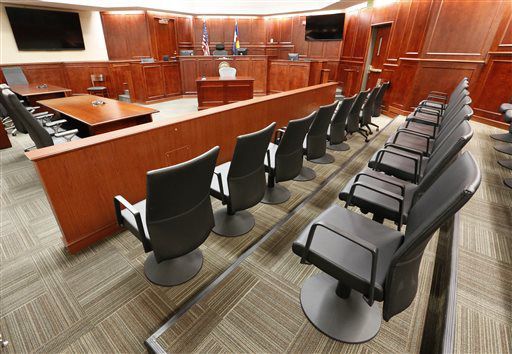
Eviction cases continue to present challenges for litigants who struggle to understand the process, the report explained, with rising needs for help in guardianship and conservator cases. Further, in cases that involve victims of domestic violence, participants “noted that some judges lack compassion in the way they interact with self-represented survivors,” the commission wrote.
Several of the recommendations involved making financial investments or reimagining existing efforts to address gaps. For example, Colorado’s law schools could require access to justice as a core component of their curriculum.
Also, the judiciary could pivot from language access to “language justice,” moving beyond the provision of interpreters in courtrooms.
“Language justice measures for the judicial department could include multilingual signage, all forms in multiple languages, orders in the language of preference, and the acceptance of court forms submitted in the language of preference for the court user,” the report suggested.
Although immigrants in the country illegally face barriers due to federal funding restrictions and concern that people may be deported if they turn to the courts for help, the report continued, there are exceptions allowing survivors of domestic violence to receive aid no matter their legal status.
“However, the inconsistency creates the impression that legal aid is not available for undocumented immigrants, hindering their ability to seek help,” the commission wrote.
“The solutions discussed across the state provide meaningful insight into what must come next,” said Overall in a statement accompanying the report’s release.
The report will likely be a topic at legislative oversight hearings next year.

Development fees not limited to brand new construction, Colorado court rules
Michael Karlik
michael.karlik@coloradopolitics.com
Updated 2 days ago
Colorado’s second-highest court ruled last month that local governments’ ability to impose fees on “new development” is not limited solely to construction projects that occur on empty land. Under state law, local governments that issue development permits are empowered to...
Colorado justices consider whether fraud claims belong in corporate dispute
Michael Karlik
michael.karlik@coloradopolitics.com
Updated 2 days ago
The Colorado Supreme Court considered on Tuesday whether it is possible for a corporate plaintiff to pursue fraud claims over conduct that could be covered by a contract or by a set of interrelated business agreements leading up to the...
Colorado Gov. Jared Polis grants clemency to Tina Peters, makes her eligible for release from prison
Ernest Luning
ernest.luning@coloradopolitics.com
Updated 3 days ago
Colorado Gov. Jared Polis on Friday granted clemency to Tina Peters and made the former Republican county clerk eligible for release from state prison as soon as early June, capping months of speculation that the Democratic governor would shorten a...
Grand jury indicts 2 petition circulators in 2024 signature-forgery case
Marissa Ventrelli
marissa.ventrelli@coloradopolitics.com
Updated 2 days ago
A statewide grand jury has indicted two petition circulators on allegations that they forged signatures while gathering support for a proposed constitutional amendment on the 2024 ballot. The Colorado Attorney General Phil Weiser’s office said the circulators — Cherell Long...
Couple’s notarized agreement did not create common law marriage, appeals court says
Michael Karlik
michael.karlik@coloradopolitics.com
Updated 2 days ago
A Garfield County couple’s signed, notarized document attesting to their common law marriage does not mean they were actually married, Colorado’s second-highest court ruled last week. In contrast to a formal, licensed marriage, Colorado recognizes common law marriages between two...
Colorado justices acknowledge judge’s misunderstanding of law in eminent domain case
Michael Karlik
michael.karlik@coloradopolitics.com
Updated 4 days ago
Members of the Colorado Supreme Court appeared to agree on Tuesday that a Douglas County judge incorrectly believed he lacked the authority to allow a property owner to pursue evidence challenging a government entity’s legal right to take the property...
Colorado legislators pass bill that sponsors say would strengthen sex crime victim protections
Jenny Deam
jenny.deam@gazette.com
Updated 3 days ago
A Colorado bill that supporters say would strengthen victim protections and mandate law enforcement training on how trauma can affect survivors of sex crimes and domestic violence is on its way to Gov. Jared Polis’ desk for signing. Senate Bill...
Municipal camping bans do not violate Colorado Constitution, says appeals court
Michael Karlik
michael.karlik@coloradopolitics.com
Updated 1 day ago
Municipal ordinances that ban people from living on public property do not violate the Colorado Constitution’s prohibition on cruel and unusual punishment, the state’s second-highest court ruled on Thursday. A three-judge Court of Appeals panel agreed that it was appropriate...
10th Circuit again dismisses ex-prison employee’s challenge to workplace DEI training
Michael Karlik
michael.karlik@coloradopolitics.com
Updated 4 days ago
The Denver-based federal appeals court dismissed a second lawsuit on Monday brought by a former Colorado Department of Corrections employee who was offended by an equity training module and had alleged it created a hostile work environment. In 2023, U.S....

As Colorado’s federal judges churn through immigration petitions, Domenico’s cases sit undecided
Michael Karlik
michael.karlik@coloradopolitics.com
Updated 3 days ago
Colorado’s U.S. District Court judges have spent months pushing out decisions in hundreds of immigration detention cases and largely siding with detainees, but one judge has barely touched his caseload. Chief Judge Daniel D. Domenico has only issued orders in...
PREV
PREVIOUS

Trump targets Colorado AI law with executive order, setting stage for legal fight
Colorado’s 2024 effort to regulate artificial intelligence is facing a direct challenge from the Trump administration. President Donald Trump signed an executive order on Thursday to block states from enforcing their own AI laws. Trump also announced the creation of a legal task force to challenge state AI laws that the order said are inconsistent […]

Denver Mayor Peña makes unexpected announcement | A LOOK BACK
Thirty-Five Years Ago This Week: Denver Mayor Federico Peña announced personal news that caught many of his supporters and Denver residents who paid close attention to politics off guard. Just two weeks prior on Nov. 16, 1990, The Colorado Statesman had published a paid ad embellished with the statement, “We’re for Peña, for Denver.” The […]