

‘Deep source of pride’: Federal judge speaks about first year on bench, how he spends his time
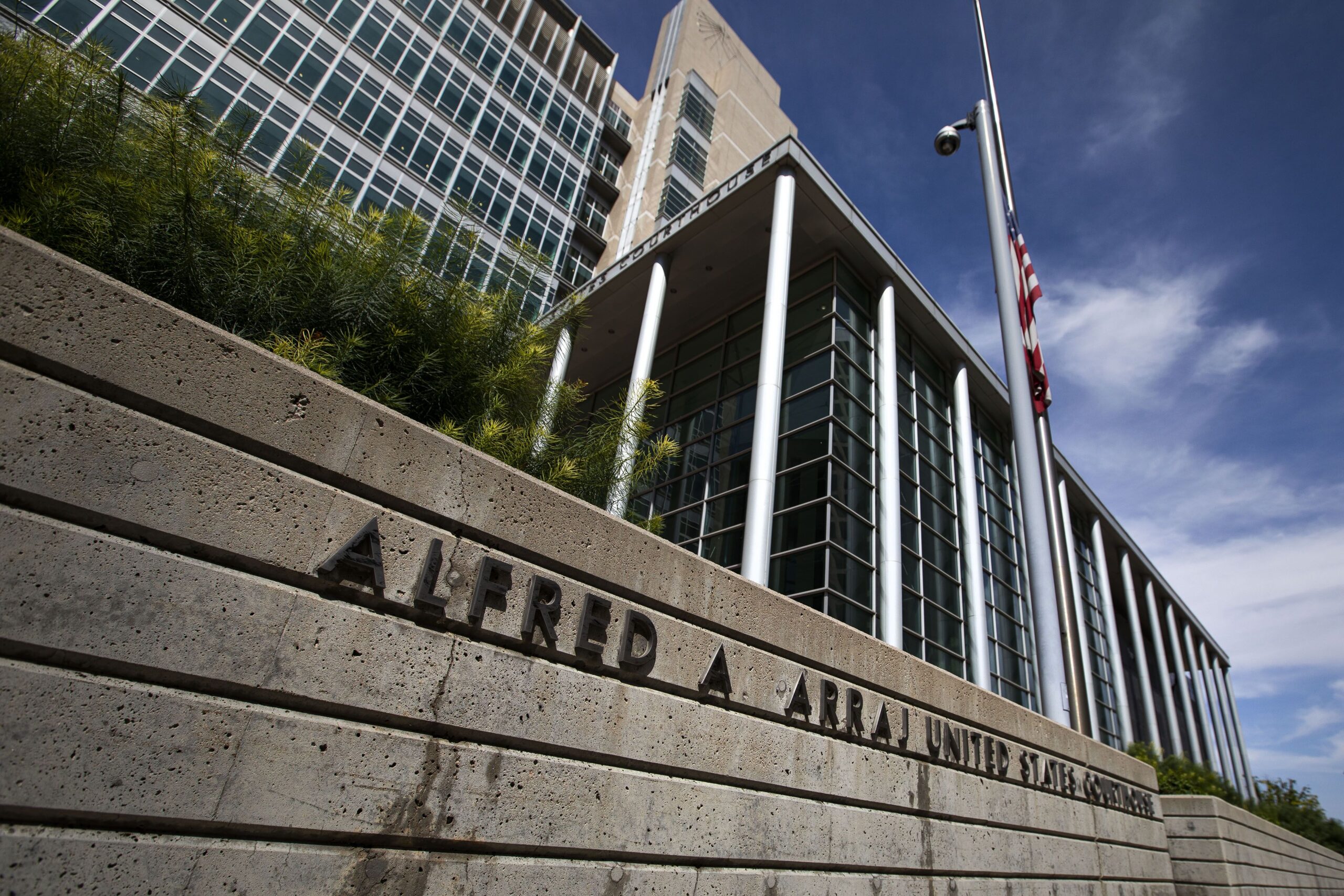
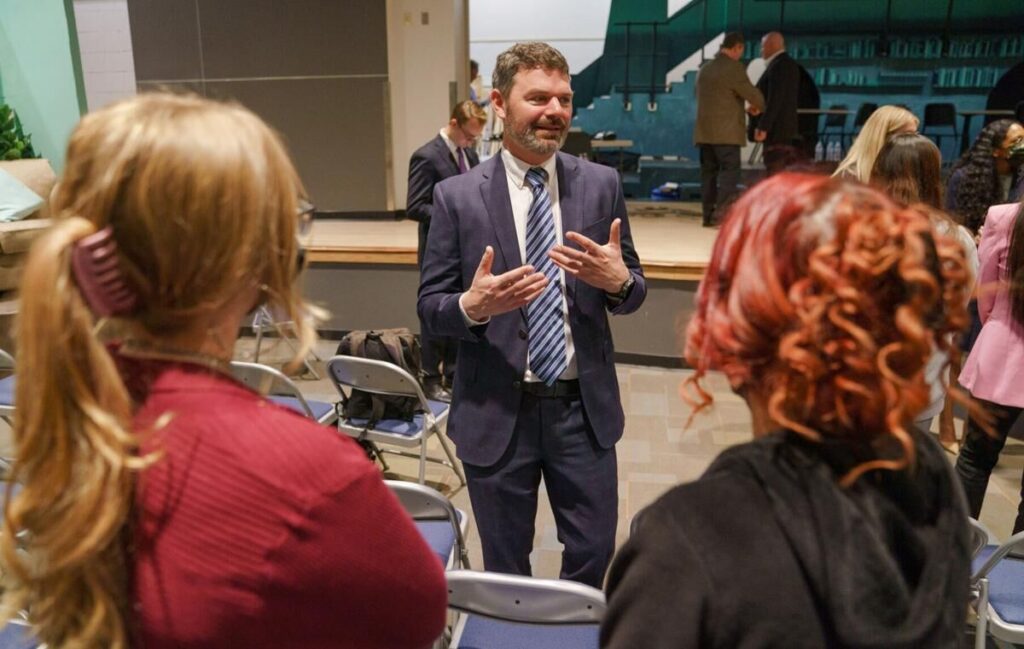
One of Colorado’s newest federal judges spoke on Thursday about his first year on the bench, his philosophy behind facilitating case settlements and how his background as a public defender informs his current role.
“Most of my career, I represented poor people or people who didn’t have enough money for an attorney,” said U.S. Magistrate Judge Timothy P. O’Hara. “Before you start thinking, ‘Oh boy, he seems to have an affinity for the little guy,’ being a public defender is all about fairness. Fairness comes in a lot of different shapes and forms and sizes. I try to be fair to everyone. The worst thing was when I felt I didn’t get to speak or didn’t feel heard.”
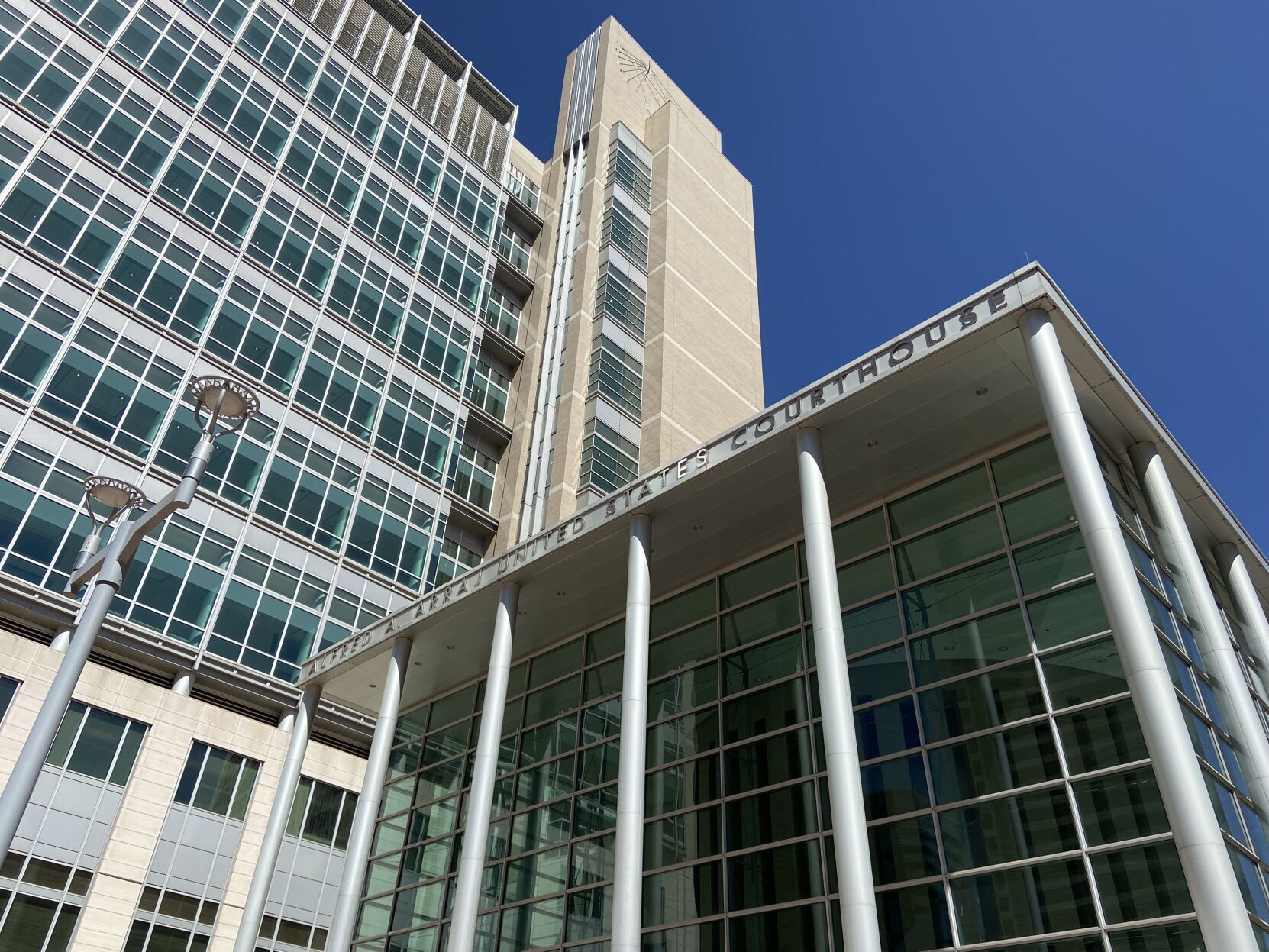
O’Hara delivered a lighthearted talk to an audience of attorneys at the Alfred A. Arraj U.S. Courthouse in Denver. He joined the court in October 2024, after the presidentially appointed district judges named him to succeed now-U.S. District Court Judge S. Kato Crews.
Among other things, O’Hara said he tries to bring humor to the bench. It takes the form of “a lot of dad jokes” and facetious citations to “Goose v. Gander” when one side is taking a hypocritical stance.
“I’m probably not the typical federal judicial officer in that respect. I’m a little less buttoned-up than some others,” he said. “But if anyone feels it’s off-putting, please let me know.”
O’Hara said the court will likely reach 4,000 civil case filings imminently, a notable increase from prior years. He currently has 562 cases assigned to him, primarily civil lawsuits in which a district judge is the final decision-maker, plus cases in which the litigants have agreed O’Hara alone will preside.
Writing orders and recommendations, he said, takes up the single largest chunk of his time, followed by status or scheduling conferences. Evidentiary-related hearings and motions proceedings amount to roughly one-fifth of his duties. Settlement conferences and criminal duty are about 30% of his time combined.
Settlements facilitated by magistrate judges far eclipse the number of trials at the district court, of which there were 38 last year in civil cases. In his first 14 months, O’Hara has conducted 23 conferences, with a 91% success rate.
“That’s a deep source of pride,” he said, “that parties have entrusted me to do that. And it takes a lot of time.”
He said one settlement conference did not conclude until 11 p.m., and multiple cases settled after 7 p.m. after a full day of negotiations. O’Hara also noted he has signs saying “Believe” in the rooms where the litigants are — a reference to the optimistic and folksy soccer coach Ted Lasso played by Jason Sudeikis in the television show of the same name.
“What’s interesting is the narrative in the one room about the other side and the narrative in the other room about the other side is often so emotional, and it’s an impediment to settlement,” he said. “I see the misconceptions. ‘Oh, we think the plaintiff’s wife is driving the bus. We think she’s the one that’s preventing this case from settling.’ Plaintiff’s wife is in there not saying a word.”
O’Hara advised that parties looking for a “home run” are welcome to proceed to trial, but his goal is for both sides to get “a single or a double.”
“Both sides are getting something,” he said. “The relief I see on the plaintiff’s face when I say, ‘This could be over today. It could be over today,’ is like, ‘Ahh!’ It’s a wave that washes over them. And on the defense side, ‘You could stop paying your lawyers today.’ Same wave of relief!”
He added that he believed his willingness to keep facilitating the settlement as long as it takes has been a factor in reaching resolution.
“As long as you move $5, I’m still going,” O’Hara said. He clarified that for magistrate judge-involved settlements, he now tends to prioritize cases with self-represented litigants or where the cost of going to a private mediator would be prohibitive, given the time-intensive nature of the conferences.
Finally, he said it is challenging to issue thorough yet quick written decisions. But he finds it “most rewarding” to create a written product that he and lawyers can rely upon.
“I have a little piece in this big puzzle of cases that we all use. I’m only persuasive, I’m not binding on anybody,” he said. “But that matters. To use someone’s logic and to bring it into another case? That’s a source of pride.”
The Faculty of Federal Advocates sponsored the discussion.

Denver murder conviction reversed for incomplete self-defense instruction
Michael Karlik
michael.karlik@coloradopolitics.com
Updated 1 hour ago
Colorado’s second-highest court reversed a defendant’s murder conviction last week because a Denver judge gave an incomplete instruction to the jury about the man’s right to self-defense. Donald R. Gonzales and Gary McLaughlin met up in a Capitol Hill parking...
Colorado lawmaker, House leaders named in workplace-retaliation lawsuit
Marianne Goodland
marianne.goodland@coloradopolitics.com
Updated 4 hours ago
A former legislative aide has filed a lawsuit alleging she was mistreated, illegally directed to perform campaign work and harmed by a House leadership structure she charged was fragmented, politicized and ineffective at protecting employees. The lawsuit, filed by Jennifer...
Federal judge hears arguments about Colorado’s 3-day gun purchase waiting period
Michael Karlik
michael.karlik@coloradopolitics.com
Updated 9 hours ago
A federal judge heard arguments on Monday about the constitutionality of a 2023 Colorado law that generally imposes a three-day waiting period on firearm purchases after the initiation of a background check. The test that the U.S. Supreme Court created...
Colorado Supreme Court intervenes in Weld County prosecution dismissed due to Missy Woods misconduct
Michael Karlik
michael.karlik@coloradopolitics.com
Updated 40 minutes ago
The Colorado Supreme Court ordered a Weld County trial judge last week to respond to the district attorney’s claim that he improperly dismissed a criminal case because of “outrageous” conduct by the Colorado Bureau of Investigation. Daniel Lee Eatinger stood...
Schoolchildren’s presence at child sex-related trial did not harm Arapahoe County defendant, appeals court says
Michael Karlik
michael.karlik@coloradopolitics.com
Updated 3 days ago
Colorado’s second-highest court decided on Thursday that the presence of a group of schoolchildren on the first day of a child sexual exploitation trial did not violate an Arapahoe County defendant’s constitutional right to a fair trial. Prosecutors charged Jerry...
Appeals court cites week-old Colorado law to reinstate child neglect case at child, father’s request
Michael Karlik
michael.karlik@coloradopolitics.com
Updated 3 days ago
Colorado’s second-highest court invoked a new state law for the first time on Thursday and reinstated a child neglect case that both the child and her father wished to reopen. House Bill 1227 took effect on Aug. 12, reversing a...
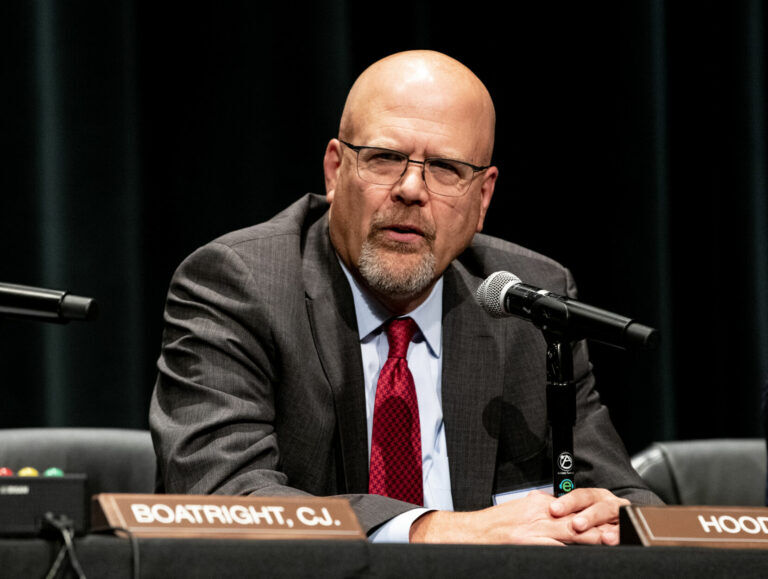
Colorado Supreme Court names William Hood as next chief justice
Michael Karlik
michael.karlik@coloradopolitics.com
Updated 4 days ago
The Colorado Supreme Court has selected Justice William W. Hood III to be the next chief justice, the judicial branch announced on Friday. Hood will succeed Chief Justice Monica M. Márquez, who took over the role in July 2024. “I...
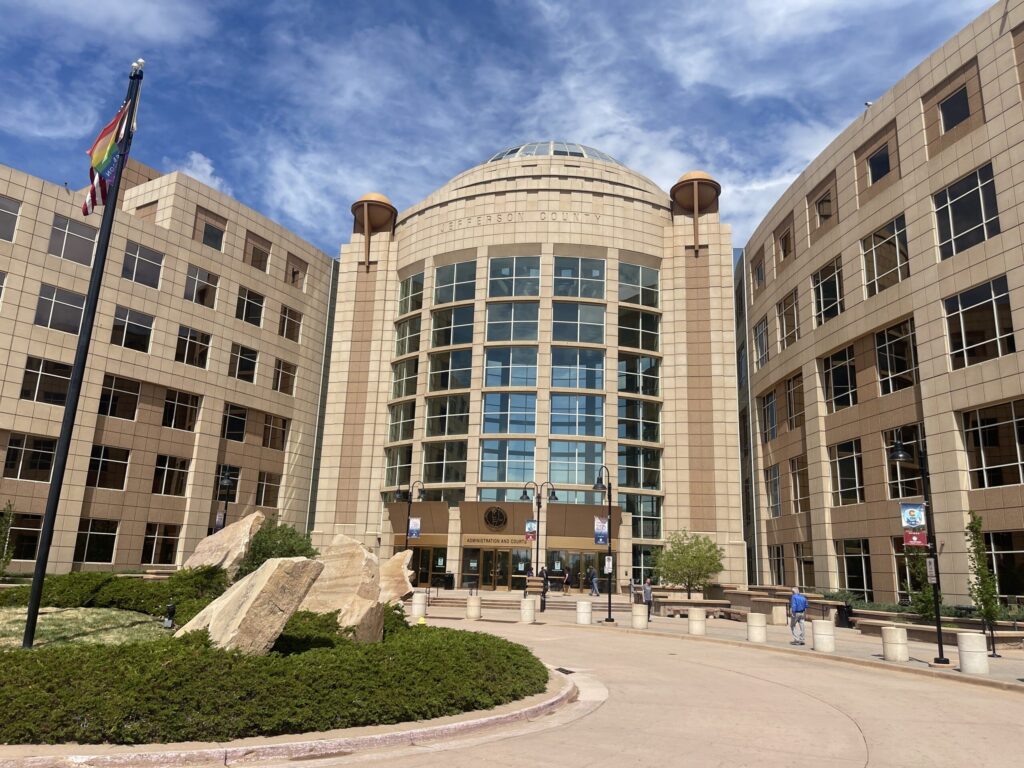
Family of slain Lakewood teacher releases statement as murder suspect makes first court appearance
Matt Kyle
matt.kyle@denvergazette.com
Updated 1 day ago
Patrick Theodore Barnett, the Lakewood man accused of killing his wife, a Jeffco Public Schools art teacher, made his first court appearance Friday morning as his wife’s family looked on. The status conference hearing was held before District Court Judge...
Appeals court upholds Park County trophy hunting conviction
Michael Karlik
michael.karlik@coloradopolitics.com
Updated 4 days ago
Colorado’s second-highest court clarified on Thursday that a defendant may stand convicted under the state’s trophy hunting laws if he abandons a bear carcass but returns later to remove the meat. Under Colorado law, it is a felony to detach...
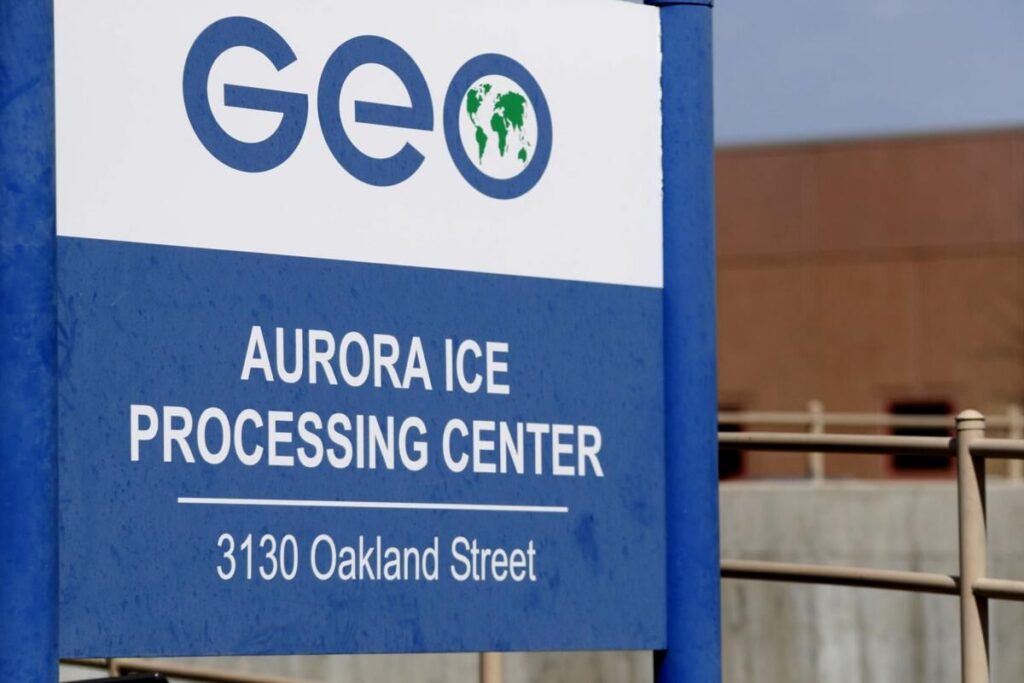
Judge grants partial injunction to GEO in fight against state health inspection law
Kyla Pearce
kyla.pearce@gazette.com
Updated 5 days ago
A judge ruled Thursday that The GEO Group does not have to follow parts of a new state law requiring more frequent health and safety inspections at the U.S. Immigration and Customs Enforcement processing center in Aurora. Under the order...
PREV
PREVIOUS
Colorado's snowpack to suffer as bone dry conditions, more wind forecast for high country; where's the snow?
Dry conditions will prevail for another six or seven days as Colorado’s high country continues to experience a dry fall heading into mid December. Colorado’s snowpack remains growing inconsistently, marking the third year in last five to start below median average. But snow is forecast to return about a week before Christmas, giving the possibility […]
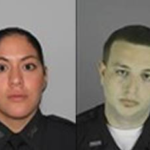
Two Denver sheriff's deputies arrested on suspicion of assaulting at-risk adult
Two Denver sheriff’s deputies were arrested Thursday on suspicion of felony assault of an at-risk adult. Sgt. Carla Gentempo and Deputy Jason Gentempo were arrested by Denver police on suspicion of third-degree assault, a class six felony, according to a Thursday news release from the Denver Sheriff’s Department. The charges appear to stem from an […]