

Colorado AG’s move hampers AI’s progress | OPINION
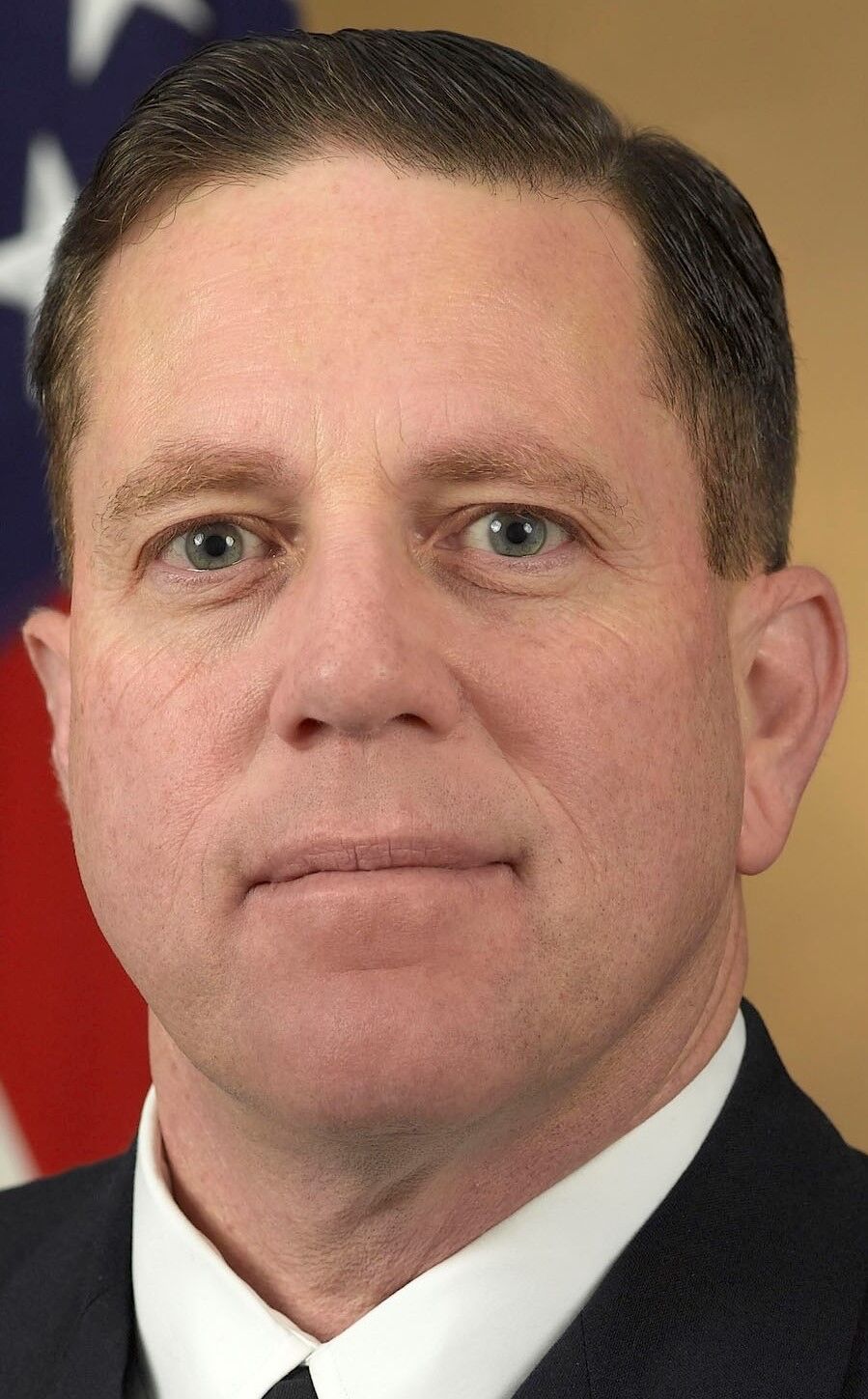
By Martin A. Perryman
According to a report from the Common Sense Institute, a nonpartisan Colorado think-tank, the Centennial State has quietly become one of America’s great technology stories. At a time when most others are still arguing about how to begin, this year, we became the first state in the country to pass a comprehensive artificial intelligence law. The federal side of things is not much better — more than 150 AI-related bills were introduced in Congress during the past two years, yet not a single one passed. Here in Colorado, we didn’t wait like everyone else. We acted.
Our leadership on AI is paying off. Our state now ranks third in the nation for tech sector concentration, which is living proof innovation is part of our DNA. And every new tech job created here supports another 2.67 jobs across other industries, from construction to hospitality to education. Venture capitalists have noticed, making Colorado fifth in the nation for venture-capital investment, with funds pouring into AI, cloud computing and cybersecurity startups.
We are also one of the fastest-growing states for AI-related employment, ranking 14th nationally for AI job postings and accounting for roughly 14% of all job growth in 2024.
In other words, Colorado isn’t just participating in the AI era. We’re helping to build it. And for those of us who served in uniform, that leadership isn’t just about jobs or ensuring robust innovation. It’s also about national security. America’s economic strength and technological superiority are what keep our adversaries, from Beijing to Moscow, in check.
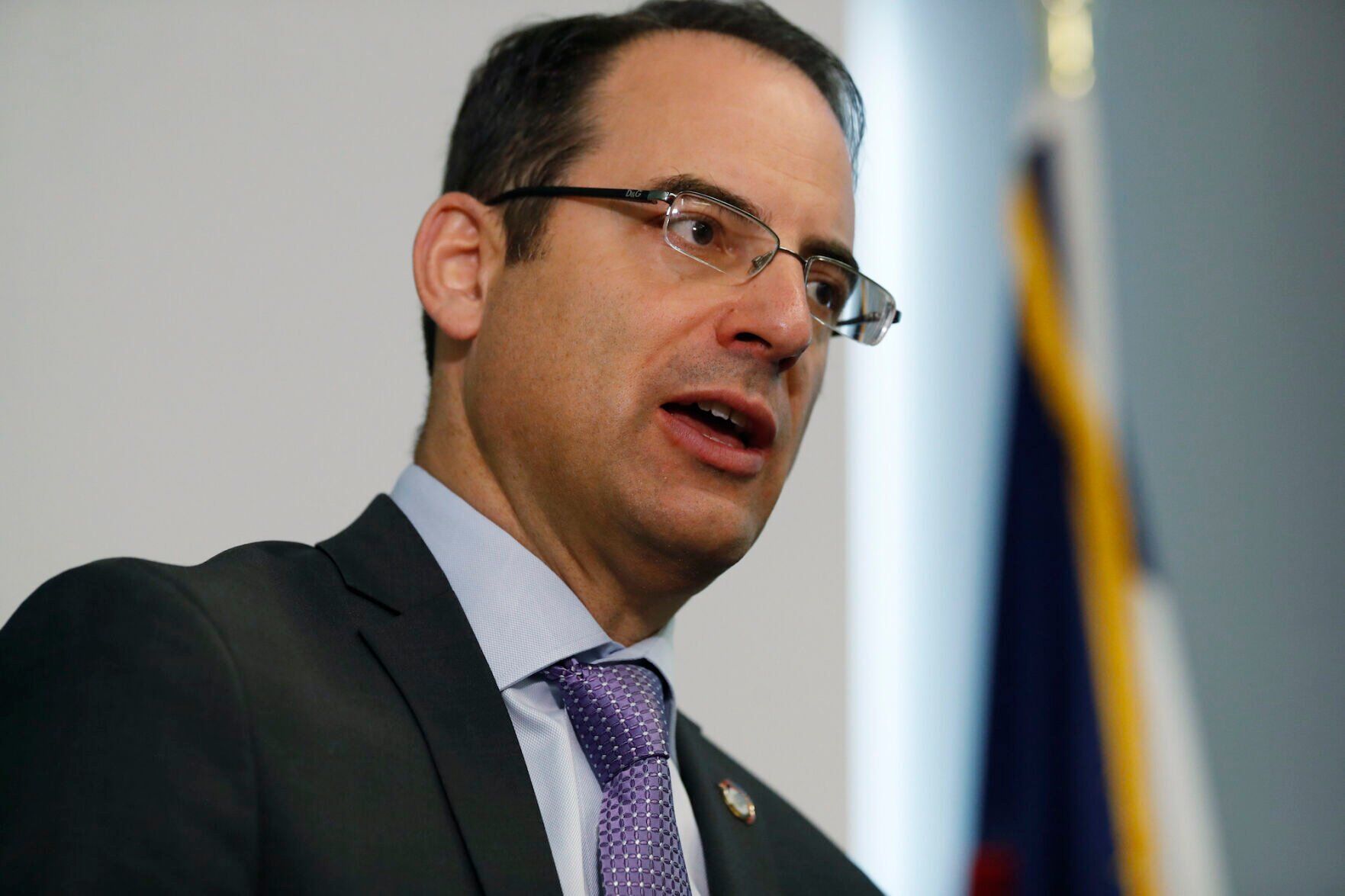
That’s why Attorney General Phil Weiser’s decision to fight the federal government’s approval of the Hewlett Packard Enterprise–Juniper Networks merger is so troubling.
By siding against a merger of a company with offices in Colorado, which U.S. intelligence officials and the Department of Justice deemed essential to national competitiveness, Weiser is undercutting the very technological edge that keeps our state and country safe. He’s trying to get a judge to unwind the Department of Justice and intelligence community’s hard work.
The combined company would strengthen our ability to compete with Chinese telecom giant Huawei, whose government-backed networks dominate much of the developing world and increasingly power artificial intelligence infrastructure abroad.
HPE and Juniper make the routers, servers and secure networking systems AI systems need. If Colorado wants to remain a hub for AI development, from university labs in Boulder to fast-growing data centers in Aurora and Colorado Springs, then America needs strong, stable companies building that backbone.
Colorado’s AI success came about because our leaders, on both sides of the aisle, built an environment where innovation could thrive: strong universities, sensible regulation and collaboration between the public and private sectors. The HPE–Juniper merger represents exactly that kind of collaboration. Blocking it doesn’t protect consumers; it protects foreign competitors who would love to see American firms sidelined.
As a Democrat, I believe in responsible oversight and corporate accountability. But I also believe in results. For Colorado to keep leading in AI, its policymakers must understand the difference between regulation that protects people and regulation that paralyzes progress and undermines national security. Weiser’s challenge to the HPE–Juniper merger could slow job growth, weaken our AI infrastructure, and slide tech investments out of here at a time when Colorado’s leadership in AI should be increasing.
From my years in the service, I learned strength deters conflict. The same principle applies here: if America leads in AI, we shape the future. If we fall behind, China will.
Colorado can stay on the cutting edge of this tech race, but only if our elected officials choose progress over politics. Our innovation ecosystem — our jobs, our research and our future — depend on it.
Martin A. Perryman, a retired U.S. Army colonel, is a Colorado defense and foreign policy expert. He served as an Army foreign area officer with operational assignments to the Pentagon, Central Command and European Command. Following retirement from the Army, he worked closely with host nation defense and security forces executing multiple installation projects for security scanning equipment internationally. He currently is providing contract support to the International Partners Division of Space Systems Command, a major command of U.S. Space Force.

Was there ever a Colorado city that required racial segregation by law? | BOB LOEVY
Bob Loevy
bob-loevy@coloradopolitics.com
Updated 1 day ago
The answer is “yes.” The Black Racial Equity Study Commission, led by Colorado Senate President James Coleman, has learned the city of Fruita had laws forbidding black people from being on the city streets at night and from being buried...
The African roots of three Colorado leaders | SONDERMANN
Eric Sondermann
eric-sondermann@coloradopolitics.com
Updated 3 days ago
Colorado’s political transformation is measured in many ways. A once reliably red state (with asterisks) became purple and is now a rather deep blue. For better or worse, probably the latter, power is ever more consolidated along the Front Range...

Fighting for every Colorado rural hospital on the eastern plains | GUEST COLUMN
Colorado Politics
colorado-politics@coloradopolitics.com
Updated 2 days ago
By Lauren Boebert After touring Melissa Memorial Hospital in Holyoke and Wray Community District Hospital — two of more than a dozen rural hospitals in my district — I was again reminded why I fight for them in Washington. The...

Fix Colorado without shortchanging taxpayers | GUEST COLUMN
Colorado Politics
colorado-politics@coloradopolitics.com
Updated 2 days ago
By Lisa Frizell If we truly want to fix Colorado, we must respect taxpayers, demand accountability and prioritize classroom results. Proposition NN fails the test. The far left put forth this measure, presenting it as the only way to fund public...

New anti-gun legislation is about preventing firearm ownership, not safety | GUEST COLUMN
Colorado Politics
colorado-politics@coloradopolitics.com
Updated 2 days ago
By Ava Flanell It’s been a little more than a month since the most radical anti-gun legislation went into effect in Colorado history: Senate Bill 25-003. Originally intended as an “assault weapons ban,” Colorado Democrat sponsors settled for a complicated...
Colorado ed department must up its competence to prevent waste, fraud, abuse | Paula Noonan
Paula Noonan
paula-noonan@coloradopolitics.com
Updated 3 days ago
The Colorado Department of Education let $24 million fly from its checking accounts from January 2017 through June 2026 to CHE, aka Colorado Homeschool Enrichment. The details show how easily CHE and Education Re-Envisioned BOCES re-envisioned how to convert public...
Remember the injustice of forced unionism | GUEST COLUMN
Colorado Politics
colorado-politics@coloradopolitics.com
Updated 3 days ago
By Mark Mix This Labor Day we celebrated the men and women whose hard work keeps the country running. But in Colorado, many of those same workers face a real threat: pay union dues or lose their job. That’s because...

Should we always blame voters for low civic participation in elections? | GUEST COLUMN
Roland Halpern
roland-halpern@coloradopolitics.com
Updated 3 days ago
This year, like every election cycle, we hear the same complaints — enough citizens don’t vote. Voter turnout is too low. People are disengaged. Citizens are shirking their civic responsibility. If only voters cared more, democracy would work better. Fair...

Lori Gimelshteyn on 3 ballot measures to ‘let kids be kids’ | The OpEdge Podcast
Tony Olivero
tony.olivero@gazette.com
Updated 3 days ago
Lori Gimelshteyn — board member of Protect Kids Colorado and executive director of the Colorado Parent Advocacy Network — joins The OpEdge to discuss three measures headed to Colorado voters this November. Gimelshteyn tells host and investigative columnist Jimmy Sengenberger...
A path toward justice and public safety | PODIUM
Anthony Hartsook
ahartsockop@gmail.com
Updated 3 days ago
Strangulation can be one of the most dangerous forms of assault; despite the lack of visible ailments it is accompanied by. Though strangulation leaves no broken bones, bruises or visible wounds, it is one of the strongest predictors of future...
PREV
PREVIOUS
A cabal of candidates in the Denver school board election | NOONAN
A gaggle of geese, a murder of crows, a conspiracy of lemurs — these are the collective nouns that describe these collections of animals. In the Denver Public Schools’ board election, Denver Families for Public Schools has given us its own version: a cabal of candidates. Four candidates received Denver Families’ endorsements on top of […]

Do Pueblo voters have strong-mayor buyer's remorse? | MAES
In 2019, Pueblo city voters opted to change its form of government from a city council-city manager form of government to that of a council-mayor form of government. As a result, the city elected its first mayor in more than a century. Nick Gradisar was elected as the mayor and Heather Graham served simultaneously as […]