

Denver hosts world’s largest police conference as DPD responded to weekend protest

Denver law enforcement this week seized an opportunity to share its policing strategies with global agencies, as the city played host this year to the world’s largest police conference and as massive protests filled downtown streets.
From Saturday to Tuesday, more than 16,000 law enforcement representatives from across the world were expected to visit the Colorado Convention Center for the annual International Association of Chiefs of Police Conference.
Established in 1893, the IACP organization has more than 35,000 members representing law enforcement-oriented agencies from across 170 countries. Its conference of over 600 vendors visits new cities each year.
During IACP’s four days in Denver, police agencies were represented nationwide and from countries in South America, Africa, Europe and Asia.
The IACP conference offers exhibits and presenters for public safety professionals to learn about new strategies, police techniques, careers, technology and department resources.
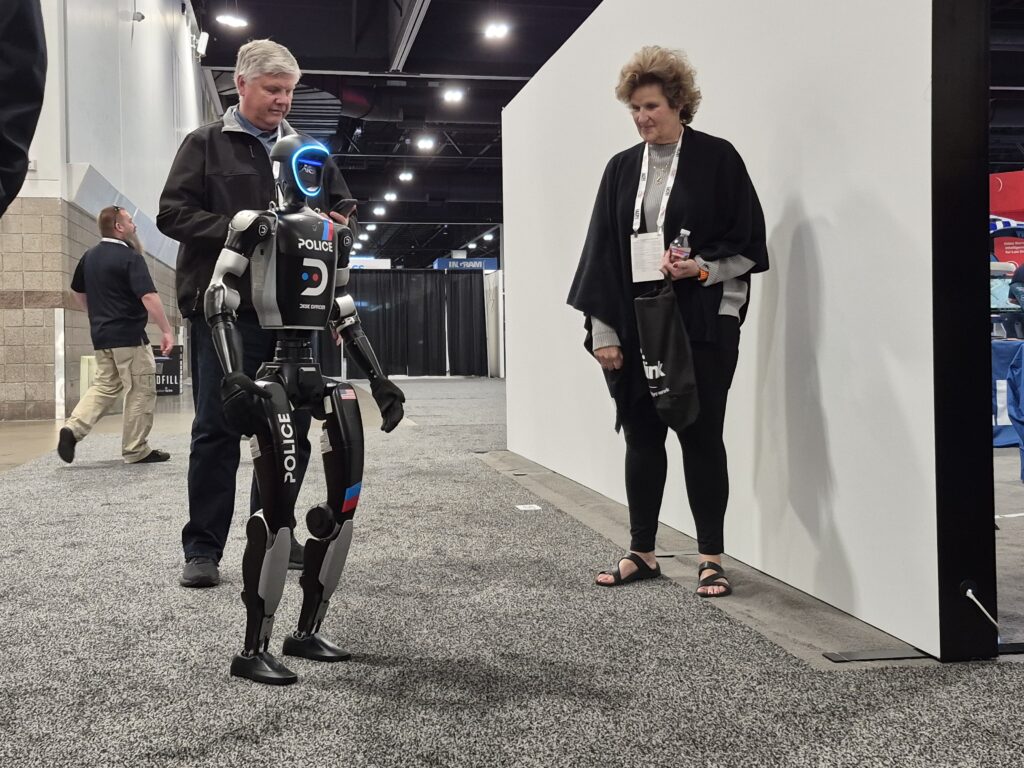
For it to be in Denver meant a great deal to its police department of 1,568 sworn officers, its police chief said.
“We’ve learned from some great people, but I think it’s also important to share what you’ve learned with others, so that they can see similar success,” Denver Police Department Chief Ron Thomas told The Denver Gazette of the city hosting IACP.
“Other communities across the world have struggled with, or are currently struggling with, things that we had struggled with,” Thomas said. “I think sharing our success and helping people understand those effective strategies.”
One of DPD’s panels explained how the department is utilizing hot spot data to establish enforcement strategies – such as the department’s “Hot Streets” program.
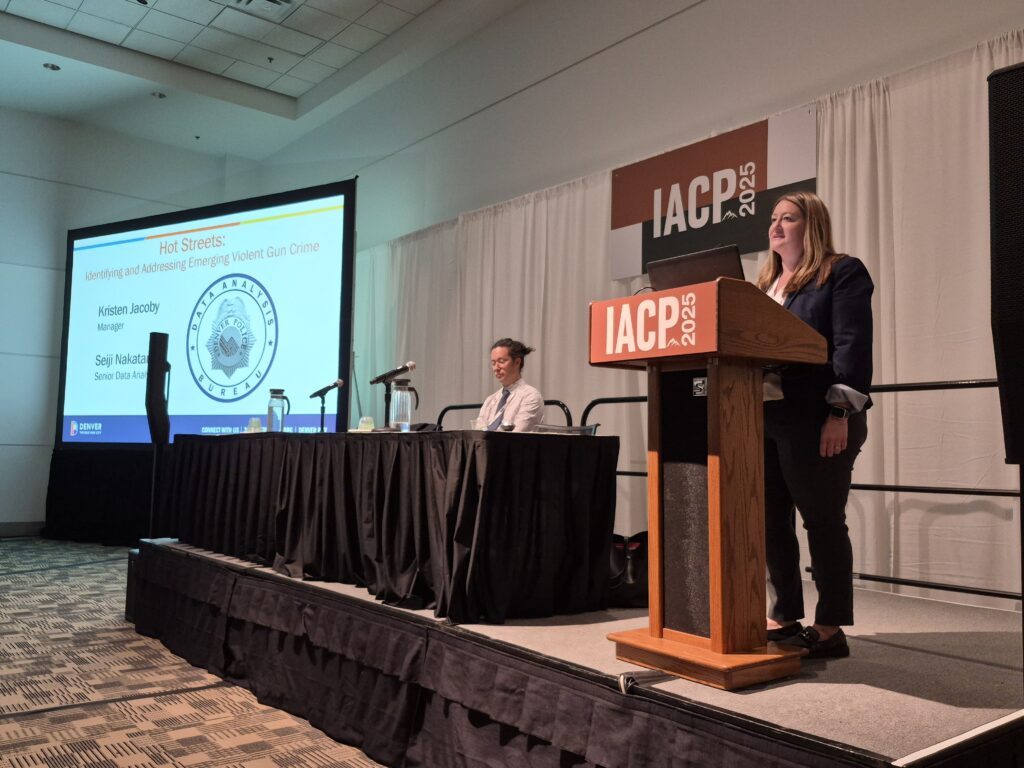
Capt. Kevin Burns of the San Juan County Sheriff’s Office in New Mexico, said he is excited to take what he learned in Denver back down south of the Colorado border.
“It’s so valuable to be here, so smaller agencies can see what bigger agencies have,” Burns told The Denver Gazette after one panel.
Many other panels during the conference included representation from across the world, sharing respective strategies for the cities or places the agencies serve.
Thomas, who attended much of the conference, said the department at IACP also addressed enforcement strategies for vehicle theft, violent crimes and how to police in large crowds.
During the conference, Thomas said visiting law enforcement took notice of the latest “No Kings” protest enforcement response.
On Saturday, Denver joined nationwide “No Kings” protests, when tens of thousands of people flooded downtown streets in a peaceful protest. After which, Denver police arrested a dozen people during follow-up protests and used smoke and pepper balls.

The police chief claimed protests exemplified enforcement strategies to “separate those individuals that wanted to cause harm and destruction and still deal with them with extreme level of professionalism.”
Denver Mayor Mike Johnston’s office agreed.
“Denver was honored to host both the International Association of Chiefs of Police and the largest No Kings protest in the state on the same weekend,” Jon Ewing, a mayor’s office spokesperson, said in an email responding to hosting IACP.
Ewing said both events represented “a demonstration of our commitment to public safety and our place as a vibrant city.”
In his IACP speech, Mayor Johnston addresses protests. He said the city “won’t tolerate people throwing bottles at police officers or lighting police cars on fire, because nobody who takes an oath and puts on a badge to defend this city deserves that.”
“In Denver,” the mayor added, “that behavior doesn’t make you a patriot, it makes you a criminal.”

2 Colorado State troopers shot near Woodland Park; suspect killed
DEBBIE KELLEY
debbie-kelley@coloradopolitics.com
Updated 2 days ago
Two Colorado State Patrol troopers were hospitalized, and a suspect is dead after a shooting during a traffic stop Tuesday. The initial incident happened at about 7:15 a.m., when a resident reported suspicious activity in the area near milepost 286...
Family of slain Lakewood teacher releases statement as murder suspect makes first court appearance
Matt Kyle
matt.kyle@denvergazette.com
Updated 3 days ago
Patrick Theodore Barnett, the Lakewood man accused of killing his wife, a Jeffco Public Schools art teacher, made his first court appearance Friday morning as his wife’s family looked on. The status conference hearing was held before District Court Judge...
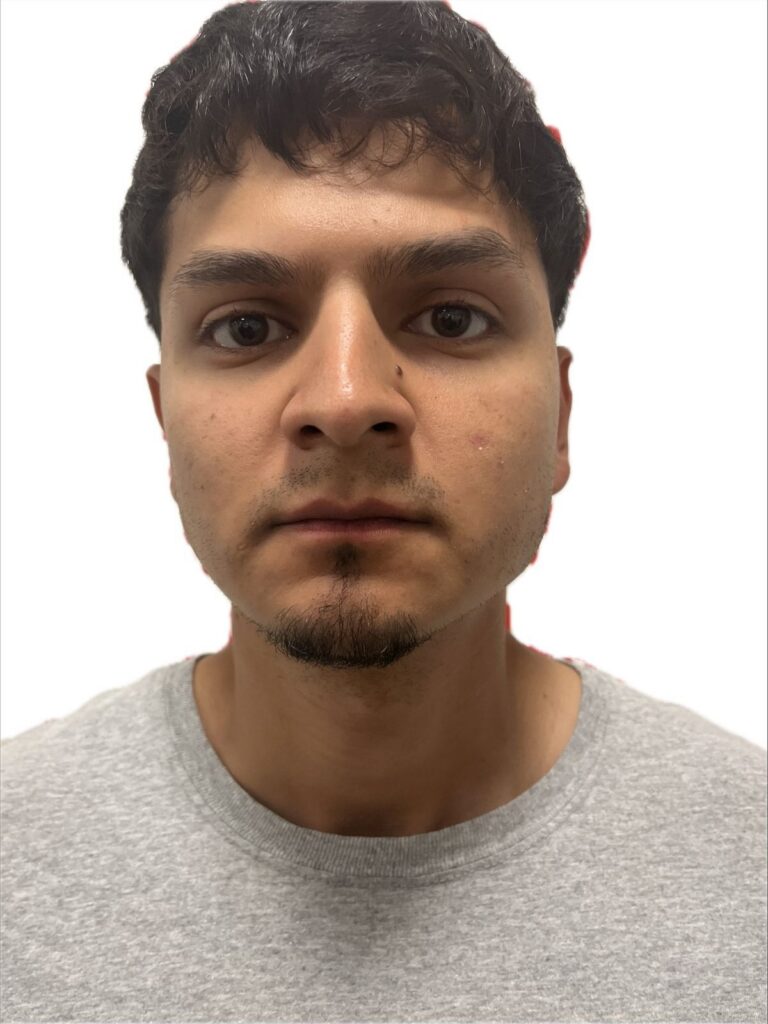
Parker man faces 20 years to life for serial sexual assaults
Nicholas Fogleman
nicholas.fogleman@denvergazette.com
Updated 7 days ago
A 25-year-old Parker man who sexually assaulted three women in 2025 pleaded guilty Wednesday and will serve 20 years to life in prison. Javier Rodriguez-Andrade pleaded guilty to charges stemming from three sexual assaults involving women ages 19 to 24. ...
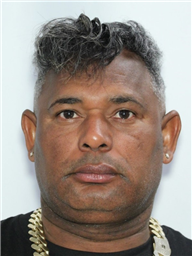
Man charged in Northglenn homicide of wife
Matt Kyle
matt.kyle@denvergazette.com
Updated 7 days ago
A man has been formally charged with murder and burglary relating to a homicide last week in Northglenn. Alexei Munive-Rodriguez, 48, was arrested Sunday after he was at large following the homicide, which occurred Friday. Police were dispatched around 10:30...
Colorado judge blasts state forensics lab in dismissing child sex case
Jenny Deam
jenny.deam@gazette.com
Updated 1 week ago
In a potentially widely consequential action, a Weld County district judge dismissed a child sexual assault case, citing the ongoing scandal at the Colorado Bureau of Investigation’s forensic lab that “has left a dark mark on the history of Colorado...

DA justifies CSPD officers in fatally shooting man at McDonald’s
Cleo Westin
cleo-westin@coloradopolitics.com
Updated 1 week ago
The deadly shooting of a man by Colorado Springs police officers at a McDonald’s was ruled justified by the 4th Judicial District Attorney’s Office on Monday, the office announced in a news release. The ruling determined officers Daniel White, Mitchell...

Adams County deputies justified in shooting man who killed ex-wife’s parents, DA says
Kyla Pearce
kyla.pearce@gazette.com
Updated 1 week ago
District Attorney Brian Mason declared three Adams County deputies justified in fatally shooting a man who had killed his ex-wife’s parents and approached them with a knife. The 17th Judicial District Attorney’s Office will not file criminal charges against Deputies...
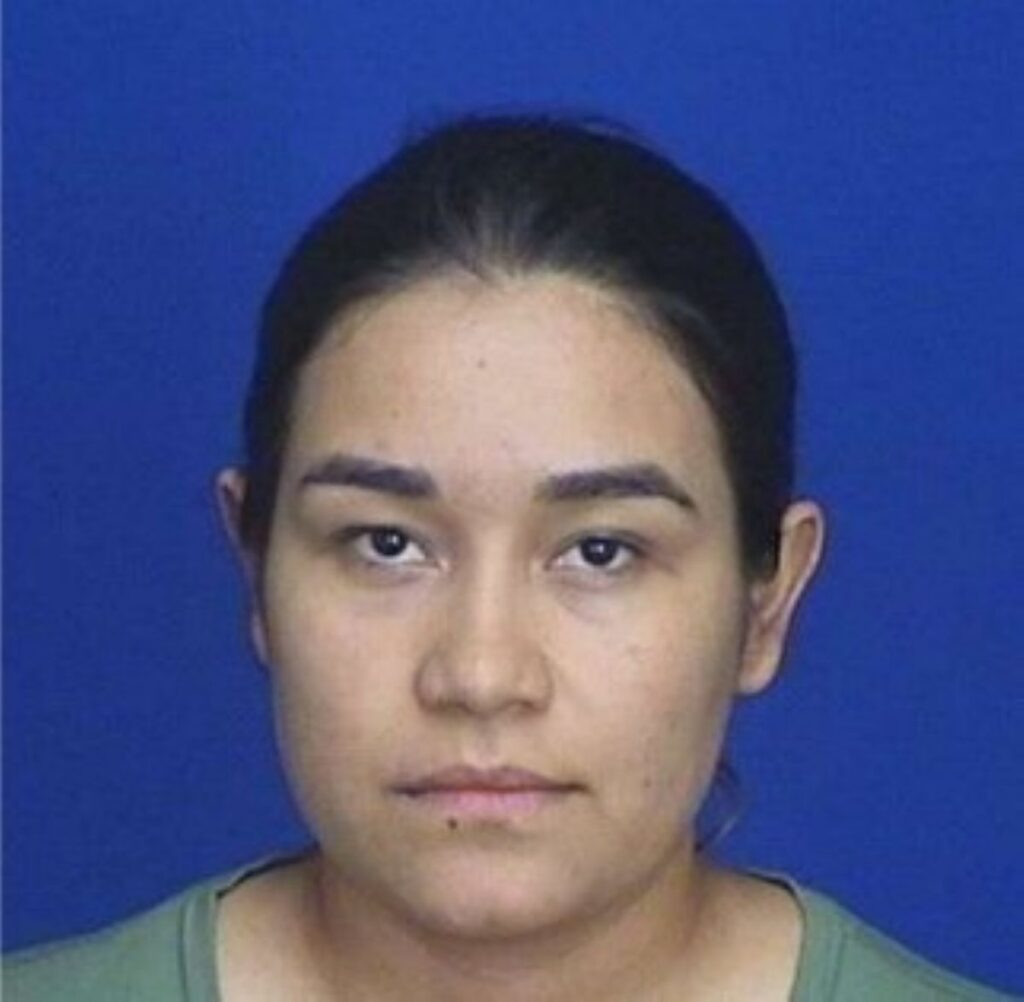
Castle Rock caregiver sentenced after stealing more than $110,000 in jewelry from family
Nicholas Fogleman
nicholas.fogleman@denvergazette.com
Updated 1 week ago
A judge sentenced a Castle Rock caregiver to 90 days in jail after she pleaded guilty to stealing more than $110,000 worth of jewelry from the family of a disabled son under her care. Elsa Montejo-Fuentes, 32, had worked for...

CSI study reviews impacts of Colorado’s mandatory sex‑trafficking sentencing measure
Marissa Ventrelli
marissa.ventrelli@coloradopolitics.com
Updated 1 week ago
A new report by the think-tank Common Sense Institute examines what could happen if Colorado voters approve Initiative No. 108, which establishes mandatory life sentences for offenders convicted of sexual trafficking of a minor. The measure is backed by Protect...

White House deploys private companies to help crack down on cybersecurity breaches
David Zimmermann
david-zimmermann@coloradopolitics.com
Updated 2 weeks ago
The White House intends to use private companies in the United States to help crack down on cybersecurity breaches perpetrated by transnational criminal organizations. President Donald Trump signed a memorandum on Wednesday, directing his administration to employ the private sector...
PREV
PREVIOUS

Aurora to close 2 library branches this week
Aurora is closing two of its smallest library branches Friday to make way for upgrades to the Martin Luther King Jr. Library in early November. The city’s library system will shut down the libraries Chambers Plaza, 1551 Chambers Road, and Iliff Square, 2253 S. Peoria St., reassigning staff to the Central and Martin Luther King […]

Connect for Health Colorado has serious financial management problems, audit says
Worries that the quasi-governmental agency that operates Colorado’s official state-based health insurance marketplace was spending money for political purposes turned out to be unfounded, according to a new audit. But the state audit found that Connect for Health Colorado has serious problems with its financial management, including a lack of oversight on the use of […]