

Colorado and Denver governments renew push to dismiss energy lawsuit
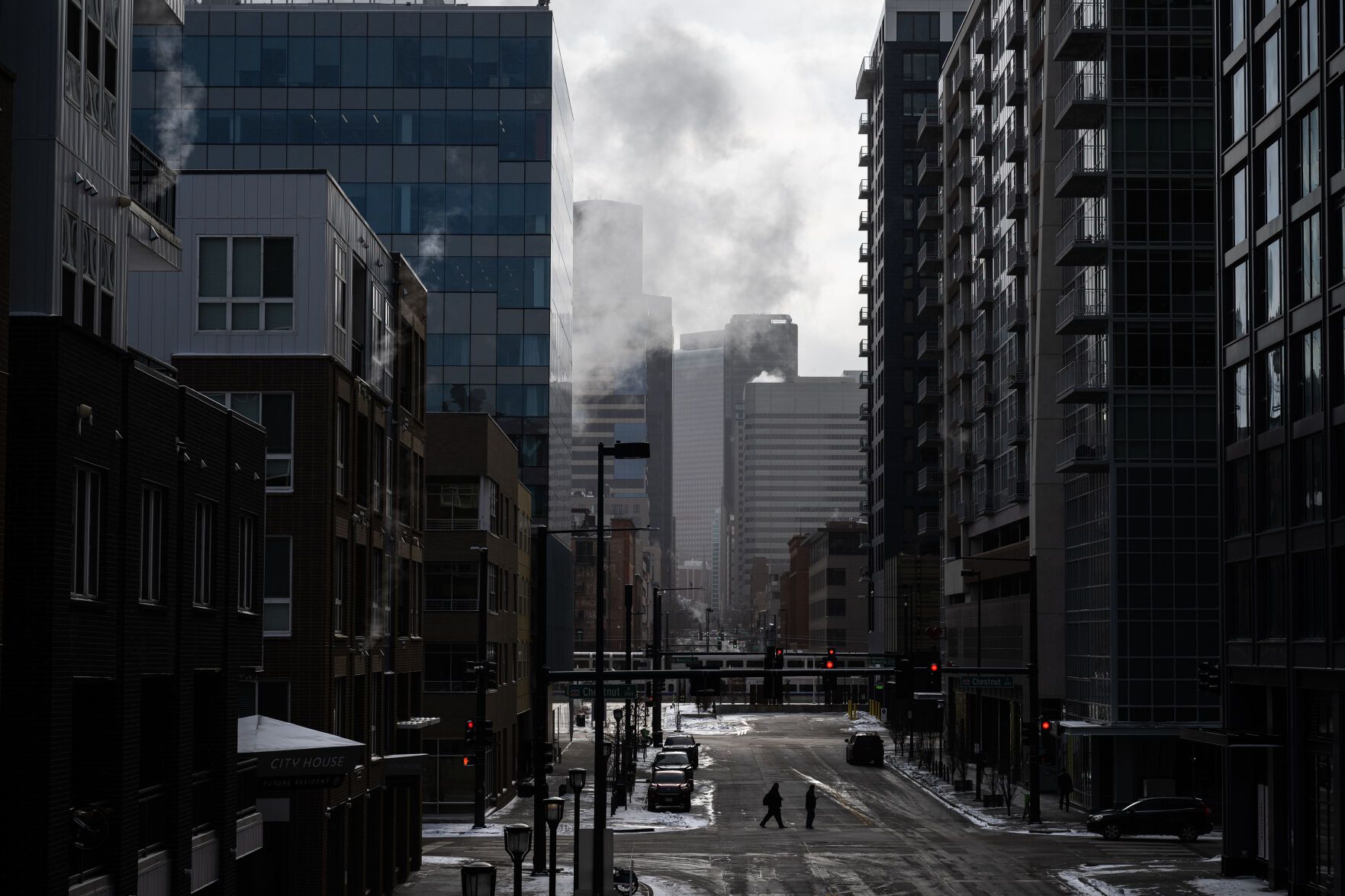
Officials from Denver and the state of Colorado, along with environmental organizations, asked a federal judge anew to throw out a long-running lawsuit challenging the building energy mandates by city and the state in a fight over how far the governments can go in forcing large buildings to cut fossil energy.
The state and the city argued the building energy mandates are necessary to comply with Gov. Jared Polis’ “Greenhouse Gas Reduction Roadmap,” which calls for reaching “net zero” CO2 emissions by 2040.
The latest dismissal motions, filed Oct. 3 by the city, the state and a coalition of environmental intervenors, seek to end the case brought by four trade associations representing apartment owners, hotels and commercial developers.
The Colorado Apartment Association, Apartment Association of Metro Denver, Colorado Hotel and Lodging Association, and NAIOP Colorado have claimed that Denver’s “Energize Denver” ordinance and the state’s “Regulation 28” violate the federal Energy Policy and Conservation Act, which reserves controlling appliance-efficiency standards to the U.S. Department of Energy.
The business groups insisted the rules effectively force owners of large buildings to replace gas-fired boilers and water heaters with electric systems, which the groups claimed is federally preempted.
Denver and the state countered that the case had been filed too late and that the owners lack “standing” — the legal right to sue — because no fines have been imposed and owners have not used the extensions, custom targets or other compliance options available under the rules, and, thus, have not “exhausted” administrative remedies, something the courts usually require for a case to be “ripe” for adjudication.
“The Building Performance Standards rules offer multiple compliance pathways,” the Colorado Energy Office said in a statement, adding that “the BPS (building performance standards) rules do not require electrification.”
Plaintiffs maintained they already face tangible harm through audits, engineering studies and replacement planning needed to meet 2024 reporting deadlines and prepare for 2027 and 2030 targets. Those costs, they said, are immediate and unavoidable.
The trade groups also accused the city and the state of trying to “run out the clock” by relying on procedural defenses, instead of addressing the substance of their claims. They argued the statute of limitations resets each time the rules are amended — most recently when Denver revised its regulations in July 2023 and again in April 2025, each time promising “more flexible compliance options.”
Environmental groups including the Sierra Club, Natural Resources Defense Council, and the Colorado Solar and Storage Association have joined the city and the state, saying the rules are critical to meeting state climate goals and already offer ample flexibility.
Plaintiffs maintained that the flexibility is illusory and that even with exemptions, many buildings will be forced to electrify to meet the city’s and state’s targets.
U.S. District Judge Regina M. Rodriguez will decide whether the motions end the case or allow it to move forward to test whether Colorado’s climate policies conflict with federal energy law.

Colorado doctors, dentists challenge state law on gender‑transition services in new federal lawsuit
Marissa Ventrelli
marissa.ventrelli@coloradopolitics.com
Updated 11 hours ago
A group of Christian doctors and dentists has filed a federal lawsuit challenging a Colorado law they say requires them to provide gender‑transition services that conflict with their religious and ethical beliefs. The lawsuit, filed by the Christian Medical and...

Parenting from prison: Inmates hope to be present in their children’s lives, while physically absent
Marianne Goodland
marianne.goodland@coloradopolitics.com
Updated 3 days ago
The room was decorated with balloons, the tables sparking bright with colors as the smell of pizza and cake wafted through the air. As did music. This was, after all, a father-daughter dance. Except this was not a typical father-daughter...

Colorado House ethics committee issues ‘stern letter’ to Democrat over caucus funds mismanagement
Marianne Goodland
marianne.goodland@coloradopolitics.com
Updated 5 days ago
The Colorado House ethics committee on Friday voted unanimously to issue a “stern letter” to Rep. Mandy Lindsay, D-Aurora, regarding her mismanagement of House Democratic caucus funds. The committee further voted to request that Lindsay resign as Democratic Caucus co-chair...

Secretary of Energy, congressmen push for reliable power over renewable outside CSU coal power plant
Brennen Kauffman
brennen-kauffman@coloradopolitics.com
Updated 5 days ago
U.S. Secretary of Energy Chris Wright said Friday that the Trump administration would continue to fight against state efforts to close coal power plants, including the Ray Nixon Power Plant outside of Colorado Springs. Wright was joined by Colorado Republican...
Manny Rutinel resigns from Colorado legislature to focus on congressional race
Marissa Ventrelli
marissa.ventrelli@coloradopolitics.com
Updated 5 days ago
The Democrat running for a key congressional race — whose outcome could decide the balance of power in the U.S. House — on Friday resigned from the Colorado legislature. State Rep. Manny Rutinel is turning his attention to his campaign...

Wildlife commissioner pushes for tougher penalties after hunter accidentally kills Colorado wolf
Marianne Goodland
marianne.goodland@coloradopolitics.com
Updated 2 weeks ago
Colorado wildlife officials on Wednesday revisited the agency’s handling of violations involving protected species, prompting renewed debate over whether current penalties are sufficient. Colorado Parks and Wildlife Commissioner Rebecca Niemiec on Wednesday urged the agency to impose stronger penalties —...

Colorado enacts new penalties for violent crimes and updates race categories on state forms
Marissa Ventrelli
marissa.ventrelli@coloradopolitics.com
Updated 5 days ago
A trio of new laws — two regarding increased penalties for violent crimes and one establishing new requirements for government-issued forms — went into effect on Sept. 1. Here’s a breakdown of what they do. The bill: Senate Bill 25-050 What...

Capped or graduated income tax rate? Colorado voters to decide
Marianne Goodland
marianne.goodland@coloradopolitics.com
Updated 2 weeks ago
The proposal to create income tax tiers — which would replace Colorado’s flat rate — has been certified for the November general election ballot, setting the stage for a major showdown between two competing forces seeking to define the parameters of...

Some charges against Colorado Democrat arrested for intoxication dropped, Texas police say
Deborah Grigsby
deborah.smith@denvergazette.com
Updated 2 weeks ago
The charges of resisting arrest against a Lone Tree Democrat who is running for the Colorado state House have been dropped, according to authorities from Texas. Christian Schilder, who is running to represent Colorado’s House District 39, was apprehended on...

Colorado state House Democratic candidate arrested in Texas for public intoxication
Marianne Goodland
marianne.goodland@coloradopolitics.com
Updated 2 weeks ago
A Democrat from Lone Tree who is running for a House seat was arrested in Texas in May on charges of public intoxication and resisting arrest. Christian Schilder, the Democrat, is challenging Rep. Brandi Bradley, the Republican incumbent, in the...
PREV
PREVIOUS

Xcel appeals to state on billion-dollar energy project denied in El Paso County
Colorado’s largest utilities provider has asked the state to overrule local decisions on the $1.7 billion Colorado Power Pathway project, which was denied permits this year in El Paso and Elbert counties. Xcel is asking the Colorado Public Utilities Commission to consider overruling local decisions on the 550-mile powerline project in the name of public […]

Douglas County-led panel emphasizes 'industry collaboration' among aerospace companies
Douglas County leaders and state aerospace industry representatives discussed Wednesday what draws aerospace companies to Colorado, notably to the county with more than 27,000 aerospace workers. The panel, a part of the Metro Denver Chamber of Commerce’s Site Selection Conference, comes on the heels of President Donald Trump last month announcing Space Command is moving […]