

Taiwan, Colorado are economic, strategic partners | OPINION

By Debbie Huang
In an increasingly unstable world free democracies are faced with growing challenges, not the least of which are “grey zone” tactics employed by authoritarian regimes which seek to undermine the economies and institutions of free nations and erode the rules-based international order. Taiwan is among those nations which face such a constant onslaught.
Though a geographically small country located across the Pacific, Taiwan is of great importance to Colorado. In many ways it is the front-line of democracy, the anchor of the Indo-Pacific’s first island chain, serving as a bulwark against communist Chinese aggression. It is also one of Colorado’s most important trading partners, especially for agricultural products, and a leader in 21st century technology — accounting for 60% of the world’s semiconductors, including 90% of the most advanced ones, and an increasingly important partner in artificial intelligence. This makes Taiwan an indispensable economic partner, not just for Colorado, but for the world.
Taiwan is committed to the defense of democratic values, individual rights, and free markets, both at home and abroad. Last year, Taiwan’s new president, Lai Ching-te, unveiled the “Four Pillars of Peace” action plan, which includes: strengthening national defense; improving economic security; strengthening partnerships with fellow democratic countries, and pursuing stable and principled cross-strait leadership. The first of these is building our national defense, including a commitment to raise Taiwan’s defense spending. Taiwan desires peace, but harbors no illusions about the threat against our way of life — the Chinese Communist Party (CCP) has never renounced the use of force against our country, and has increased its military activity around our islands. Taiwan does not seek conflict with China, and we will not provoke it; in fact, we desire greater, constructive dialogue with Beijing. But make no mistake, we will defend our sovereignty if need be.
However, national security relies not only on military strength, but also on the ability to enhance national resilience through technology and innovation. Taiwan’s leadership in semiconductor production and advanced technology fuels growth in several major economic sectors, including AI, digitalization, and healthcare. As part of a national economic diplomacy strategy, Taiwan is seeking to establish new “non-red” supply chains — those independent of China. In addition to providing for economic growth both for Taiwan and our trading partners, this strategy will safeguard critical high-tech industries from undue interference from China and other authoritarian regimes.
Unfortunately, while Taiwan has proven to be a responsible and vital international partner on so many levels, and despite its significant global contributions, it remains largely unrecognized by the international community, and unconscionably excluded from most international organizations, including the United Nations (UN) and the International Civil Aviation Organization (ICAO). This is due to the People’s Republic of China’s continued and deliberate misrepresentation of United Nations General Assembly Resolution 2758. The resolution, which enabled the PRC’s admission to the UN, makes no mention of Taiwan, and neither excludes Taiwan from UN participation, nor grants the PRC permission to represent Taiwan. Taiwan has never been a part of the PRC; nevertheless, the UN has continued to capitulate to communist China’s relentless political pressure, and uses resolution 2758 as a pretext to exclude Taiwan from the international community.
Taiwan is pushing back against this unreasonable exclusion by engaging on a meaningful level with the very international community the CCP seeks to isolate us from. Through diplomacy, economic trade, international development, and humanitarian assistance, Taiwan has demonstrated our resilience and our commitment to be valuable global partners. As a result, increasing numbers of countries are emphasizing the importance of peace and stability across the Taiwan Strait, including at multilateral forums such as the Group of Seven (G7). Meanwhile, governmental bodies within several nations have publicly clarified that UNGA Resolution 2758 neither determines Taiwan’s status nor precludes its participation in the UN system.
There are more opportunities for the international community to express their support for Taiwan and our stand for democracy; the ICAO, for example, will convene for it’s 42nd assembly from September 23 to October 3, in Montreal Canada, where they will draw up international civil aviation regulations. The Taipei Flight Information Region covers one of the busiest regions in East Asia for air travel, and the ICAO should be called upon to allow Taiwan to fully participate in the Assembly to ensure the maintenance of regional aviation safety.
This year marks the 80th anniversary of the establishment of the United Nations. This is the ideal time for the international community to recognize Taiwan’s rightful place on the world stage and embrace the contributions our nation has to offer. Taiwan invites the world — and Colorado — to “chip in” and work together to create a better, brighter, more peaceful and stable world.
Debby Huang is director general of the Taipei Economic and Cultural Office in Denver, which serves as the de facto consulate for the Republic of China (Taiwan) in the states of Colorado, Kansas, Missouri, Nebraska, North Dakota and South Dakota.

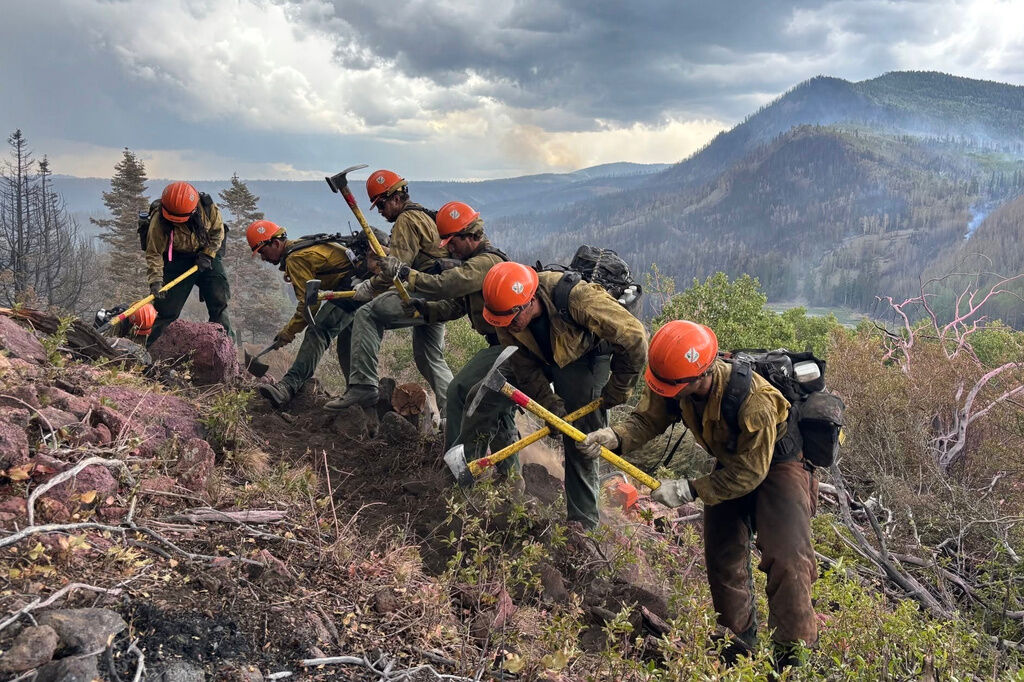
Colorado, Utah mourn after 3 firefighters killed in wildfires
Nicholas Fogleman
nicholas.fogleman@denvergazette.com
Updated 3 hours ago
Gov. Jared Polis on Sunday mourned the deaths of three firefighters killed while battling a wildfire on the Colorado-Utah border, calling the loss a tragedy for the state and the firefighting community. The firefighters died Saturday while responding to a...

Read Michener’s ‘Centennial’ | Jon Caldara
Jon Caldara
jon-caldara@coloradopolitics.com
Updated 3 days ago
If you’ve been reading my columns, you’ve noticed I’m basically illiterate. I blame my dyslexia and public education, but my Olympic-level laziness could be the driving factor. Anyway, I basically can’t read (and, still, I graduated from CU Boulder, so...
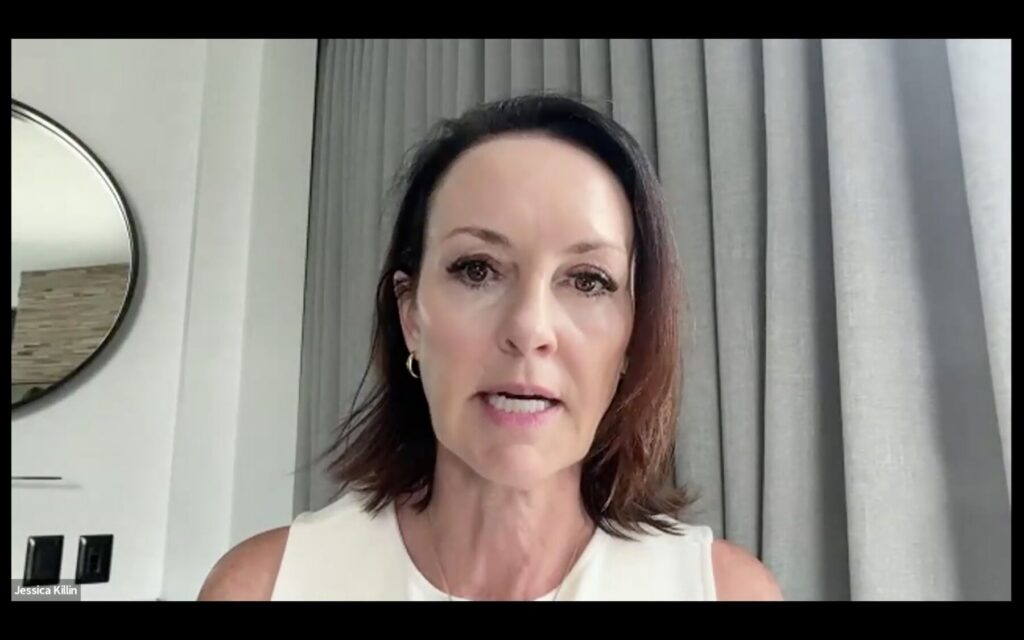
Crank challenger Jessica Killin signs on to new centrist Democratic group’s ‘Promise to America’
Ernest Luning
ernest.luning@coloradopolitics.com
Updated 10 hours ago
Jessica Killin, one of the Democrats running in Tuesday’s primary for the chance to challenge U.S. Rep. Jeff Crank in Colorado’s 5th Congressional District, joined with more than a dozen incumbent Democratic lawmakers and candidates this week signing on to...
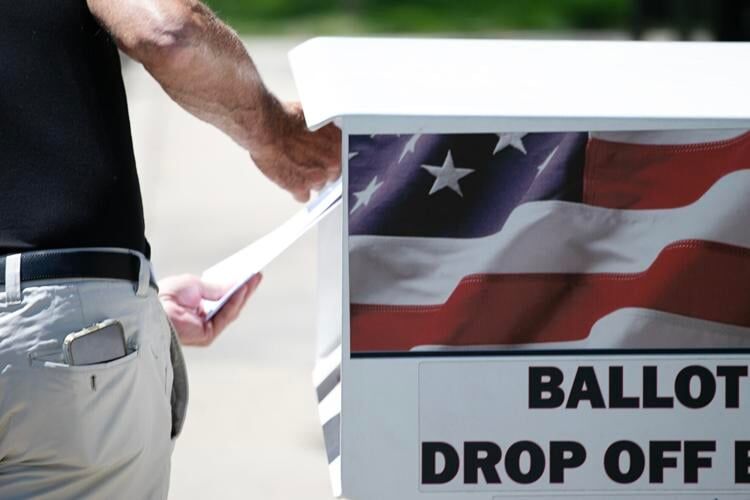
Who’s spending in Colorado to get your vote?
Marianne Goodland
marianne.goodland@coloradopolitics.com
Updated 1 day ago
Groups that raise unlimited amounts of money have spent about $20 million in May and June to try and influence Colorado voters’ choices in the upcoming June 30 primaries. By law, these groups cannot coordinate with the candidates they support....

Tina Peters tells supporters to ‘stand up and fight back’ at Castle Rock event
Marissa Ventrelli
marissa.ventrelli@coloradopolitics.com
Updated 2 days ago
Tina Peters, the former Mesa County clerk recently released from prison, warned supporters that what happened to her could happen to them, too, if they did not “stand up and fight back” at an event at the Douglas County Fairgrounds....
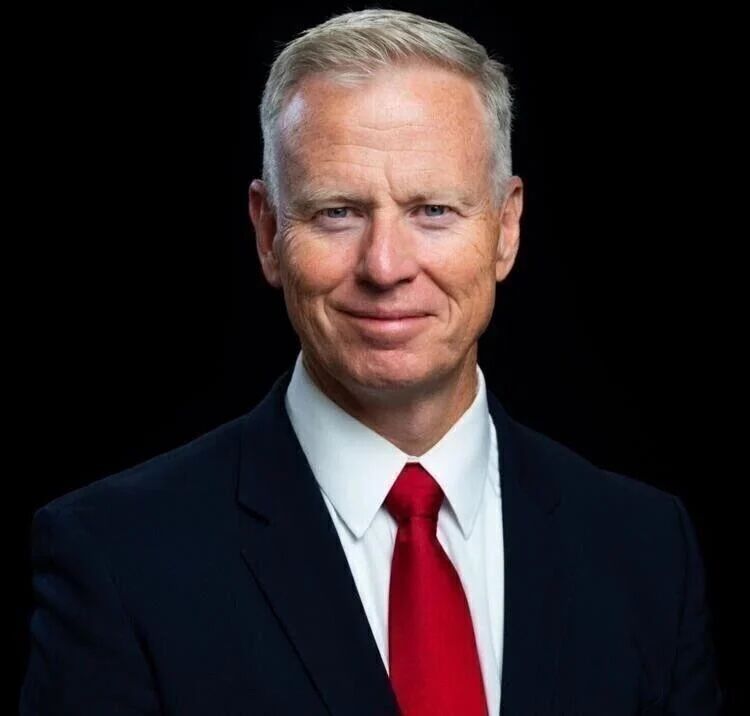
Will one unqualified AG replace another? | George Brauchler
George Brauchler
george-brauchler@gazette.com
Updated 3 days ago
Colorado Democrats are poised to nominate another attorney general candidate with de minimis relevant credentials or experience. Far from disqualifying, Colorado’s recent voting history mirrors that of America in favoring biography over experience, partisanship over policy, and emphasizing what divides...
Pueblo’s mayor keeps stirring the pot | Dennis Maes
Dennis Maes
dennis-maes@coloradopolitics.com
Updated 3 days ago
Pueblo Mayor, Heather Graham, has clearly proven to be a disciple of the Donald Trump school of governance. And, like her mentor, she is experiencing the same catastrophic results. The format is to ignore what the electorate approved and expects...

The perils of Colorado’s unregulated abortions | GUEST COLUMN
Colorado Politics
colorado-politics@coloradopolitics.com
Updated 3 days ago
By Tom Perille How did the movement which grew out of a genuine concern for the health and safety of women become the same movement that undermines women’s health and safety today? Despite good intentions, it was a long route...
Colorado to participate in Great American State Fair in Washington
Marissa Ventrelli
marissa.ventrelli@coloradopolitics.com
Updated 1 day ago
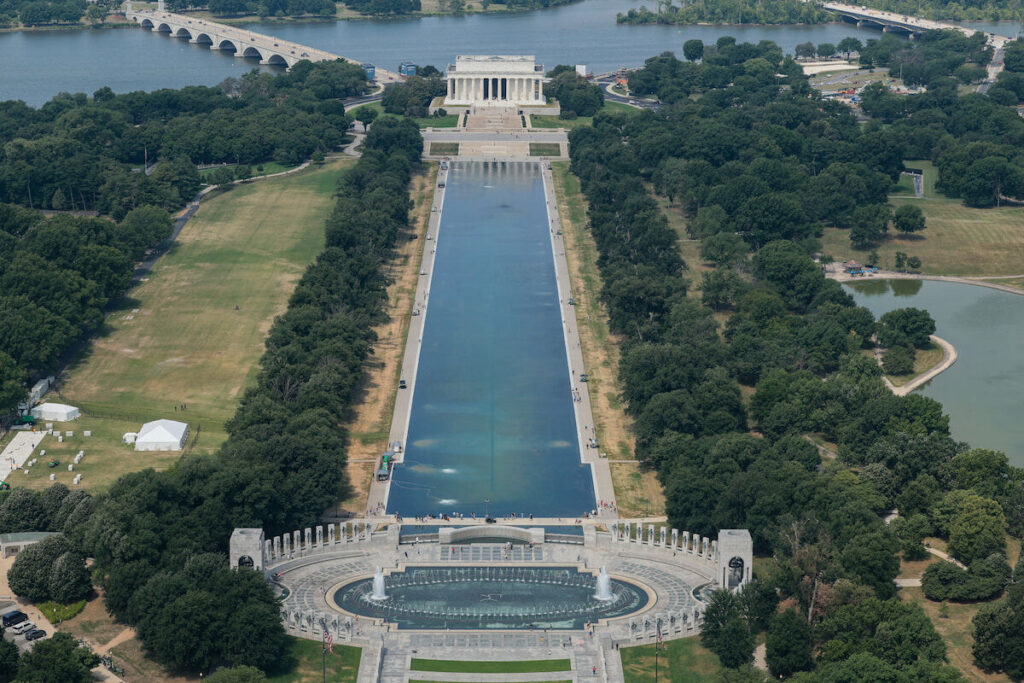
Visitors to Washington, D.C. for the country’s 250th anniversary will have the opportunity to learn about Colorado’s natural beauty and culture during the Great American State Fair, a World’s Fair-style event that opened Thursday at the National Mall. While all...

Phil Weiser leading Michael Bennet in Colorado’s Democratic gubernatorial primary, internal poll finds
Ernest Luning
ernest.luning@coloradopolitics.com
Updated 2 days ago
Attorney General Phil Weiser holds a lead over U.S. Sen. Michael Bennet among likely voters less than a week before ballots are due in Colorado’s Democratic gubernatorial primary, according to a new poll released Thursday by a group backing Weiser....
PREV
PREVIOUS

Tinkering with the machinery of death | BIDLACK
Many years ago, I happened to cross paths with then-US Supreme Court Justice Harry Blackmun. We were attending different conferences in Aspen. I was in the Music Tent, as part of John Denver’s regular annual environmental education meeting, while Justice Blackmun was speaking to a legal group that had gathered in the Aspen Institute next […]

Colorado sports betting brings in big bucks for state water plan projects
Funding for the state’s 2015 water plan started as a trickle. But sports gaming revenue has now turned that trickle into a steady stream. The Colorado Division of Gaming announced this week that nearly $33.8 million from 2024-25 will be allocated to the Colorado Water Conservation Board to support the state’s water plan, with distribution to […]