

Denver judge failed to let defendant speak, appeals court finds in overturning 48-year sentence
A Denver judge did not satisfy her obligation to ensure a defendant knew he could speak on his own behalf at sentencing, Colorado’s second-highest court determined in ordering a new sentencing hearing on Thursday.
Jurors convicted Joe Pinheiro of second-degree murder in 2022 for fatally shooting Philip Malinowski five years earlier. The parties disputed whether Pinheiro’s actions were intentional, with the defense maintaining the shooting was accidental.
Pinheiro faced a sentence of 16 to 48 years in prison. During the sentencing hearing, his lawyer told then-District Court Judge Jennifer B. Torrington, “I’ve instructed Mr. Pinheiro not to make a statement today since we do plan on appealing this conviction.”
Torrington then imposed the maximum sentence. Her ruling amounted to five spoken sentences that did not describe how she concluded 48 years were appropriate. Instead, Torrington said she reviewed “the entirety of the record,” the presentencing investigation report and the comments of various parties.
“That statement is so ambiguous and inscrutable to be meaningless. Pinheiro’s sentencing range was 16 to 48 years. Why did the court choose 48? Why not 38? Why not 28? Why not 18 or 16?” wrote public defender Jeffrey A. Wermer on appeal. “We do not know because the court did not tell us. Affirming here would render meaningless the requirement that sentencing courts must state on the record the basic reasons for imposing the sentence.”
A three-judge Court of Appeals panel did not address whether Torrington’s rationale was inadequate because it agreed with Pinheiro that she neglected to give him the opportunity to speak, as state law requires.
“The district court must give every criminal defendant an opportunity to speak on their own behalf before it imposes a sentence,” wrote Judge Stephanie Dunn in the July 24 opinion. She added that it was unclear if Pinheiro knew he had that right, notwithstanding his defense lawyer’s statement.
“Because we agree that the court violated Pinheiro’s right to speak, we don’t reach the remaining arguments,” Dunn wrote, returning the case to the trial court for a new sentencing.
The Court of Appeals panel also agreed police violated Pinheiro’s Miranda rights, but the mistake did not affect the outcome.
After shooting Malinowski, Pinheiro went to the Sheridan police station, called 911, said he needed to speak to a detective, and confessed to shooting and killing someone. Officers arrived and arrested Pinheiro, who had also brought with him a bag containing guns.
An officer gave Pinheiro a Miranda warning, advising of his constitutional rights to silence and to consult with an attorney. During his subsequent police interview, Pinheiro twice invoked his right to counsel. On appeal, Pinheiro disputed the prosecution’s use at trial of the final set of statements Pinheiro made 2.5 hours after his 911 call, in which Pinheiro told Detective Bryan Valenzuela where the victim was.
After speaking with Pinheiro, leaving the room and returning, Valenzuela said he needed to ask Pinheiro “where this potentially injured party that you’re claiming to the other officers to have murdered” was. Pinheiro told Valenzuela the address and continued to respond to the detective’s questions.
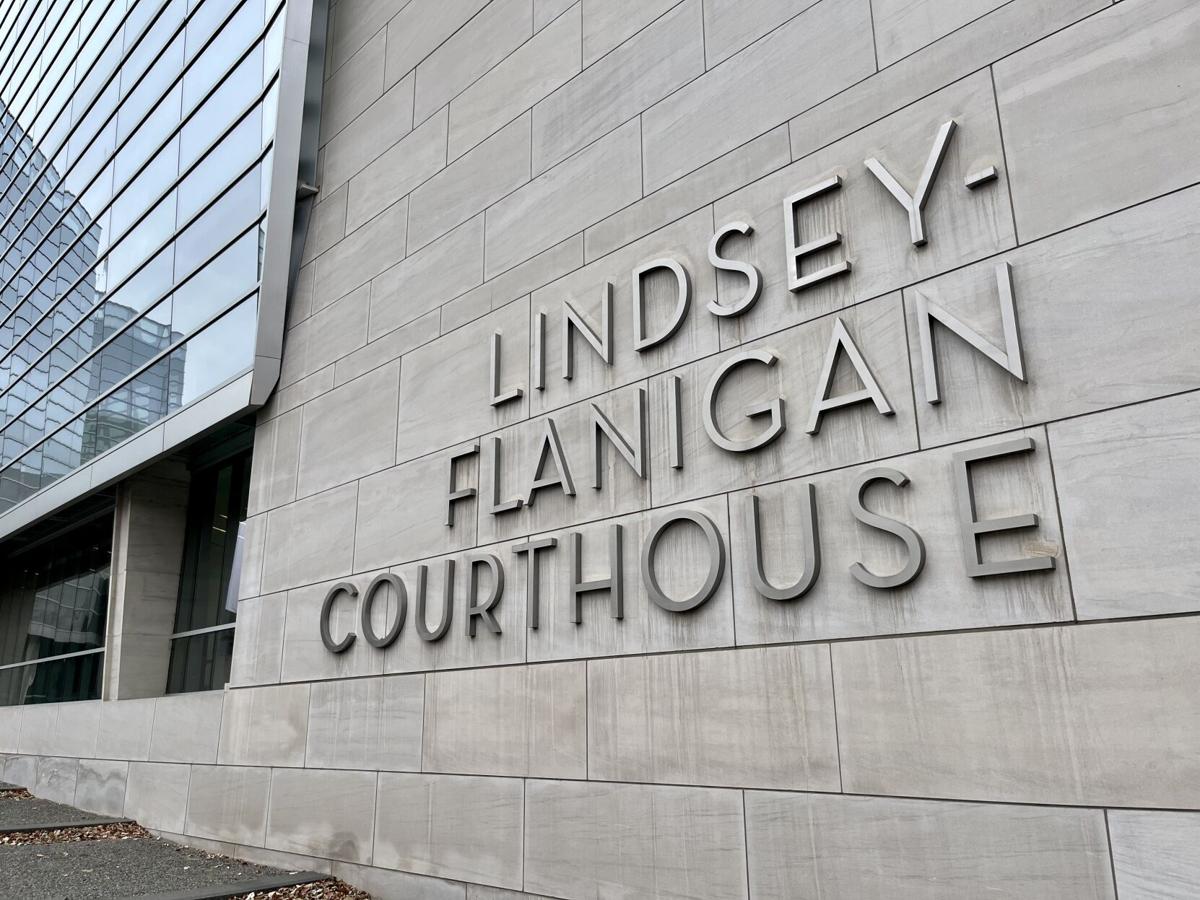
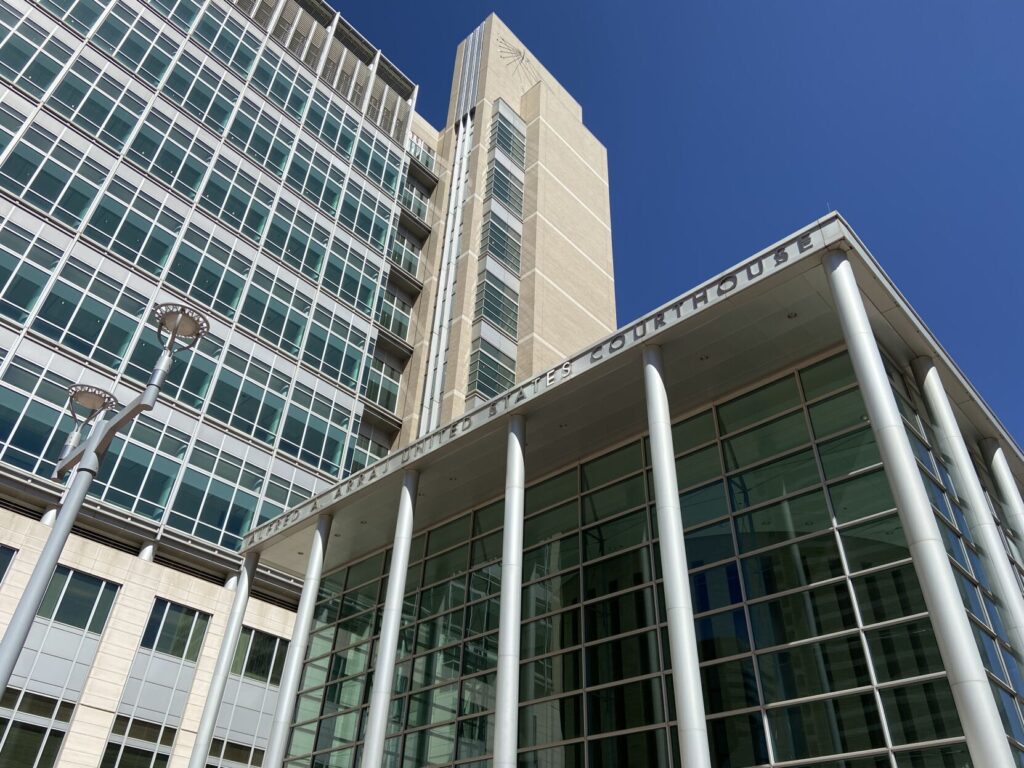
The Lindsey-Flanigan Courthouse in Denver.
Michael Karlik michael.karlik@coloradopolitics.com

Then-District Court Judge Kenneth M. Laff determined the questioning, which happened after Pinheiro invoked his right to counsel, could be used as evidence because it was “reasonable to believe that a threat to public safety existed.”
“Detective Valenzuela had reason to believe there was an injured victim in an unknown location,” Laff added.
Pinheiro, on appeal, acknowledged the U.S. Supreme Court has created a “public safety” exception. The court’s goal, as explained in a 1984 decision, was to avoid placing police officers “in the untenable position of having to consider, often in a matter of seconds, whether it best serves society” to respect a suspect’s Miranda rights or to question them about a potential safety threat.
However, Wermer argued for Pinheiro, the Supreme Court was addressing a scenario in which officers had just stopped the defendant and wanted to know where an unsecured gun was located.
In Pinheiro’s case, “the custodial interrogation occurred two and a half to three hours after Malinowski died,” Wermer wrote. “It is unreasonable to believe that a shooting victim would still be alive hours after a first-hand report of a fatal shooting.”
The Court of Appeals panel agreed the Supreme Court’s recognized exception did not apply. Dunn noted the police questioning happened after Pinheiro’s Miranda warning, and well after he had told police he had shot and killed someone.
“True, the location of the victim was unknown,” Dunn wrote. But “well-intentioned though he might have been, the fact that the detective waited several hours to press the issue undercuts any claim that there was an objectively reasonable belief of immediate or exigent danger.”
Because the panel deemed Pinheiro’s statements “unimportant and irrelevant” to the issue of whether Pinheiro intended to shoot Malinowski, it decided the violation did not affect the verdict.
The case is People v. Pinheiro.


Judicial performance evaluations released, Montezuma County judge disciplined | COURT CRAWL
Michael Karlik
michael.karlik@coloradopolitics.com
Updated 15 hours ago
Welcome to Court Crawl, Colorado Politics’ roundup of news from the third branch of government. Colorado’s citizen-led judicial performance commissions released their voter narratives for the judges standing for retention in November, plus a disciplinary panel imposed consequences on a...
Federal judge holds off on dismissing formerly bankrupt medical contractor from Jeffco jail death lawsuit
Michael Karlik
michael.karlik@coloradopolitics.com
Updated 17 hours ago
A federal judge declined on Monday to dismiss the formerly bankrupt medical contractor from a lawsuit over a detainee’s death in Jefferson County jail, but indicated she would do so if the plaintiffs’ attorneys go through the process to ensure...
Federal judge green-lights excessive force, retaliation claims for trial against Fort Collins officers
Michael Karlik
michael.karlik@coloradopolitics.com
Updated 3 days ago
A federal judge green-lit a jury trial last week against multiple Fort Collins police officers on claims that they used excessive force on one man who was standing unarmed in his underwear, and retaliated against another man for exercising his...
10th Circuit revives wage violation lawsuit against Papa John’s operator
Michael Karlik
michael.karlik@coloradopolitics.com
Updated 3 days ago
The Denver-based federal appeals court on Tuesday reinstated a former Papa John’s delivery driver’s lawsuit alleging violations of federal and state wage law. Steve Mighell worked for one month at a Denver Papa John’s location in summer 2023. He alleged...
Colorado appeals judge’s delays in releasing opinions noted by performance commission
Michael Karlik
michael.karlik@coloradopolitics.com
Updated 3 days ago
The citizen-led performance commission that provides guidance to voters about whether to retain members of Colorado’s second-highest court raised concerns by judges and attorneys that Judge Elizabeth L. Harris sometimes struggles with releasing opinions promptly. Harris, who joined the Court...
Colorado judge explores sanctions against DOJ, ICE for rearresting man 4 days after release on bond
Michael Karlik
michael.karlik@coloradopolitics.com
Updated 4 days ago
A federal judge in Colorado is considering sanctions against the government after immigration agents rearrested a man four days after an immigration judge found him suitable for release on bond. On July 28, U.S. Magistrate Judge N. Reid Neureiter ordered...
Divided disciplinary panel censures Montezuma County judge after agreement reached
Michael Karlik
michael.karlik@coloradopolitics.com
Updated 4 days ago
A disciplinary panel formally imposed a public censure, suspension, and further training on Montezuma County Court Judge Ian J. MacLaren on Tuesday by a 2-1 vote. Under constitutional Amendment H, which voters adopted in November 2024, MacLaren was set to...
Colorado’s Western Slope magistrate judges describe unique role in federal judiciary
Michael Karlik
michael.karlik@coloradopolitics.com
Updated 6 days ago
Two of Colorado’s federal judges stationed on the Western Slope spoke to lawyers on Wednesday about their unique roles, the ways their workloads differ, and the need for more criminal defense lawyers to take cases outside the Front Range. “Here...

Denver sues Philip Morris, other tobacco companies over cigarette butt litter
Deborah Grigsby
deborah.smith@denvergazette.com
Updated 4 days ago
Denver is demanding that some of the biggest tobacco companies in the world pay for the cleanup of discarded cigarette butts on its streets, following a similar campaign that cities in other states have pursued. Denver’s lawsuit, filed this week...
Federal judge rules that request for bond hearing not necessary to challenge immigration detention
Michael Karlik
michael.karlik@coloradopolitics.com
Updated 4 days ago
A federal judge in Colorado ruled last week that it is not mandatory for a person to seek a bond hearing with an immigration judge before they challenge the lawfulness of their detention in federal court. For the past year,...