

Colorado justices raise eyebrows at Denver judge’s restrictions on juvenile defendant
Members of the Colorado Supreme Court appeared unnerved on Wednesday at the restrictions a Denver judge placed on a teenage defendant’s attempt to argue that he should be tried as a juvenile, not as an adult.
Lawyers for Clayshjon Eugene Clark-Collins sought the Supreme Court’s intervention after his trial judge indicated he largely did not want to hear live testimony about the 11 factors in state law for “reverse transferring” the case to juvenile court. The judge also required the defense to otherwise submit its written evidence 30 days beforehand and limited the hearing — which can take multiple days or even a week — to half of one day.
During oral arguments, Justice Carlos A. Samour Jr., a former trial judge, was especially critical of the limitations placed on Clark-Collins’ ability to prove he belonged in juvenile court.
“I’ve been on the trial court bench. I know about docket pressures. I sympathize with what the judge is trying to do here,” he said. “I’ve never heard of a situation where a judge in a criminal case requires that testimony be reduced to writing. That is foreign to me.”
“I don’t know what you’re accomplishing with this procedure,” Samour continued. “And it just doesn’t feel to me like it’s in compliance with what the statute requires.”
In February 2024, prosecutors charged Clark-Collins with 15 counts related to aggravated robbery and weapons possession. Clark-Collins was a few months shy of 18 at the time. The defense requested a reverse transfer hearing to address whether his case should be moved from district court, where he faced up to 32 years in prison if convicted, to juvenile court, where Clark-Collins would face less punitive consequences.
At a June 10 hearing last year, the defense requested a three-day reverse transfer hearing. District Court Judge Eric M. Johnson interrupted to say he would set it for half a day instead.
During a follow-up appearance, Johnson explained why he believed “this can be done promptly without four, five or six days, which is often set here in Denver.”
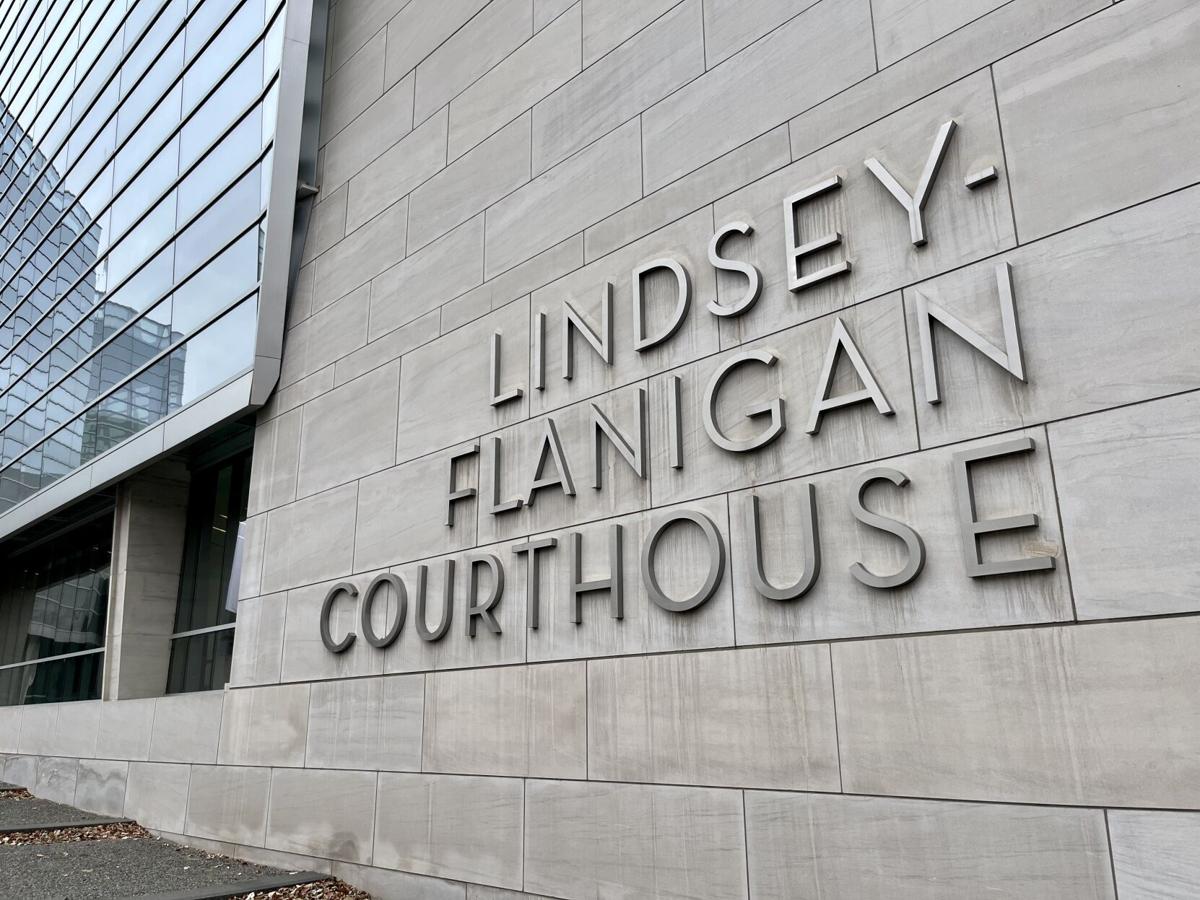
The Lindsey-Flanigan Courthouse in Denver.
Michael Karlik michael.karlik@coloradopolitics.com

Ticking through the 11 factors in state law that judges must consider before granting a transfer to juvenile court, Johnson said Clark-Collins’ criminal history and the seriousness of the charges would be self-evident, and he did not need a “deep dive” into Clark-Collins’ past.
“What’s left really can get done in a day,” he added.
In September, Johnson issued a written order announcing that he was combining the reverse transfer hearing with a preliminary hearing, which requires prosecutors to demonstrate probable cause exists to bring the case to trial. Johnson wrote that the “vast majority of the evidence” he would consider for the reverse transfer hearing would take the form of documents.
Moreover, all evidence able to be put in writing “will be submitted to the Court 30 days prior to the hearing,” he wrote.
Clark-Collins’ lawyers asked Johnson to reconsider, pointing out multiple problems with the proposed sequencing.
First, they argued Johnson had unnecessarily and unrealistically limited the duration of the reverse transfer hearing. Second, by requiring the defense to disclose Clark-Collins’ medical and educational records 30 days before the reverse transfer hearing, the prosecution would have access to confidential or sensitive information that would not normally be available for the probable cause hearing — scheduled for the same day.
On Feb. 10, 2025, Johnson refused to alter the process as envisioned. Clark-Collins’ attorneys turned to the Supreme Court for intervention.
“Oral testimony gives the court a chance to correct any assumptions or confusion or misunderstandings that are contained in reports,” public defender Efosa Akenzua argued to the justices.
Moreover, added Clark-Collins’ second attorney, Priscilla Gartner, one of the factors to consider in transferring to juvenile court is the nature of the offense — evidence of which coming from the defense could make the prosecution’s job easier.
“In a circumstance where a defendant may be presenting evidence that ‘I was reckless, my conduct was negligent,’ they are by the very nature of bringing forward those witnesses,” she said, “admitting to having committed the act.”
Assistant Attorney General Lily E. Nierenberg, representing Johnson, argued his conditions were appropriate and aimed at efficiency.
“What the defense is asking for in this case is no boundaries, effectively turning these hearings into a trial,” she said.
“The flip side,” interjected Chief Justice Monica M. Márquez, “is you would appear to have us draw a line that lets the court exercise unlimited discretion in constraining or defining in advance how the hearing should be run. Is that true?”
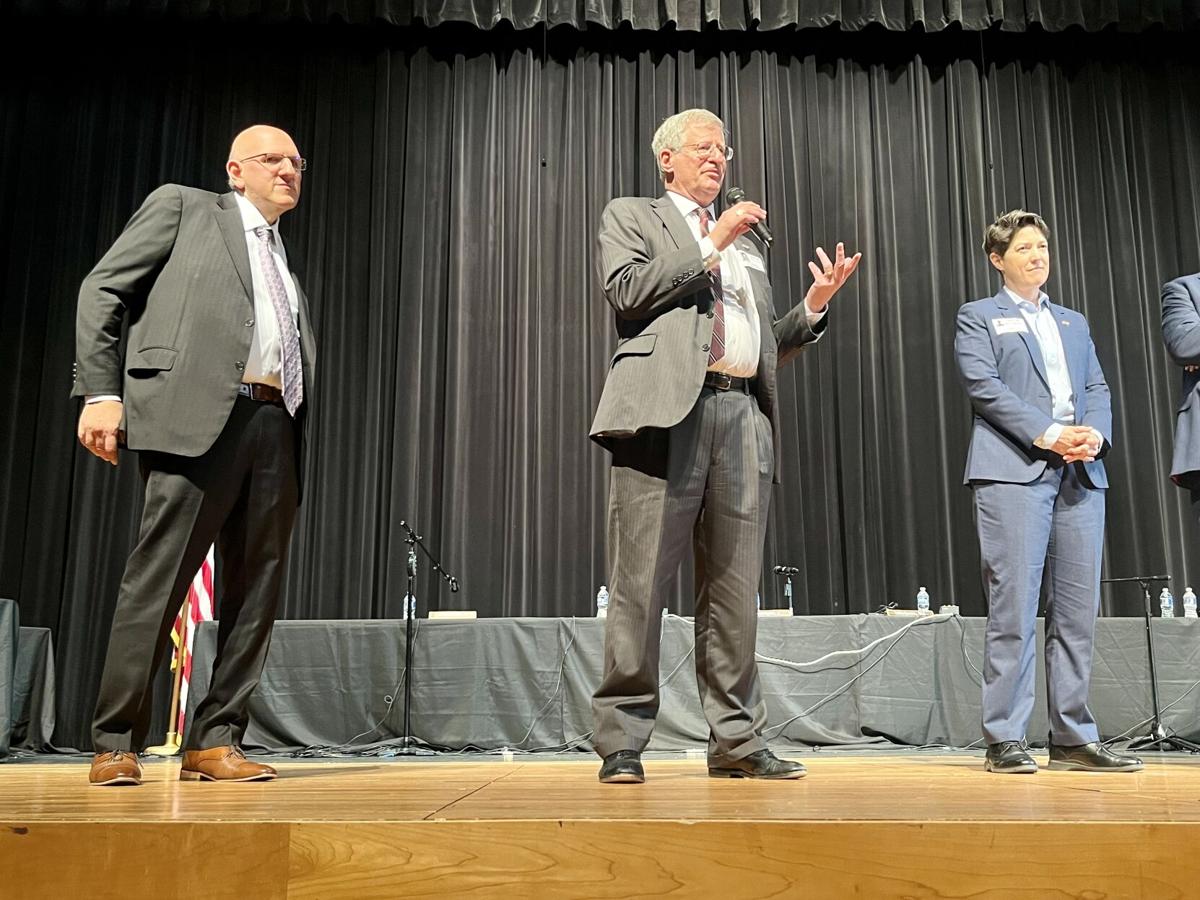
Justices Carlos A. Samour Jr. and Richard L. Gabriel, along with Chief Justice Monica M. Márquez, take questions from students at Falcon High School during the Colorado Supreme Court's "Courts in the Community" visit to Peyton, Colo. on May 15, 2025.
Michael Karlik/Colorado Politics

Justice Richard L. Gabriel wondered what law or rule empowered Johnson to require the defense to share its evidence 30 days in advance.
“I’m having trouble seeing what the authority is for that,” he said.
Finally, Samour echoed he had “several concerns” with how Johnson approached the hearing, including how Johnson was supposed to determine witness credibility if he expected to take the bulk of evidence in written form, without cross-examination.
“It feels to me like the judge is essentially eliminating most of the hearing and limiting it to just the bare minimum,” Samour said.
The case is People v. Clark-Collins.
Colorado Politics Must-Reads:

10th Circuit sympathetic to Colorado consumer protection law governing interest rates
Michael Karlik
michael.karlik@coloradopolitics.com
Updated 13 hours ago
Members of the Denver-based federal appeals court appeared sympathetic on Tuesday to Colorado’s assertion that it can lawfully require certain out-of-state banks to abide by the state’s own ceilings on interest rates when they lend to consumers in Colorado. The...
Colorado justices to decide insurance companies’ obligation to disclose relevant policies
Michael Karlik
michael.karlik@coloradopolitics.com
Updated 11 hours ago
The Colorado Supreme Court announced on Monday that it will decide whether an insurance company violated state law by withholding an at-fault driver’s policy for nearly a year when there was no dispute that the policy was not in effect...

Judicial performance evaluations released, Montezuma County judge disciplined | COURT CRAWL
Michael Karlik
michael.karlik@coloradopolitics.com
Updated 1 day ago
Welcome to Court Crawl, Colorado Politics’ roundup of news from the third branch of government. Colorado’s citizen-led judicial performance commissions released their voter narratives for the judges standing for retention in November, plus a disciplinary panel imposed consequences on a...

DA justifies CSPD officers in fatally shooting man at McDonald’s
Cleo Westin
cleo-westin@coloradopolitics.com
Updated 15 hours ago
The deadly shooting of a man by Colorado Springs police officers at a McDonald’s was ruled justified by the 4th Judicial District Attorney’s Office on Monday, the office announced in a news release. The ruling determined officers Daniel White, Mitchell...
Federal judge holds off on dismissing formerly bankrupt medical contractor from Jeffco jail death lawsuit
Michael Karlik
michael.karlik@coloradopolitics.com
Updated 11 hours ago
A federal judge declined on Monday to dismiss the formerly bankrupt medical contractor from a lawsuit over a detainee’s death in Jefferson County jail, but indicated she would do so if the plaintiffs’ attorneys go through the process to ensure...
Castle Rock caregiver sentenced after stealing more than $110,000 in jewelry from family
Nicholas Fogleman
nicholas.fogleman@denvergazette.com
Updated 17 hours ago
A judge sentenced a Castle Rock caregiver to 90 days in jail after she pleaded guilty to stealing more than $110,000 worth of jewelry from the family of a disabled son under her care. Elsa Montejo-Fuentes, 32, had worked for...
Federal judge green-lights excessive force, retaliation claims for trial against Fort Collins officers
Michael Karlik
michael.karlik@coloradopolitics.com
Updated 3 days ago
A federal judge green-lit a jury trial last week against multiple Fort Collins police officers on claims that they used excessive force on one man who was standing unarmed in his underwear, and retaliated against another man for exercising his...

10th Circuit revives wage violation lawsuit against Papa John’s operator
Michael Karlik
michael.karlik@coloradopolitics.com
Updated 4 days ago
The Denver-based federal appeals court on Tuesday reinstated a former Papa John’s delivery driver’s lawsuit alleging violations of federal and state wage law. Steve Mighell worked for one month at a Denver Papa John’s location in summer 2023. He alleged...
Colorado appeals judge’s delays in releasing opinions noted by performance commission
Michael Karlik
michael.karlik@coloradopolitics.com
Updated 3 days ago
The citizen-led performance commission that provides guidance to voters about whether to retain members of Colorado’s second-highest court raised concerns by judges and attorneys that Judge Elizabeth L. Harris sometimes struggles with releasing opinions promptly. Harris, who joined the Court...

Colorado judge explores sanctions against DOJ, ICE for rearresting man 4 days after release on bond
Michael Karlik
michael.karlik@coloradopolitics.com
Updated 5 days ago
A federal judge in Colorado is considering sanctions against the government after immigration agents rearrested a man four days after an immigration judge found him suitable for release on bond. On July 28, U.S. Magistrate Judge N. Reid Neureiter ordered...