

Government does right by ranchers — really | GABEL
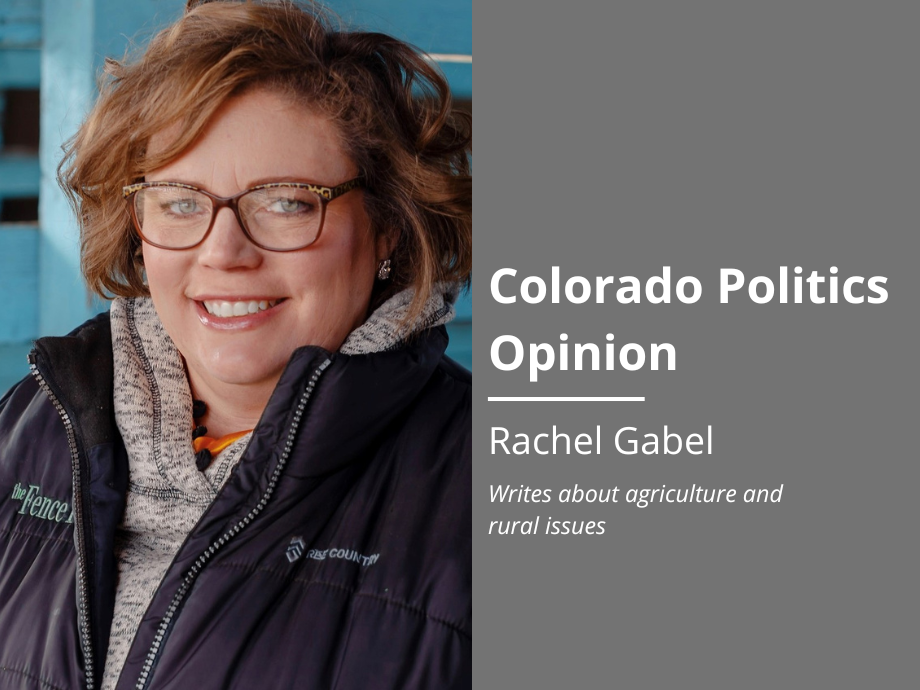
Rachel Gabel

When it comes to criminal cases, only 5% end in dismissals, making the dismissal of federal theft of government property charges against Charles and Heather Maude all the more incredible. The Maudes are a young ranching family from Caputa, South Dakota, and the two were indicted separately about a year ago, forcing them to each retain an attorney to avoid the real possibility of prison time and $500,000 in fines. The charges stemmed from a fence line built sometime between 1910 and 1950 that left about 25 acres of Buffalo Gap National Forest land on their side of the fence and about 25 acres of their land on the Forest Service side of the fence.
U.S. Forest Service Special Agent Travis Lunders served the indictments to the couple after allegedly receiving a complaint from a hunter who said a no trespassing sign was on that very fence on the wrong border.
The couple met with USFS Forester Julie Wheeler who made plans to visit the allotment and to arrange a survey, which was expected to take place within a year. Six days later Lunders showed up with a survey crew and a few days after that, he arrived on the Maude’s doorstep to indict them. They were forced to give up any weapons they had, placed under a gag order, and told they should plan for alternative arrangements for their two small children should they be made orphans by the American government.
Heather spoke during the press conference on behalf of her family and said production agriculture is their passion.
“We are both fifth-generation farmers and ranchers. Our families have a combined 250 years in production agriculture. We paused briefly in that pursuit in our grandfathers’ generation. Both of my grandfathers fought in World War II. Charles’ great grandfather is a four-star war mom. Her four sons fought in World War II and all four sons came home. Since then, we have pursued our primary passion, which is production agriculture. When this hit, it hit in the heart and soul of our place. The Maude family came to this area in 1907 and purchased adjoining land in 1910 and have managed it without incident and with great care since then.”
Stay up to speed: Sign up for daily opinion in your inbox Monday-Friday
She concluded by thanking “everyone else who wrote, who contributed financially and who prayed for us. May God bless you and God bless America and God bless American agriculture.”
She said she planned to wrap that a bit differently, though she was overcome by emotion when she mentioned her gratitude for her parents, Tom and Randi Hamilton, the fourth-generation ranchers who raised her in Niobrara County, Wyoming.
“Our forefathers, my grandfather and Charles’ grandfather and his brothers included, did not go to war for this family to protect our God-given rights and freedoms and a government that would support us in keeping those rights and freedoms just for future generations to be persecuted by that government,” she said. “We see this as a true win, and we thank the Trump administration for their efforts to be a by and for the citizen again. What an exciting time to see us round that corner after so many decades of it being the opposite.”
She said they hope this sets a precedent moving forward other producers can build upon and that demonstrates the government doing right by the people.
In an interview shortly after the announcement, Wyoming Rep. Harriett Hageman said “targeting a family over a boundary dispute about a fence that had existed in the same location for 75 years was meant to send a message to landowners, farmers and ranchers that these agencies are not their friend and they’re going to try to use their power to try to restrict our ability to use these properties for grazing and other purposes.”
Hageman said she has seen cases during her years where the abuse by the federal government is “astronomical.” One case involved a landowner in northern Wyoming who moved an irrigation ditch, affecting 2.1 acres of his own land.
“The EPA and Corp of Engineers came in and said that irrigation ditch was a navigable water of the United States and brought an enforcement action against him threatening with $37,500 in penalties every day,” she said. “By the time we went to trial, it was nine years after he did the work so he was facing penalties of almost $65 million.”
She tried the case before a jury and won, but said it was an incredible abuse of power by the EPA and Corp of Engineers. She said actions like that case and like the Maude case are examples of rogue agents and employees — “dictators, despots, and tyrants” — attempting to prevent the use of even private property.
Rachel Gabel writes about agriculture and rural issues. She is assistant editor of The Fence Post Magazine, the region’s preeminent agriculture publication. Gabel is a daughter of the state’s oil and gas industry and a member of one of the state’s 12,000 cattle-raising families, and she has authored children’s books used in hundreds of classrooms to teach students about agriculture.

State money diversion scheme the unsurprising downfall of ERBOCES scam | Paula Noonan
Paula Noonan
paula-noonan@coloradopolitics.com
Updated 12 hours ago
Falcon School District 49, aka El Paso County School District 49, has finally cut bait, thrown the fishing pole into the lake and sunk the canoe. The longtime enabler of the Education Reenvisioned BOCES’ (ERBOCES) schemes to fund private Christian...

Steve Schuck on the ‘magic’ of school choice | The OpEdge Podcast
Tony Olivero
tony.olivero@gazette.com
Updated 1 day ago
Parents Challenge co-founder and longtime school choice advocate Steve Schuck joins The OpEdge to discuss expanding educational opportunities and ensuring parents are in charge of their kids’ education. Schuck tells investigative columnist and host Jimmy Sengenberger why he believes Colorado...

Do lobbyists add value to policymaking? | PODIUM
Colorado Politics
colorado-politics@coloradopolitics.com
Updated 1 day ago
By Corky Kyle I was recently asked a straightforward question: are lobbyists a valuable component in the development of public policy? After more than four decades working with the Colorado General Assembly, state agencies, local governments, associations and businesses, my...

Ain’t Polis’ Peters commutation a pity? | Hal Bidlack
Hal Bidlack
hal-bidlack@coloradopolitics.com
Updated 3 days ago
I am hoping that, yet again, my long-suffering and very forgiving editor will pardon my rambling thoughts today, as there are too many open tabs on my computer that deal with issues I want to talk about (Ed: pretty used...

Colorado lieutenant governor candidate Markert says early discipline and key mentors set his course
Marianne Goodland
marianne.goodland@coloradopolitics.com
Updated 4 days ago
Editor’s note: This is the first installment in a three-part series examining Colorado’s candidates for lieutenant governor. In this piece, Colorado Politics speaks with George Markert, the Republican running mate to gubernatorial candidate Victor Marx. Marx is competing against Democrat...

Colorado, like America, past due for generational change in politics | Miller Hudson
Miller Hudson
miller-hudson@coloradopolitics.com
Updated 1 day ago
I was 27 before I ever voted for president. At 19, in 1964, the Constitution had not yet been amended establishing 18-year-old voting eligibility. In 1968, I was serving overseas with the U.S. Navy at a time when there was...

Farmers and ranchers win on NIETC cancellation | Rachel Gabel
Rachel Gabel
rachel-gabel@coloradopolitics.com
Updated 4 days ago
The Department of Energy rolled into Lamar last week and Office of Electricity Assistant Secretary Katie Jereza stood in her neat, green suit in front of a room filled with farmers, ranchers and landowners. The crowd was filled with straw...

Going after the wrong butts | Jon Caldara
Jon Caldara
jon-caldara@coloradopolitics.com
Updated 1 week ago
Mayor Mike Johnston proclaimed, “It is past time Big Tobacco cleaned up the big mess it’s created.” Yep. Denver is suing tobacco companies for the cigarette butts littering the city. Because Denver’s Big Mess couldn’t possibly be the fault of...
Three districts that will answer key Colorado political questions | Paula Noonan
Paula Noonan
paula-noonan@coloradopolitics.com
Updated 1 week ago
Colorado’s legislature used to be a place where neither party was dominant. Dozens of seats were competitive and House and Senate majorities switched regularly. From 2010 to 2020, the House was predominantly Democratic with one two-year assembly under Republicans. The...

Hunting is a privilege, not a constitutional right | PODIUM
Colorado Politics
colorado-politics@coloradopolitics.com
Updated 1 week ago
By Roland Halpern Colorado voters may soon be asked to place hunting and fishing in the state constitution. Proposition 302 would establish the right to hunt, fish and take wildlife using “traditional methods,” while declaring hunting and fishing are the...