

Federal, state judges give the do’s and don’ts of criminal appeals | APPELLATE UPDATE
Members of the state and federal appeals courts based in Denver spoke to attorneys on Friday about strategies for properly litigating criminal appeals, including how to make arguments based on body-worn camera footage.
Justice Brian D. Boatright, Judge Karl L. Schock of the Court of Appeals and Judge Gregory A. Phillips of the U.S. Court of Appeals for the 10th Circuit told lawyers the best strategy for criminal appeals is to be up front with the court about the unpleasant facts.
“We had a case before our court a couple of years ago with the sale of body parts,” said Phillips, a former attorney general for Wyoming. “And an effective strategy in that case was for the defense to stipulate to certain facts. Obviously, not very pleasant ones. … Just agree with the facts and move on.”
Boatright recalled reading a case where the prosecution and the defense characterized the underlying crime completely differently.
“Remember who you’re writing for. If you’re writing for your client, ‘This is his best version of what happened,’ it’s probably not effective,” he said.
Schock, a former U.S. Department of Justice attorney, added that in many cases, the severity of the crime may have no bearing on the alleged error being litigated on appeal.
“It’s always interesting. I saw this when I was practicing, too: You always have the defense writing their brief and it talks about all of the difficult life that the defendant had and all the mitigating things that happened in this crime,” he said. “And the prosecution comes out and talks about how severe the crime was and how gruesome everything was. And the issue was, like, some hearsay testimony.”
The judges spoke at the annual Appellate Practice Update sponsored by the Colorado Bar Association.
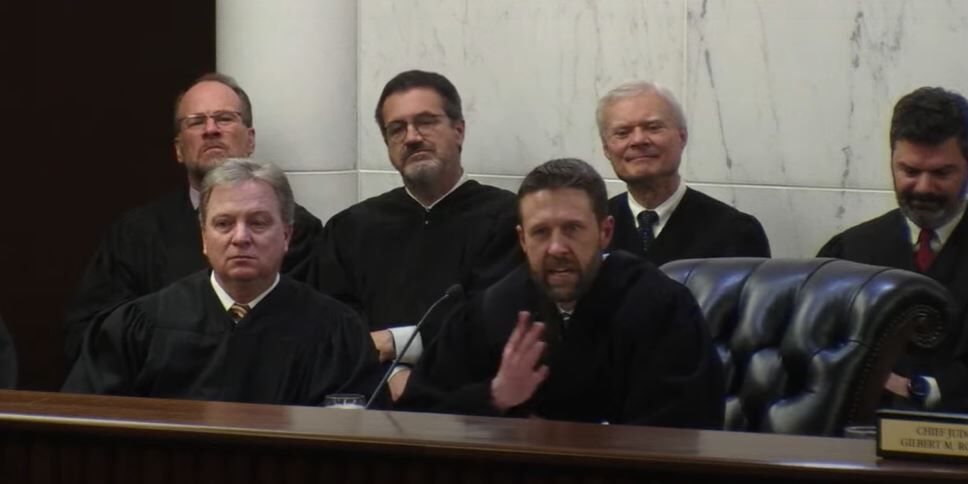
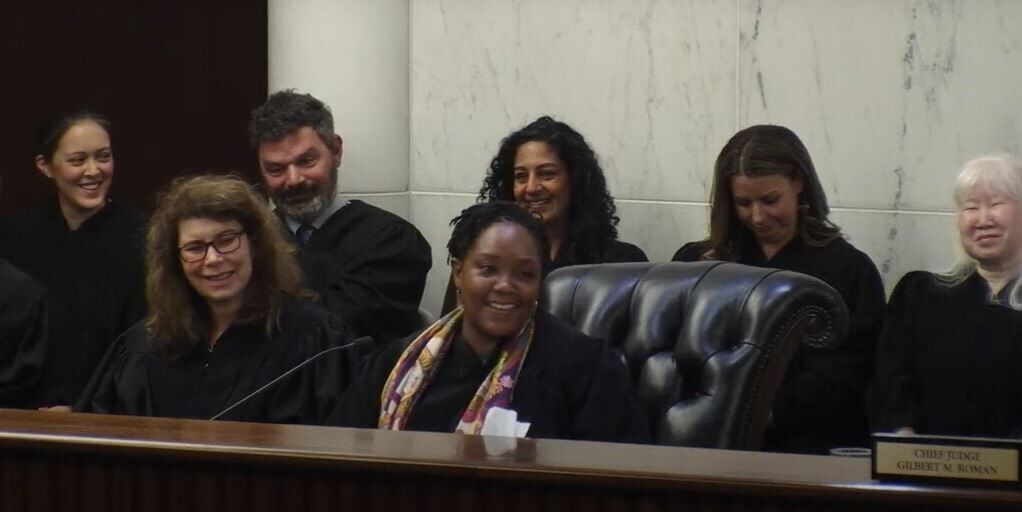
Judge Karl L. Schock speaks at his ceremonial swearing-in on Jan. 19, 2023. At left is Judge Jerry N. Jones. In the back row, from left to right, are Judges Timothy J. Schutz, Ted C. Tow III, Lino S. Lipinsky de Orlov and Matthew D. Grove.

Schock further advised that defense lawyers should avoid litigating numerous issues and instead focus on the relatively strong ones. If one of the issues is “cumulative error” — the idea that several errors, while individually benign, undermined the fairness of the trial in combination — Schock told lawyers to make the appeal about that.
“‘Why did this one affect this one affect this one?’ That’s a much stronger cumulative error argument than, ‘There were a lot of errors,'” he said.
Boatright acknowledged he was “not a huge fan” of the concept of “plain error,” which applies when appellate courts are reviewing an alleged error that garnered no objection in the trial court when it occurred. A plain error is one that affects a defendant’s “substantial rights” and is so obvious that a trial judge should intervene even without an objection.
“I envision myself as a trial court judge going, ‘Whoa, stop!'” said Boatright, a former Jefferson County judge. He elaborated that he encountered moments in which a prosecutor was using inflammatory rhetoric, but the defense attorney made no objection.
“Because they would much rather have the trial court judge jump in and admonish the prosecutor than object. I’m always wondering, ‘Is this a strategy?'” Boatright added.
The judges agreed they found body-worn camera footage and other video useful when reviewing some legal questions — like whether police neglected to warn a suspect of their Miranda rights.
“It’s like a flashback. I’ll watch the video because I feel it gives you so much more of a feel for what’s going on,” said Boatright.
“‘Was a person in custody?’ for example. Let’s see exactly what it looked like. ‘Was there police coercion in interrogation?'” said Schock. “Things where seeing it really matters.”
Phillips added that the proliferation of body-worn cameras is “one of the best developments” for both sides, in that it can deter bad behavior. It also puts reviewing judges “right on the roadside.”
“One statistic that I think would astonish you is how many times we watch those videos. Watch them over and over and over. And we see things that don’t come up in the briefs that maybe should have. We watch them more than counsel sometimes,” he said. “It’s a second-by-second thing. Intonation. Facial expressions.”
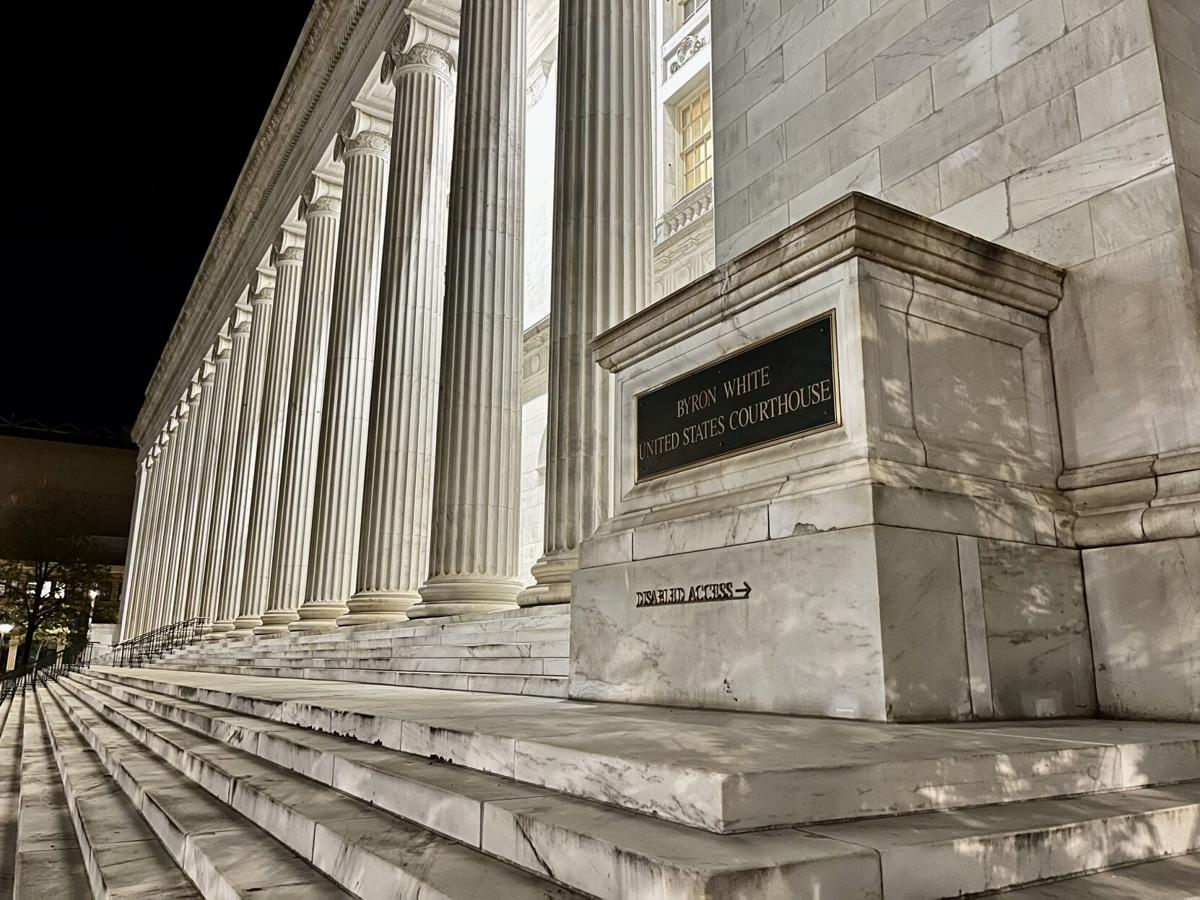
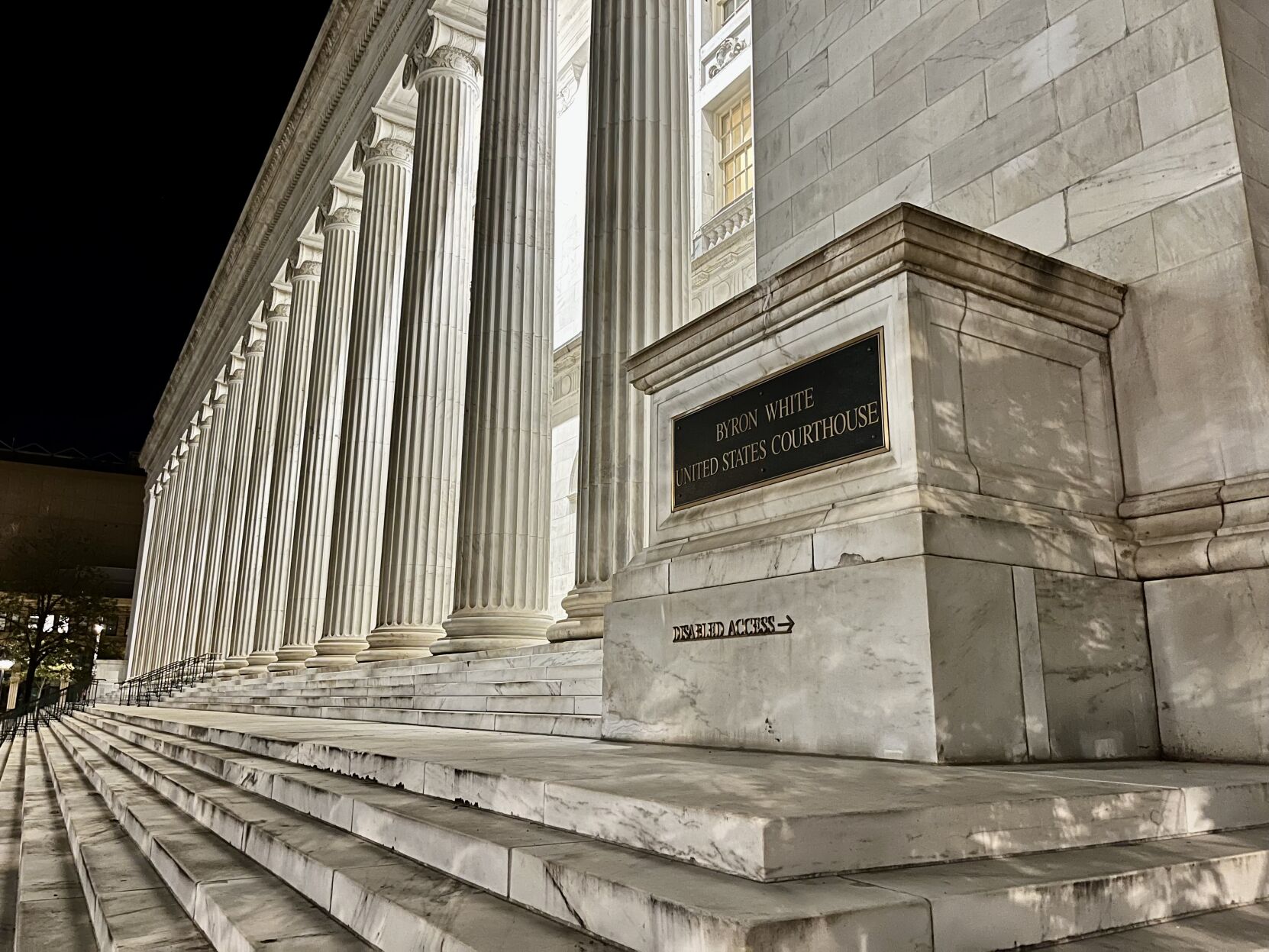
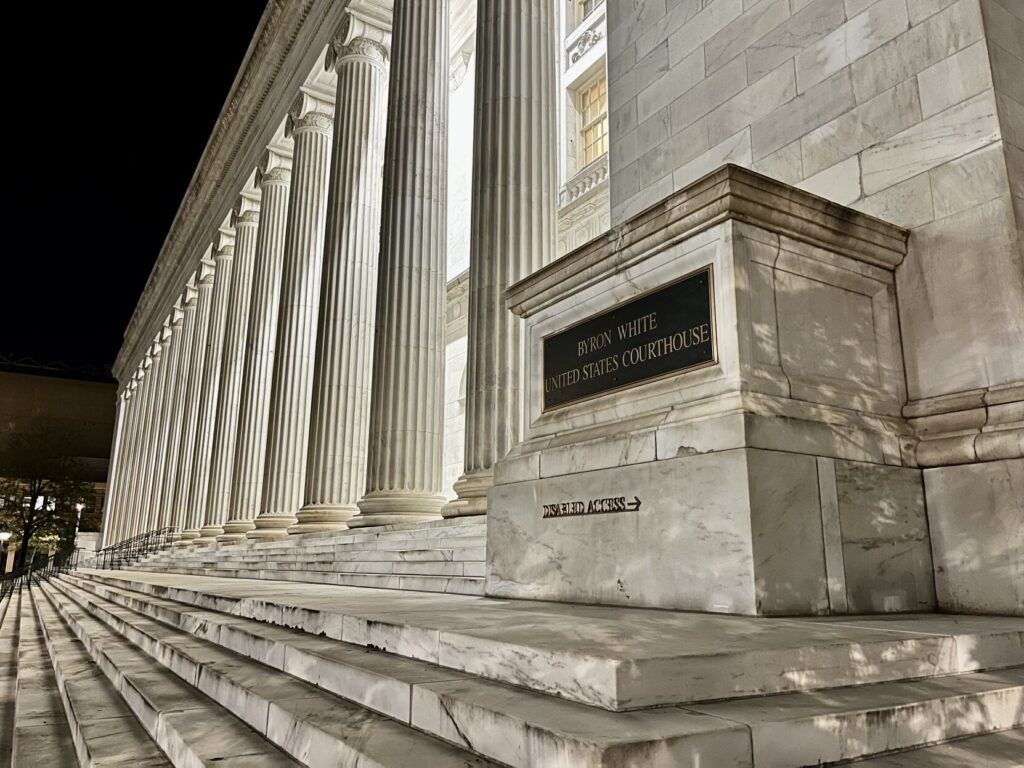
The Byron White U.S. Courthouse in Denver, which is home to the U.S. Court of Appeals for the 10th Circuit.
Michael Karlik michael.karlik@coloradopolitics.com
Finally, Phillips said his court is “very open” to redacting information from briefs or even barring the public from attending certain oral arguments. He recalled an instance where the courtroom was cleared for a case involving a juvenile sex offender and other instances where there was a credible belief someone may be harmed.
“What does that mean? A lot of the time it’s a government cooperator,” he said. “Nobody wants someone getting hurt for cooperating.”
Boatright said the state Supreme Court has never closed its courtroom during an argument, but it recently heard a request to avoid using certain parties’ names, even though the case had been litigated throughout the lower courts under everyone’s full identities.
“By the time it gets to our court, is the cat already out of the bag?” he said.

Schoolchildren’s presence at child sex-related trial did not harm Arapahoe County defendant, appeals court says
Michael Karlik
michael.karlik@coloradopolitics.com
Updated 1 day ago
Colorado’s second-highest court decided on Thursday that the presence of a group of schoolchildren on the first day of a child sexual exploitation trial did not violate an Arapahoe County defendant’s constitutional right to a fair trial. Prosecutors charged Jerry...
Appeals court cites week-old Colorado law to reinstate child neglect case at child, father’s request
Michael Karlik
michael.karlik@coloradopolitics.com
Updated 1 day ago
Colorado’s second-highest court invoked a new state law for the first time on Thursday and reinstated a child neglect case that both the child and her father wished to reopen. House Bill 1227 took effect on Aug. 12, reversing a...
Colorado Supreme Court names William Hood as next chief justice
Michael Karlik
michael.karlik@coloradopolitics.com
Updated 2 days ago
The Colorado Supreme Court has selected Justice William W. Hood III to be the next chief justice, the judicial branch announced on Friday. Hood will succeed Chief Justice Monica M. Márquez, who took over the role in July 2024. “I...

Appeals court upholds Park County trophy hunting conviction
Michael Karlik
michael.karlik@coloradopolitics.com
Updated 2 days ago
Colorado’s second-highest court clarified on Thursday that a defendant may stand convicted under the state’s trophy hunting laws if he abandons a bear carcass but returns later to remove the meat. Under Colorado law, it is a felony to detach...

Judge grants partial injunction to GEO in fight against state health inspection law
Kyla Pearce
kyla.pearce@gazette.com
Updated 3 days ago
A judge ruled Thursday that The GEO Group does not have to follow parts of a new state law requiring more frequent health and safety inspections at the U.S. Immigration and Customs Enforcement processing center in Aurora. Under the order...
Parker man faces 20 years to life for serial sexual assaults
Nicholas Fogleman
nicholas.fogleman@denvergazette.com
Updated 4 days ago
A 25-year-old Parker man who sexually assaulted three women in 2025 pleaded guilty Wednesday and will serve 20 years to life in prison. Javier Rodriguez-Andrade pleaded guilty to charges stemming from three sexual assaults involving women ages 19 to 24. ...
Divided appeals court upholds warrantless DNA collection in Colorado cold case, cautions of government overreach
Michael Karlik
michael.karlik@coloradopolitics.com
Updated 4 days ago
Colorado’s second-highest court upheld the warrantless collection of a suspect’s DNA from a discarded soda can as constitutional on Thursday, while warning about potential abuse of DNA privacy in the absence of further guardrails. By 2-1, a three-judge Court of...
Man charged in Northglenn homicide of wife
Matt Kyle
matt.kyle@denvergazette.com
Updated 4 days ago
A man has been formally charged with murder and burglary relating to a homicide last week in Northglenn. Alexei Munive-Rodriguez, 48, was arrested Sunday after he was at large following the homicide, which occurred Friday. Police were dispatched around 10:30...
10th Circuit grants immunity to officers for fatal Manitou Springs shooting
Michael Karlik
michael.karlik@coloradopolitics.com
Updated 3 days ago
The Denver-based federal appeals court ruled on Wednesday that responding officers from Manitou Springs and El Paso County cannot be held constitutionally liable for shooting and killing a man after a 20-minute standoff. Wilford Deweese allegedly pulled out a gun...
10th Circuit rejects invitation for full-court review of tax-avoidance case
Michael Karlik
michael.karlik@coloradopolitics.com
Updated 4 days ago
The Denver-based federal appeals court declined to reconsider the standards for holding entities liable for their tax-avoidance schemes, with a majority of judges voting against full-court review on Monday. In April, a three-judge panel of the U.S. Court of Appeals...