

Proposal to address Colorado Bureau of Investigation’s woes heads to state House
The third of three measures intended to address the problems with rape test kits and accountability issues at the Colorado Bureau of Investigation won Senate approval on Friday.
Senate Bill 304 still must go through two committee hearings, a House debate and a final vote before the Colorado General Assembly adjourns on Wednesday.
As introduced, the bill came with a cost of $150,000 in general funds, to pay for an independent sexual assault kit coordinator at the bureau, who would provide annual reports to the legislature on the state’s capacity to complete sexual assault kit tests.
The bill was amended by the Senate Appropriations Committee Thursday, to remove the coordinator and the $150,000 in costs and to put the program under the Department of Law instead of the Colorado Bureau of Investigation.
SB 304 also sets up a “Sexual Assault Forensic Medical Evidence Review Board” within the Department of Law.
The board’s charge would be to “review and monitor the effectiveness of current protocols, standards, and training practices in the criminal legal system response to sexual assault.” It would also be required to make victim-centered recommendations to the General Assembly by Nov. 1, 2026 on improvements and in accordance with the federal Violence Against Women Act of 1994.
Under SB 304, law enforcement would be required to notify a victim at least every 90 days if the agency has not received the results of the text kit. The bill also requires an accredited crime lab to “endeavor to analyze” those kits within 60 days of receipt.
“Colorado has struggled for years to quickly test evidence related to sexual assault offenses, leaving survivors of these crimes without justice and the broader community without safety,” said Sen. Mike Weissman, D-Aurora, in a statement Friday.
He said that this session, Republicans and Democrats have supported additional dollars funding to catch up on the backlog of evidence and worked on transparency requirements so the public can be “more fully aware of how this work is progressing.”
“Senate Bill 304 builds on this work by requiring better communication about evidence test status to survivors of sexual assault offenses, increased reporting, and investment in a new board to improve communication and coordination across state and local forensic labs. This bill is part of our ongoing commitment to do better for survivors of these horrible offenses,” he added.
SB 304 won 33 votes in the Senate Friday. In the House, it is sponsored by Reps. Jenny Willford, D-Northglenn, and Meg Froelich, D-Englewood.
Willford was sexually assaulted by a driver for Lyft who had borrowed the credentials of another Lyft driver. Her rape kit from Feb. 2024 is still awaiting testing, more than a year later. Willford is now suing Lyft. A bill she is cosponsoring puts more consumer protections into ride share services, including barring ride share companies from allowing drivers to loan their credentials to others.
The other two bills on the CBI issue are SB 170, sponsored by the Joint Budget Committee, that allows the bureau to roll over existing funds to hire third party labs to work on the state’s backlog of rape test kits. The governor signed SB 170 on March 26.
House Bill 1275, which won final and unanimous approval from the Senate Thursday is on its way to the governor. That measure requires crime lab employees to report wrongful actions within the lab and an investigation by the crime lab director. It also creates a process for individuals to seek post-conviction relief if their case is implicated.
The bills are all tied to the misconduct allegations tied to Yvonne Woods, a nearly 30-year employee of the investigation lab accused of deleting data and manipulating DNA evidence in more than 1,000 instances.
Those errors are estimated to have cost CBI more than $11 million. Woods has been indicated on 102 felony charges.
Meanwhile, the conviction of a man in Boulder County was vacated after a retest of evidence by an independent lab in Virginia revealed he could be, in fact, “statistically excluded.” The man had been arrested and convicted years after a 1994 murder in large part on the strength of a DNA analysis by Woods.
This story has been updated to reflect the changes made by the Senate Appropriations Committee.


Lake Mead hits historic low water level as Colorado River struggles | OUT WEST ROUNDUP
The Associated Press
the-associated-press@coloradopolitics.com
Updated 5 days ago
NEVADA Lake Mead hits new low BOULDER CITY — Lake Mead, the largest reservoir in the United States, has plummeted to its lowest water level since it was filled some 90 years ago, another sign of the crisis plaguing the...

Democrats and their big roll of the dice | SONDERMANN
Eric Sondermann
eric-sondermann@coloradopolitics.com
Updated 5 days ago
For Republicans on the ballot this fall, the hand they are forced to play is rather set. Even if so many of them had not so meekly submitted to President Donald Trump’s agenda, they would still be largely tethered to...

Reagan’s PATCO Showdown ignited Colorado labor backlash | A LOOK BACK
Rachael Wright, Special to Colorado Politics
rachael.wright@coloradopolitics.com
Updated 4 days ago
Forty-five years ago this week: “It’s the old Nixon reaction as far as I’m concerned. He thinks he’s the Great God Almighty and can do no wrong … in the eyes of the public,” said Zelda Bransted, spokesman of the...
Federal judge green-lights excessive force, retaliation claims for trial against Fort Collins officers
Michael Karlik
michael.karlik@coloradopolitics.com
Updated 1 day ago
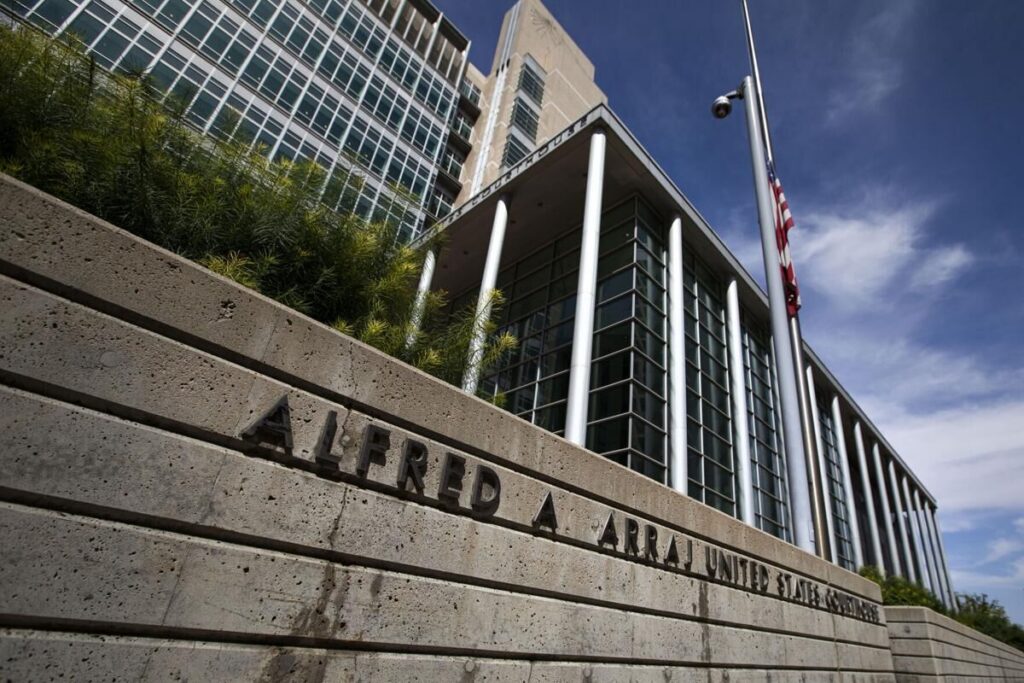
A federal judge green-lit a jury trial last week against multiple Fort Collins police officers on claims that they used excessive force on one man who was standing unarmed in his underwear, and retaliated against another man for exercising his...

Jeff Crank, Jessica Killin set to face off in 2 debates in Colorado’s 5th Congressional District
Ernest Luning
ernest.luning@coloradopolitics.com
Updated 3 days ago
Republican U.S. Rep. Jeff Crank and Jessica Killin, his Democratic challenger, have agreed to debate twice in the weeks leading up to the general election in Colorado’s 5th Congressional District, their campaigns have said. Crank is seeking a second term...

CSI study reviews impacts of Colorado’s mandatory sex‑trafficking sentencing measure
Marissa Ventrelli
marissa.ventrelli@coloradopolitics.com
Updated 19 hours ago
A new report by the think-tank Common Sense Institute examines what could happen if Colorado voters approve Initiative No. 108, which establishes mandatory life sentences for offenders convicted of sexual trafficking of a minor. The measure is backed by Protect...

Luigi Mangione pleads guilty in UnitedHealthcare CEO Brian Thompson murder case
Kaelan Deese
kaelan-deese@coloradopolitics.com
Updated 3 days ago
Luigi Mangione pleaded guilty Friday to two federal stalking charges connected to the 2024 killing of UnitedHealthcare CEO Brian Thompson, a major development that could complicate New York prosecutors’ separate murder case against him. Mangione, 28, not only pleaded guilty in Manhattan federal court...

French court blocks Macron’s social media ban for children under 15
Emily Hallas
emily-hallas@coloradopolitics.com
Updated 3 days ago
France’s top court struck down on Friday a law championed by President Emmanuel Macron that would have made it illegal for children to have social media accounts. The law, approved by lawmakers in July, was set to take effect at...
10th Circuit revives wage violation lawsuit against Papa John’s operator
Michael Karlik
michael.karlik@coloradopolitics.com
Updated 2 days ago
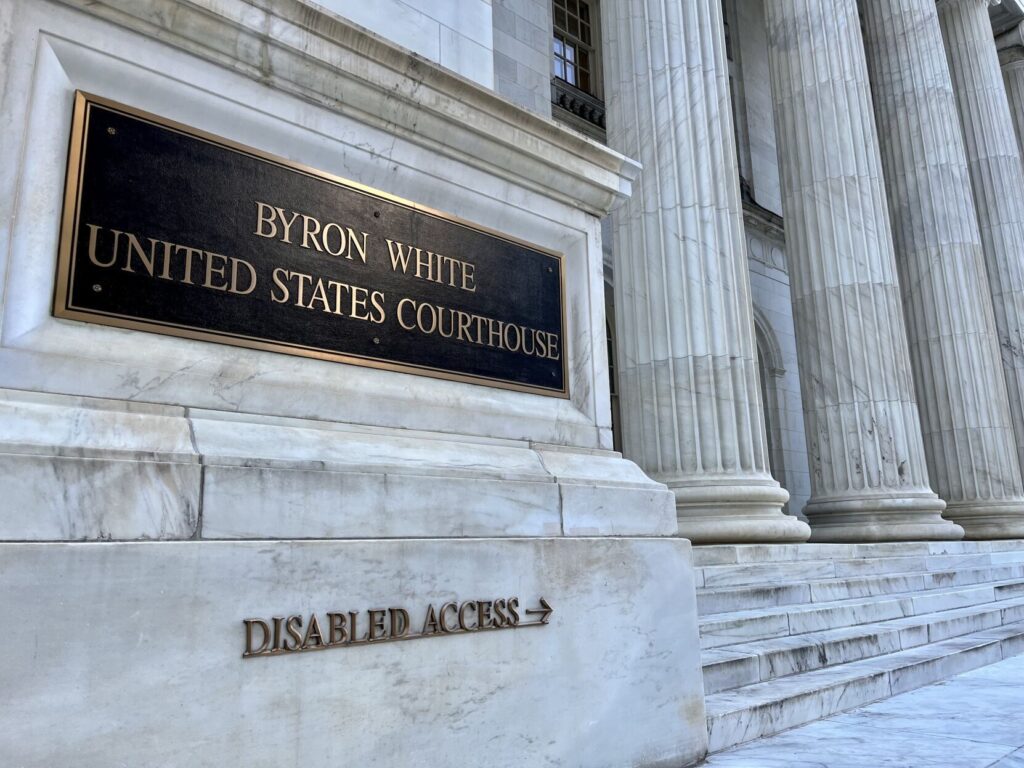
The Denver-based federal appeals court on Tuesday reinstated a former Papa John’s delivery driver’s lawsuit alleging violations of federal and state wage law. Steve Mighell worked for one month at a Denver Papa John’s location in summer 2023. He alleged...

Golden fire chief fired days after city manager as city investigates ‘racist incident’
Matt Kyle
matt.kyle@denvergazette.com
Updated 3 days ago
The City of Golden has terminated its fire chief days after terminating the city manager due to a “racist incident” earlier this year at a city fire station. City officials said that in March, a “Snoop on a Stoop” doll,...