

High-profile cases advance in federal court, Supreme Court adopts rules for child welfare matters | COURT CRAWL
Welcome to Court Crawl, Colorado Politics’ roundup of news from the third branch of government.
Federal judges heard multiple high-stakes or high-profile cases last week, plus the state Supreme Court adopted a package of rules to govern child neglect cases while making a key tweak.
Supreme Court action
• The Supreme Court adopted a package of new rules for child neglect cases that had the broad support of interested entities across the legal community. However, the justices did tweak one section, clarifying when a parent who requests a jury trial surrenders that right.
• In doing so, the Supreme Court answered some of the legal questions that surfaced during oral arguments in three cases earlier this month. While the changes signal the justices’ thinking, they won’t actually affect the cases in a backwards-looking way.
• The justices rejected an attempt to blur the line between breach of contract and negligence lawsuits, noting the distinction is particularly important for the construction industry.
Heard on appeal
• The state’s Court of Appeals emphasized that a 2020 police accountability law only envisions unsuccessful plaintiffs will pay officer defendants for their costs if the claim is frivolous.
• A Denver judge included unsupported facts in her order severely restricting a father’s parenting time, to the point where his attorney wondered if the judge confused his case with another.
• Judge Karl L. Schock, a former U.S. Department of Justice lawyer who now sits on the Court of Appeals, warned law enforcement they can’t seek broad swaths of data unrelated to the crime from a suspect’s cell phone.
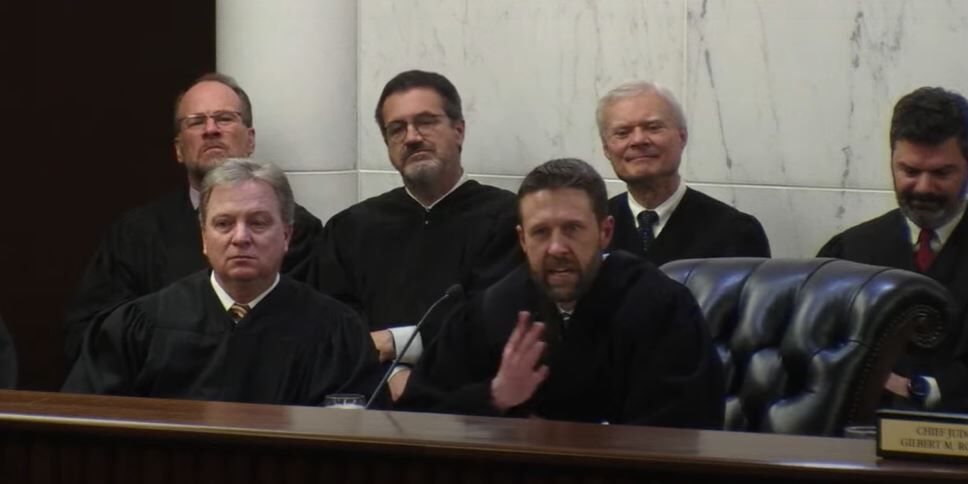
Judge Karl L. Schock speaks at his ceremonial swearing-in on Jan. 19, 2023. At left is Judge Jerry N. Jones. In the back row, from left to right, are Judges Timothy J. Schutz, Ted C. Tow III, Lino S. Lipinsky de Orlov and Matthew D. Grove.

High-profile cases
• Readers are probably aware that there are court cases elsewhere in the country challenging the administration’s use of the Alien Enemies Act of 1798 to summarily remove people alleged to be Venezuelan gang members. One such case is in Colorado, and a judge has not only blocked the government from removing people under the act, but has temporarily imposed procedural safeguards and opined that the use of the act appears unlawful.
• U.S. District Court Judge Charlotte N. Sweeney, a Biden administration appointee, also worried about the government’s conduct lately — namely, removing people quickly, and even erroneously, then fighting efforts to return them.
• Today or tomorrow, the U.S. Court of Appeals for the 10th Circuit will likely issue an order deciding whether to pause Sweeney’s 14-day temporary restraining order — a decision that normally isn’t appealable because of its short-term nature.
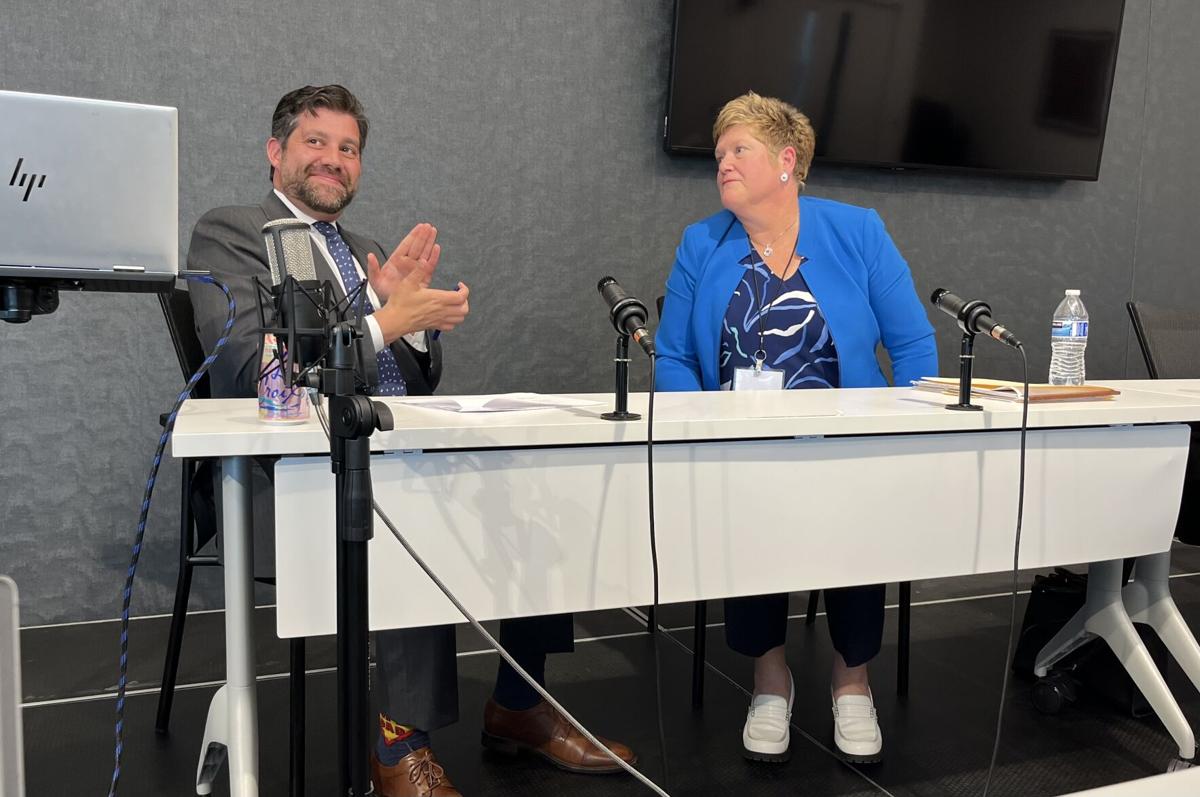
Attorney David Gartenberg applauds for U.S. District Court Judge Charlotte N. Sweeney at a legal event in Denver on July 21, 2023.
Michael Karlik michael.karlik@coloradopolitics.com

• Thanks to her decision finding the project permit unlawful, U.S. District Court Senior Judge Christine M. Arguello is now effectively the project engineer for Denver Water’s massive Gross Reservoir and Dam construction in Boulder County. Last week, she ordered the utility to share engineering documents with the environmental groups that successfully challenged the project.
• Meanwhile, the 10th Circuit is allowing some construction to continue while Arguello forges ahead with a hearing to determine what more work is needed to stabilize the structure.
• Finally, Chief U.S. Magistrate Judge Scott T. Varholak was skeptical of the federal government’s assertion of an interest in the habeas corpus case brought by convicted Mesa County ex-clerk Tina Peters, who is a supporter of the president and is seeking to be released from prison while her criminal appeal unfolds.
In other federal news
• The 10th Circuit deemed it “common sense” that police officers commit a constitutional violation when they shoot someone’s pet that doesn’t pose a threat.
• Although there were severe restrictions on public access to the first federal criminal trial in Colorado during the COVID-19 pandemic, the 10th Circuit said those protocols didn’t violate the constitutional guarantee of a public trial.
• One 10th Circuit judge suggested school district policies that allow staff to help students conceal their true gender identities from their parents could rise to the level of a constitutional violation.
• A Denver man who was acquitted of murder hadn’t shown the detectives in his case maliciously prosecuted him, a federal judge ruled.

FILE PHOTO: The Alfred A. Arraj U.S. Courthouse in downtown Denver. (Photo courtesy of United States District Court - Colorado)
Courtesy photo, U.S. District Court

Miscellaneous proceedings
• No, a judge can’t drive or park a car in front of his home that has his wife’s law firm’s logo affixed to the side, the state’s judicial ethics panel advised.
• The Denver Gazette reported that retired judges who take one-off appointments to handle domestic relations cases in a private capacity are overseen by neither the attorney regulation nor the judicial discipline authorities for the state.
• At noon on Thursday, May 1, lawyers and judges will gather on the steps of Denver’s City and County Building to commemorate “Law Day.” The organizers have billed the event as recognizing “an urgent need for us to stand united in support of the United States Constitution and the Rule of Law.”

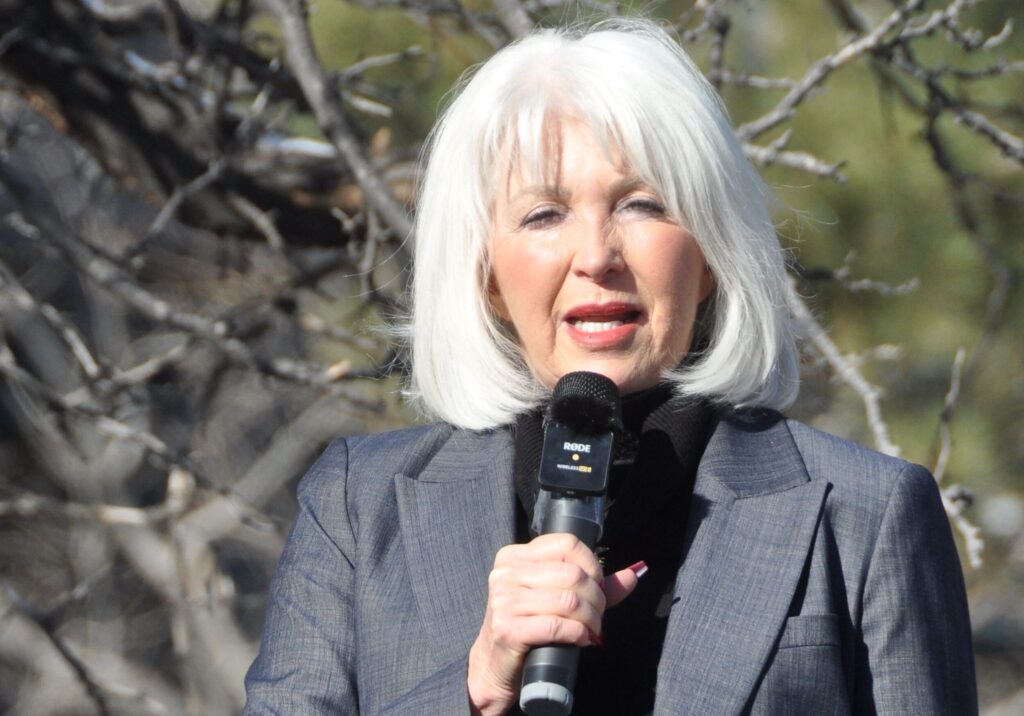
10th Circuit dismisses Tina Peters’ challenge to confinement as moot
Michael Karlik
michael.karlik@coloradopolitics.com
Updated 4 hours ago
The Denver-based federal appeals court granted the state’s unopposed request on Wednesday to dismiss former Mesa County clerk Tina Peters’ challenge to her confinement as moot. Although Peters received a commutation of her prison sentence last month from Gov. Jared...
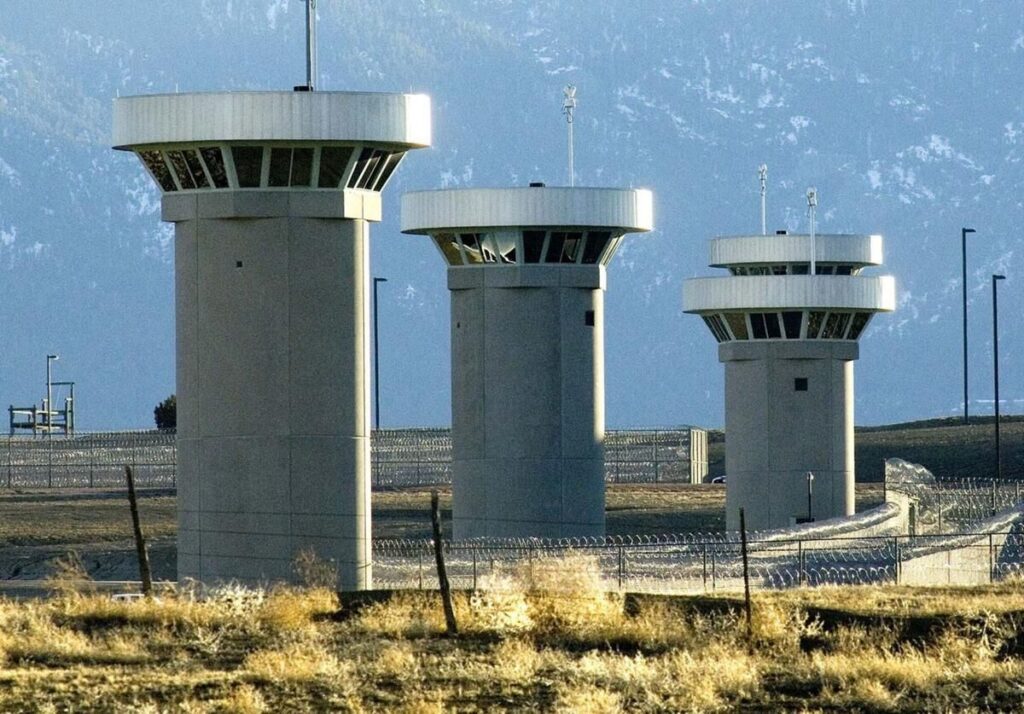
Federal judge declines to recuse from death penalty case after Supermax visit
Michael Karlik
michael.karlik@coloradopolitics.com
Updated 4 hours ago
A federal judge declined to recuse herself last month from a death penalty case arising out of Colorado’s “Supermax” prison, finding that her tour of the facility earlier this year did not bias her decision-making. U.S. District Court Judge Charlotte...
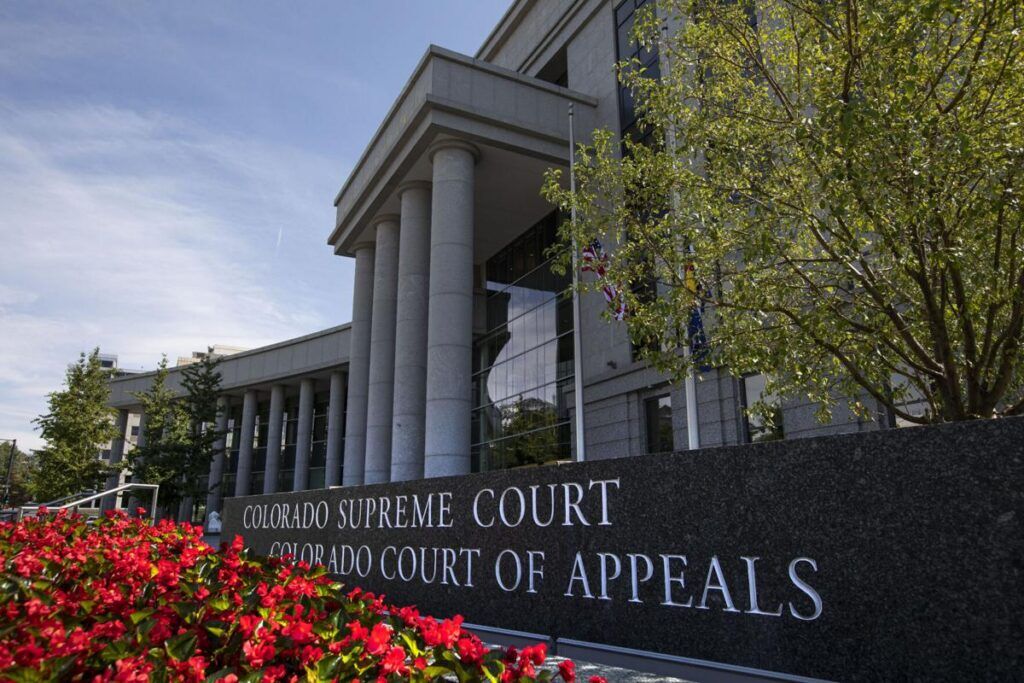
Appeals court clarifies offense of impersonating a peace officer
Michael Karlik
michael.karlik@coloradopolitics.com
Updated 9 hours ago
Colorado’s second-highest court clarified this month that a person commits the offense of impersonating a peace officer if they engage in “any conduct” while pretending to be law enforcement. In a case out of El Paso County, Richard James Coulier...
Colorado Supreme Court reverses 2 Chaffee County judges for imposing fee on habeas petitioner
Michael Karlik
michael.karlik@coloradopolitics.com
Updated 1 day ago
The Colorado Supreme Court rejected two separate appeals earlier this month from an incarcerated defendant seeking immediate release from prison, but concluded that two Chaffee County judges incorrectly required him to prepay filing fees for his cases. David J. Gottorff...
Weld County judge wrongly denied bail to murder defendant in gap between law change
Michael Karlik
michael.karlik@coloradopolitics.com
Updated 1 day ago
Colorado’s second-highest court ruled this month that a Weld County judge was wrong to deny bail to a murder defendant in the window between the state Supreme Court’s recognition of the right to bail and the voters’ subsequent overruling of...
Defendants acquitted by insanity are eligible for records-sealing, appeals court says
Michael Karlik
michael.karlik@coloradopolitics.com
Updated 3 hours ago
Colorado’s second-highest court clarified last month that defendants who are found not guilty by reason of insanity are eligible to have their criminal records sealed from public view. Judges must seal criminal records if, among other things, a defendant is...
Colorado Supreme Court shuts down ‘new form of representation’ in postconviction cases
Michael Karlik
michael.karlik@coloradopolitics.com
Updated 2 days ago
While unrepresented defendants in postconviction proceedings are permitted to have a court-appointed attorney investigate and augment their claims, that is not the case when a private lawyer authors the original petition, the Colorado Supreme Court decided on Monday. In contrast...

Colorado State Shooting Association files constitutional challenge to firearms dealer law
Marissa Ventrelli
marissa.ventrelli@coloradopolitics.com
Updated 2 days ago
A firearms group has filed a lawsuit challenging a recently signed law expanding regulations for firearms dealers in Colorado. House Bill 26-1126 clarifies that firearms dealers must hold both a federal and state license to operate. The bill also allows the...
Colorado justices walk back appeals court’s expansion of rezoning via ballot box
Michael Karlik
michael.karlik@coloradopolitics.com
Updated 2 days ago
The Colorado Supreme Court ruled on Monday that rezonings of planned-unit developments cannot occur through a vote at the ballot box, reversing an appellate decision that found such changes were fair game for a popular vote. In contrast to traditional,...
Colorado Supreme Court recognizes right to self-defense in workplace
Michael Karlik
michael.karlik@coloradopolitics.com
Updated 2 days ago
The Colorado Supreme Court recognized on Monday that there is a right to self-defense in the workplace for which employers may not terminate workers so long as they lawfully exercise that right. The court’s majority in the 5-2 decision cautioned...