

Appeals judge warns police against overly broad cell phone search warrants
A member of the state’s second-highest court warned last month that law enforcement personnel should be on notice by now that they cannot obtain warrants seeking broad amounts of data from a suspect’s cell phone records unrelated to the crime.
A three-judge panel for the Court of Appeals upheld the convictions and 102-year prison sentence of Ramon Rodriguez-Ortiz. He made multiple arguments on appeal, including that the search warrant police used to obtain records from his cell phone provider failed to “particularly” describe the information they were seeking — a requirement of the Fourth Amendment.
In a March 20 opinion, the panel concluded the warrant, albeit broad, was acceptable because it was confined to a six-month period and omitted pictures, videos and other types of files that are stored on a cell phone.
Judge Karl L. Schock wrote separately to say that while he ultimately believed police were justified in relying upon the warrant, it was, in fact, an “all encompassing search” of the cell phone that did not satisfy the Fourth Amendment’s requirements.
“I emphasize what the law has long made clear. The particularity requirement is not a formality or a legal technicality; it is a bedrock constitutional principle,” he wrote. “Its purpose is to tell law enforcement officers exactly what they are authorized to search for and to prevent the kind of general, exploratory rummaging the United States and Colorado Constitutions prohibit.”
In the underlying case, Denver jurors convicted Rodriguez-Ortiz of numerous offenses after he shot at his then-girlfriend’s bedroom and vehicles, slashed her tires, threw incendiary devices through her mother’s window and tampered with surveillance cameras.
Police sought a search warrant for Rodriguez-Ortiz’s cell phone records. Authorities wanted information, covering a six-month period, showing:
• All incoming and outgoing call records
• All incoming and outgoing text messages
• All “data activity/internet usage” and “advanced precision location data”
• Cell tower coordinates
• Devices, users and names associated with the account

The Justice Department is taking efforts to protect older adults against fraud.
GERD ALTMANN/PIXABAY

Accompanying the warrant was an affidavit from a law enforcement officer describing the various criminal incidents of which Rodriguez-Ortiz was suspected. A judge approved the warrant. Based on the information uncovered from the cell phone provider, police sought a second warrant and recovered a gun from Rodriguez-Ortiz’s truck.
On appeal, Rodriguez-Ortiz argued the original warrant amounted to “fishing.” He noted the officer who drafted the warrant was seeking to establish “communication patterns and locations” for Rodriguez-Ortiz and “develop a pattern of (his) life.”
The Court of Appeals contrasted the warrant in Rodriguez-Ortiz’s prosecution with past case law and found it was particular enough to be constitutional.
Judge Rebecca R. Freyre, writing for herself and Judge Grant T. Sullivan, noted the data search was limited to the period during which the crimes occurred and the warrant referred to the officer’s affidavit explaining the nature of the offenses. Although Freyre acknowledged the warrant could have clarified the various categories of information should be “related to the crime,” she wrote that the affidavit made clear police were looking for information about the specific offenses.
It was also “reasonable for investigators to examine Rodriguez-Ortiz’s patterns to determine whether he was regularly near the victim’s location on days when no crimes occurred,” she wrote.
Finally, the majority observed the warrant “excluded much of the data contained in a cell phone, such as images, videos, and contact lists.”

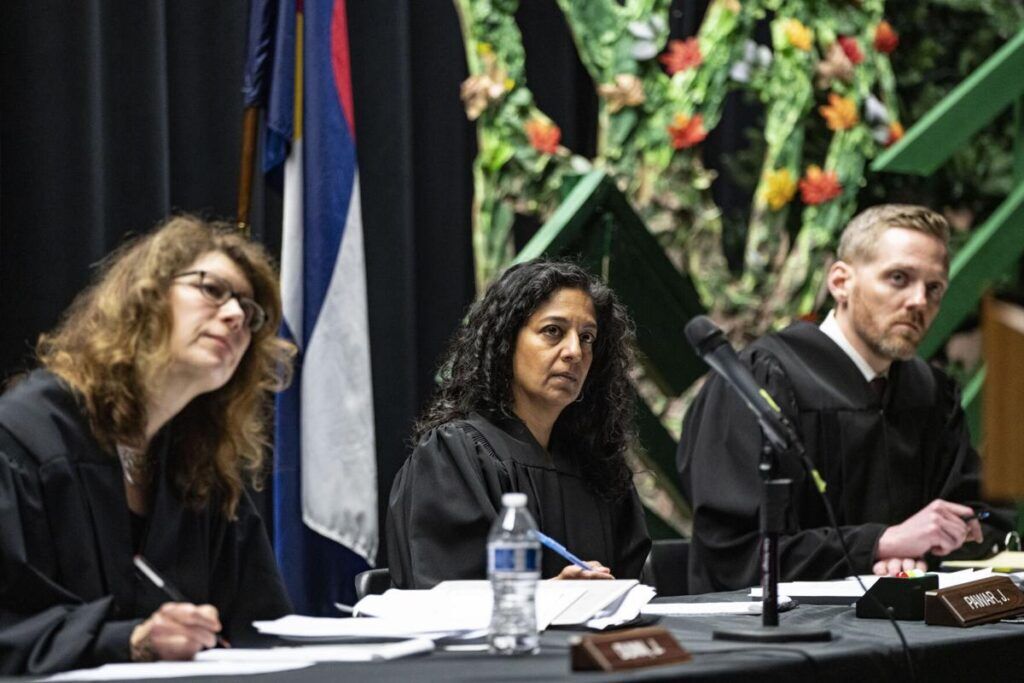
Members of Colorado's Court of Appeals attend the ceremonial swearing-in of Judge Melissa C. Meirink on Feb. 27, 2025.

Schock, a former U.S. Department of Justice lawyer, was unconvinced the warrant described “particularly” the information police sought in Rodriguez-Ortiz’s cell phone records.
First, he recognized officers include affidavits narrating the alleged crimes when they submit a warrant to judges for approval. But the Fourth Amendment, Schock wrote, makes no mention of supporting documentation.
“It is the warrant, not the affidavit, that tells law enforcement what they may search for,” he explained.
Further, Schock took issue with the fact that the crimes occurred on 11 dates, but the warrant sought 184 days of communications records — with the officer announcing they wanted to “develop a pattern of (Rodriguez-Ortiz’s) life.”
“And far from restricting those records to evidence of specific crimes, the affidavit explicitly sought evidence of non-criminal activity,” Schock wrote. “Under the guise of this warrant, officers could search for evidence of other crimes, or unknown crimes, or even private information having nothing to do with crime at all.”
Schock nonetheless agreed with the majority that the search was valid because of the “good faith exception,” meaning that law enforcement reasonably relied on the judicially approved warrant to conduct a search. He acknowledged it may not have been clear that the Fourth Amendment applied equally to cell phone records from a service provider as it does to the cell phone itself, and there were some limitations embedded in the warrant.
Also, it is “hard for me to say that the executing officer could not have reasonably presumed the warrant to be valid when two judges” on the appellate panel said it was, he added.
However, Schock cautioned that the good faith exception is not “a free pass whenever the government violates the Fourth Amendment.”
“In light of the long line of case law recognizing that cell phones are ‘entitled to special protections from searches,’ a reasonable officer should by now be well on notice that a cell phone warrant may not seek all (or even most) data on a phone simply because the owner of the phone may have committed a crime,” he concluded.
The case is People v. Rodriguez-Ortiz.


A new day? Colorado’s troubled guardianship office pursues ‘cultural reset’
Marianne Goodland
marianne.goodland@coloradopolitics.com
Updated 3 days ago
Colorado’s guardianship program, long criticized for mismanagement and high staff attrition, is undergoing a “cultural reset,” as its new director works to repair partnerships and prepare for a major expansion under recent legislation. Created by lawmakers in 2017, the Office...
Local party leaders, incoming judge among members of judicial performance commission that violated law
Michael Karlik
michael.karlik@coloradopolitics.com
Updated 23 hours ago
A local Democratic leader and 2024 presidential elector. A legislative aide and leader in the Young Republicans. An incoming county court judge freshly appointed by the governor. They are among the eight members of the northeastern Colorado judicial performance commission...

Judge dismisses lawsuit seeking records from Colorado Democratic group
Marianne Goodland
marianne.goodland@coloradopolitics.com
Updated 2 days ago
A lawsuit seeking to obtain records from Democratic lawmakers affiliated with a caucus has been thrown out by a Denver District Court judge. On July 17, Judge Ericka Englert dismissed the April lawsuit filed by progressive activist Derrick Blanton, who...
Colorado Springs mother Deborah Nicholls’ murder conviction overturned
Nick Smith
nick-smith@coloradopolitics.com
Updated 3 days ago
A Colorado Springs mother convicted in 2008 of murdering her three children in a house fire might get a new trial after a judge ruled that prosecutors withheld key evidence that could have impacted the jury’s verdict. Deborah Nicholls, whose...
Colorado court overturns illegal $7,000 restitution order
Michael Karlik
michael.karlik@coloradopolitics.com
Updated 2 days ago
Colorado’s second-highest court overturned a Weld County defendant’s obligation to pay more than $7,000 in crime victim restitution on Thursday because a trial judge failed to issue a legally compliant restitution order at the time of sentencing. In Colorado, as...

Appeals court rejects former DougCo commissioner’s legal fee claim
Nicholas Fogleman
nicholas.fogleman@denvergazette.com
Updated 2 days ago
The Colorado Court of Appeals rejected a former Douglas County commissioner’s bid for reimbursement of attorney fees she incurred while responding to multiple investigations into her conduct. The dispute stemmed from a 2019 anonymous letter sent to county officials alleging...
Appeals court orders second look at Denver Water’s immunity for cyclist’s injury
Michael Karlik
michael.karlik@coloradopolitics.com
Updated 3 days ago
Colorado’s second-highest court ordered another look at a bicyclist’s negligence lawsuit against Denver Water on Thursday, concluding that a trial judge needed to evaluate the utility’s potential immunity using the state Supreme Court’s new guidance. Joseph A. “Joey” Scott alleged...
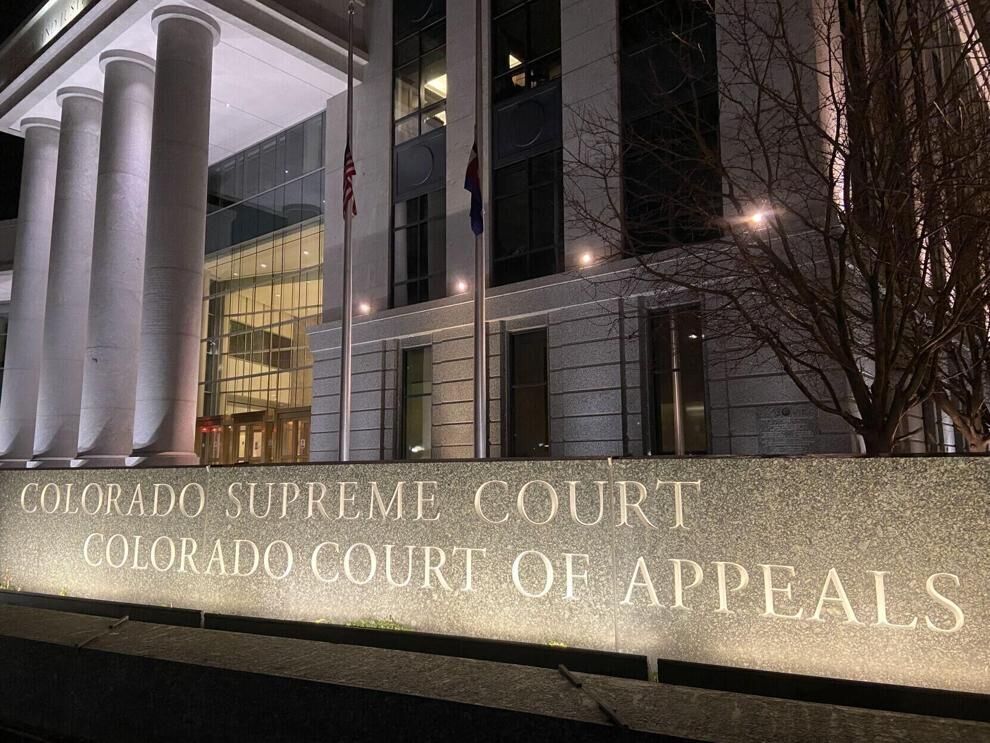
Labels, duration not definitive proof of ‘intimate relationship,’ Colorado court rules in domestic violence case
Michael Karlik
michael.karlik@coloradopolitics.com
Updated 2 days ago
Colorado’s second-highest court clarified on Thursday that the length of a couple’s relationship and the labels they attach to it are not conclusive evidence of whether it is an “intimate relationship” that can give rise to a domestic violence prosecution....

Colorado AG urges Supreme Court to let Boulder climate lawsuit proceed
Marissa Ventrelli
marissa.ventrelli@coloradopolitics.com
Updated 3 days ago
Colorado Attorney General Phil Weiser has filed a court brief with the U.S. Supreme Court in a lawsuit brought by Boulder city officials seeking to hold oil companies liable for their environmental impact. The case began in 2018, when the...
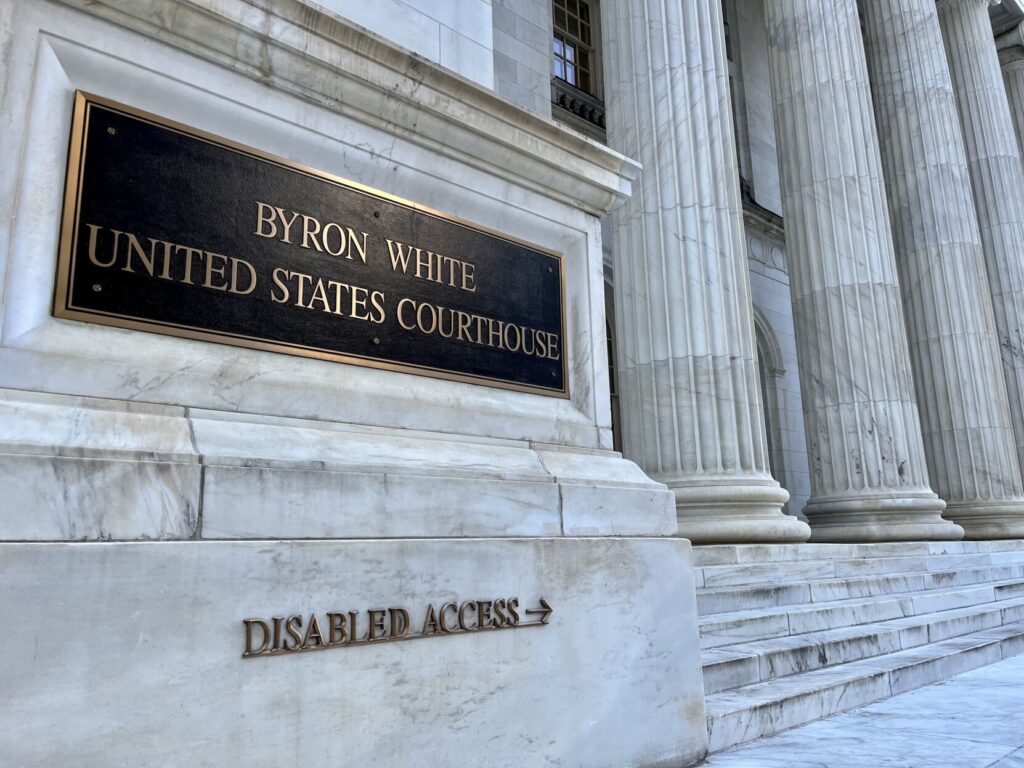
10th Circuit says landowner cannot sue ex-Routt County judge for statements in decision
Michael Karlik
michael.karlik@coloradopolitics.com
Updated 4 days ago
A Routt County landowner cannot sue a former judge for his allegedly inaccurate statements in a case where the landowner was not a party, the Denver-based federal appeals court decided on Wednesday. Anne Fitzsimmons, who lives in Germany, owns a...