

Ballot measure to repeal Colorado’s wolf reintroduction program rejected by title board
The body that makes the final review of ballot measures on Wednesday rejected a proposal to repeal Colorado’s wolf reintroduction program.
The entity known as the Title Board, which is comprised of representatives of the attorney general’s office, the Secretary of State, and the Legislative Council staff, approved a second initiative aimed at ending the wolf program to collect signatures.
The Title Board sided with opponents who claimed Initiative #35 violated the state’s single-subject rule. That claim, which two individuals filed, said the measure had four unrelated subjects:
• To end gray wolf reintroduction
• To remove the “nongame” status of gray wolves, and the use of the sole term “wolves” rather than the term “gray wolves” used throughout the remainder of the wolf reintroduction statute, which could extend the import ban beyond just the gray wolf
• Redefining livestock to include livestock guard or herding animals, which has nothing to do with wolves
• A prohibition on importing wolves (not just gray wolves) from out of state would be unnecessary under the measure’s stated purpose, as contained in the first section
Proposition 114 passed in 2020 with support primarily from Front Range voters and not the communities on the Western Slope, where wolves have been introduced. Since December of 2023, 25 wolves have been brought to Colorado from Oregon and British Columbia. Within a few months, they started preying on livestock in Grand County and, more recently, Eagle and Pitkin counties.
Following the reintroduction, two Oregon wolves formed a pair and produced at least four pups. They were eventually captured due to concerns that the male was responsible for a dozen livestock depredations. The male died shortly after capture — it turned out from an earlier gunshot wound. Four other wolves have also died. Two of the British Columbia wolves were killed in Wyoming, although Colorado Parks and Wildlife and the state of Wyoming have not said how the second wolf died. Another Oregon wolf died after a fight with another wolf, and a fourth died after a battle with a mountain lion.
All told, that leaves the state with 27 collared wolves, including two in Jackson County who traveled to Colorado several years ago from Wyoming.
Dozens of livestock producers, ranchers, ag organizations, county commissioners and wildlife conservation groups, with hundreds of thousands of members, had pleaded with the proponents to pull initiative #35.
Colorado coalition of hunters, anglers opposes 2026 wolf reintroduction repeal efforts
Dan Gates of Coloradans for Responsible Wildlife Management told Colorado Politics that, based on the outreach from the agriculture community and the Colorado Wildlife Conservation Project, which includes his group, the title board probably made the best decision that could be made, given the single-subject issue.
As for the multitude of organizations that came together to oppose Initiative #35, Gates said, “We are pleased to make sure we are trying to do things lockstep with each other and in a collaborative manner, to benefit wildlife management and agriculture production when it comes to wolf restoration.”
Meanwhile, Initiative #13, the measure that has been approved, states simply that the state will end the reintroduction of gray wolves by Dec. 31, 2026.
Critics of both ballot measure pointed out that the state would likely have completed the reintroduction program by then, rendering the issue moot.
The Title Board approved the measure on Feb. 19.
Petition forms are due Aug. 27, and if successful, the measure will appear on the 2026 general election ballot.
Funding, which the advocates have struggled to raise, could make that a tall order.
Ballot measures require 124,238 valid signatures to qualify for the ballot. The standard is to collect at least 200,000. It is not unusual for a campaign to spend $1 million just on gathering signatures.
The group called Colorado Advocates for Smart Wolf Policy raised only $29,000 in its first three months and spent $11,000, with all but $1,000 going to Patrick Davis Consulting, the campaign manager.
In a statement Wednesday, Davis said, “We are disappointed with the State Title Board’s decision to reverse its unanimous April 2, 2025, decision to set a single subject title on Proposed Initiative #35.
“With this decision, the Title Board is denying the owners of livestock guard and herding animals the chance for compensation for losses caused by a gray wolf and denying the professionals at the Colorado Department of Parks and Wildlife the chance to be given flexibility to manage Colorado’s wolf population as they see fit,” Davis said. “Additionally, Colorado voters were denied the opportunity to weigh in on prohibiting wolves from being imported into Colorado.”
That said, he pointed out that Initiative #13 is ready and Advocates for Smart Wolf Policy will begin collecting signatures “immediately.”
Gaspar Perricone, who chairs the Colorado Wildlife Conservation Project, said, “The proposal in Initiative #13, while similar to Initiative #35, doesn’t appear to address the underlying concerns” that were expressed by Colorado Wildlife Conservation Project.
He added: “We continue to look toward proactive solutions that will have a meaningful impact in addressing the underlying issues with the ongoing wolf management plan for landowners and the sportsmen community.”


Luigi Mangione pleads guilty in UnitedHealthcare CEO Brian Thompson murder case
Kaelan Deese
kaelan-deese@coloradopolitics.com
Updated 57 minutes ago
Luigi Mangione pleaded guilty Friday to two federal stalking charges connected to the 2024 killing of UnitedHealthcare CEO Brian Thompson, a major development that could complicate New York prosecutors’ separate murder case against him. Mangione, 28, not only pleaded guilty in Manhattan federal court...

French court blocks Macron’s social media ban for children under 15
Emily Hallas
emily-hallas@coloradopolitics.com
Updated 1 hour ago
France’s top court struck down on Friday a law championed by President Emmanuel Macron that would have made it illegal for children to have social media accounts. The law, approved by lawmakers in July, was set to take effect at...
10th Circuit revives wage violation lawsuit against Papa John’s operator
Michael Karlik
michael.karlik@coloradopolitics.com
Updated 2 hours ago
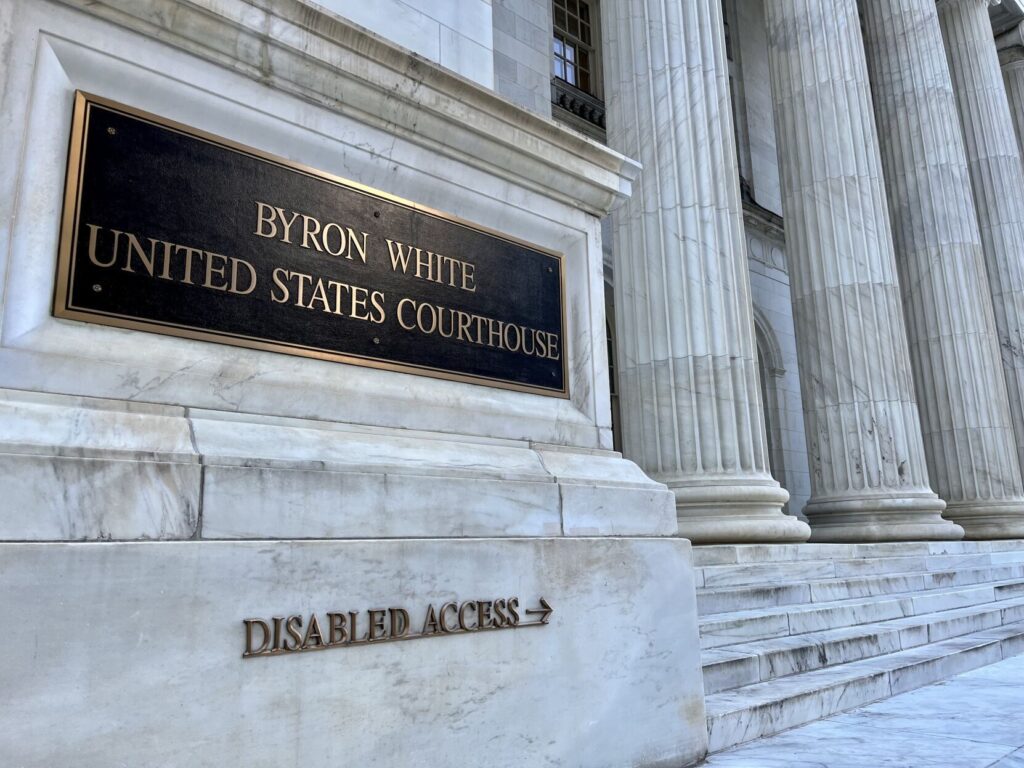
The Denver-based federal appeals court on Tuesday reinstated a former Papa John’s delivery driver’s lawsuit alleging violations of federal and state wage law. Steve Mighell worked for one month at a Denver Papa John’s location in summer 2023. He alleged...

Golden fire chief fired days after city manager as city investigates ‘racist incident’
Matt Kyle
matt.kyle@denvergazette.com
Updated 3 hours ago
The City of Golden has terminated its fire chief days after terminating the city manager due to a “racist incident” earlier this year at a city fire station. City officials said that in March, a “Snoop on a Stoop” doll,...

Ikon Pass company cuts jobs in Denver and beyond amid several changes
Bernadette Berdychowski
bernadette.berdychowski@denvergazette.com
Updated 2 hours ago
As the ski resort company behind the Ikon Pass and the operator of Steamboat Springs, Arapahoe Basin and Winter Park Resort is going through a phase of changes, the company based in Denver is now cutting jobs. Alterra Mountain Co....
Healthcare freefall: Once built on federal investment, rural hospitals today fight to survive
Thelma Grimes
thelma.grimes@coloradopolitics.com
Updated 4 hours ago
Editor’s Note: Colorado’s healthcare system is entering a period of accelerating instability — a “tsunami,” as multiple leaders describe it — driven by collapsing hospital finances, shrinking Medicaid reimbursements, disappearing services and a political fight over who is responsible for...

Healthcare freefall: Subsidy cuts, insurance gaps reshape how Coloradans will seek care
Thelma Grimes
thelma.grimes@coloradopolitics.com
Updated 3 hours ago
Editor’s Note: Colorado’s healthcare system is entering a period of accelerating instability — a “tsunami,” as multiple leaders describe it — driven by collapsing hospital finances, shrinking Medicaid reimbursements, disappearing services and a political fight over who is responsible for...

Healthcare Freefall: Finger‑pointing intensifies as Colorado’s healthcare system strains under rising costs, shrinking coverage
Thelma Grimes
thelma.grimes@coloradopolitics.com
Updated 3 hours ago
Editor’s Note: Colorado’s healthcare system is entering a period of accelerating instability — a “tsunami,” as multiple leaders describe it — driven by collapsing hospital finances, shrinking Medicaid reimbursements, disappearing services and a political fight over who is responsible for...
Colorado appeals judge’s delays in releasing opinions noted by performance commission
Michael Karlik
michael.karlik@coloradopolitics.com
Updated 9 hours ago
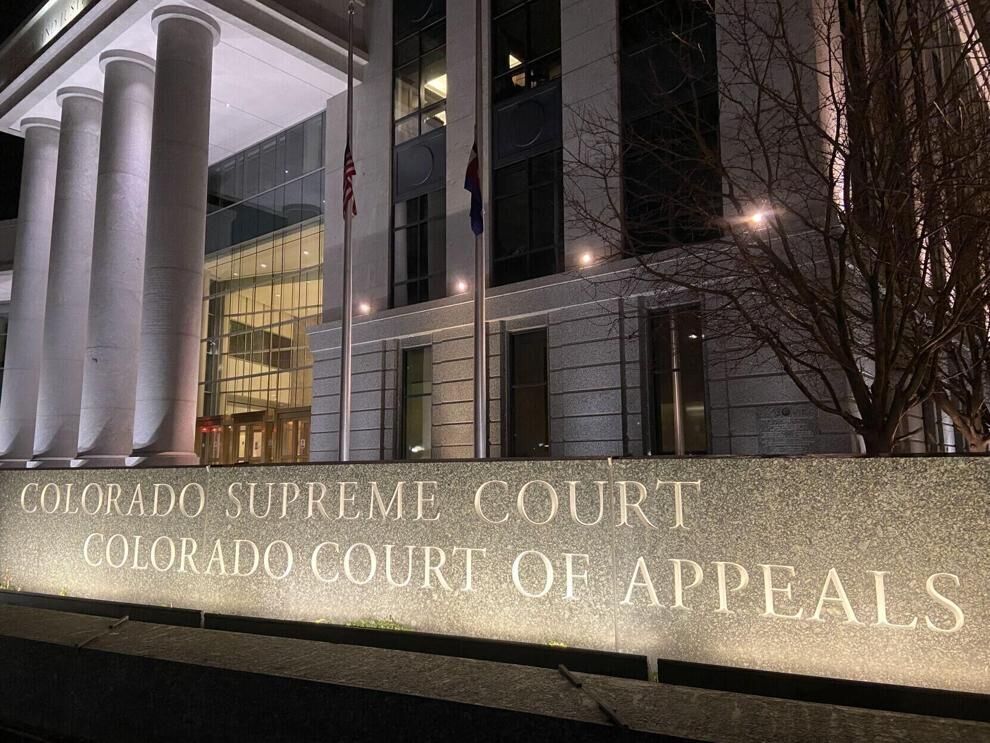
The citizen-led performance commission that provides guidance to voters about whether to retain members of Colorado’s second-highest court raised concerns by judges and attorneys that Judge Elizabeth L. Harris sometimes struggles with releasing opinions promptly. Harris, who joined the Court...

DPS board sends $44 million tax increase to Denver voters
Nico Brambila
nico.brambila@denvergazette.com
Updated 6 hours ago
The Denver Public Schools board on Thursday unanimously voted to place a mill levy override on the November ballot that — if approved by voters — would raise taxes by $43.9 million annually, largely to fund employee raises. The request...