

Northeast Colorado judge intends to resign to resolve misconduct complaint, parties reveal in unique hearing
A trial judge in northeastern Colorado intends to resign his seat if a disciplinary panel accepts the agreed-upon narrative of the misconduct allegations against him, the parties said during a first-of-its-kind proceeding on Friday.
The state Supreme Court suspended District Court Judge Justin B. Haenlein in November due to an ongoing investigation by the Colorado Commission on Judicial Discipline. Around the same time, voters overwhelmingly approved Amendment H, which restructured the process of disciplining judges to provide greater transparency earlier in the process.
That change resulted in the first-ever livestreamed status conference in a disciplinary case, held virtually through the courtroom of Weld County District Court Judge Vincente G. Vigil. Vigil is a member of the three-person panel who will adjudicate Haenlein’s discipline, along with attorney Tyrone Glover and non-lawyer Jeff Swanty.
“The panel is very, very mindful of what it believes the intent of Amendment H to be. Very mindful of the state of Colorado has clearly indicated that these proceedings should be held in the light of day,” said Vigil.
However, Amendment H also necessitated a new set of judicial discipline rules, which have not come quickly enough to give the parties guidance about how Haenlein’s case should be handled.
Haenlein is a judge in the 13th Judicial District, consisting of Morgan, Logan, Sedgwick, Phillips, Washington, Yuma and Kit Carson counties. Voters retained Haenlein last year by a margin of 57%-43%. The citizen-led performance commission that made a recommendation to voters offered a uniformly positive review of him.


The allegations against Haenlein have yet to be disclosed publicly, but members of the panel, the judicial discipline commission and Haenlein’s attorney anticipated during the status conference that documentation currently available to the panel will be widely released soon.
Although the parties suggested at the outset of the proceeding that they anticipated the disciplinary case might be at its conclusion if the panel accepts the agreed-upon sanction and narrative of events, panel members balked at that proposal. Primarily, they were concerned that Amendment H changed the landscape and a stipulated resolution by the parties was no longer sufficient for them to fulfill their own duties.
“I think the panel members feel strongly that at least they would like a formal charging document so they can use that as a benchmark to determine whether the panel members’ accepting the stipulation is not just in the parties’ interest, but in the public’s interest,” said Vigil.
“I’d like to know more how this decision was made,” said Swanty, referring to the parties’ agreement that Haenlein would resign if the panel accepted the parties’ resolution. “To me, it doesn’t seem the discipline is in line with what has been agreed to as the current facts. So, I would like to hear from both sides basically defending how you came up with this decision. To me, no offense, it seems out of line.”
Jeff Walsh, special counsel to the commission, clarified that removal from office was already the harshest sanction that can be imposed on a judge. He stressed the original allegations against Haenlein largely overlapped with the factual narrative the parties agreed to in reaching a resolution, and he did not believe additional documentation was necessary.
“Judge Haenlein is on temporary suspension right now. He’s being paid, and that has been the circumstance for four months now,” Walsh said. “While he’s also being paid, while not working, the 13th Judicial District is currently laboring under the burden of being down a judge. That, I’m sure, is a struggle for them. So, time has been of the essence.”
He added that while the commission was not “keeping facts from the public,” he did want to protect the identity of a witness in the misconduct proceedings.
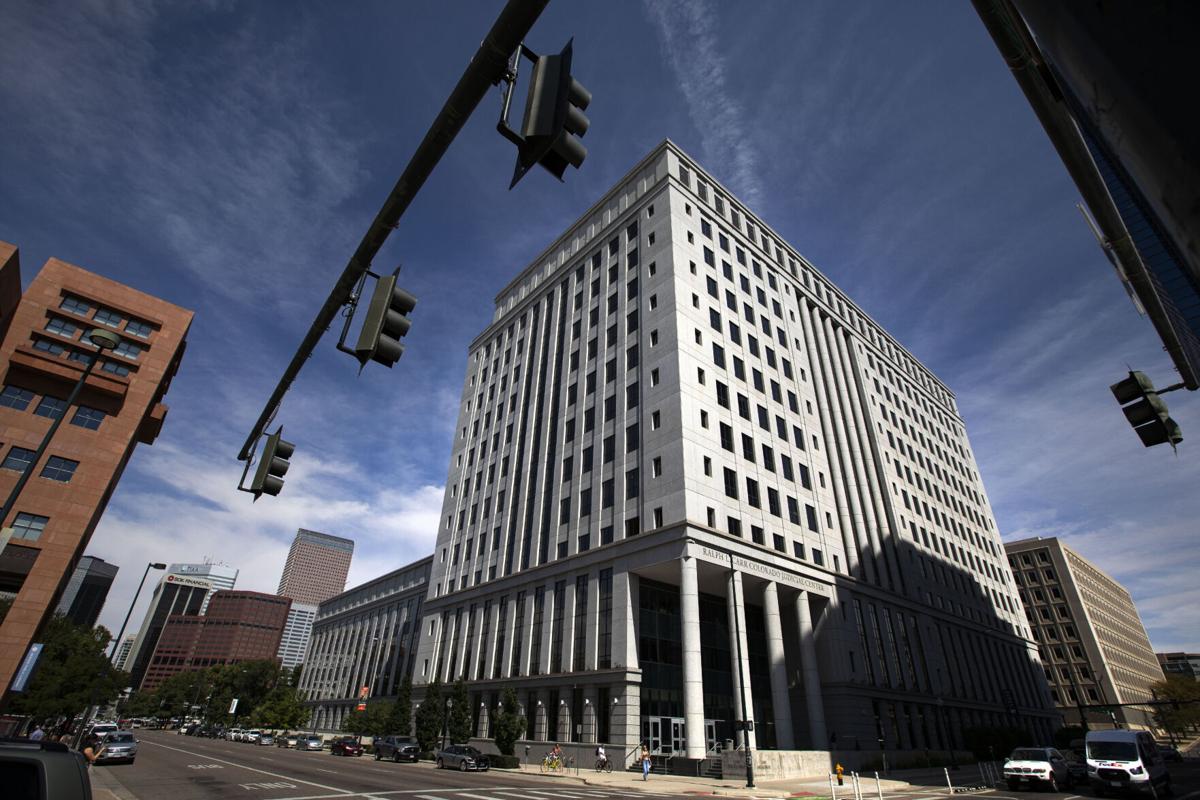
The Ralph L. Carr Colorado Judicial Center, on Tuesday, Sept. 13, 2022, in Denver, Colo. (Timothy Hurst/The Denver Gazette)
Timothy Hurst
Glover defended the panel’s request to know more about where the case started so it could evaluate the propriety of the parties’ resolution and not “rubber stamp” it.
“If a member of the public were going back to view what happened in this matter,” he said, “they’re not gonna know how this situation came together. They’re gonna see it was an agreement between the parties.”
The panel ordered the commission to file a document containing the allegations. Haenlein will file a response. Another status conference will be held on May 8.
The parties and the panel clarified that the primary hitch to wrapping up the case stemmed from the seeming repeal of judicial disciplinary rules in the wake of Amendment H. The constitutional amendment, in addition to creating the adjudicative body that hears formal disciplinary proceedings, also created a rule-making body. The chair of the rule-making committee previously told Colorado Politics that the entity is moving quickly to enact emergency rules.
“It’s just the reality of operating under a new process under which there is not actually rules that have yet been created to instruct us how to go about doing this,” said David Beller, the attorney for Haenlein.
“Nobody likes to be the first,” agreed Vigil.

Colorado’s chief federal judge orders return of wrongfully deported man, second judge to explore ‘series’ of violations
Michael Karlik
michael.karlik@coloradopolitics.com
Updated 7 hours ago
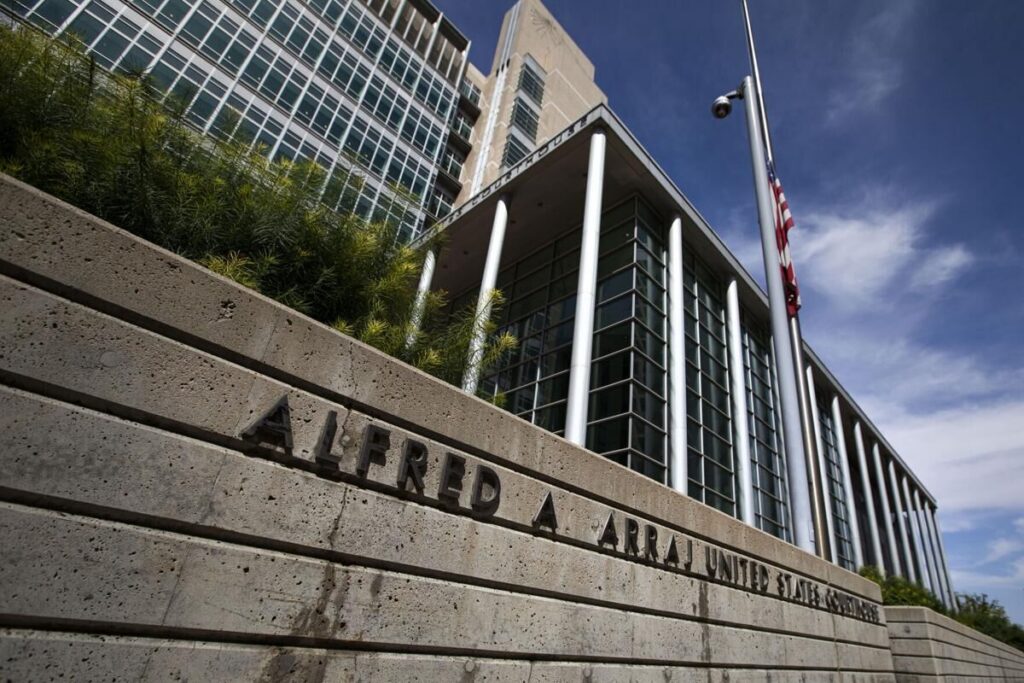
Colorado’s chief federal judge took the extraordinary step of directing the government on Tuesday to do everything it can to return a man it deported in violation of his order. At the same time, Colorado’s chief magistrate judge has set...
Denver murder, assault convictions reversed due to faulty jury instructions
Michael Karlik
michael.karlik@coloradopolitics.com
Updated 5 hours ago
Colorado’s second-highest court reversed a defendant’s convictions for murder and assault last week after concluding a Denver judge incorrectly omitted key jury instructions that could have affected the verdict and sentencing. Stephen C. Swainson fatally stabbed Israel Casillas in downtown...
‘Understand people for who they are’: 2 federal judges talk about compassion in courtroom
Michael Karlik
michael.karlik@coloradopolitics.com
Updated 13 hours ago
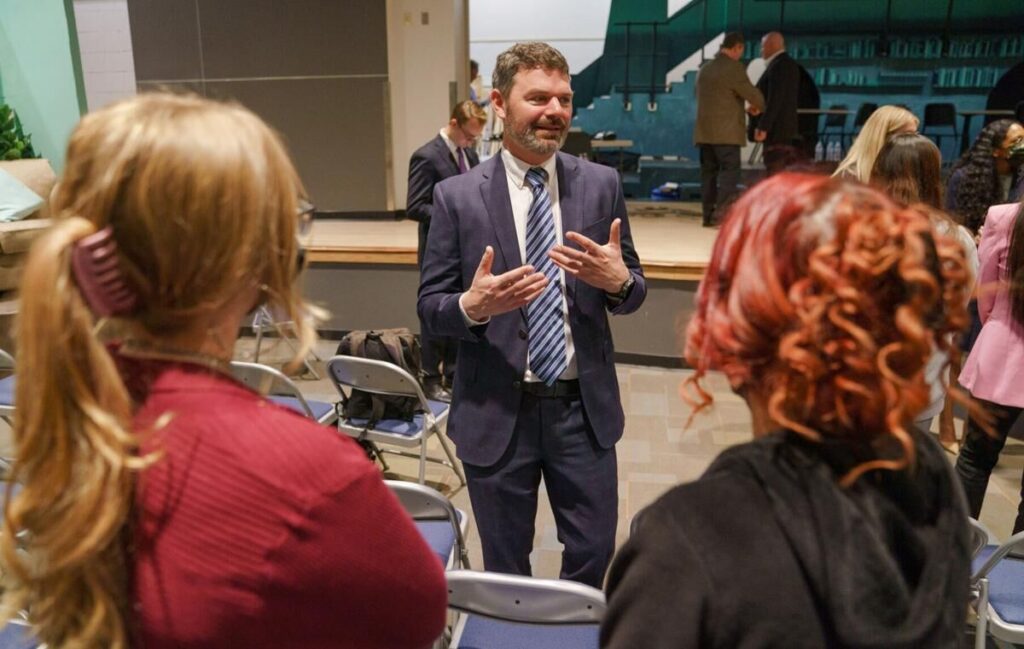
Before taking the bench in 2022, U.S. District Court Judge Charlotte N. Sweeney was an employment discrimination attorney. While the cases could be emotionally charged, they were different from the criminal proceedings she is now handling. “It wasn’t necessarily affecting...
Denver murder conviction reversed for incomplete self-defense instruction
Michael Karlik
michael.karlik@coloradopolitics.com
Updated 1 day ago
Colorado’s second-highest court reversed a defendant’s murder conviction last week because a Denver judge gave an incomplete instruction to the jury about the man’s right to self-defense. Donald R. Gonzales and Gary McLaughlin met up in a Capitol Hill parking...
Colorado lawmaker, House leaders named in workplace-retaliation lawsuit
Marianne Goodland
marianne.goodland@coloradopolitics.com
Updated 1 day ago
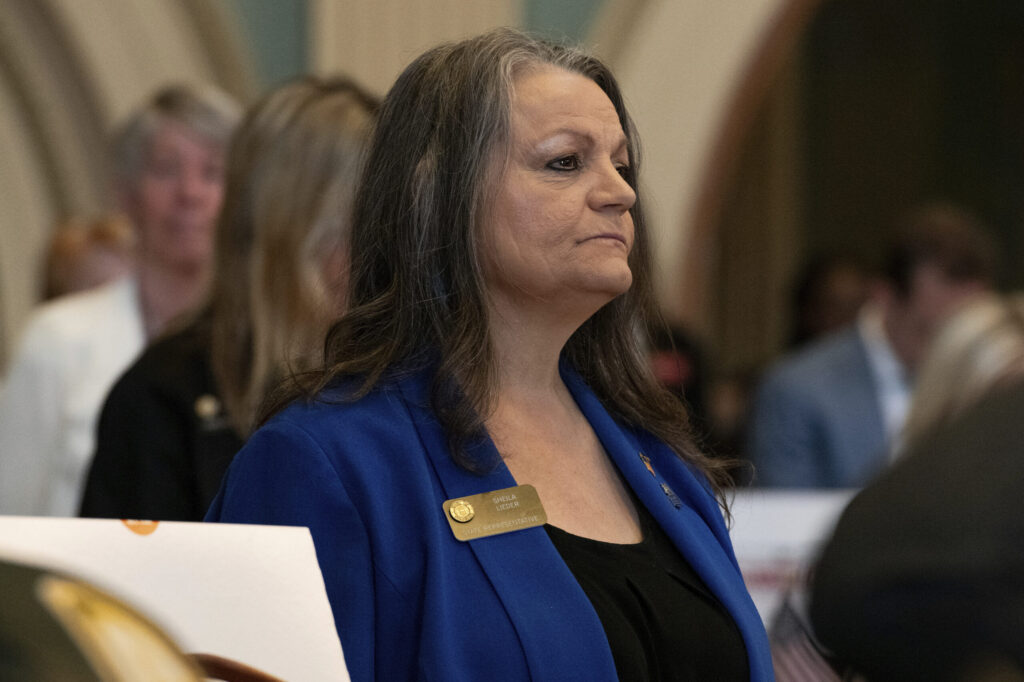
A former legislative aide has filed a lawsuit alleging she was mistreated, illegally directed to perform campaign work and harmed by a House leadership structure she charged was fragmented, politicized and ineffective at protecting employees. The lawsuit, filed by Jennifer...
Federal judge hears arguments about Colorado’s 3-day gun purchase waiting period
Michael Karlik
michael.karlik@coloradopolitics.com
Updated 2 days ago
A federal judge heard arguments on Monday about the constitutionality of a 2023 Colorado law that generally imposes a three-day waiting period on firearm purchases after the initiation of a background check. The test that the U.S. Supreme Court created...
Colorado Supreme Court intervenes in Weld County prosecution dismissed due to Missy Woods misconduct
Michael Karlik
michael.karlik@coloradopolitics.com
Updated 1 day ago
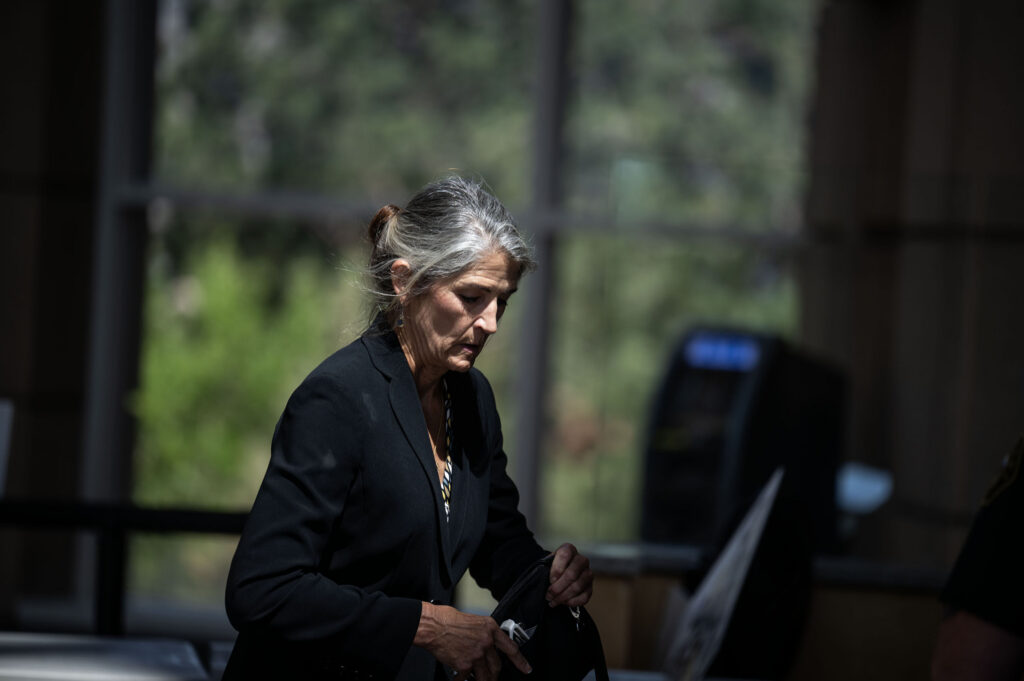
The Colorado Supreme Court ordered a Weld County trial judge last week to respond to the district attorney’s claim that he improperly dismissed a criminal case because of “outrageous” conduct by the Colorado Bureau of Investigation. Daniel Lee Eatinger stood...
Schoolchildren’s presence at child sex-related trial did not harm Arapahoe County defendant, appeals court says
Michael Karlik
michael.karlik@coloradopolitics.com
Updated 4 days ago
Colorado’s second-highest court decided on Thursday that the presence of a group of schoolchildren on the first day of a child sexual exploitation trial did not violate an Arapahoe County defendant’s constitutional right to a fair trial. Prosecutors charged Jerry...
Appeals court cites week-old Colorado law to reinstate child neglect case at child, father’s request
Michael Karlik
michael.karlik@coloradopolitics.com
Updated 4 days ago
Colorado’s second-highest court invoked a new state law for the first time on Thursday and reinstated a child neglect case that both the child and her father wished to reopen. House Bill 1227 took effect on Aug. 12, reversing a...
Colorado Supreme Court names William Hood as next chief justice
Michael Karlik
michael.karlik@coloradopolitics.com
Updated 5 days ago
The Colorado Supreme Court has selected Justice William W. Hood III to be the next chief justice, the judicial branch announced on Friday. Hood will succeed Chief Justice Monica M. Márquez, who took over the role in July 2024. “I...