

When is a grandparent a grandparent? Colorado justices weigh visitation rights dispute
Under Colorado law, a grandparent is a person “who is the parent of a child’s father or mother.” On Tuesday, members of the Colorado Supreme Court heard the argument that the word “is” is crucial to understanding what should happen when the mother and father are no longer alive.
“Under the plain definition, you say ‘Who are the parents?’ And whether it’s strangers to the children or whether it’s some blood relationship, two new parents are now the children’s father and mother,” said attorney Sean Connelly. “And in the eyes of the law, that dissolves the legal relationship, and a maternal or paternal grandparent is no longer a legal grandparent.”
The dispute over the status of grandparents stems from the deaths of Brandon and Amanda Sullivan in their Delta County home in April 2020. They left behind three young children. Authorities deemed it a murder-suicide.
A judge appointed the children’s maternal grandparents, Suzanne Nicolas and August Nicolas, as the permanent guardians, while allowing the paternal grandparents to visit. In October 2021, the Nicolases adopted the children. The paternal grandparents, Jayne Mecque Sullivan and Daniel Francis Sullivan, then petitioned for ongoing visitations, and the judge set a schedule.
However, Connelly, representing the Nicolases, told the Supreme Court there are “profound disagreements” between the two sets of grandparents stemming from the slaying. Consequently, they have sought to overturn the trial judge’s visitation order for the Sullivans. As their legal argument, the Nicolases maintain they are now the children’s parents and the Sullivans, not being their parents, no longer fall under the definition of “grandparents.”
Some members of the court were skeptical of that reasoning.
“The statute doesn’t say the child’s ‘legal’ father or mother, but it seems like your interpretation inserts that word,” Chief Justice Monica M. Márquez told Connelly. “It seems like your whole interpretation hinges on the premise that when it refers to the child’s father and mother, the statute is referring only to the child’s legal father and mother, not the child’s biological father and mother.”
However, Justice Brian D. Boatright suggested such distinctions did not matter.
“The Nicolases are the parents. Why does there need to a qualifier of ‘current’ or ‘legal?'” he wondered. “I feel like we’re creating a second-class parenting regimen by saying it has to say ‘legal.’ I mean, they’re the parents.”
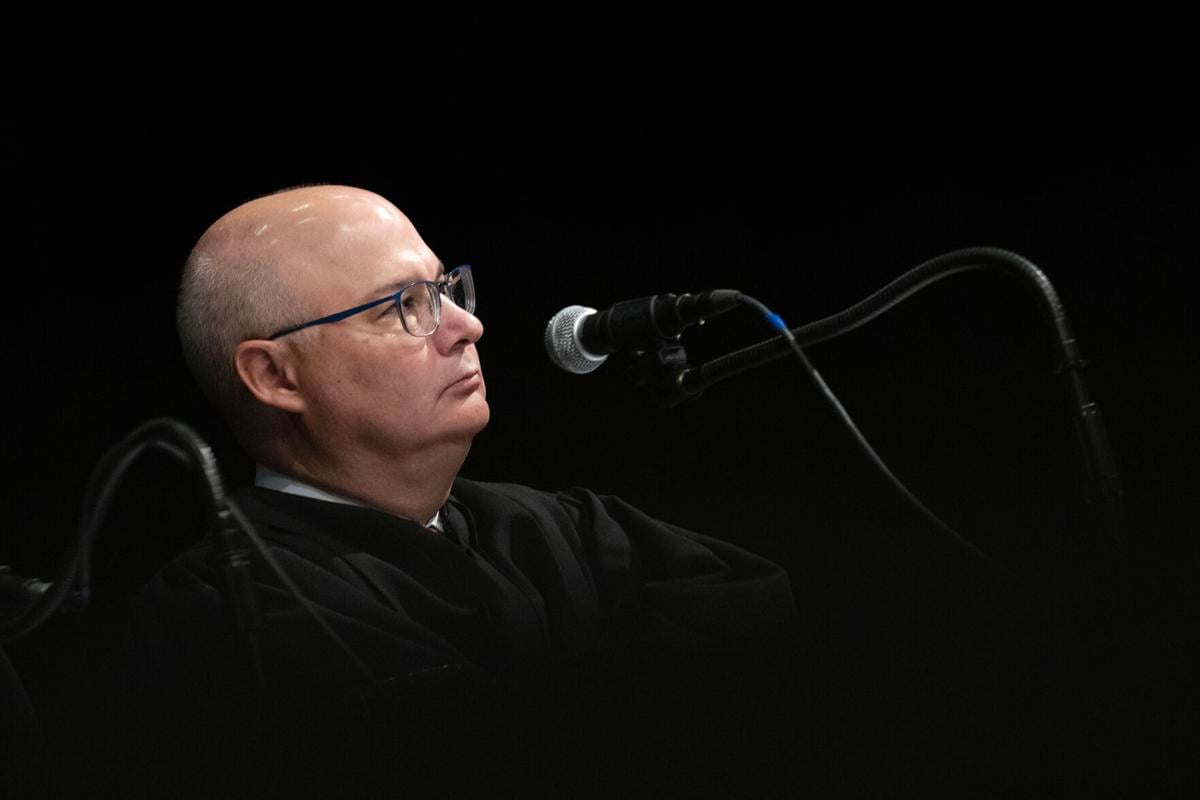
Colorado Supreme Court Chief Justice Brian D. Boatright looks on during oral arguments of the Arnold R. Martinez v The People of the State of Colorado case during Courts in the Community on Thursday, Oct. 26, 2023, at Gateway High School in Aurora, Colo. (Timothy Hurst/Denver Gazette)
Timothy Hurst

The dispute over the Sullivans’ right to seek visitation also implicates a section of the Colorado Children’s Code laying out when grandparents may seek visitation rights in cases touching on custody and parental responsibilities.
On the one hand, grandparents may pursue visitation when the child’s parent has died. They may also do so when the child is living with another party, “excluding any child who has been placed for adoption or whose adoption has been legally finalized.” For the Nicolas-Sullivan case, those provisions appeared mutually exclusive.
As a result, the Nicolases argued grandparent visitation was a non-starter because the children were already adopted, while the Sullivans suggested the death-of-a-parent provision was the one that applied to their case.
Previously, a three-judge panel for the Court of Appeals sided with the Sullivans, concluding grandparent visitation rights are not “automatically cut off” whenever a grandchild is adopted.
The Sullivans “fall within the definition of grandparents, regardless of when they filed their petition for grandparent visitation,” wrote Judge W. Eric Kuhn.
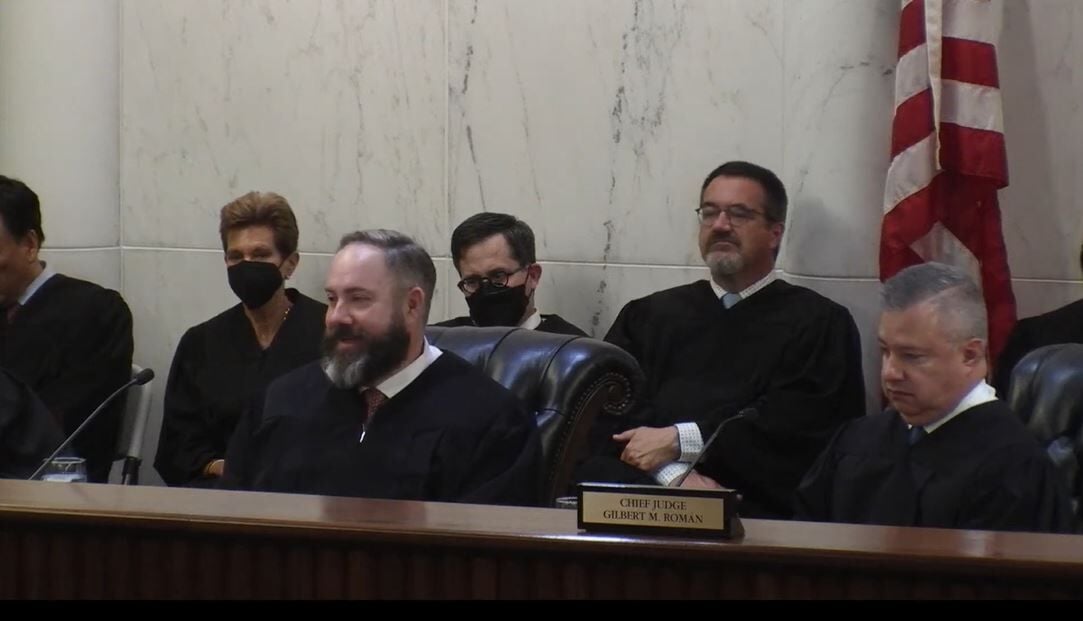
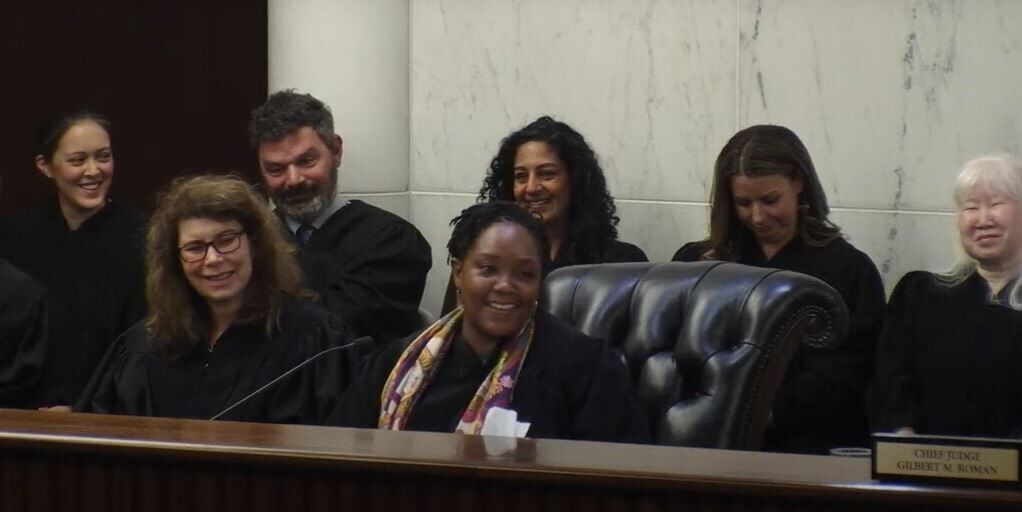
FILE PHOTO: Judge W. Eric Kuhn speaks following his swearing-in ceremony to the Court of Appeals on July 22, 2022. Also pictured, from left to right, are Judges Rebecca R. Freyre, Craig R. Welling and Ted C. Tow III, and Chief Judge Gilbert M. Román.
The Denver Gazette

Attorney Timothy J. Eirich, representing the Sullivans, told the Supreme Court that he believed the exclusion of grandparent visitations after a child has been adopted was not likely intended for the scenario where one set of grandparents does the adopting.
“I serve as general counsel for eight different adoption agencies and this is where I’ve seen this language be addressed,” he said.
Eirich added that during the history of the case, there was always an understanding the Sullivans could visit their grandchildren. He said allowing his clients to seek visitation would not undermine the constitutional rights afforded to the Nicolases as the children’s new parents.
“If we prevail here,” Eirich said, “I anticipate the Nicolases are going to go back to the trial court and they’re going to file a motion to terminate grandparent visitation, arguing it’s no longer in the children’s best interest.”
Justice Richard L. Gabriel asked about a situation in which two parents die in a car accident and a family friend adopts the children.
“In your view, all the grandparents would be out of luck. They’d be out of those children’s lives,” he told Connelly.
“I would hope that in an ideal world, people would say, ‘We want the grandparents still involved in their lives,'” Connelly said.
“I think your answer has to be ‘yes,'” interjected Justice Maria E. Berkenkotter, that the grandparents could no longer legally seek visitation.
Yes, that is what would happen, Connelly said.
The case is In re the Parental Responsibilities of K.M.S. et al.

Denver murder conviction reversed for incomplete self-defense instruction
Michael Karlik
michael.karlik@coloradopolitics.com
Updated 6 hours ago
Colorado’s second-highest court reversed a defendant’s murder conviction last week because a Denver judge gave an incomplete instruction to the jury about the man’s right to self-defense. Donald R. Gonzales and Gary McLaughlin met up in a Capitol Hill parking...
Colorado lawmaker, House leaders named in workplace-retaliation lawsuit
Marianne Goodland
marianne.goodland@coloradopolitics.com
Updated 9 hours ago
A former legislative aide has filed a lawsuit alleging she was mistreated, illegally directed to perform campaign work and harmed by a House leadership structure she charged was fragmented, politicized and ineffective at protecting employees. The lawsuit, filed by Jennifer...
Federal judge hears arguments about Colorado’s 3-day gun purchase waiting period
Michael Karlik
michael.karlik@coloradopolitics.com
Updated 14 hours ago
A federal judge heard arguments on Monday about the constitutionality of a 2023 Colorado law that generally imposes a three-day waiting period on firearm purchases after the initiation of a background check. The test that the U.S. Supreme Court created...
Colorado Supreme Court intervenes in Weld County prosecution dismissed due to Missy Woods misconduct
Michael Karlik
michael.karlik@coloradopolitics.com
Updated 6 hours ago
The Colorado Supreme Court ordered a Weld County trial judge last week to respond to the district attorney’s claim that he improperly dismissed a criminal case because of “outrageous” conduct by the Colorado Bureau of Investigation. Daniel Lee Eatinger stood...
Schoolchildren’s presence at child sex-related trial did not harm Arapahoe County defendant, appeals court says
Michael Karlik
michael.karlik@coloradopolitics.com
Updated 3 days ago
Colorado’s second-highest court decided on Thursday that the presence of a group of schoolchildren on the first day of a child sexual exploitation trial did not violate an Arapahoe County defendant’s constitutional right to a fair trial. Prosecutors charged Jerry...
Appeals court cites week-old Colorado law to reinstate child neglect case at child, father’s request
Michael Karlik
michael.karlik@coloradopolitics.com
Updated 3 days ago
Colorado’s second-highest court invoked a new state law for the first time on Thursday and reinstated a child neglect case that both the child and her father wished to reopen. House Bill 1227 took effect on Aug. 12, reversing a...
Colorado Supreme Court names William Hood as next chief justice
Michael Karlik
michael.karlik@coloradopolitics.com
Updated 4 days ago
The Colorado Supreme Court has selected Justice William W. Hood III to be the next chief justice, the judicial branch announced on Friday. Hood will succeed Chief Justice Monica M. Márquez, who took over the role in July 2024. “I...
Family of slain Lakewood teacher releases statement as murder suspect makes first court appearance
Matt Kyle
matt.kyle@denvergazette.com
Updated 1 day ago
Patrick Theodore Barnett, the Lakewood man accused of killing his wife, a Jeffco Public Schools art teacher, made his first court appearance Friday morning as his wife’s family looked on. The status conference hearing was held before District Court Judge...
Appeals court upholds Park County trophy hunting conviction
Michael Karlik
michael.karlik@coloradopolitics.com
Updated 4 days ago
Colorado’s second-highest court clarified on Thursday that a defendant may stand convicted under the state’s trophy hunting laws if he abandons a bear carcass but returns later to remove the meat. Under Colorado law, it is a felony to detach...
Judge grants partial injunction to GEO in fight against state health inspection law
Kyla Pearce
kyla.pearce@gazette.com
Updated 5 days ago
A judge ruled Thursday that The GEO Group does not have to follow parts of a new state law requiring more frequent health and safety inspections at the U.S. Immigration and Customs Enforcement processing center in Aurora. Under the order...