

Colorado lawmakers advance measures on abortion, gender services
Four measures dealing with abortion and gender issues advanced in the Colorado House of Representatives on Friday, when Republicans and Democrats debated familiar claims and at times delved into issues of morality and race.
The proposals are headed to a final vote in the chamber, which is slated to occur on Sunday.
Senate Bill 183 creates conforming statutory language tied to the intent of the voters on Amendment 79, which enshrined the right to an abortion in the state constitution last November.
Amendment 79 also required the state to pay for abortions for pregnant women enrolled in the state’s children’s basic health care plan, which is part of Medicaid; for state employees covered under the state’s health care plans; and for local government employees covered under their health insurance plans.
The fiscal analysis for SB 183 says about 1.67% of women covered under Medicaid will seek abortions, with half choosing surgical abortion and half opting for medication abortion. The analysis indicates about 5,566 women per year will seek an abortion paid for by the children’s basic health plan.
The bill comes with a fiscal cost to the state of about $1.5 million in general funds because it mandates that abortion services be paid for by the state, although the fiscal analysis notes that about 20 abortions per year in Colorado are paid for with federal funds. That’s to pay for abortions resulting from rape or incest, which is covered under the federal Hyde amendment that generally prohibits the use of federal funds for the procedure.
The costs for those services stand at $3 million for Medicaid-funded abortions and $204,000 for abortions for state employees. The fiscal analysis estimates the state will save about $81,500 in 2025-26. The analysis also said the state would save $3.2 million in federal Medicaid funds — tied to the costs of labor and delivery, about $3,850 per patient. A surgical abortion is abut $1,300 per patient; a medication abortion is about $800.
Abortion, morality and race
The debate over SB 183 touched on familiar themes. For Republicans, it’s a matter of morality. For Democrats, it’s about implementing voters’ will.
Republican amendments, which all failed, would have required statistical information on the number of abortions in each trimester or offered alternatives to abortion. One amendment rewrote the legislative declaration to include a statement that “killing our children is antithetical to our very survival as a people.”
That amendment, offered by Rep. Stephanie Luck, R-Penrose, also declared that “a Black child conceived in Colorado has a 50/50 chance of being aborted in the womb. This is an ethnic tragedy, not a choice.”
That drew House Assistant Minority Leader Jennifer Bacon of Denver to the podium, accompanied by Rep. Michael Carter, D-Aurora. Bacon said she brought Carter with her because he would “help me contain my consternation” over how offended she was by the amendment.
Bacon said that — as a Black woman who can bear a Black child but can’t talk about supremacy, slavery or related issues, and given the problems of Black maternal health — “if we’re going to write into statute what an ethnic tragedy is, it should be owned” by someone other than the person who wrote the amendment.
House Speaker Julie McCluskie of Dillon, one of the bill’s co-sponsors, said she respects those who didn’t vote for the amendment but argued that public funds can now be used for abortion — and without moral judgment.
“Should we be passing moral judgment on health care?” McCluskie said, citing as an example to press her point smokers who develop lung cancer.
She said a majority of voters supported Amendment 79 and the legislation implements their will, she said.
The bill has not been amended in its trip through the House, so, if approved on a final vote, it will head straight to the governor’s desk.
Lawmakers debate gender transition services
House Bill 1309 codifies “gender-affirming care” in statute and prohibits health insurance providers from denying or limiting such care, as prescribed by a physical or behavioral healthcare provider.
“Gender-affirming care” includes social, psychological or medical interventions for transgender children and adults, such as hormone therapy and surgical procedures, notably double mastectomies and genital surgeries.
Sponsored by Reps. Kyle Brown, D-Louisville and Brianna Titone, D-Arvada, Colorado’s first transgender lawmaker, the bill’s fiscal analysis noted that the Centers for Medicare and Medicaid Services approved such services through the Affordable Care Act in 2021. The Trump administration, through a proposed rule in March, intends to reverse that decision.
“This health care makes a person whole. It’s life-saving,” Titone said during the debate. Colorado believes in freedom and having access to medically-necessary health care, and this bill embodies that, she said.
Republicans said transgender transitions result in a host of medical complications, arguing that “gender-affirming care” is an elective procedure that should not be covered.
“This is destructive for society” — not just for children, said Rep. Scott Bottoms, R-Colorado Springs.
Republican amendments, which failed, included blocking gender transition services for those under 18, allowing for reversal of gender transition and adding a petition clause to allow citizens to seek initiatives to block the legislation from taking effect.
The third bill, House Bill 1312, seeks to penalize “deadnaming” and “misgendering” as discriminatory actions and to mandate the courts to include such claims in determining the allocation of parenting time in custody cases.
It implicates parenting responsibilities, notably when they are in dispute over a child’s gender transition, as well as schools. Additionally, the bill compels “publishers” to use a person’s chosen name when asked. Under the proposal, refusing to comply is evidence of the intent to discriminate.
Broadly speaking, “misgendering” means not using an individual’s preferred pronoun or honorific, while “deadnaming” refers to using transgender persons’ birth names, instead of their preferred names.
Loving had struggled to get health care and jobs, and went into Club Q for a drink, where she was murdered, said Rep. Lorena Garcia, D-Adams County, one of the bill’s sponsors.
“The dignity of being called your name, of being referred to the gender of which you truly are, made the difference of wanting to be in this world,” Garcia said.
Co-sponsor Rep. Rebekah Stewart, D-Lakewood, said the bill shores up existing laws and protections, arguing it would lead to equitable application of school rules and ensure supporting their child’s gender identity cannot be “weaponized” against parents.
“This bill is the least we can do,” she added.
Republicans argued that the bill would turn parents into criminals when they call their child the wrong name. They also called it governmental overreach.
Rep. Jarvis Caldwell, R-Monument, said the bill is the most egregious he’s seen this session. The idea that “misgendering” a child is “coercive control” or child abuse because a parent wants to get a child help “instead of affirming their delusions” is disgusting, he said.
He also said it’s a violation of the First Amendment and an infringement on local control.
The bill defines “coercive control” to include threatening to publish materials related to a person’s gender services in child custody cases.
Additionally, the bill bars schools from adopting dress codes based on gender and instead allow students to abide by the variations of that dress code, and it compels “publishers” to use a person’s chosen name when asked. Under the proposal, refusing to comply is evidence of the intent to discriminate.
“This is our generational moment,” said Rep. Javier Mabrey, D-Denver, pointing to the Trump administration’s executive orders that he said encourage attacks on transgender persons. Mabrey also criticized members of his own party, saying some prominent Democratic members of Congress treat transgender people as a political inconvenience.
“We cannot treat, standing up for civil rights, and standing up for our trans siblings, as political inconvenience,” he said. “You’re either for civil rights or you aren’t.”
Representatives tackle proposal dealing with legal protections for abortion, gender services
Finally, House members tackled Senate Bill 129, which deals with legal protections for abortion and gender transition services.
As it applies to abortion drugs, the measure allows, at the practitioner’s request, the label for mifepristone, misoprostol and their generic alternatives to display only the name of the prescribing health care practice, instead of the individual practitioner. It also prevents Colorado residents and businesses from complying with out-of-state civil, criminal, or regulatory inquiries about individuals or entities involved in what sponsors described as “legally protected health-care activity.”
A New York doctor has been charged in Louisiana on criminal charges for providing abortion pills and the attorney general in Texas has sued in civil court for the same reason. New York Governor Kathy Hochul, citing her state’s law, refused to comply with an extradition warrant from Louisiana for the doctor.
The bill also prevents arrests if the charge is related to those “legally-protected” health services provided in Colorado and prevents public entities, such as state agencies, local governments, school and special districts and statutory entities, from assisting in out-of-state investigations tied to such services.
The bill as amended in the Senate simply said the state registrar would not publish reports on abortion. An amendment added on Friday went much further — it said the Department of Public Health and Environment would not report a patient’s name, address or employer, or where the abortion took place, limiting the collection of that data to statistical information. It also prohibited the registrar from sharing that patient or procedure information with state, local or the federal government, even under subpoena or search warrant.
A second amendment stated that state health employees or agents — as well as those employed by county, district or municipal public health agencies — could not be compelled to testify in legal proceedings tied to information on individuals obtaining an abortion.
Republicans charged that abortion clinics had less regulatory oversight than a dog groomer or a nail salon.
The measure does not value the life of a woman, said Rep. Ken DeGraaf, R-Colorado Springs.
An amendment offered by Bottoms would have added “second and third trimester abortion clinics” to the list of regulated health facilities. Bill sponsor Rep. Karen McCormick, D-Longmont, said abortion clinics are not identified that way.
Another amendment would have required minors to obtain parental consent before an abortion.
Colorado’s 2003 parental notification law requires only that a parent be notified — the minor does not have to obtain consent.
Other amendments would have required a provider to administer a pain killer to the fetus prior to the procedure or requiring a mental health consultation for the woman prior to the procedure. All the Republican amendments failed.
SB 129, should it be approved by the House on a final vote, will head back to the Senate.


10th Circuit partially revives lawsuit over 2020 Denver protest injuries
Michael Karlik
michael.karlik@coloradopolitics.com
Updated 6 hours ago
The Colorado-based federal appeals court revived a man’s claims against Denver on Friday after concluding a trial judge resolved the case in the city’s favor without analyzing two of the three instances of alleged excessive force and other constitutional violations....

Federal judges find Colorado immigration judge violated several orders
Michael Karlik
michael.karlik@coloradopolitics.com
Updated 7 hours ago
Multiple federal judges in Colorado have freed people from immigration custody after determining that one immigration judge violated their directives for properly conducting bond hearings. For nearly a year, Colorado’s U.S. District Court has faced a flood of “habeas corpus” petitions...
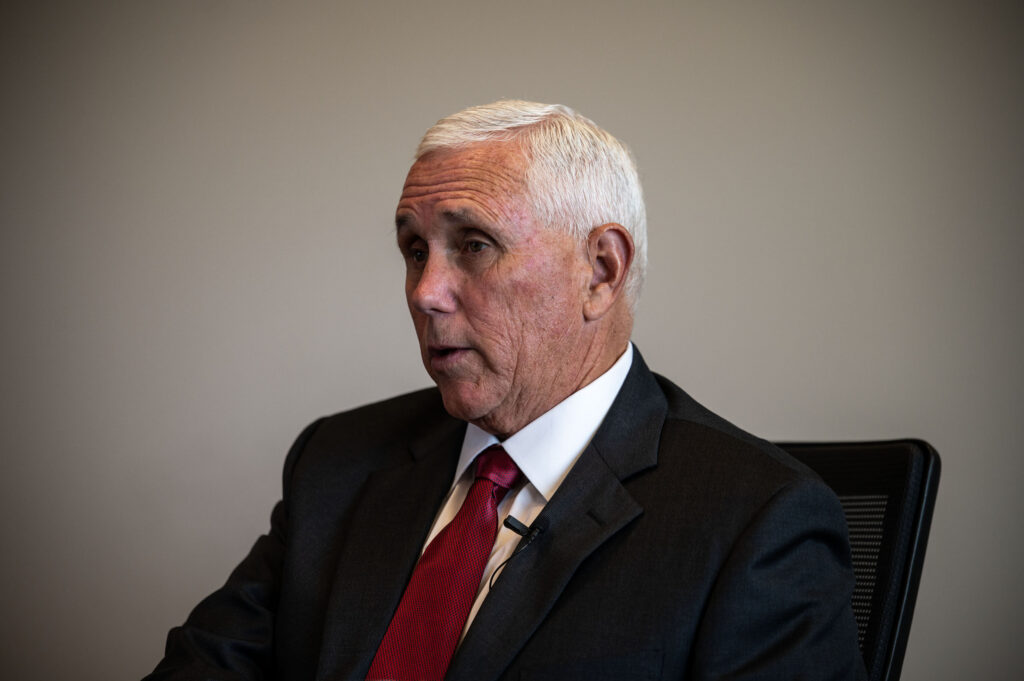
Q&A with Mike Pence | Former vice president says GOP’s populist turn from conservatism isn’t permanent
Ernest Luning
ernest.luning@coloradopolitics.com
Updated 7 hours ago
Former Vice President Mike Pence says he’s concerned that the Republican Party has taken a populist turn away from bedrock conservative principles during President Donald Trump’s second term, but he believes the party will return to its roots when Trump...

New federal plan sets short-term rules for Colorado River management
Marianne Goodland
marianne.goodland@coloradopolitics.com
Updated 6 hours ago
Interior Department’s plan spares Colorado from mandatory cuts for now After years of stalled negotiations among the seven states that rely on the Colorado River, the federal government on Friday released its own plan for managing the drought-strained system. Calling...
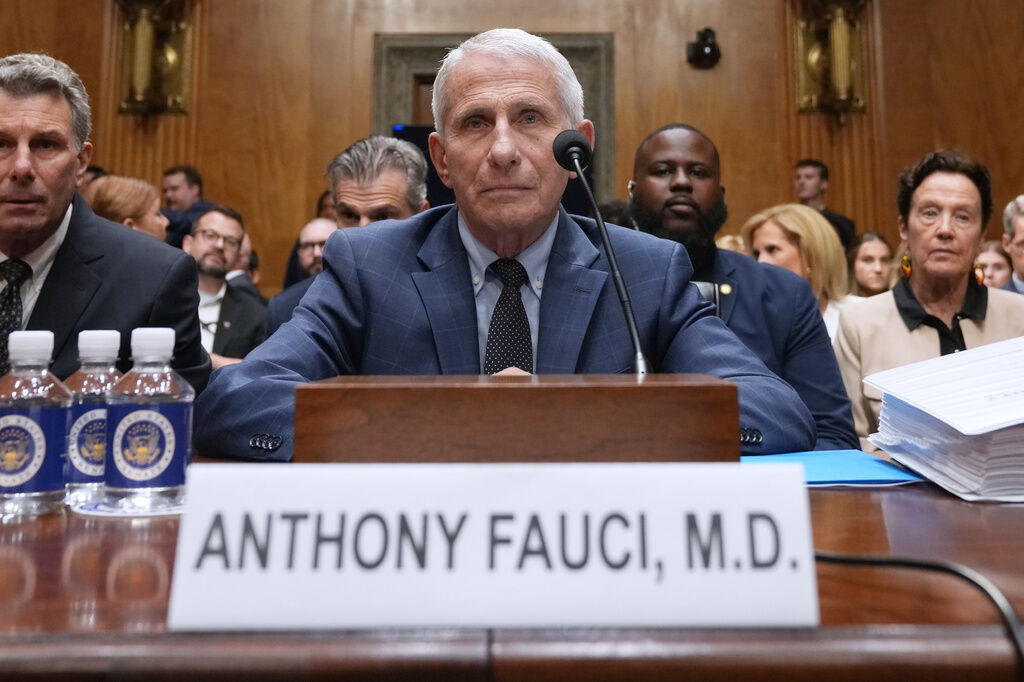
Fauci’s diary details blooming outrage toward ‘far right,’ softness toward Biden and China
Hudson Crozier
hudson.crozier@washingtonexaminer.com
Updated 11 hours ago
Dr. Anthony Fauci increasingly railed against “far right” critics of his approach to COVID-19 issues while describing strong support from the Biden White House in his pandemic-era diary, which was recently released by Congress. The former National Institute of Allergy...

Colorado is spared mandatory cuts under federal Colorado River proposal
The Associated Press
the-associated-press@coloradopolitics.com
Updated 12 hours ago
California, Arizona and Nevada to take less water under plan While Colorado has been spared from mandatory reductions, Arizona, California and Nevada would take less water from the Colorado River under a proposal announced Friday by the federal government to...

Republican Victor Marx taps George Markert as his lieutenant governor pick in Colorado’s gubernatorial race
Ernest Luning
ernest.luning@coloradopolitics.com
Updated 4 hours ago
Colorado Republican gubernatorial nominee Victor Marx named George Markert, a retired Marine colonel, as his running mate for lieutenant governor Friday morning, saying the former U.S. Senate candidate will bring “exceptional character, proven leadership and a lifetime of serving others”...

Misconduct complaints from ex-Colorado judicial discipline director dismissed against federal judges
Michael Karlik
michael.karlik@coloradopolitics.com
Updated 1 day ago
The administrative body for the Denver-based federal appeals court upheld a finding last week that misconduct complaints against Colorado’s chief federal trial judge and the chief appeals judge warranted dismissal and appeared to be a “litigation tactic” by the complaining...

Boulder County coroner IDs body found over 50 years ago
Matt Kyle
matt.kyle@denvergazette.com
Updated 12 hours ago
After nearly 55 years, a body found in Boulder County has been identified. The Boulder County Coroner’s office on Thursday announced it has identified a set of remains found in Bluebell Canyon in August 1971 as Douglas Sumner, 22. The...

First-ever Red Rocks naturalization ceremony draws most diverse group of new citizens
Michael Karlik
michael.karlik@coloradopolitics.com
Updated 8 hours ago
Colorado’s federal trial court held its first-ever naturalization ceremony for nearly 300 new citizens on Thursday at Red Rocks Park and Amphitheatre. “We’re doing it to commemorate the 250th anniversary of the Declaration of Independence and the United States. Red...
PREV
PREVIOUS
Colorado leaders, businesses brace for fallout from Trump tariffs
Colorado business and political leaders are bracing for the fallout following President Donald Trump’s new round of tariffs, expressing worries about higher prices and possible damage to the state’s economy, though some offered calibrated responses and noted robust sales in some areas as customers decide to buy goods now in anticipation of higher prices later. […]

Uber and Lyft face new regulations to protect riders and drivers as Colorado committee pushes bill forward
The House Business Affairs & Labor Committee voted to impose stricter safety requirements for rideshare companies such as Uber and Lyft, with a representative who was allegedly sexually assaulted by a driver last year. House Bill 1291, sponsored by Reps. Jenny Willford, D-Northglenn, and Meg Froelich, D-Englewood, and Sens. Faith Winter, D-Westminster, and Jessie Danielson, […]