

DEI purge ends the Air Force’s impactful Women’s Initiative Team
Now-retired Air Force Lt. Col. Jessica Ruttenber was at her first Air Force pilot training class in 2004 when she was pulled out and told she was a half-inch too short to pursue her dream to fly.
For generations, the Air Force required pilots to stand between 5 feet, 4 inches and 6 feet, 5 inches.
Ruttenber didn’t accept that her fate should turn on such a small difference.
“I just refused to quit. … I ended up driving around the country to find aircraft that I could be safe enough to fly on my own,” she said. The Air Force let her investigate, but didn’t help her research in any way.
Based on her work, the Air Force granted her waivers to fly the KC-135, a plane dedicated to refueling and airlift, and a C-21, a military version of a business jet. She started training in 2005.
Later in her career, she spent years working as a volunteer for change from inside the Air Force with the all-volunteer Women’s Initiative Team. She spent two years working to eliminate the height requirement specifically. It was replaced with a screening process to see what planes individuals can safely fly. The Air Force announced the change in May 2020, while President Donald Trump was in office the first time.
Air Force Academy reviewing clubs for compliance under Trump order shuttering DEI programs
The team also worked on changes around pregnancy, miscarriage, grooming standards and ensuring service members have access to uniforms that fit. Other working groups were dedicated to working on issues that effect minorities, including Native and Black Americans.
The Women’s Initiative Team was dissolved on Jan. 20 under Trump’s executive order to end all diversity, equity and inclusion programs.
The DEI programs that are being eliminated include training, mentoring and employee resource groups that support women and other underrepresented groups in the workplace.
The Women’s Initiative Team was formed in 2008 under the umbrella of the Barrier Analysis Working Group. In 2020, the working group’s mission expanded and the teams were partnered with the Diversity and Inclusion Task Force.
For Ruttenber, the changes brought on by the Initiative Team increased the talent pool and helped with overall retention.
“Maybe there was a program that needed to be reevaluated,” Ruttenber said of the changes brought by the executive order. “But these were not them.”
The secretary of the Air Force public affairs team did not immediately respond to questions about the dissolution of the working groups.

Air Force Maj. Amanda Rebhi is pictured at her daughter’s tombstone in Arlington National Cemetery.
Courtesy of Amanda Rebhi

Air Force Maj. Amanda Rebhi is pictured at her daughter’s tombstone in Arlington National Cemetery.
Air Force Academy graduate and Maj. Amanda Rebhi also volunteered with the Women’s Initiative Team to help improve conditions for airmen. Some of that work was based on her own loss.
Rebhi’s water broke in 2020, just 17 weeks into her pregnancy, and the emergency room on her base turned her away without testing her to see if amniotic fluid was present. Later she went to see an obstetrician provider who didn’t do an ultrasound check to see if her water had broken. Those were just two frustrating appointments over the 5½ weeks she experienced problems with the pregnancy and did not receive proper care.
When she went into Walter Reed Army Medical Center, the staff confirmed her water had broken about two weeks earlier, and it was too late to save her daughter.
If she had been allowed to seek obstetric care off-base, she believes her care would have been better and civilian medical staff could have detected the placenta abruption that led to her miscarriage.
It’s possible, if Rebhi had been put on bedrest sooner her daughter, Liliana, would have lived to a point where she could have survived outside the womb.
Since then Rebhi has been allowed to seek pregnancy care off-base, she said, but only because she lost her daughter.
National advocates against DEI in the military got started in Colorado Springs
“I don’t think women should have to lose a child to have an option in their care,” said Rebhi, who is now a mother of two.
While military spouses can choose to seek pregnancy care off-base, active-duty military members can only do that if the care is not available on-base, she explained.

Air Force Maj. Amanda Rebhi’s eldest daughter, Avalina, is pictured with Liliana’s tombstone in Arlington National Cemetery.
Courtesy of Amanda Rebhi

Air Force Maj. Amanda Rebhi’s eldest daughter, Avalina, is pictured with Liliana’s tombstone in Arlington National Cemetery.
As a member of the Women’s Initiative Team she could have presented data she gathered during her fellowship and proposed solutions to leaders in the Air Force. One of the studies she complied showed mothers giving birth on base had more post-delivery complications than mothers receiving care off-base. The 2017 study was published in Birth Issues in Perinatal Care.
The end of the official group means airmen cannot work with senior leaders on regulation changes or adjustments to the law that would likely be included in the annual must-pass National Defense Authorization Act, Rebhi said. So she expects all efforts will stall.
Previously, the working group allowed her to successfully make the case for leave following the death of a child or other household member.
While military service members still have to use vacation time first after a death, if for some reason they have no time off available they can have up to two weeks of time off following the death of an immediate family member. Rebhi would like to see a time when service members don’t have to use vacation time for bereavement.
Rebhi also successfully fought for convalescent leave for women to recover after having a miscarriage.
For Rebhi, the bereavement leave was partially a matter of safety. No one wants someone who has just lost a child working on critical tasks like aircraft maintenance, she said.
So while the change came through the Women’s Initiative Team, it benefited everyone, she said.
The team’s work also led to a longer timeline for military members to be able to heal after giving birth before being asked to pass a physical fitness test. Before 2017, service members had six weeks following a pregnancy before they could be asked to pass a test. Now they have a year, she said.
None of these changes lowered the standards for performance, she said.
Department of Defense announces ‘identity months are dead’
“This is about being able to enable women to do the mission at a high quality standard,” she said.
Ruttenber’s advocacy also had broad impacts. The previous height limitations based on the designs of the planes disqualified 44% of American women ages 20-29 from flying, even those who would sit in the back of the plane and work as linguists. It also disqualified some men.
The data gathered for the team successfully showed that changing the standards could open up a much larger pool of talent to the Air Force, Ruttenber said, while upholding strict standards related to skill.
Before the change, airmen could apply for waivers to fly, but the knowledge about waivers was limited, she said. In 2019, aspiring pilots could go to Wright Patterson Air Force Base in Ohio or the Air Force Academy and get measured to see if they could safely operate aircraft even if they were outside the official height requirements, according to a news release. At the time, applicants as short as 4 feet, 11 inches had received waivers.
The Air Force also changed its design standards for planes in 2020 so the cockpits of new models must be based on the modern body types from the current recruiting pool. Previously, the planes were designed based on a pilot survey of men flying in 1967, according to the Air Force.
Planes are not refitted to accommodate different body styles, and they can remain in the fleet for decades. So it’s important designs can accommodate a broad pool of people, so you can train those with the highest aptitude, Ruttenber said, rather than turning them away over their height.
There was still plenty of work to be done through the teams, Ruttenber said.
Rebhi, who has served for 13 years, expects to stay in the Air Force and keep working to make things better. At times, that can mean just standing up for younger female airmen.
“If I leave, if I take away what I can contribute to the mission, it doesn’t improve and it doesn’t improve for women behind me,” she said.


Regulators seek public input for massive Montana-Wyoming oil pipeline proposal | OUT WEST ROUNDUP
The Associated Press
the-associated-press@coloradopolitics.com
Updated 6 days ago
WYOMING Massive oil pipeline proposed State and federal officials are seeking public comment on the proposed Bridger Pipeline Expansion project to carry Canadian crude from the border in Phillips County, Montana, to a terminal near Guernsey in Wyoming. The massive...

Mysterious letter causes uproar, investigation in Mesa County GOP | A LOOK BACK
Rachael Wright, Special to Colorado Politics
rachael.wright@coloradopolitics.com
Updated 4 days ago
Twenty Years Ago This Week: An unregistered activist group calling themselves ‘The Colorado Republican Caucus’ mailed letters to at least 160 Republicans in Mesa County calling various Grand Junction Republicans “turncoats” and “traitors.” “The danger was that the letters were...

Colorado Politics Calendar Apr. 20-26
Rachael Wright, Special to Colorado Politics
rachael.wright@coloradopolitics.com
Updated 4 days ago
CoPo’s weekly political calendar helps you find political and public policy events throughout Colorado. It includes candidate and issue campaign events, public policy meetings, court hearings, state and local party conventions, assemblies, debates, rallies, parades, speaking engagements, traveling dignitary appearances,...

A happier budget week | Capitol M | Week of April 18, 2026
Marianne Goodland
marianne.goodland@coloradopolitics.com
Updated 3 days ago
It’s budget time at the state Capitol, and generally, it’s a humorless situation. It certainly was that way in the House last week, with a 15-hour reading of the long bill at 661 pages that resulted in lawmakers having to...

Colorado lawmakers advance bill to tackle Colorado’s prison capacity issues
Marianne Goodland
marianne.goodland@coloradopolitics.com
Updated 2 days ago
As lawmakers move the 2026–27 state budget toward completion, they are intensifying efforts to address overcrowding and capacity challenges within the Department of Corrections and related agencies—issues that have contributed to increased spending in the budget. The state Senate on...
Colorado justices, lawyers speak with rural students through outreach program
Michael Karlik
michael.karlik@coloradopolitics.com
Updated 17 hours ago
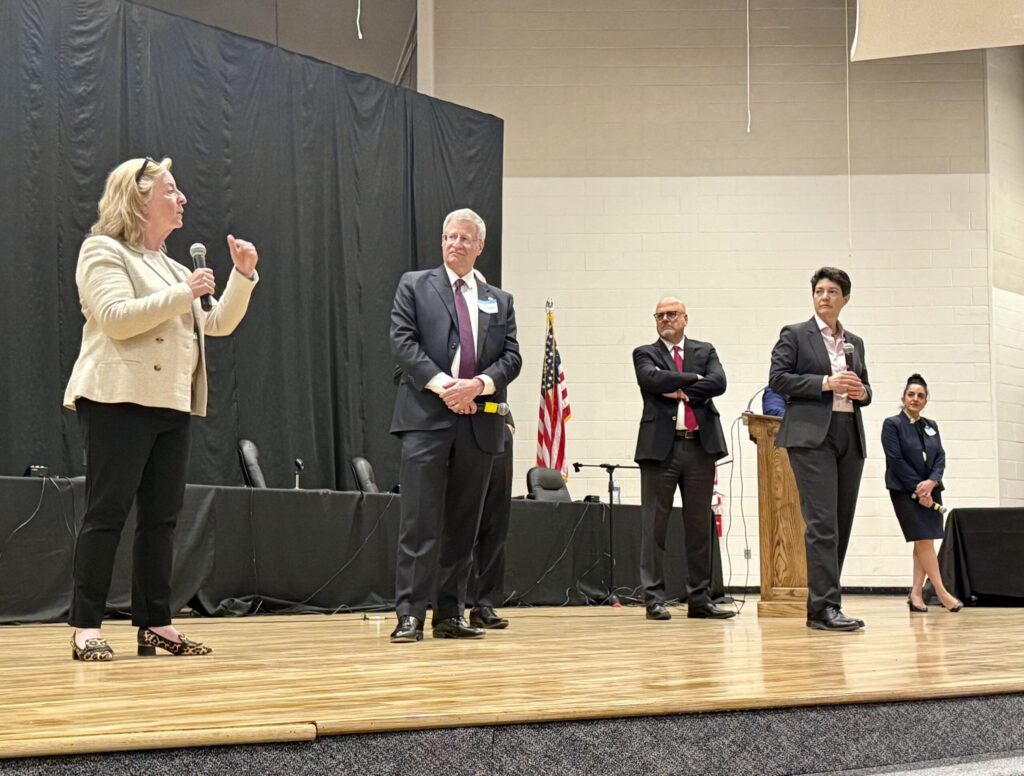
Members of the Colorado Supreme Court appeared before students from eight rural schools on Thursday to hear a pair of cases, field questions, and mark the first time the state’s newest justice participated in the long-running program. “I had such...
Democrats want Colorado colleges to provide medication abortion
Marissa Ventrelli
marissa.ventrelli@coloradopolitics.com
Updated 2 days ago
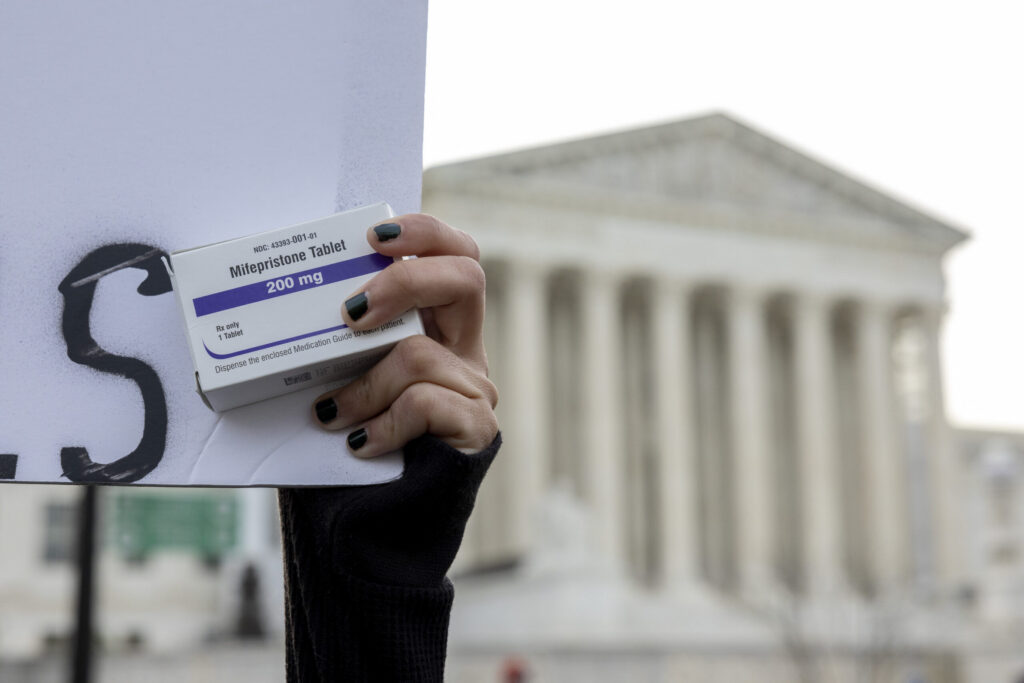
A bill proposing to require Colorado colleges and universities to provide abortion medication services cleared a legislative committee on Thursday. Advocates said the measure — which exempts religious-based institutions but applies to public, private, and community colleges — will improve...

Trump ‘in discussions’ with IRS to cut deal in tax record lawsuit
Brady Knox, Washington Examiner
brady.knox.washington.examiner@gazetteedit.wpenginepowered.com
Updated 2 days ago
President Donald Trump is in talks with the Internal Revenue Service to strike a deal over the release of his tax records. The news was revealed in a legal filing, where his legal team said they were in “discussions” with...
Governor’s wildlife commission picks face pushback ahead of Colorado Senate hearing
Marianne Goodland
marianne.goodland@coloradopolitics.com
Updated 2 days ago
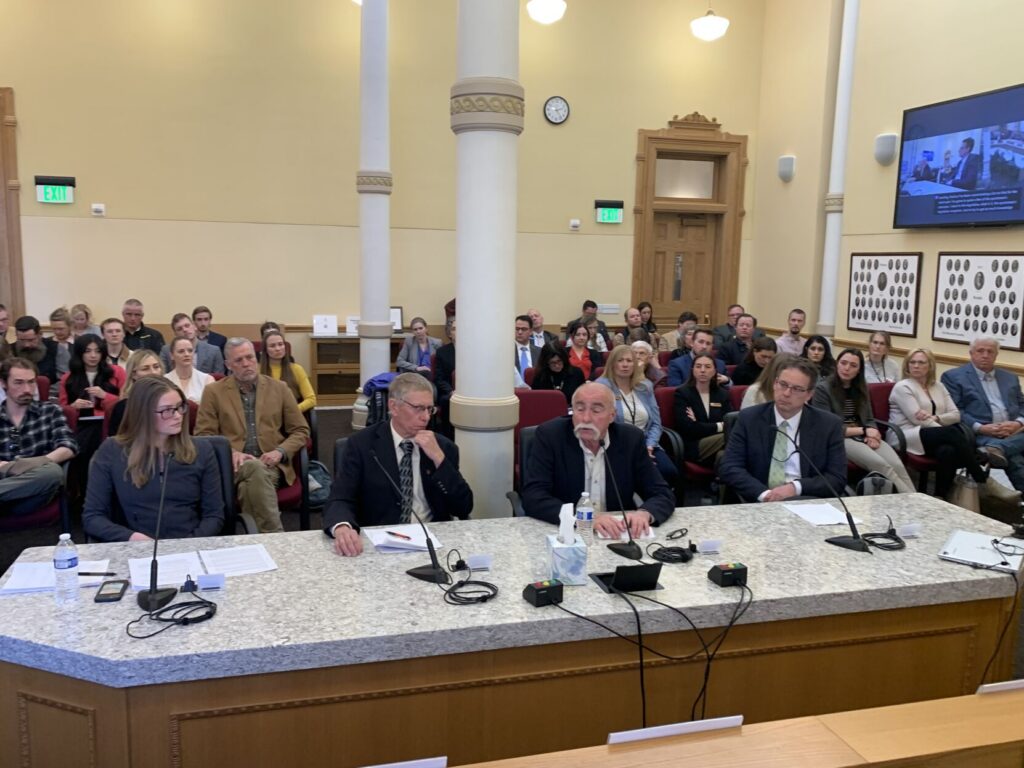
Colorado’s largest coalition of hunters, anglers, and wildlife conservation groups is urging state lawmakers to reject two of Gov. Jared Polis’ latest nominees to the Colorado Parks and Wildlife Commission, setting up a contentious confirmation hearing before the Senate Agriculture...
Colorado justices skeptical of snowboarder’s bid to revive injury lawsuit after signing new waiver
Michael Karlik
michael.karlik@coloradopolitics.com
Updated 18 hours ago
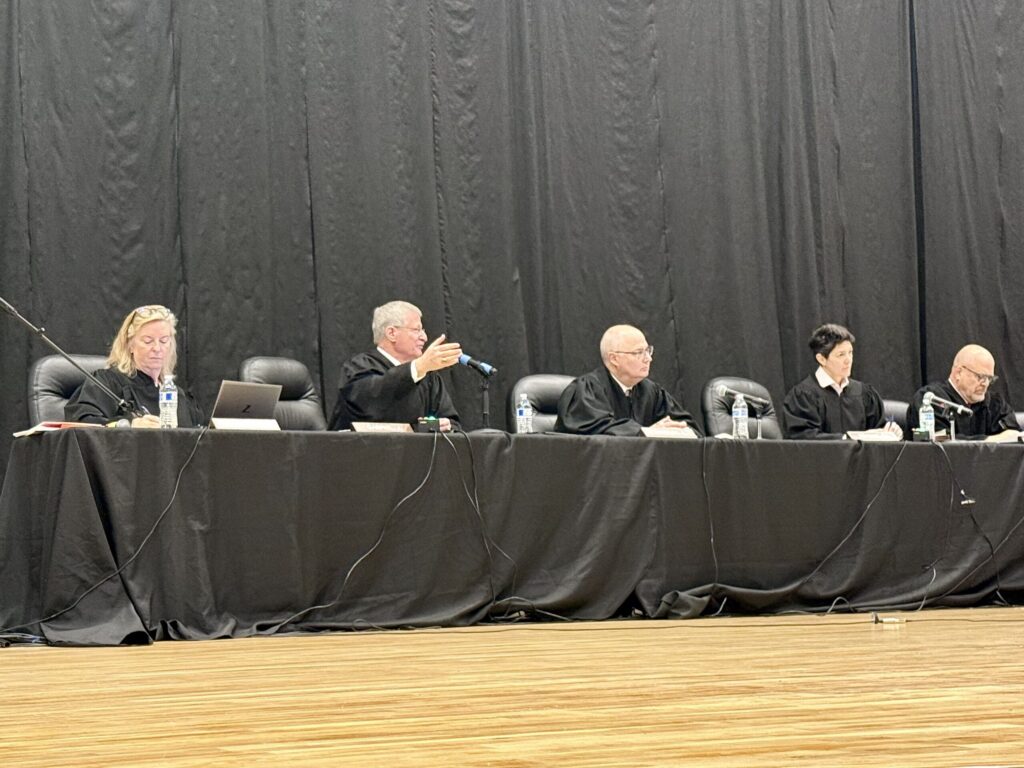
The Colorado Supreme Court seemed to agree on Thursday that a plaintiff is not entitled to continue his snowboarding injury lawsuit because he purchased another pass in the middle of litigation that released all past legal claims. “It says you’re...