

Appellate judges address AI use, 10th Circuit judge speaks about ski retreats | COURT CRAWL
Welcome to Court Crawl, Colorado Politics’ roundup of news from the third branch of government.
Artificial intelligence was a hot topic among appellate judges in the final days of 2024, plus one federal judge spoke about his annual ski retreats with his clerks spanning two decades.
Artificial intelligence warning
• Recently, there has been coverage of lawyers who use generative AI tools like ChatGPT to help write their court filings, only to get in trouble when the judges find out the briefs contain fake citations. But the state’s Court of Appeals hadn’t yet considered what the penalty should be, if any, for a failure to check the work of generative AI tools.
• Last month, the Court of Appeals clarified that litigants and lawyers may be subject to sanctions, after a self-represented plaintiff admitted he used AI to prepare his brief and didn’t review the output for accuracy.
• People using generative AI “must be aware of the tools’ propensity to generate outputs containing fictitious legal authorities and must ensure that such fictitious citations do not appear in any court filing,” wrote Judge Lino S. Lipinsky de Orlov, one of a handful of Colorado judges who has developed expertise on the subject of AI and the law.

Colorado Court of Appeals Judge Lino S. Lipinsky de Orlov

Colorado Court of Appeals Judge Lino S. Lipinsky de Orlov
• Days afterward, three judges on the U.S. Court of Appeals for the 10th Circuit shared their own views on AI in judging. The reactions ranged from Judge Carolyn B. McHugh‘s prediction that she won’t use it at all to Judge Timothy M. Tymkovich‘s disclosure that he tried out AI to research a term in a contract dispute.
State Supreme Court updates
• In a bizarre move, the Supreme Court retracted a two-month-old decision recognizing tenants have the right to a jury trial in certain eviction cases. The court said it based its prior decision on a misunderstanding of the circumstances. Rather than correct their analysis, the justices shrugged and said the legislature should decide whether tenants should receive a jury trial.
• The Supreme Court confirmed a 2019 decision clarifying how judges should evaluate the proportionality of criminal defendants’ sentences didn’t create a new constitutional rule entitling people with decades-old convictions to relief.
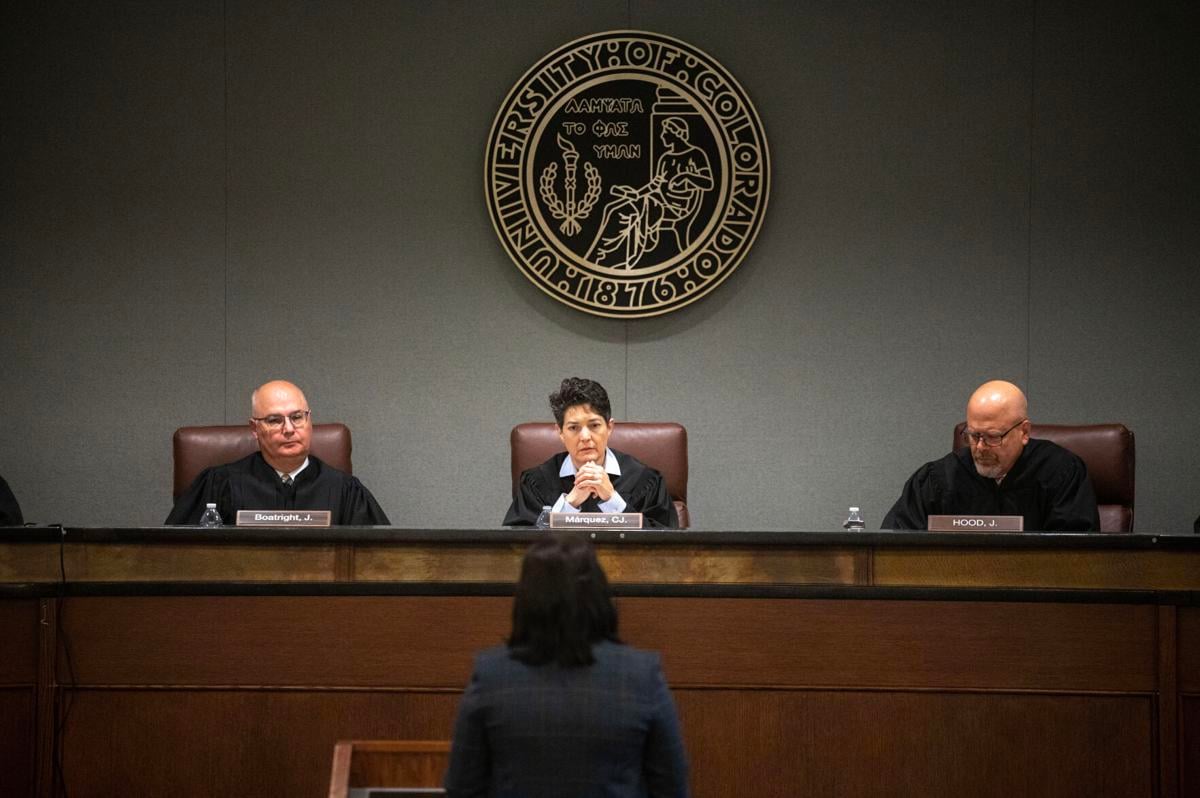
(From left) Colorado Supreme Court Justice Brian D. Boatright, Chief Justice Monica M. M á rquez and Justice William W. Hood III listen to arguments from Assistant Attorney General Caitlin E. Grant during the People v. Rodriguez-Morelos case as part of Courts in the Community at the Wolf Law building at University of Colorado Boulder on Thursday, Oct. 24, 2024. The semi-annual event entails the Colorado Supreme Court hearing arguments before an audience of students throughout the state. (Stephen Swofford, Denver Gazette)
Stephen Swofford Denver Gazette

(From left) Colorado Supreme Court Justice Brian D. Boatright, Chief Justice Monica M. Márquez and Justice William W. Hood III listen to arguments from Assistant Attorney General Caitlin E. Grant during the People v. Rodriguez-Morelos case as part of Courts in the Community at the Wolf Law building at University of Colorado Boulder on Thursday, Oct. 24, 2024. The semi-annual event entails the Colorado Supreme Court hearing arguments before an audience of students throughout the state. (Stephen Swofford, Denver Gazette)
• The state may withhold records relevant to police officers’ misconduct, the Supreme Court ruled, while rejecting a rule that could have led to less transparency across numerous other agencies.
• The Supreme Court clarified the process for proving an insurance company unreasonably delayed or denied benefits to policyholders.
• The justices will intervene in a second criminal case in Weld County, after District Court Judge Vincente G. Vigil has been unable to stem the bleeding from the accidental disclosure of confidential defense documents to the prosecution.
• The Supreme Court will decide who is criminally responsible when someone enlists a third party to mislead a government official, whether experts can testify about child sex assault victims’ truthfulness, when a defendant’s mental health evidence is admissible, whether a man was unconstitutionally convicted of a sex offense and whether vehicle rental companies can also be held liable as insurers.
Heard on appeal
• For the second time in less than a year, the Court of Appeals overturned a restitution order by former District Court Judge Patricia Herron, who exceeded the legal deadline even after the Supreme Court issued a landmark ruling that told judges they needed to follow the law.
• An ex-University of Colorado skiing coach may be entitled to unemployment benefits after being fired for making inappropriate comments to female athletes.

A University of Colorado Boulder student talks through campus Thursday, March 21.
Kyla Pearce/Denver Gazette

A University of Colorado Boulder student talks through campus Thursday, March 21.
• The Court of Appeals determined a judge wrongly found 15 years ago that a defendant was competent to stand trial. Now, a new judge will have to decide — in 2025 — whether the defendant was indeed competent in 2010.
• Although the Court of Appeals found no misconduct occurred, one judge pleaded with district attorneys’ offices to refrain from pushing the envelope with unfair arguments, as illustrated by one Denver prosecutor’s repeated references to the TV show “Dexter” at trial.
• A Grand County judge should take another look at whether a town manager acted “willfully and wantonly” when he sent an allegedly defamatory email about a Grand Lake trustee, the Court of Appeals instructed.
• Relying on recent Supreme Court precedent, the Court of Appeals ruled an Arapahoe County prosecutor didn’t do anything wrong by dismissing a Black juror who said she had negative experiences with law enforcement based on her skin color.
• Former Mesa County clerk Tina Peters, who is serving a nine-year sentence for her role in tampering with her office’s election equipment, was wrongly found in contempt and ordered to pay $1,500, the Court of Appeals decided.
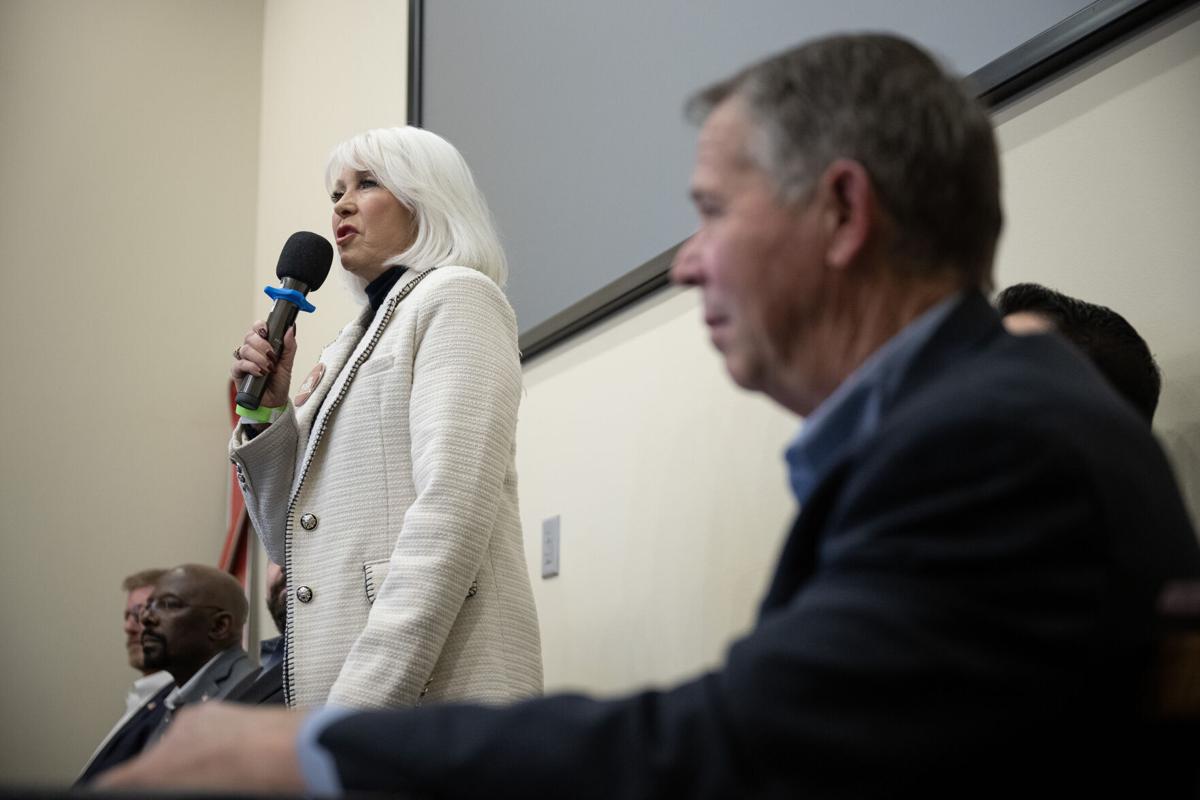
Chair candidate Tina Peters speaks during the Colorado State Republican Chair Debate on Feb. 25, 2023, at Ben’s Brick Oven Pizza in Hudson
(Timothy Hurst/Denver Gazette)

Chair candidate Tina Peters speaks during the Colorado State Republican Chair Debate on Feb. 25, 2023, at Ben’s Brick Oven Pizza in Hudson
• Boulder County prosecutors presented insufficient evidence to charge a man with attempted extreme indifference murder when he caused a small explosion in his hotel room with SWAT officers nearby.
• A student who sued Regis University for disciplining him for sexual misconduct cannot hold the school liable for its allegedly flawed investigation, the Court of Appeals decided.
• By 2-1, the Court of Appeals directed a La Plata County judge to calculate a legal sentence for a defendant, while the dissenting judge believed a few minor tweaks could make the existing sentence acceptable.
In federal news
• The 10th Circuit’s chief judge, Jerome A. Holmes, dismissed a misconduct complaint against a district judge somewhere in the circuit’s six-state region. The unidentified judge acknowledged he made a mistake by talking to a politically affiliated group, but Holmes concluded the judge had rectified the problem.
• Mesa County and Grand Junction law enforcement fatally shot a man 16 times in his driveway. The 10th Circuit found they were entitled to qualified immunity.
• An Elbert County sheriff’s sergeant shot an unarmed man who startled him. The 10th Circuit found he was entitled to qualified immunity.
• Judge Timothy M. Tymkovich spoke to Federalist Society members about the annual ski trips he has taken with his clerks and former clerks over the past 20 years. Tymkovich also said he has skied with Justice Neil M. Gorsuch, U.S. District Court Judge Daniel D. Domenico and their clerks. He shared pictures of commemorative items from the 20th reunion trip, which he pointed out are not subject to disclosure under current guidelines.
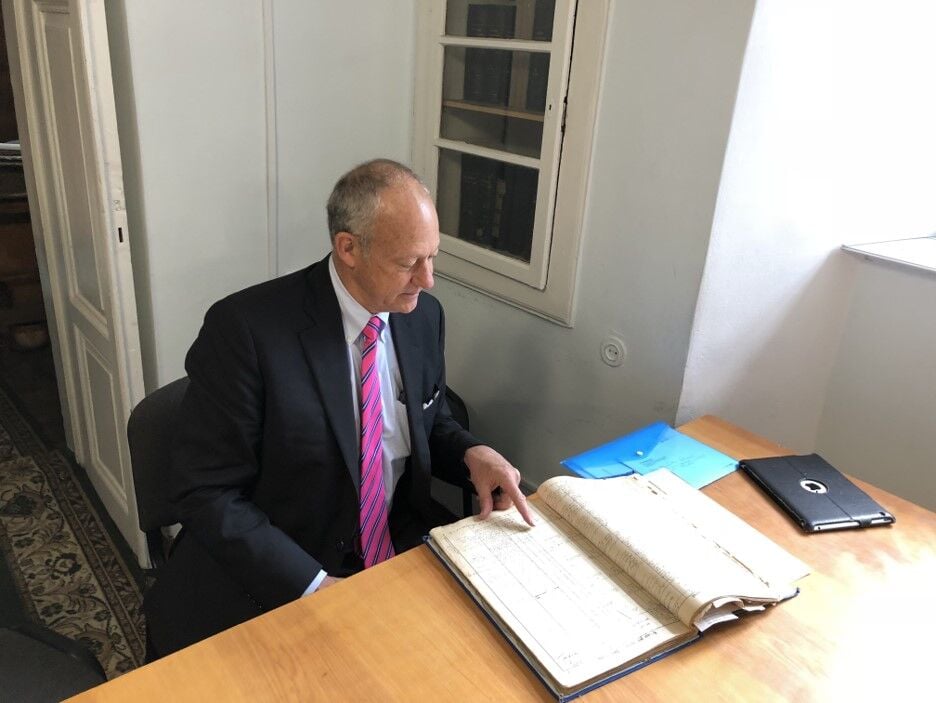
Judge Timothy M. Tymkovich looks at a census book from the early 1900s in Lviv during a May 2018 visit to Ukraine. Photo courtesy of Timothy Tymkovich

Judge Timothy M. Tymkovich looks at a census book from the early 1900s in Lviv during a May 2018 visit to Ukraine. Photo courtesy of Timothy Tymkovich
• President Joe Biden vetoed a bipartisan bill that would have given Colorado two more federal trial judges beginning in 2029, and added a total of 66 judgeships nationwide.
Vacancies and appointments
• The governor has selected Magistrate Kristen M.M. Tarrin to be the next Dolores County Court judge, where she succeeds now-Montezuma County Court Judge Ian J. MacClaren.
• Magistrate Lauren T. Swan, a former public defender, has been appointed to fill the seat of District Court Judge Patrick W. Murphy in the 11th Judicial District (Fremont, Chaffee, Custer and Park counties).
• The governor also appointed retired U.S. Magistrate Judge Kristen L. Mix to the Independent Judicial Discipline Adjudicative Board, which will hear state judicial discipline matters following the passage of a constitutional amendment in November.
• Applications are due by Jan. 21 to succeed Denver District Court Judge Darryl F. Shockley, who is resigning to join the senior staff of incoming District Attorney John Walsh.
• Applications are also due by Jan. 17 to succeed the late District Court Judge Sharon Holbrook in the 17th Judicial District (Adams and Broomfield counties). Holbrook died on Dec. 30, having been a judge since 2016. She was 51.
• “The 17th Judicial District is saddened by the loss of Judge Holbrook, who was broadly recognized for her humility, sense of humor, and for treating those who appeared before her with respect. Judge Holbrook was committed to the 17th, having served the community here with the district attorney’s office before becoming a magistrate, and then a district court judge. Her loss will be felt throughout the district and the state.” —Chief Judge Kyle Seedorf
Miscellaneous proceedings
• Colorado Politics looked at the biggest developments in the judiciary last year, which includes the installation of a new chief justice and a period of relative stability on the federal bench.
• Former President Jimmy Carter died last week. Two of his appointees, Senior Judge Stephanie K. Seymour of the 10th Circuit and U.S. District Court Senior Judge John L. Kane, are still on the bench. Last summer, Kane recalled his connection to the Carter family to Colorado Politics:
I’ve never met Jimmy Carter, though I greatly admire him, especially for his character and his good works following his presidency. I did meet President Carter’s mother, Miss Lillian, in India where she was the oldest active Peace Corps volunteer in the country and I was a young staff member visiting then Bombay from my assigned office in then-Calcutta for a staff meeting. The meeting was brief and we exchanged pleasantries.

Federal judge directs plaintiff to revise complaint alleging Denver officers’ constitutional violations
Michael Karlik
michael.karlik@coloradopolitics.com
Updated 55 minutes ago
A federal judge directed a defendant to revise his allegations on Wednesday to more precisely state what two Denver officers and the city itself allegedly did to violate his constitutional rights by facilitating his prosecution for murder until prosecutors dropped...
Federal judge explores new sanctions against ex-Colorado judicial discipline director
Michael Karlik
michael.karlik@coloradopolitics.com
Updated 2 hours ago
A federal judge on Wednesday directed Colorado’s former judicial discipline director, for the third time this year, to explain why she should not sanction him for his latest conduct in his litigation against the state’s judiciary. Christopher S.P. Gregory, who served...
Colorado joins lawsuit challenging changes to Endangered Species Act
Marissa Ventrelli
marissa.ventrelli@coloradopolitics.com
Updated 1 hour ago
Colorado once more joined a coalition of states challenging the Trump administration — this time on proposed rules regarding the Endangered Species Act. The pair of lawsuits challenge new rules made under Interior Secretary Doug Burgum, who earlier said the...
10th Circuit orders second look at immunity for Kiowa County deputy over fatal vehicle crash
Michael Karlik
michael.karlik@coloradopolitics.com
Updated 2 hours ago
The Denver-based federal appeals court directed a trial judge on Tuesday to further analyze whether a Kiowa County deputy and the sheriff’s office may be sued for a fatal vehicle collision. The Colorado Governmental Immunity Act generally shields government entities and public...
Colorado justices to hear appeal in Kendrick Castillo death lawsuit, ‘fugitive’ rule
Michael Karlik
michael.karlik@coloradopolitics.com
Updated 1 day ago
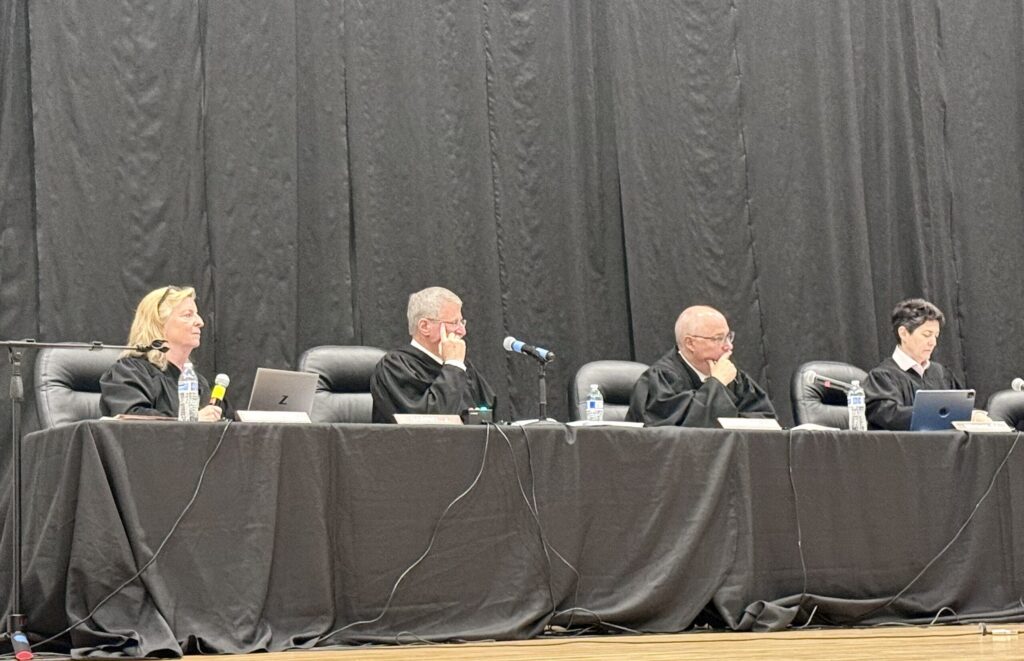
The Colorado Supreme Court announced on Tuesday that it will decide whether it was proper to dismiss a lawsuit over the 2019 shooting death of Kendrick Castillo after the defendants paid the maximum amount of damages available to Castillo’s parents,...

Federal judge dismisses Douglas County’s challenge to collective bargaining law
Nicholas Fogleman
nicholas.fogleman@denvergazette.com
Updated 9 hours ago
A federal judge dismissed claims brought by the Douglas County Board of Commissioners alleging that a state law granting county employees the right to organize and join labor unions violates free speech protections and conflicts with federal labor law. Douglas...

Arapahoe County judge’s frustration with defense lawyer not grounds for new trial
Michael Karlik
michael.karlik@coloradopolitics.com
Updated 1 day ago
Colorado’s second-highest court decided last week that an Arapahoe County judge’s repeated rebukes of a defense attorney and orders to “be quiet” did not rise to the level of bias or a violation of the defendant’s due process rights. A...

Divided appeals court upholds vehicle theft conviction despite unclear origin of car’s value
Michael Karlik
michael.karlik@coloradopolitics.com
Updated 22 hours ago
Colorado’s second-highest court upheld a defendant’s conviction for aggravated motor vehicle theft last week, even though it was unclear how the Thornton Police Department estimated the value of the stolen car. Officer Marc Faivre encountered Ashley Shelee Gibbens-Martinez in a...
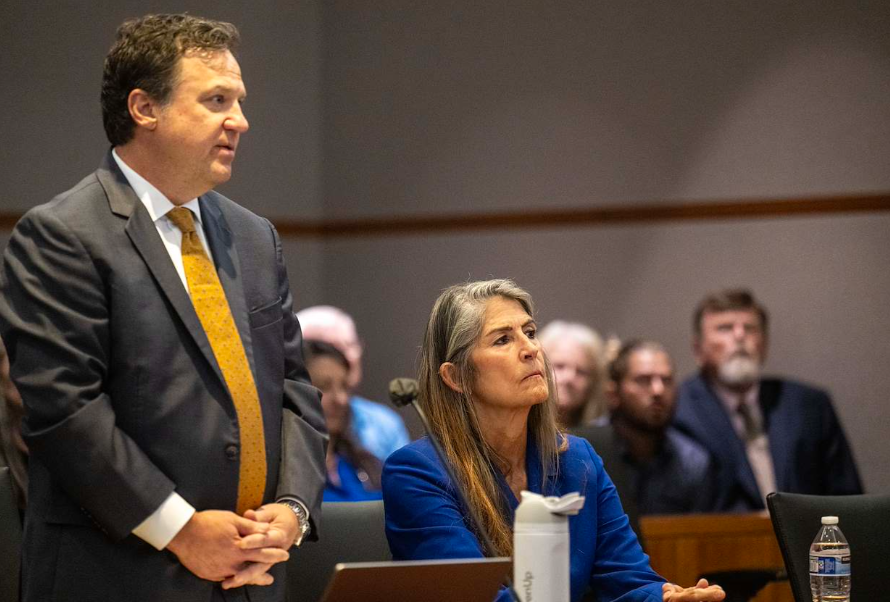
Disgraced ex-CBI analyst Missy Woods sentenced to prison in DNA scandal
Jenny Deam
jenny.deam@gazette.com
Updated 1 day ago
A Jefferson County district court judge on Tuesday sentenced a disgraced former Colorado Bureau of Investigation DNA analyst to a decade in prison for altering and deleting data in scores of criminal cases over several years. Jefferson County District Judge...

Parenting from prison: Inmates hope to be present in their children’s lives, while physically absent
Marianne Goodland
marianne.goodland@coloradopolitics.com
Updated 1 day ago
The room was decorated with balloons, the tables sparking bright with colors as the smell of pizza and cake wafted through the air. As did music. This was, after all, a father-daughter dance. Except this was not a typical father-daughter...