

Integration facts are fudged for Colorado charter schools | NOONAN
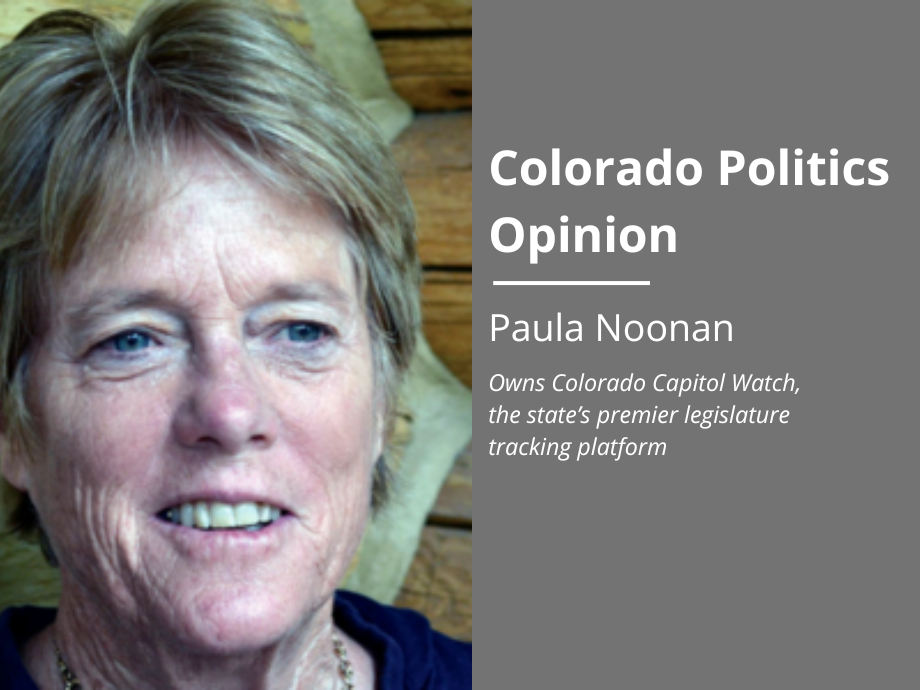
Paula Noonan

Paula Noonan
Charter school promoters in Colorado never fail to spin the public relations story charters are better in every way than public schools built to serve neighborhoods and communities.
Recent claims by Kevin Hesla of the Colorado League of Charter Schools assert Colorado’s charters are contributing to the integration of our public schools, a long-sought promise of the 1954 Supreme Court case Brown v. Board of Education.
Hesla argues Colorado’s charter schools have contributed to the overall integration of Colorado’s student bodies. Hesla says: “The total number of students enrolled in highly segregated schools has declined from 86,000 students to 17,000…. Among the very few charter schools where more than 90% of students identify as the same race/ethnicity, many were specifically designed to better serve historically marginalized student groups.”
Hesla’s picture does not accurately reflect what’s happening demographically in charter schools. The following data comes from the Colorado Department of Education based on 2023-2024 numbers as 2024-2025 numbers are not yet available.
Currently Colorado’s charter schools fall into three general categories. Denver Public Schools authorize 53 charters, the Charter School Institute authorizes 45 schools, and 42 other school districts authorize 164 charters. Charter school segregation and integration statistics vary significantly according to their authorizer and location.
Stay up to speed: Sign up for daily opinion in your inbox Monday-Friday
Charters in Denver Public Schools are on average 86% minority, while DPS as a whole is 75% minority. Thirty-four charters in Denver, 64%, have minority populations of 90% plus. Only six Denver charters, 11%, have minority populations 60% or lower.
As an aside, most Denver charters serve middle and high school students. Of the five lowest performing charter schools, all are high-minority elementary schools with high English language learning (ELL) needs. Schools with high numbers of ELL students, whether charter or public, will have low academic performance scores, with very few exceptions.
Charters have these low scores despite the advantage of resources from individuals such as MacKenzie Scott of Amazon fortune, Reed Hastings of Netflix, the Bill and Melinda Gates Foundation, and the Walton Family Foundation. As an example, Scott pitched $6 million to Denver’s KIPP charters and $4.5 million to Rocky Mountain Prep charters.
Denver’s overall charter portfolio shows it’s not profitable to market to non-minority students. It’s logical to infer white students in Denver are not a strong market because these non-minority students choose to attend neighborhood public schools considered excellent by their parents.
Moving on to non-Denver charters, excluding CSI schools, these 164 schools educate 54,947 students in buildings comprising 0% to 35% minority students. As a note, 75% of the state’s school districts have no charter schools. Only 45 school districts out of 176 authorize charters.
Non-Denver/non-CSI charter schools have an average 70.48% academic ranking. They serve 5% ELL and 9% Free and Reduced Lunch students. The chosen curriculum is often “classical” with a Christian orientation.
A direct correlation occurs between these charters’ low at-risk populations and their above average academic performance numbers. These segregated schools (30% or less minority population doesn’t count as integrated), have generally wealthier students with all the advantages in supporting academic achievement money can buy.
CSI charters are a mixed bag depending on where the charters are located. These schools educate 23,013 students at 43 schools. Their average FRL numbers are 34% to the state’s 40%. Their average minority population is 47% with the state at 49%. Their ELL numbers are 16% to the state’s 15%.
Consistent with the general effects of poverty and wealth on education results, twelve CSI schools with the highest percentages of minority, FRL and ELL students rank lowest in academic performance. The 13 “distinction” CSI schools have the lowest number of minority, FRL and ELL students.
In today’s declining enrollment environment, segregated charter schools are mostly protected from school closure. This fact has particularly affected DPS in its school closing ordeal. Several neighborhood schools within blocks of minority-populated charter schools are closed while the charters are protected. In southwest Denver, a KIPP charter elementary has a significantly lower population than a nearby neighborhood school on the “close” block.
Claims Colorado’s charters are furthering school integration are mostly fudging. Though a small number of charters are integrated, integration is not the overall mission. “Choice” is the mission. On the whole, “choice” is leading to segregation, whether it’s from marketing to low-income minorities served by schools using public funds without public governance, or whether it’s marketing to non-minority families to ensure moderate-to-high income children are schooled together.
No one should look at charter schools as an overall integration happy-ending story. No one should look to charters as the cure for the effects of low income on students. Finally, no one should look to charters as the schools where non-English-speaking children will quickly, miraculously acquire English-speaking skills.
With declining school enrollments due to lower birth rates and neighborhood gentrification, the charter “choice” movement will likely cause more segregation despite the fact children, minority and non-minority, do better academically and socially when educated together.
Paula Noonan owns Colorado Capitol Watch, the state’s premier legislature tracking platform.

Colorado must continue finding common ground on wildfire policy | GUEST COLUMN
Colorado Politics
colorado-politics@coloradopolitics.com
Updated 16 hours ago
By John Herrick Colorado has never lacked for opinions about wildfire policy. We debate forest management, climate change, prescribed burns, land use, air quality and budgets. Those debates are familiar territory, but a new discussion is beginning to happen around...

Proposition NN is the best investment for Colorado’s students and schools | GUEST COLUMN
Colorado Politics
colorado-politics@coloradopolitics.com
Updated 16 hours ago
By Justin Ogden Colorado families know what it means to make difficult budget decisions. Inflation has driven up the cost of groceries, housing, utilities and just about everything else. Families like mine work hard to stretch every dollar while still...
Were the primaries a preview for consequential general election? | Paula Noonan
Paula Noonan
paula-noonan@coloradopolitics.com
Updated 2 days ago
Colorado’s political future will go the way of this election. Historically, the state has not had both chambers controlled by a supermajority. This election may change that. The primaries suggest how the general election may play out. Democrats had solid...
Disagreement doesn’t have to mean disrespect | GUEST COLUMN
Colorado Politics
colorado-politics@coloradopolitics.com
Updated 2 days ago
By Vincent Atchity These days, it doesn’t take long to feel overwhelmed by politics. Turn on the news, scroll through social media or read the comments on almost any political post and you’ll find anger, outrage and personal attacks. For...

Keeping Colorado’s kids’ trust online | PODIUM
Colorado Politics
colorado-politics@coloradopolitics.com
Updated 2 days ago
By Stuart Jenkins Almost every day, the kids and teens we serve across Colorado are introduced to new generative artificial intelligence and other emerging technology, including conversational AI systems designed to simulate human conversation. These tools are no longer a...

Marx’s ‘through line’ predates Trump, connects to Maes | FEEDBACK
Colorado Politics
colorado-politics@coloradopolitics.com
Updated 2 days ago
Eric Sondermann is of course correct Victor Marx is an unserious, unelectable, embarrassing Republican nominee for governor of Colorado. But I respectfully submit that the “through line,” as Mr. Sondermann describes it, is not from Trump to Marx, despite their...

Cedric Pride’s blueprint for opportunity through the trades | The OpEdge Podcast
Tony Olivero
tony.olivero@gazette.com
Updated 3 days ago
Cedric Pride, CEO of the nonprofit Pride Initiative in Denver, joins The OpEdge with a blueprint for workforce development, skilled trades, and economic opportunity. Pride tells host and investigative columnist Jimmy Sengenberger why he believes the trades offer a path...
Colorado’s No. 1 education ranking should raise our ambition | GUEST COLUMN
Colorado Politics
colorado-politics@coloradopolitics.com
Updated 3 days ago
By Scott Laband Colorado has earned the right to celebrate its new No. 1 ranking in education from U.S. News & World Report. Gov. Jared Polis called it “one of the proudest moments” of his time in office and shared the...

Colorado’s No. 1 education ranking reflects the power of school choice | GUEST COLUMN
Colorado Politics
colorado-politics@coloradopolitics.com
Updated 3 days ago
By Peter Mason Colorado is now the No. 1 state in the nation for education, according to the 2026 U.S. News & World Report Best States rankings. That is a distinction worth celebrating. It is also a distinction worth understanding....

Courageous Colorado bucks Trump’s federal stupidity | Miller Hudson
Miller Hudson
miller-hudson@coloradopolitics.com
Updated 4 days ago
There are several theories regarding the rhythm of American politics. The most frequently cited is the pendulum hypothesis — positing that episodes of liberal dominance are then interrupted by spans of conservative control. Since Ronald Reagan’s presidential election in 1980,...