

Neighborhood schools, families disadvantaged by DPS closures | NOONAN
Paula Noonan

Paula Noonan
The Denver Public Schools (DPS) Board of Education will vote soon to close schools for next year. Five elementary schools are on the chopping block with about 1,100 students total getting the boot out of their neighborhood buildings.
At a recent board meeting, the district stated its values and guidelines for closing schools. The values, of course, state “every learner will thrive.” The guidelines state DPS will “provide an educational program to meet the needs of all students without identifying a disproportionate number of schools with high percentages of students (who) qualify for free or reduced lunch, multilingual learners, or students with disabilities.”
Those values and guidelines turned topsy-turvy as DPS administration selected to close four schools with a disproportionate number of students who qualify for free or reduced lunch (FRL) and with high percentages of minority children and English Language Learning (ELL) students. The schools on the block, mostly in low-income neighborhoods, are Columbian Elementary, Castro Elementary, Schmitt Elementary and IAD Harrington. Palmer Elementary in central east Denver is the outlier with below district averages of FRL and minority students.
Decisions by previous administrations made closing these predominantly low-income-serving schools inevitable. When now U.S. Sen. Michael Bennet was superintendent of DPS, he initiated the rapid expansion of charter schools. This policy accelerated under former Superintendent Tom Boasberg.
Stay up to speed: Sign up for daily opinion in your inbox Monday-Friday
Castro Elementary, the namesake school of Richard Castro, education and civil rights activist, is sandwiched between two charter schools, Kipp Sunshine Elementary and Rocky Mountain Prep Southwest. Kipp’s Denver chain of six schools received $6 million from billionaire MacKenzie Scott, ex-wife of Amazon’s Jeff Bezos. She gave $4 million to Rocky Mountain Prep schools. But DPS-managed Castro Elementary was not so fortunate. Its 237 students, 57 more than the population of Kipp Sunshine, got the short end of the philanthropy stick. Castro’s students will have to seek a new school for 2025.
Both Rocky Mountain Prep Southwest, Castro’s closest “neighbor,” and Kipp Sunshine will lick their chops to receive Castro’s students. Those children represent roughly $3.5 million in student dollars up for grabs.
Schmitt Elementary, also in southwest Denver, is just east of Federal Boulevard with Rocky Mountain Prep Southwest to its north and Rocky Mountain Prep Ruby Hill to its south. Schmitt’s 127 students represent about $2 million in revenue that will move around. Two alternative neighborhood schools for Schmitt’s students are not exactly in Schmitt’s neighborhood. They are on the other side of Santa Fe Highway and across Broadway. DPS will provide transportation.
The situation for International Academy Denver Harrington in central Denver is similar. IAD Harrington sits a couple of streets away from University Prep Steele. This is an example of how Denver’s chartering has eviscerated too many of Denver’s neighborhood schools and the building investments put into those schools. This section of the city already has lots of academic options for students. Two elementary schools within blocks of each other don’t make sense. U Prep has 95 open seats to welcome most of IAD Harrington’s 122 students along with about $2 million in revenue.
This school closing process is not yet complete. Before their final decision, the DPS board will attend the schools to receive feedback from parents. The two-minute rule is in play at the feedback sessions. Board members will receive in-person testimony only. The board will not interact with parents during their testimony. That is, parents will testify to a brick wall, with DPS board members as the bricks. The same rules will apply at formal board meeting hearings.
To be clear, charters are not omnipresent in DPS. They have moved into areas with high numbers of minority students, such as on the west side of town. Parts of the city with majority white children in schools do not experience the same charter impacts. These neighborhoods will not close schools.
DPS charters claim education and learning improve for minorities under their management. That claim, unfortunately, has not proven out. The challenges of providing adequate resources to children from low-income families are great. Language barriers add to the complexity. The achievement differences between charters serving these children and district-managed schools are not distinguishable. Some years some schools appear to do “better” than others only for the scores to flip the next year.
On Nov. 21, the board will conduct a final vote on the closings. They have received advice from their consultant, Ben Kleban, a charter school founder in New Orleans. His schools were recently closed for non-performance. He’s a consultant with School Board Partners, the firm that coached and trained current board President Carrie Olson for two years. “Scratch my back, I’ll scratch yours.”
The Nov. 21 board meeting will complete this year’s process. In the near future, it’s likely DPS will close more neighborhood schools in predominantly minority communities despite its values and guidelines. That’s what the administration’s numbers of expected students, empty seats and district “choice” imply.
After all is said and done with this round, DPS will save about $6.6 million. The DPS board should allocate that $6.6 million specifically to the care of dislocated students, set up a school closure oversight committee and pray Denver’s residents start having babies again.
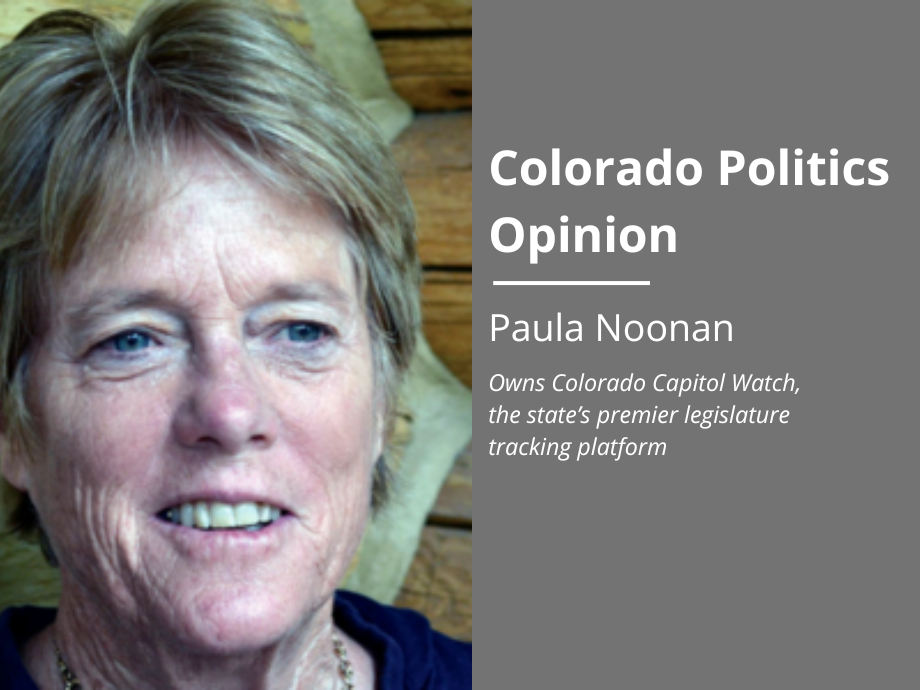
Paula Noonan owns Colorado Capitol Watch, the state’s premier legislature tracking platform.

Mountain Lion/Pheasant Green Chile a hit! | Capitol M | Week of April 25, 2026
Marianne Goodland
marianne.goodland@coloradopolitics.com
Updated 8 hours ago
The lighter side of the state Capitol, although if you were eating at the barbecue Thursday, you are probably not any “lighter.” With the arrival of spring comes outdoor barbecues at the state Capitol, and the most unusual is the...

Passenger train service from Denver to Fort Collins? | Cronin and Loevy
Tom Cronin Bob Loevy
tom-cronin-bob-loevy@coloradopolitics.com
Updated 5 hours ago
A “Joint Service” plan is being developed that would bring passenger rail service from Denver north to Fort Collins by 2029. The passenger trains would be paid for with existing funds from the Denver Regional Transportation District (RTD) and other...

The applicability of Hungary’s election to our politics | SONDERMANN
By Eric Sondermann
by-eric-sondermann@coloradopolitics.com
Updated 5 days ago
American conservatives, largely synonymous these days with MAGA save for a few lonely voices of courage and dissent, have plenty to lament. Their domination of the political landscape is waning. Various special elections hither and yon have presented bright, flashing...

Is integration the best way to mitigate Colorado education’s achievement, opportunity gaps? | Paula Noonan
Paula Noonan
paula-noonan@coloradopolitics.com
Updated 3 days ago
Colorado Senate President James Coleman and state Rep. Jennifer Bacon have introduced a bill, Senate Bill 26-170, to form an education task force, for the umpteenth time, to identify and expand “effective public schools.” Their goal, for the umpteenth time,...
Every life has equal value; Colorado must reject House Bill 26-1281 | OPINION
Colorado Politics
colorado-politics@coloradopolitics.com
Updated 3 days ago
By Emily Tofte Nestaval In Colorado, we have long held a simple, but absolute truth: every human life has equal value under the law. It is a principle that grounds our legal system, supports victims and their families, and reinforces...
Proposed data-based marketing bill would hurt small Colorado businesses | OPINION
Colorado Politics
colorado-politics@coloradopolitics.com
Updated 3 days ago
By Angel Johnson Six years ago, while I was serving in the military, I launched an e-commerce business selling inclusive, motivational activewear that empowers people of every shape and size throughout their fitness journeys. We offer high-performance, confidence-boosting products in...

Drug-induced abortions open a can of worms on campus | PODIUM
Colorado Politics
colorado-politics@coloradopolitics.com
Updated 4 days ago
By Tom Perille Why mandate drug-induced abortion access at Colorado’s colleges and universities? At a time of unprecedented Colorado state budget challenges, you would think state legislators would be laser focused on creating and funding those programs where there is...
Colorado’s creative economy needs a business structure that actually fits | OPINION
Colorado Politics
colorado-politics@coloradopolitics.com
Updated 4 days ago
By Marc Catlin Across Colorado, people are building something from the ground up.I’ve seen it my whole life. I grew up on a farm in Montrose County, and I’ve spent my career working in agriculture, water, banking and small business....

It’s time Colorado built back to affordability | OPINION
Colorado Politics
colorado-politics@coloradopolitics.com
Updated 4 days ago
By Samuel G. Michael The price of calling Colorado home has climbed faster than its fourteeners, and not everyone can keep up. Our beloved state is an increasingly unaffordable place to live, pricing out the very people who make it...

Michael A. Hancock’s ‘Rules for Restoration’ to counter radicalism | The OpEdge Podcast
Tony Olivero
tony.olivero@gazette.com
Updated 5 days ago
In the latest episode of The OpEdge — The Gazette’s new opinion podcast —writer, Denver Gazette columnist and business executive Michael A. Hancock tells OpEdge host and investigative columnist Jimmy Sengenberger how his book, “Rules for Restoration,” offers concrete ways to...