

Colorado justices to Denver judge: Take another shot at answering confidentiality question
The Colorado Supreme Court returned an appeal to a trial judge last week, telling her to redo her ruling allowing for the disclosure of potentially confidential documents after she acknowledged she used the wrong standard the first time.
In the underlying case, Hill Hotel Owner, LLC constructed a 189-room hotel in Boulder, which opened this year. In 2022, damage occurred to the concrete garage floor at the construction site. Hill Hotel and its insurer, Hanover Insurance Company, disagreed over the cause of the loss.
After Hanover denied coverage, Hill Hotel sued for breach of contract. In investigating the damage, Hanover had turned to a structural engineer, who believed contractor negligence was the issue. After Hill Hotel retained a law firm, Hanover hired another structural engineer, whose conclusions Hanover used to again deny the insurance claim.
In March, the parties notified Denver District Court Judge Jill D. Dorancy of a dispute over emails and other documents involving the two engineers. Hanover claimed they were shielded by attorney-client privilege, but Hill Hotel argued documents “generated by an insurer before its denial of coverage” were not protected because they were not prepared “in anticipation of litigation.”
Dorancy agreed and ordered Hanover to disclose communications the engineers made to Hanover’s lawyers.
On appeal to the Supreme Court, the parties and outside entities argued over when the communications of an insurance company’s counsel become privileged. However, the case took an unexpected turn when Dorancy filed her brief. She admitted the rationale she used in ordering disclosure — that the communications were not made “in anticipation of litigation” — was wrong.
“The District Court respectfully requests that this matter be remanded for it to apply the correct privilege test in the first instance,” wrote Assistant Solicitor General Talia Kraemer for Dorancy.
During oral arguments last month, some justices were concerned about issuing an opinion under the circumstances. They also wondered if they needed to do anything to clarify which standard Dorancy should apply, considering how far apart the parties’ positions were.
Ultimately, the Supreme Court issued an unsigned order on Oct. 29, directing Dorancy to reevaluate the privileged nature of the documents without elaboration.
The case is Hill Hotel Owner, LLC v. Hanover Insurance Company.

Federal judge hears arguments about Colorado’s 3-day gun purchase waiting period
Michael Karlik
michael.karlik@coloradopolitics.com
Updated 11 hours ago
A federal judge heard arguments on Monday about the constitutionality of a 2023 Colorado law that generally imposes a three-day waiting period on firearm purchases after the initiation of a background check. The test that the U.S. Supreme Court created...
Colorado Supreme Court intervenes in Weld County prosecution dismissed due to Missy Woods misconduct
Michael Karlik
michael.karlik@coloradopolitics.com
Updated 14 hours ago
The Colorado Supreme Court ordered a Weld County trial judge last week to respond to the district attorney’s claim that he improperly dismissed a criminal case because of “outrageous” conduct by the Colorado Bureau of Investigation. Daniel Lee Eatinger stood...
Schoolchildren’s presence at child sex-related trial did not harm Arapahoe County defendant, appeals court says
Michael Karlik
michael.karlik@coloradopolitics.com
Updated 3 days ago
Colorado’s second-highest court decided on Thursday that the presence of a group of schoolchildren on the first day of a child sexual exploitation trial did not violate an Arapahoe County defendant’s constitutional right to a fair trial. Prosecutors charged Jerry...
Appeals court cites week-old Colorado law to reinstate child neglect case at child, father’s request
Michael Karlik
michael.karlik@coloradopolitics.com
Updated 2 days ago
Colorado’s second-highest court invoked a new state law for the first time on Thursday and reinstated a child neglect case that both the child and her father wished to reopen. House Bill 1227 took effect on Aug. 12, reversing a...
Colorado Supreme Court names William Hood as next chief justice
Michael Karlik
michael.karlik@coloradopolitics.com
Updated 4 days ago
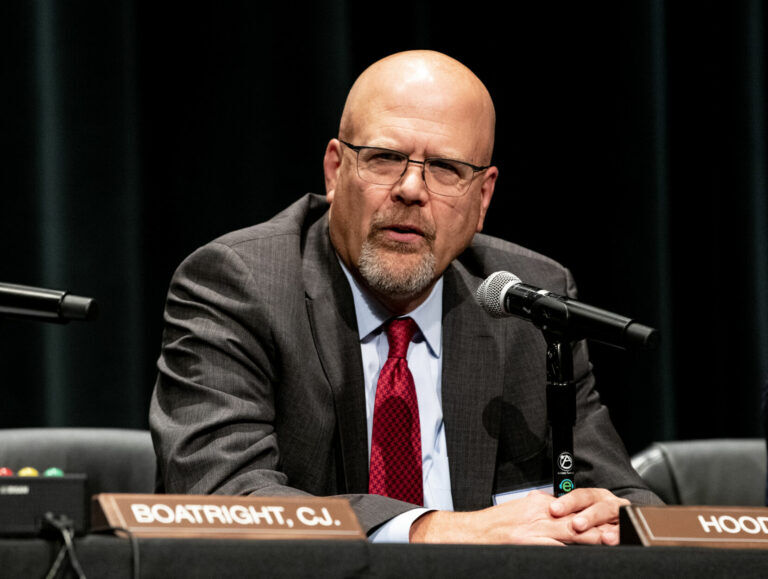
The Colorado Supreme Court has selected Justice William W. Hood III to be the next chief justice, the judicial branch announced on Friday. Hood will succeed Chief Justice Monica M. Márquez, who took over the role in July 2024. “I...
Family of slain Lakewood teacher releases statement as murder suspect makes first court appearance
Matt Kyle
matt.kyle@denvergazette.com
Updated 21 hours ago
Patrick Theodore Barnett, the Lakewood man accused of killing his wife, a Jeffco Public Schools art teacher, made his first court appearance Friday morning as his wife’s family looked on. The status conference hearing was held before District Court Judge...

Appeals court upholds Park County trophy hunting conviction
Michael Karlik
michael.karlik@coloradopolitics.com
Updated 3 days ago
Colorado’s second-highest court clarified on Thursday that a defendant may stand convicted under the state’s trophy hunting laws if he abandons a bear carcass but returns later to remove the meat. Under Colorado law, it is a felony to detach...
Judge grants partial injunction to GEO in fight against state health inspection law
Kyla Pearce
kyla.pearce@gazette.com
Updated 5 days ago
A judge ruled Thursday that The GEO Group does not have to follow parts of a new state law requiring more frequent health and safety inspections at the U.S. Immigration and Customs Enforcement processing center in Aurora. Under the order...

Parker man faces 20 years to life for serial sexual assaults
Nicholas Fogleman
nicholas.fogleman@denvergazette.com
Updated 5 days ago
A 25-year-old Parker man who sexually assaulted three women in 2025 pleaded guilty Wednesday and will serve 20 years to life in prison. Javier Rodriguez-Andrade pleaded guilty to charges stemming from three sexual assaults involving women ages 19 to 24. ...
Divided appeals court upholds warrantless DNA collection in Colorado cold case, cautions of government overreach
Michael Karlik
michael.karlik@coloradopolitics.com
Updated 5 days ago
Colorado’s second-highest court upheld the warrantless collection of a suspect’s DNA from a discarded soda can as constitutional on Thursday, while warning about potential abuse of DNA privacy in the absence of further guardrails. By 2-1, a three-judge Court of...