

Colorado Supreme Court ponders constitutionality of delayed vehicle search
Members of the Colorado Supreme Court suggested on Wednesday that Denver police could have moved more rapidly to obtain a search warrant for a man’s vehicle, but at the same time they doubted the delay amounted to a constitutional violation.
A trial judge previously barred prosecutors from using evidence of narcotics found in Arthur Mills’ car, reasoning law enforcement impounded the vehicle “longer than necessary” to secure the search warrant following Mills’ arrest three days earlier. Both sides acknowledged the U.S. Supreme Court spoke about such delays in a 1970 opinion, declaring that unless police conduct a warrantless search, a vehicle “must be seized and held without a warrant for whatever period is necessary to obtain a warrant.”
But the Denver District Attorney’s Office argued the Supreme Court did not literally mean “as long as necessary,” and likely meant the delay only has to be reasonable. Mills countered that the question really should be whether a delay is “reasonably necessary.”
“I don’t know that you two are that far apart,” observed Justice Carlos A. Samour Jr. during oral arguments.
The question of what to do with the narcotics evidence arose after police officers pulled over Mills for a traffic infraction, having observed him engage in signs of drug dealing. Mills did not have a license or proof of insurance and officers allegedly saw further indicators of drug activity during the stop.
Because Mills refused to get out of his car and officers were concerned about extracting him safely, they called Detective Kevin Burke. Although it was a Saturday afternoon and Burke was not working, he believed there was probable cause to impound the car and suggested the officers issue a citation and tell Mills he could not drive the vehicle under the circumstances.
On Monday, Burke returned to work. He requested that a drug detection dog sniff the impounded vehicle, but the dog handler asked if the sniff could happen on Tuesday. Burke said that was fine, as they had “seven days to execute search warrants.”
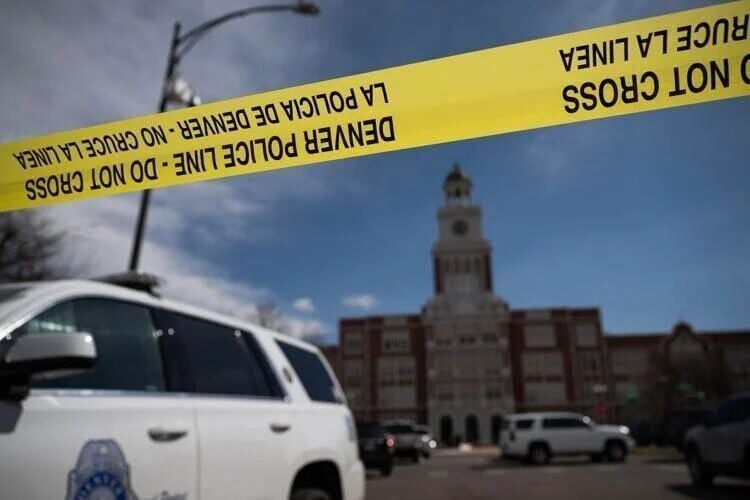
FILE PHOTO: Denver police surround the city’s East High School after a shooting Wednesday.
The Denver Gazette

FILE PHOTO: Denver police surround the city’s East High School after a shooting Wednesday.
The dog arrived on Tuesday morning and alerted to the presence of drugs. Burke applied for a warrant that afternoon and a judge signed it. Upon entering the vehicle, police found “substantial quantities” of illegal narcotics.
The defense sought to exclude the evidence from trial, arguing police waited longer than necessary to obtain the search warrant. At a hearing, District Court Judge Adam J. Espinosa agreed the delay from Saturday to Tuesday violated Mills’ Fourth Amendment right against unreasonable searches and seizures.
The prosecution appealed to the state Supreme Court, arguing Burke’s decision to wait for a dog sniff before obtaining a search warrant was reasonable.
“We do want police to be careful. We don’t want to penalize them for doing further investigation,” said Deputy District Attorney Ellen Michaels. “He certainly could have done this faster. He could have been sloppier about it. We don’t want that.”
“Had there been no dog sniff there probably would have been a question about why there wasn’t a dog sniff,” added Justice William W. Hood III.
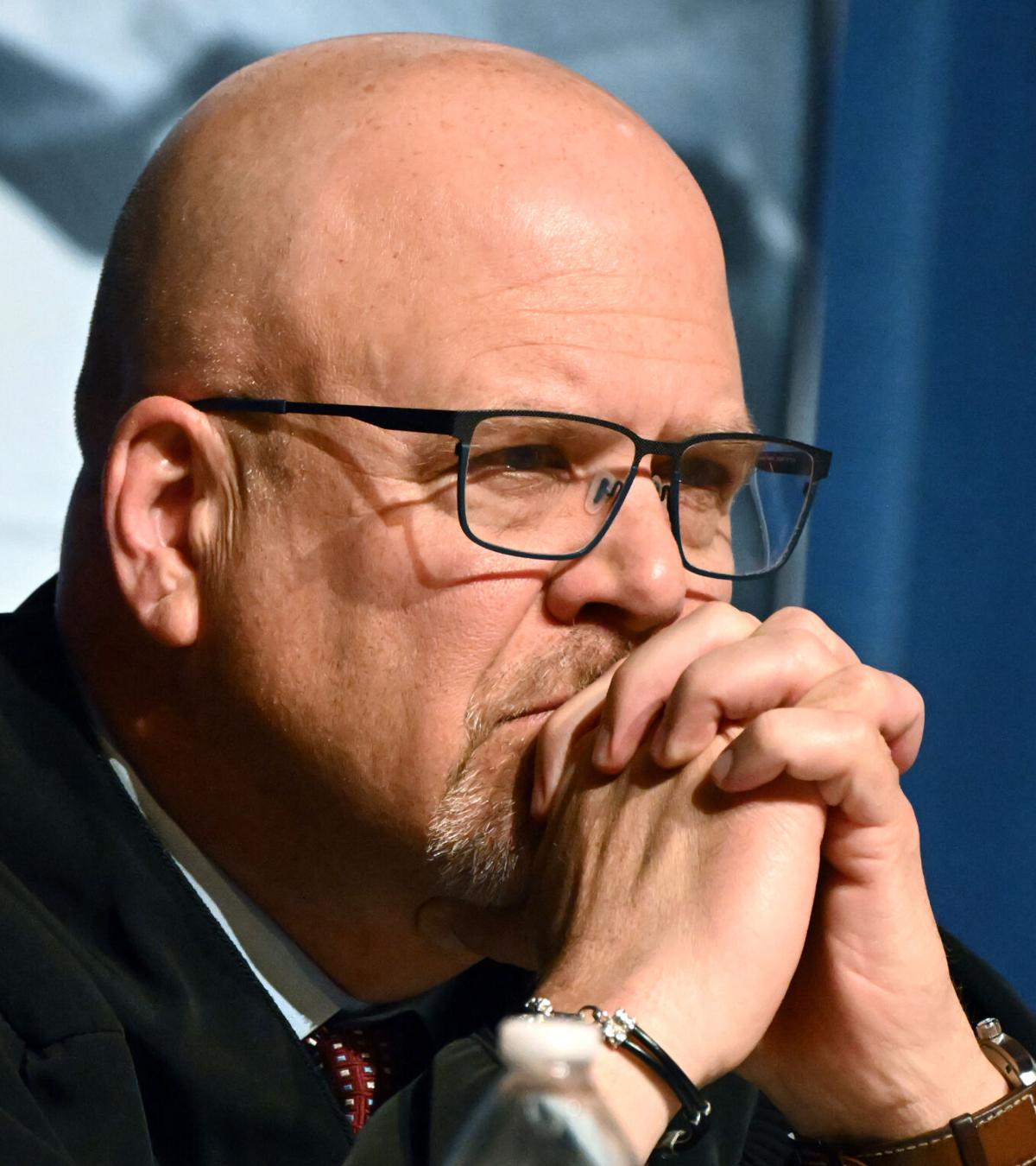
Justice William W. Hood III listens during oral arguments at the Colorado Supreme Court's "Courts in the Community" event on May 9, 2024 at Central High School in Pueblo. (Photo by Jerilee Bennett, The Gazette)

Justice William W. Hood III listens during oral arguments at the Colorado Supreme Court’s “Courts in the Community” event on May 9, 2024 at Central High School in Pueblo. (Photo by Jerilee Bennett, The Gazette)
Justice Richard L. Gabriel acknowledged the cautious approach seemed reasonable, but so did the defense’s argument that police appeared to be in no hurry following Mills’ arrest. Plus, Burke believed a seven-day period applied to search the car, which Michaels admitted was not the law.
“This was not a model of police conduct here,” Gabriel said. “I don’t suggest bad faith in the least, but it sounds like the detective misunderstood the law, thought he had seven days, no one thought they could get a warrant over the weekend — that’s not great.”
Justice Melissa Hart noted that while the car was valuable to Mills, its value did not decrease during the time police impounded it, nor could Mills have legally driven it anyway.
“Are you suggesting you would not have filed this motion to suppress if the warrant had been sought on Monday afternoon and not Tuesday afternoon?” she asked.
“Would I have filed the motion? Yes. Would it have been granted? I don’t know,” replied Deputy Public Defender Christopher Smallwood.
“That’s what I’m struggling with,” said Hart. “Really, what’s the difference between Monday afternoon and Tuesday afternoon?”
The case is People v. Mills.


10th Circuit weighs Gross Reservoir expansion, judge’s ‘punishment’ of Denver Water
Michael Karlik
michael.karlik@coloradopolitics.com
Updated 11 hours ago
Members of the Denver-based federal appeals court considered on Friday whether they could intervene in an ongoing infrastructure project to enlarge a Boulder County dam after a trial judge deemed the underlying permit unlawful nearly two years ago. Denver Water...
10th Circuit upholds federal prohibition on juvenile handgun possession
Michael Karlik
michael.karlik@coloradopolitics.com
Updated 16 hours ago
The Denver-based federal appeals court concluded on Monday that Congress acted within its constitutional powers to make it a crime for juveniles to possess handguns in most instances. The decision from the U.S. Court of Appeals for the 10th Circuit...

Senate advances judicial nominee, Montezuma County judge agrees to discipline | COURT CRAWL
Michael Karlik
michael.karlik@coloradopolitics.com
Updated 20 hours ago
Welcome to Court Crawl, Colorado Politics’ roundup of news from the third branch of government. A U.S. Senate committee advanced a judicial nominee from Colorado, plus a Montezuma County judge agreed to receive discipline for his misconduct that stops short...
Judge denies Calderon injunction case against Denver, Johnston
Deborah Grigsby
deborah.smith@denvergazette.com
Updated 23 hours ago
A U.S. District Court judge has denied a preliminary injunction in the case of Jessica Calderon, the Denver city employee who won a temporary restraining order preventing the City and County of Denver from terminating her amid the 2025 citywide...
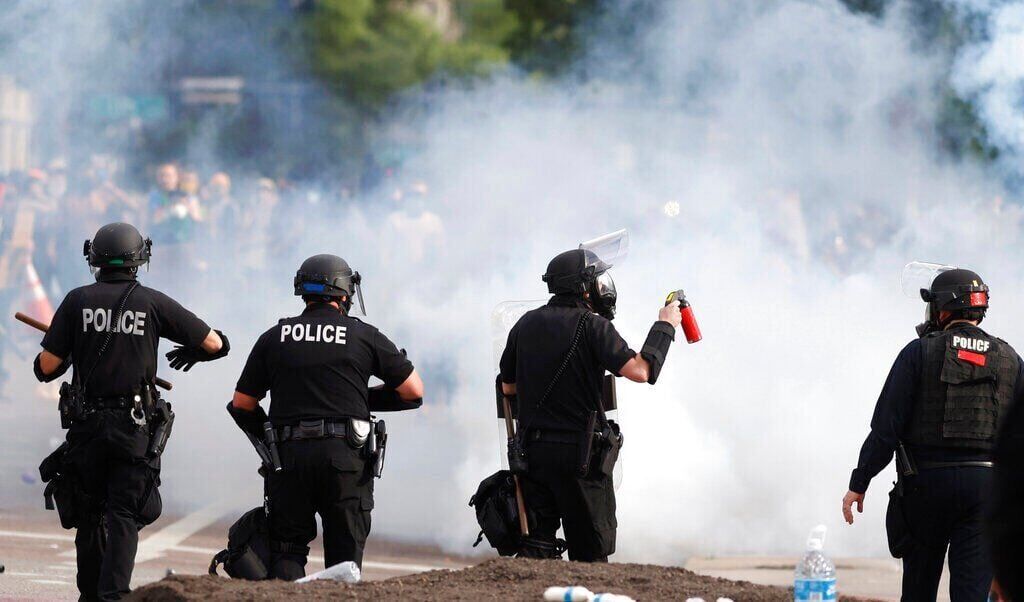
10th Circuit partially revives lawsuit over 2020 Denver protest injuries
Michael Karlik
michael.karlik@coloradopolitics.com
Updated 2 days ago
The Colorado-based federal appeals court revived a man’s claims against Denver on Friday after concluding a trial judge resolved the case in the city’s favor without analyzing two of the three instances of alleged excessive force and other constitutional violations....
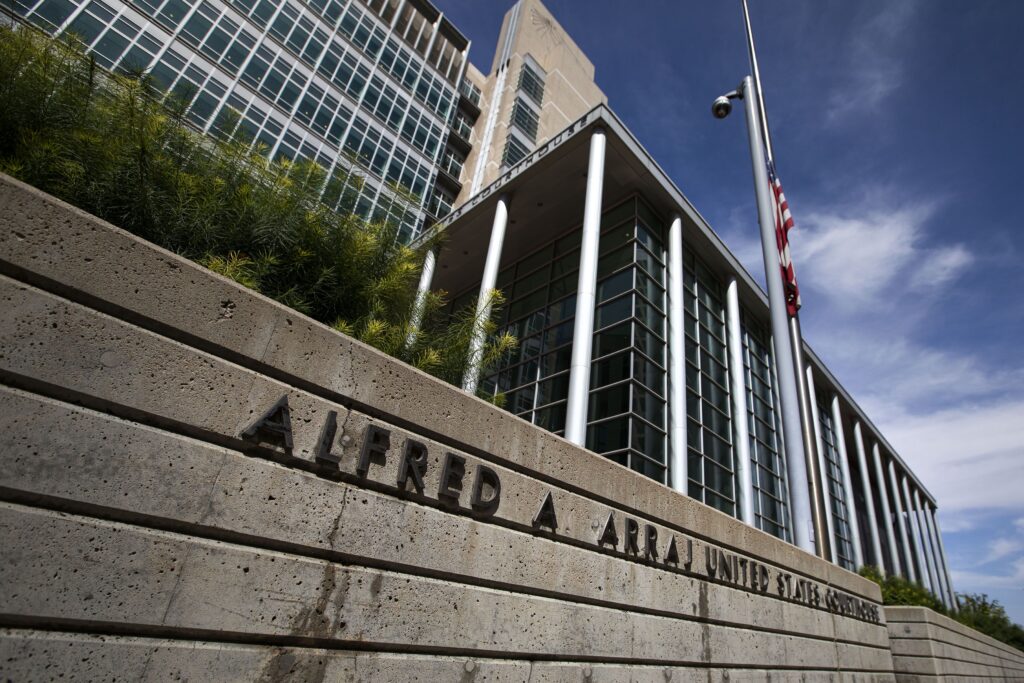
Federal judges find Colorado immigration judge violated several orders
Michael Karlik
michael.karlik@coloradopolitics.com
Updated 3 days ago
Multiple federal judges in Colorado have freed people from immigration custody after determining that one immigration judge violated their directives for properly conducting bond hearings. For nearly a year, Colorado’s U.S. District Court has faced a flood of habeas corpus petitions...

Misconduct complaints from ex-Colorado judicial discipline director dismissed against federal judges
Michael Karlik
michael.karlik@coloradopolitics.com
Updated 4 days ago
The administrative body for the Denver-based federal appeals court upheld a finding last week that misconduct complaints against Colorado’s chief federal trial judge and the chief appeals judge warranted dismissal and appeared to be a “litigation tactic” by the complaining...

First-ever Red Rocks naturalization ceremony draws most diverse group of new citizens
Michael Karlik
michael.karlik@coloradopolitics.com
Updated 3 days ago
Colorado’s federal trial court held its first-ever naturalization ceremony for nearly 300 new citizens on Thursday at Red Rocks Park and Amphitheatre. “We’re doing it to commemorate the 250th anniversary of the Declaration of Independence and the United States. Red...
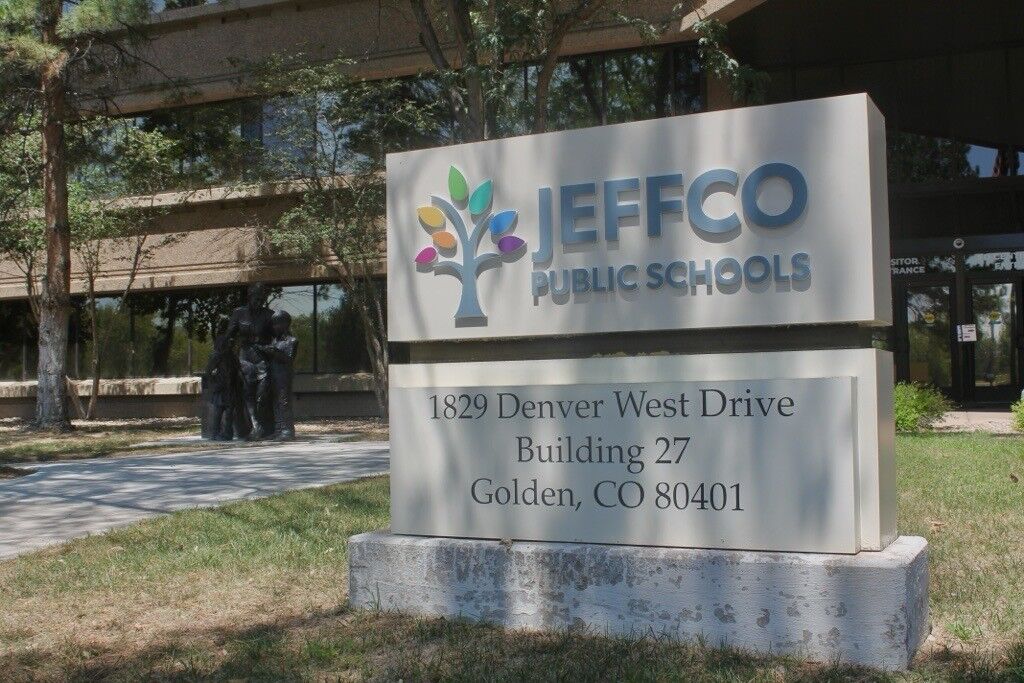
Jeffco taxpayers could be on the hook for a possible child sex assault settlement
Matt Kyle
matt.kyle@denvergazette.com
Updated 4 days ago
Taxpayers may end up on the hook for a child sexual assault settlement, possibly worth up to $15 million, after Jeffco Public Schools failed to notify its insurance company in a timely manner about the case. The incident stems from...
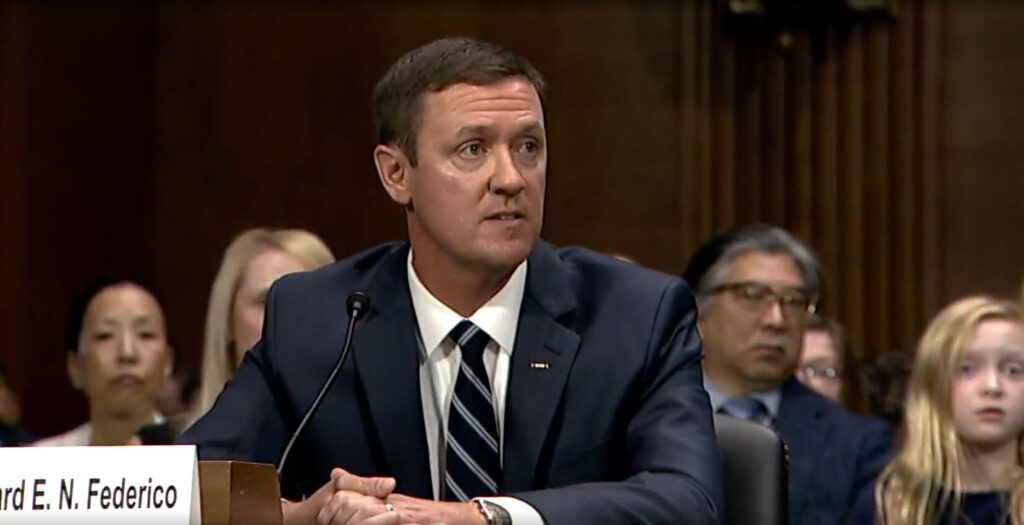
10th Circuit finds no fair housing violation by Littleton landlord for worker’s alleged rape of tenant
Michael Karlik
michael.karlik@coloradopolitics.com
Updated 20 hours ago
The Denver-based federal appeals court concluded on Monday that Littleton’s housing authority could not be held liable for a maintenance worker’s alleged rape of a tenant, as the worker’s employment did not provide any special access to the victim. A...