

District Court dismisses lawsuit to remove road tax extension from Colorado Springs ballot
An El Paso County District Court judge this month dismissed a lawsuit that sought to remove the so-called 2C road tax question from Colorado Springs’ November ballot.
Douglas Bruce, the author of Colorado’s Taxpayer’s Bill of Rights amendment, filed a three-page civil lawsuit against the city of Colorado Springs in late September, alleging the city violated TABOR requirements a dozen times in its approved ballot language for ballot issue 2C that asks to extend a dedicated sales tax for local road maintenance.
TABOR author sues Colorado Springs, seeks removal of road tax extension question on November ballot
On Nov. 5, voters will ultimately decide whether to extend the current 0.57% temporary sales and use tax for the next 10 years, from 2026 through the end of 2035. The 2C tax equates to 5.7 cents on every $10 purchase. The current tax is scheduled to sunset Dec. 31, 2025.
In a four-page order dated Oct. 10, district court Judge David S. Prince found a Colorado Supreme Court decision in a 2006 appeals case that applied to Bruce’s legal claim against the 2C ballot language.
In the 2006 case, Bruce sued Colorado Springs, similarly arguing the city’s language in an April 2003 ballot question to extend a sales and use tax for Trails, Open Space and Parks violated TABOR requirements. The state Supreme Court ultimately disagreed with Bruce, court documents show.
“This court, as a trial court, is bound by appellate court precedent and has not been presented with sufficient basis for finding a reason that would permit it to vary from that precedent. The court denies plaintiff’s TABOR challenge under the 2006 ‘Bruce’ case,” Prince wrote, in part, in his Oct. 10 order.
Election 2024: Voter Guide for El Paso and Teller counties
Ballot issue 2C: Colorado Springs voters to decide on 10-year road tax extension | Voter Guide
Though the 2C ballot language states Colorado Springs will not impose any new tax or increase the rate of any existing tax, Bruce alleged the 2C ballot issue is a tax increase because, if approved, it will increase city sales tax revenue from 2026 for 10 more years.
He estimated the sales tax revenue increase is more than $20 million in 2026, and will be more each subsequent year through 2035, plus inflation. The tax revenue increase through 2035 would exceed $250 million, he alleged.
Bruce said the 2C ballot language “egregiously” violates TABOR requirements because it does not specify, in dollars, the amount by which the city expects taxes to be increased each year if voters approve the sales tax extension.
It also does not specify the estimated or actual total, in dollars, of 2C-related fiscal year spending for 2024 and each of the past four years, or the overall percentage and dollar change, Bruce has said.
In an expedited district court hearing Oct. 4, the city’s argument that its 2C ballot language complies with TABOR requirements relied on the judgment in the 2006 Supreme Court case.
In that case, Bruce also argued that a tax extension is a tax increase. Though Bruce claimed noticing and title requirements for ballot questions proposing tax increases are also required of ballot measures proposing tax extensions, the Colorado Supreme Court in 2006 found “‘a tax extension is not a tax increase, and therefore the election notice requirements for tax increases do not apply’ to a ballot measure proposing to extend an existing sales and use tax,” the city argued in a seven-page brief dated Oct. 3.
Though Bruce argued in court Oct. 4 that the 2006 case “is wrongly decided and should be modified or set aside,” Prince wrote in his Oct. 10 order that Bruce’s “arguments for revision of the existing precedent are best made in the appellate court.”
City spokesman Max D’Onofrio said by email Monday the city had no comment on the district court’s decision, as it could still be appealed.
Fundraising for Colorado’s ballot measures picks up with less than three weeks before Election Day
Bruce did not immediately return The Gazette’s request for comment Monday.
It was unclear if he could appeal the district court’s Oct. 10 decision, but Bruce appears to be fighting 2C through a mailing campaign.
Last week, Colorado Springs residents began receiving mailers urging them to vote no on ballot issue 2C, while also supporting and opposing several other statewide ballot measures. The mailer addresses “patriots,” encouraging them to “read (the) state voter guide,” “read (the) county election notice” and “vote before Nov. 1.”
The mailers do not appear to include a notice stating they are paid for by Bruce, but voters are urged to contact an email that includes his name.
“Help us now. Want to serve on council next April? Contact us now! doug@douglasbruce.com,” the mailer states.


Right-to-natural-gas proposal in Colorado qualifies for ballot
Marissa Ventrelli
marissa.ventrelli@coloradopolitics.com
Updated 13 hours ago
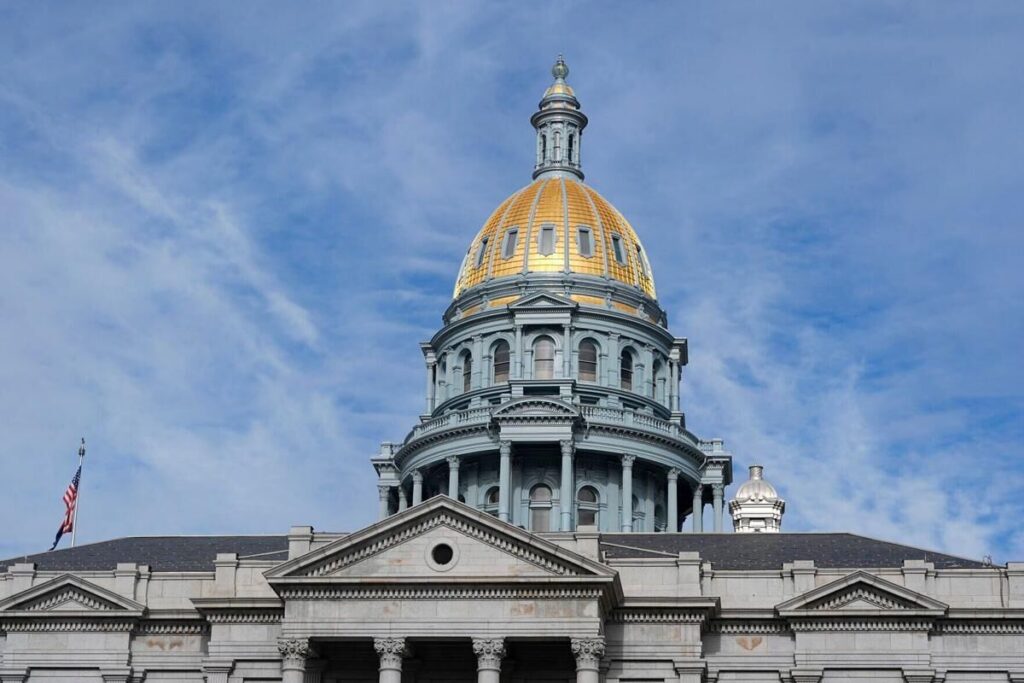
A citizen initiative that seeks to enshrine the right to natural gas has qualified for the November ballot, Colorado’s election office confirmed on Thursday. Petitions containing signatures for Initiative No. 177 were turned in to the Secretary of State’s Office for review...
What happens if voters pass Colorado’s two competing income tax measures?
Marianne Goodland
marianne.goodland@coloradopolitics.com
Updated 21 hours ago
The battle between two competing ballot measures — one seeking to cap Colorado’s income tax rate, the other pushing for a tiered system depending on income levels — might come down to whichever ballot proposal gets one more vote. The...

National House Democrats add Colorado seats held by Lauren Boebert, Jeff Hurd to target list
Ernest Luning
ernest.luning@coloradopolitics.com
Updated 2 days ago
The national House Democrats’ campaign arm on Wednesday added the Colorado congressional district held by Republican U.S. Reps. Jeff Hurd and Lauren Boebert to the list of targeted seats the party believes are vulnerable in this year’s midterms. The Democratic...
Bennet settles campaign finance complaints, admits violating state law
Marianne Goodland
marianne.goodland@coloradopolitics.com
Updated 2 days ago
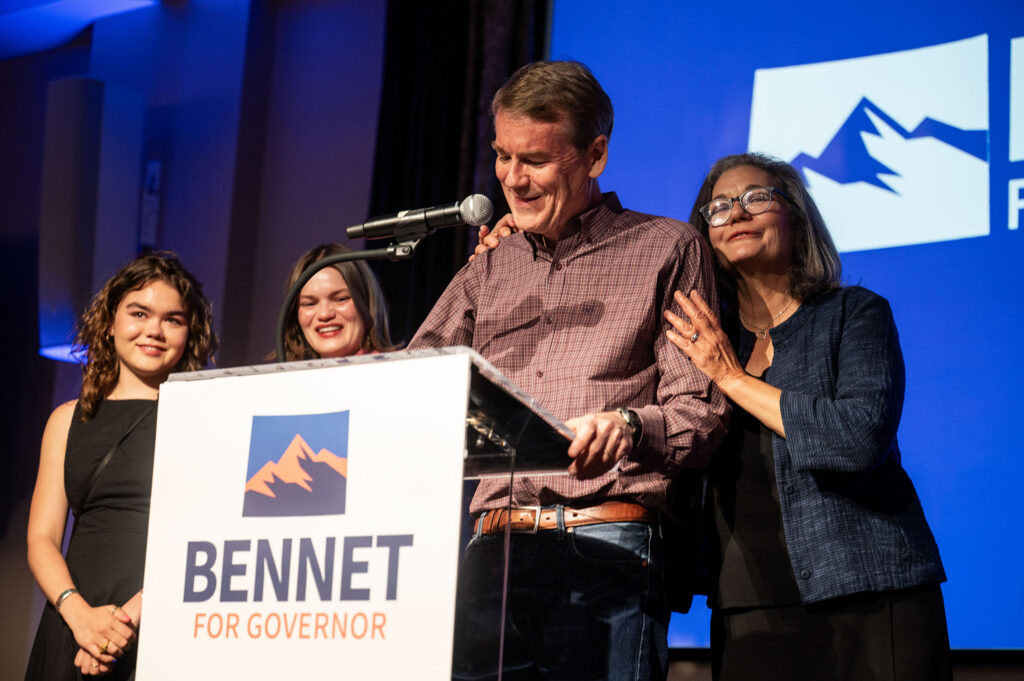
U.S. Sen. Michael Bennet’s gubernatorial campaign has agreed to pay a $7,433 fine for using his Senate campaign account to pay for gubernatorial campaign travel expenses. The July 31 settlement includes an admission by Bennet and his campaign that they...
Federal judge rejects DOJ bid to force Colorado to hand over voter information
Marissa Ventrelli
marissa.ventrelli@coloradopolitics.com
Updated 2 days ago
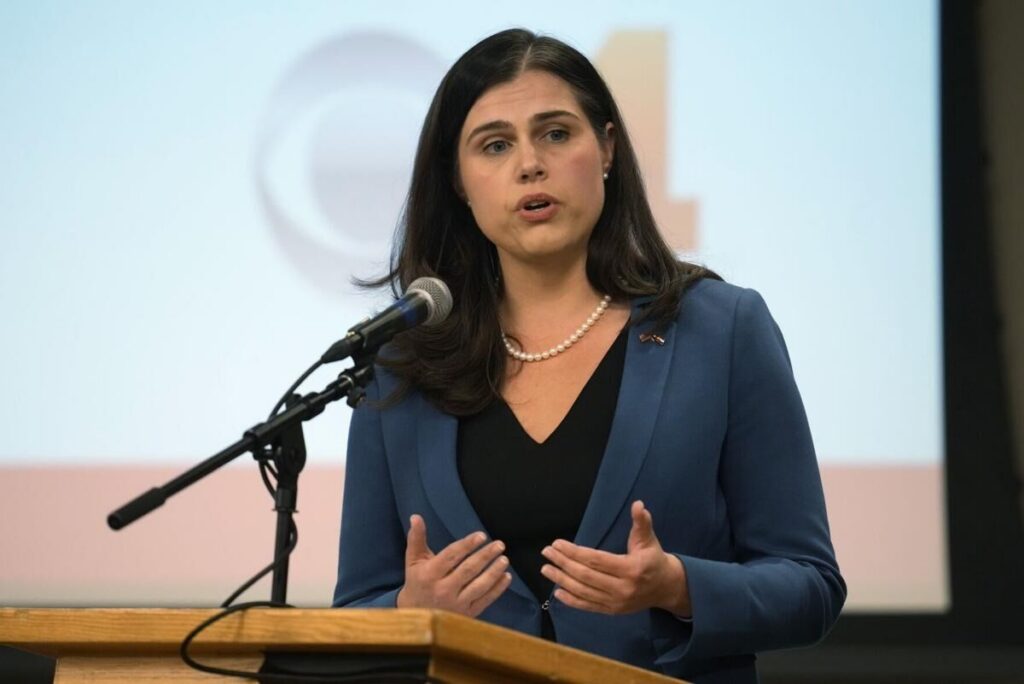
A U.S. district court judge has dismissed a lawsuit filed by the U.S. Department of Justice against Colorado Secretary of State Jena Griswold for refusing to provide the agency with personal voter information. Last December, the DOJ’s Civil Rights Division asked...

Group submits signatures for proposed Colorado graduated income tax
Marianne Goodland
marianne.goodland@coloradopolitics.com
Updated 3 days ago
The measure, which eliminates Colorado’s flat tax, is expected to raise $2 billion in new revenue The proposal to amend the Colorado constitution to change the state’s flat rate into a graduated income tax came in under the wire Monday,...

Democratic group maps out path to Colorado House and Senate supermajorities
Marissa Ventrelli
marissa.ventrelli@coloradopolitics.com
Updated 4 days ago
A national organization that works to elect Democrats to state legislatures has its sights on Colorado, unveiling a road map to establish a supermajority in both the House and Senate. Democrats have held a majority in the House since 2013...

Republican Victor Marx taps George Markert as his lieutenant governor pick in Colorado’s gubernatorial race
Ernest Luning
ernest.luning@coloradopolitics.com
Updated 7 days ago
Colorado Republican gubernatorial nominee Victor Marx named George Markert, a retired Marine colonel, as his running mate for lieutenant governor Friday morning, saying the former U.S. Senate candidate will bring “exceptional character, proven leadership and a lifetime of serving others”...
Democrat Jessica Killin’s internal poll shows dead heat with U.S. Rep. Jeff Crank in Colorado’s 5th CD
Ernest Luning
ernest.luning@coloradopolitics.com
Updated 1 week ago
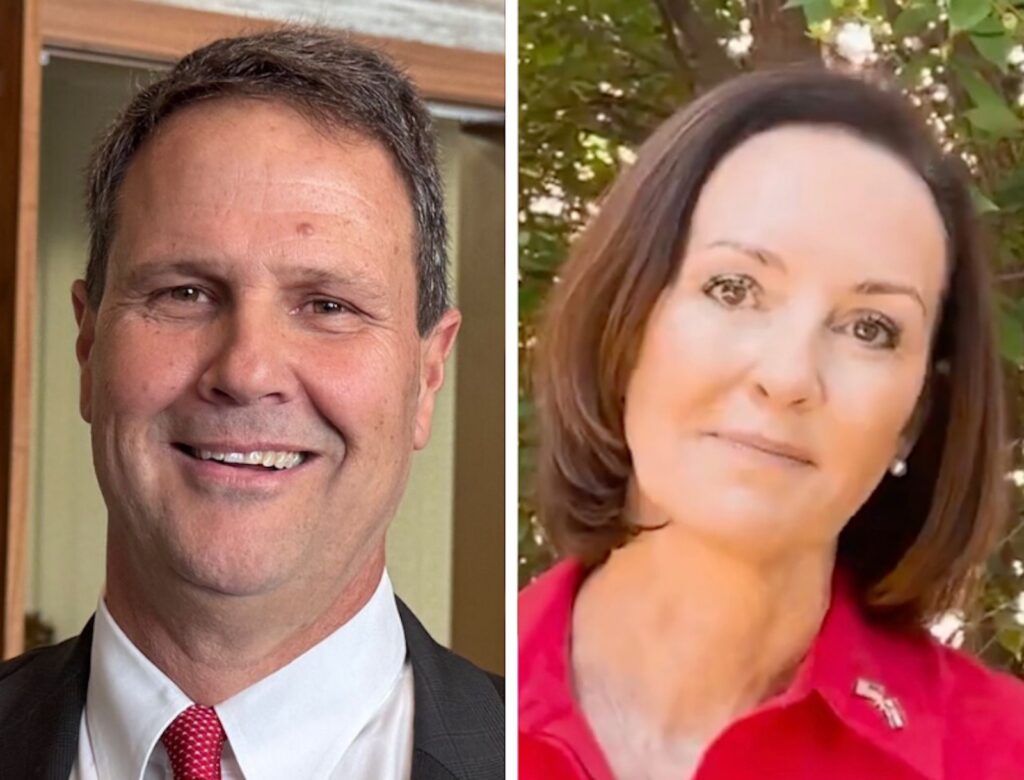
Jessica Killin, the Democratic nominee in Colorado’s 5th Congressional District, is in a statistical tie with Republican U.S. Rep. Jeff Crank, according to an internal poll released this week by Killin’s campaign. The poll of likely general election voters, conducted...
Victor Marx says he’ll only debate Phil Weiser once in Colorado governor’s race — without a moderator
Ernest Luning
ernest.luning@coloradopolitics.com
Updated 1 week ago
Colorado Republican gubernatorial nominee Victor Marx said on Tuesday that he will participate in only one debate with Attorney General Phil Weiser before the November election — and he challenged the Democratic nominee to hold the event without a moderator....