

Don’t feign compassion while harming the poor | Colorado Springs Gazette
Boulder, Longmont, Lafayette, Louisville and Erie are collectively considering an increase to the region’s minimum wage. That means politicians will feign economic compassion while jeopardizing the lowest rungs of the working poor.
As the economy suffers from three years of historically high inflation, expect more of this political pandering across Colorado — where a 2019 law allows local governments to set wages higher than the state’s minimum of $14.42.
Experience shows minimum wage laws help a fortunate few, while pricing out the lowest-paid workers when employers lay them off, cut back hours or automate labor.
Harvard Business Review studied 5,000 employees and found that “for every $1 increase in the minimum wage … the average number of hours each worker worked per week decreased by 20.8%.”
Stay up to speed: Sign up for daily opinion in your inbox Monday-Friday
The study found “the total wage compensation of an average minimum wage worker” in California fell by 13.6%” after the state last raised the minimum.
It gets worse, the study says, because “for every $1 increase in minimum wage, the percentage of workers working more than 20 hours per week (eligible for retirement benefits) decreased by 23%, while the percentage of workers with more than 30 hours per week (eligible for health care benefits) decreased by 14.9%.”
“This suggests that as minimum wage increases, firms may strategically adjust their scheduling practices to reduce the number of workers eligible for benefits: Our estimates suggest that the average store in our California data set recouped approximately 27.5% of the increase in its wage costs through savings associated with reducing benefits.”
Harvard researchers found that a $1 wage increase causes average annual net wage losses of at least $1,590 for each employee. The report blames minimum wage increases for people working part time who need to work full time.
Reduced hours, the report found, “reduce workers’ motivation, reduce workers’ ability to develop skills through on-the-job experience, reduce firms’ ability to attract and retain high performers, and increase turnover.”
The Bureau of Labor Statistics reports employers fund rising wage mandates by offering “less generous health insurance, pensions, and amenities; and replacement of lower skilled minimum wage earners with higher skilled workers or with technology.”
The Congressional Budget Office reports a federal minimum wage increase would “lift some families out of poverty — but doing so would cause other low-wage workers to become jobless, and their family income would fall.”
The Congressional Budget Office estimates a gradual federal increase to $17 an hour would cost the country nearly a million jobs by 2029.
It is hard for average wage earners to live in metro Boulder, Longmont and suburbs where modest two- and three-bedroom homes often list for $1 million and up.
“The typical schoolteacher or firefighter can’t afford a home in Boulder anymore,” said Duane Duggan, a real estate agent and sales manager for Re/Max of Boulder, in a radio interview about Boulder winning first place in the U.S. News & World Report’s “Best Places to Live in the U.S.” in 2022.
Raising the minimum wage would exacerbate this elite exclusivity. In addition to reducing employee hours and benefits, the Bureau of Labor Statistics reports that employers afford wage mandates by raising prices on what they sell.
“Minimum wage hikes can be regressive because a large proportion of low-income households’ budgets go toward products and services made by minimum wage workers,” the Bureau of Labor Statistics website states.
A look at fresh employment ads suggests typical employers in Boulder and other Front Range cities pay considerably more than the state minimum wage for unskilled labor. Raising wages by fiat will signal compassion, while causing real harm to those who can least afford it.
Colorado Springs Gazette Editorial Board

Colorado must continue finding common ground on wildfire policy | GUEST COLUMN
Colorado Politics
colorado-politics@coloradopolitics.com
Updated 19 hours ago
By John Herrick Colorado has never lacked for opinions about wildfire policy. We debate forest management, climate change, prescribed burns, land use, air quality and budgets. Those debates are familiar territory, but a new discussion is beginning to happen around...

Proposition NN is the best investment for Colorado’s students and schools | GUEST COLUMN
Colorado Politics
colorado-politics@coloradopolitics.com
Updated 19 hours ago
By Justin Ogden Colorado families know what it means to make difficult budget decisions. Inflation has driven up the cost of groceries, housing, utilities and just about everything else. Families like mine work hard to stretch every dollar while still...
Were the primaries a preview for consequential general election? | Paula Noonan
Paula Noonan
paula-noonan@coloradopolitics.com
Updated 2 days ago
Colorado’s political future will go the way of this election. Historically, the state has not had both chambers controlled by a supermajority. This election may change that. The primaries suggest how the general election may play out. Democrats had solid...
Disagreement doesn’t have to mean disrespect | GUEST COLUMN
Colorado Politics
colorado-politics@coloradopolitics.com
Updated 2 days ago
By Vincent Atchity These days, it doesn’t take long to feel overwhelmed by politics. Turn on the news, scroll through social media or read the comments on almost any political post and you’ll find anger, outrage and personal attacks. For...
Keeping Colorado’s kids’ trust online | PODIUM
Colorado Politics
colorado-politics@coloradopolitics.com
Updated 3 days ago
By Stuart Jenkins Almost every day, the kids and teens we serve across Colorado are introduced to new generative artificial intelligence and other emerging technology, including conversational AI systems designed to simulate human conversation. These tools are no longer a...
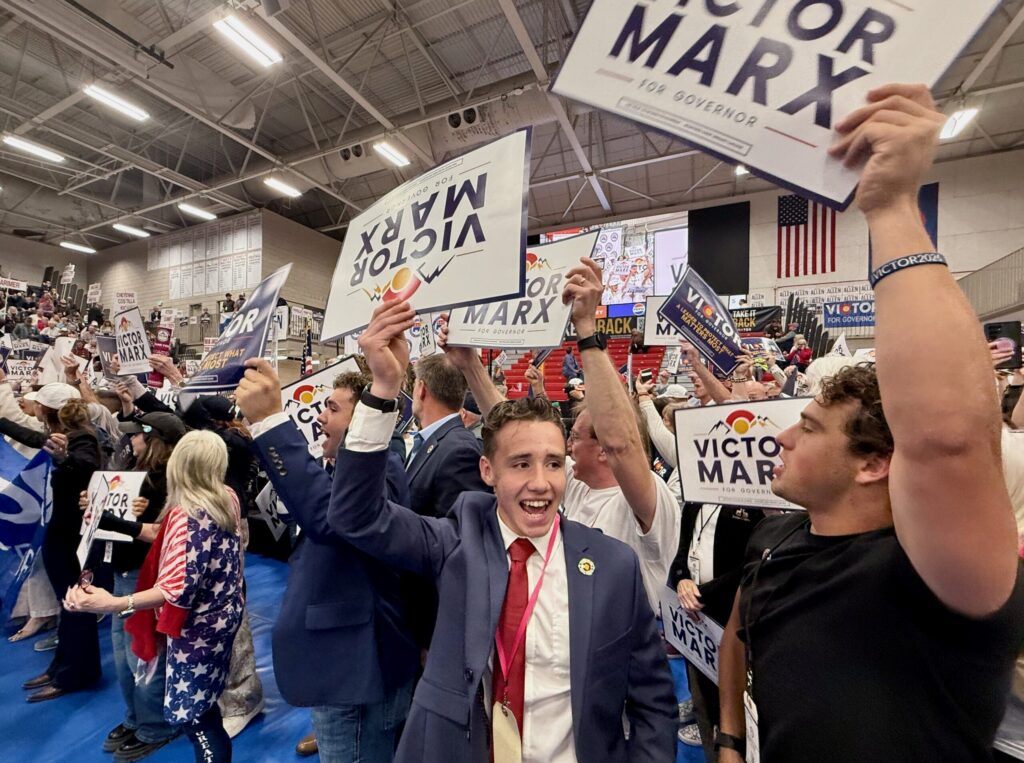
Marx’s ‘through line’ predates Trump, connects to Maes | FEEDBACK
Colorado Politics
colorado-politics@coloradopolitics.com
Updated 3 days ago
Eric Sondermann is of course correct Victor Marx is an unserious, unelectable, embarrassing Republican nominee for governor of Colorado. But I respectfully submit that the “through line,” as Mr. Sondermann describes it, is not from Trump to Marx, despite their...

Cedric Pride’s blueprint for opportunity through the trades | The OpEdge Podcast
Tony Olivero
tony.olivero@gazette.com
Updated 3 days ago
Cedric Pride, CEO of the nonprofit Pride Initiative in Denver, joins The OpEdge with a blueprint for workforce development, skilled trades, and economic opportunity. Pride tells host and investigative columnist Jimmy Sengenberger why he believes the trades offer a path...
Colorado’s No. 1 education ranking should raise our ambition | GUEST COLUMN
Colorado Politics
colorado-politics@coloradopolitics.com
Updated 3 days ago
By Scott Laband Colorado has earned the right to celebrate its new No. 1 ranking in education from U.S. News & World Report. Gov. Jared Polis called it “one of the proudest moments” of his time in office and shared the...

Colorado’s No. 1 education ranking reflects the power of school choice | GUEST COLUMN
Colorado Politics
colorado-politics@coloradopolitics.com
Updated 4 days ago
By Peter Mason Colorado is now the No. 1 state in the nation for education, according to the 2026 U.S. News & World Report Best States rankings. That is a distinction worth celebrating. It is also a distinction worth understanding....
Courageous Colorado bucks Trump’s federal stupidity | Miller Hudson
Miller Hudson
miller-hudson@coloradopolitics.com
Updated 4 days ago
There are several theories regarding the rhythm of American politics. The most frequently cited is the pendulum hypothesis — positing that episodes of liberal dominance are then interrupted by spans of conservative control. Since Ronald Reagan’s presidential election in 1980,...