

Federal judge presses Denver on police response to 2020 protests
A federal judge on Thursday heard arguments in the City and County of Denver’s attempt to end a set of legal claims against it stemming from the police response to 2020 protests, which injured eight participants and allegedly violated their constitutional rights.
Multiple cases remain pending against Denver or individual police officers four years after a Minneapolis officer killed George Floyd in May 2020, sparking international demonstrations. Plaintiffs have lodged claims of excessive force and retaliation for exercising their First Amendment right to protest.
U.S. District Court Judge Daniel D. Domenico, in weighing whether a jury should hear the claims of seven people who were shot by projectiles and subjected to tear gas — plus one man who was arrested for being out after curfew — noted Denver’s forceful response to violent agitators had affected peaceful protesters, too.
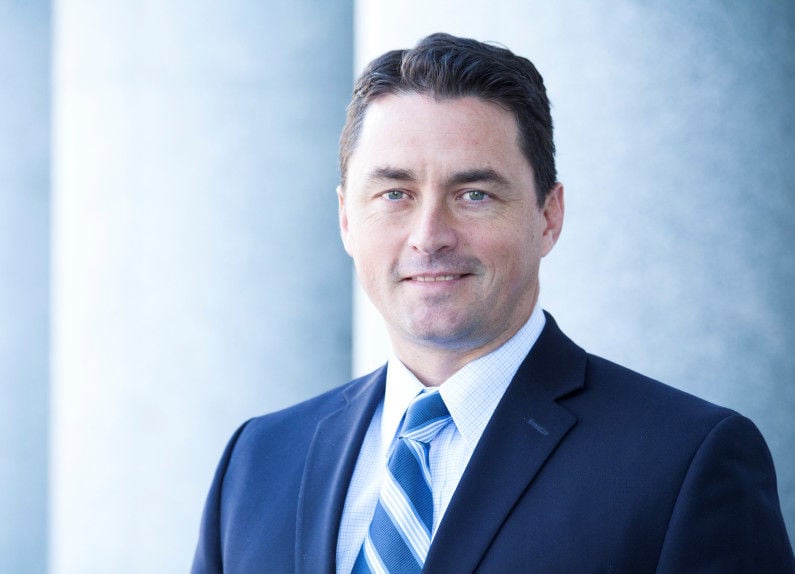
Daniel Domenico.
Colorado Politics file

Daniel Domenico.
“These plaintiffs were innocent people who weren’t engaged in any of the behavior that really caused the problems. They all suffered — some of them significant — injuries,” he said. “From the city’s perspective, I get that they have damage to prevent, order to preserve. … But why shouldn’t the city, if it’s gonna take a fairly aggressive approach, deal with the fact that that aggressive approach is gonna end up injuring innocent people? Why shouldn’t the city just be liable for that?”
“From a philosophical perspective, I don’t disagree,” responded attorney Andrew D. Ringel for Denver.
Numerous federal judges in Colorado have handled cases arising from the 2020 protests, beginning as soon as the police response turned forceful. U.S. District Court Senior Judge R. Brooke Jackson, after several days of demonstrations, handed down a temporary restraining order placing limits on law enforcement’s use of projectiles and chemical agents.
Since then, Jackson also presided over a jury trial that culminated in a $14 million award to plaintiffs injured by excessive force. In March, U.S. District Court Judge Nina Y. Wang green-lit a jury trial for 13 more plaintiffs and U.S. Magistrate Judge Kathryn A. Starnella followed suit with a freelance photographer who was arrested during the curfew.
The city has also approved millions of dollars in settlements stemming from its arrests for curfew violations and the use of crowd control tactics allegedly without warning.
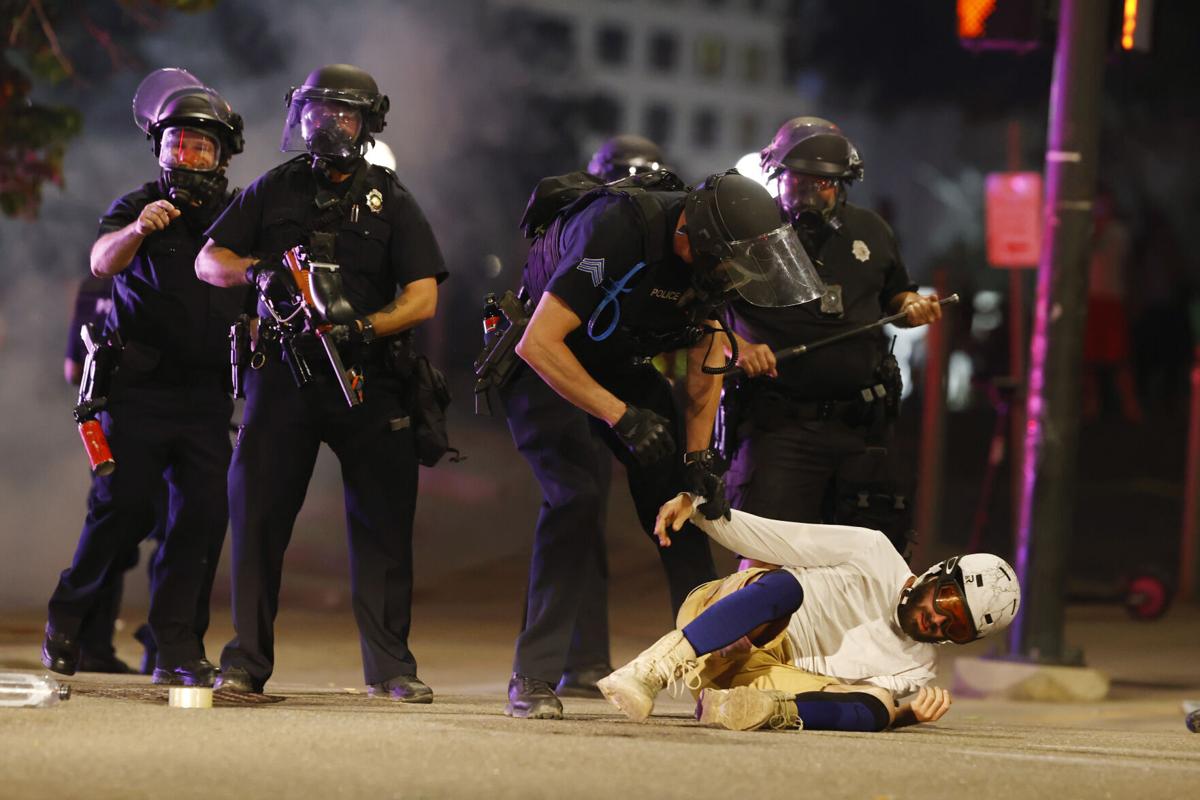
Denver Police Department officers clear a man who fell to the street after they used tear gas and rubber bullets to disperse a protest outside the State Capitol over the death of George Floyd, a handcuffed black man who died in police custody in Minneapolis, late Thursday, May 28, 2020, in Denver. (AP Photo/David Zalubowski)
David Zalubowski

Denver Police Department officers clear a man who fell to the street after they used tear gas and rubber bullets to disperse a protest outside the State Capitol over the death of George Floyd, a handcuffed black man who died in police custody in Minneapolis, late Thursday, May 28, 2020, in Denver. (AP Photo/David Zalubowski)
In the case before Domenico, the plaintiffs sued the city itself for their injuries under the theory that Denver’s own policies or customs were behind officers’ alleged violations of their constitutional rights. Attorneys for the plaintiffs argued the policies at issue were, among other things, the non-use of body-worn cameras, the effective anonymity Denver police were afforded through face shields and riot gear, and the failure to file incident reports after using force.
“I think those policies certainly cause the injuries. They certainly promote bad behavior. Anonymity promotes bad behavior, I think,” said lawyer S. Birk Baumgartner.
Domenico observed the two sides had presented different narratives around the use of force, with Denver arguing its officers needed to respond to vandalism and violence and the plaintiffs insisting the force was “indiscriminate.”
“I’ll say this: I certainly don’t think there’s any real evidence, or any evidence at all that I’m aware of, your clients were doing anything other than peacefully protesting,” Domenico acknowledged. “But I don’t think the evidence is entirely consistent with the idea that the entire protest, that there was no destructive activity or violent activity.”
That is true, acknowledged Baumgartner, adding that if one person out of 1,000 chose to throw a rock at police, it would not give officers license to open fire on the entire crowd.
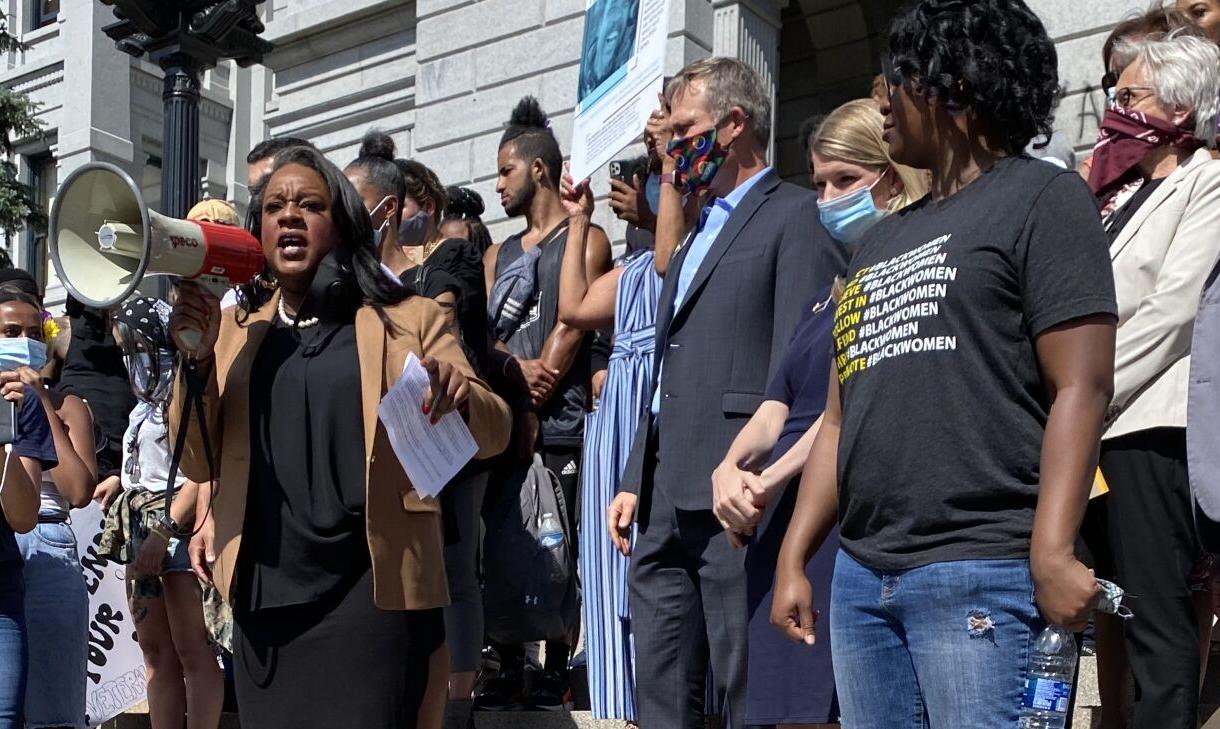
Rep. Leslie Herod, D-Denver, surrounded by family members of men who died at the hands of law enforcement, discusses her proposed bill on police accountability to a crowd assembled at the capitol to protest the death of Minneapolis man George Floyd.
Carol McKinley, special to Colorado Politics

Rep. Leslie Herod, D-Denver, surrounded by family members of men who died at the hands of law enforcement, discusses her proposed bill on police accountability to a crowd assembled at the capitol to protest the death of Minneapolis man George Floyd.
Domenico noted the plaintiffs had a difficult task of citing a policy or custom motivating the officers’ alleged constitutional violations because the protests “seem to be a one-off situation in a number of ways.”
However, “do you think the actions being challenged here were consistent or inconsistent with Denver policy?” he asked Ringel.
Ringel believed the police’s “overall response” followed Denver’s policies. But he also urged Domenico to recognize the chaotic circumstances police were responding to.
“I agree with you there’s a real danger in this case and in a lot of our cases of courts, in the comfort of our courtroom years later, second-guessing things with the benefit of hindsight,” said Domenico. At the same time, he suggested municipalities should know there will likely be agitators at any law enforcement protest.
“If you want to make sure your officers don’t do anything in these circumstances they shouldn’t do, tell them you’ve got to have your cameras on all the time, you have to be identifiable, you have to file your reports immediately,” he said. “If the policy was to not do those things, why isn’t it an appropriate inference that, actually, the official policy was, ‘We know there are gonna be some overreactions, but we’re okay with that’?”
The case is Barbour et al. v. City and County of Denver et al.

10th Circuit sympathetic to Colorado consumer protection law governing interest rates
Michael Karlik
michael.karlik@coloradopolitics.com
Updated 17 hours ago
Members of the Denver-based federal appeals court appeared sympathetic on Tuesday to Colorado’s assertion that it can lawfully require certain out-of-state banks to abide by the state’s own ceilings on interest rates when they lend to consumers in Colorado. The...
Colorado justices to decide insurance companies’ obligation to disclose relevant policies
Michael Karlik
michael.karlik@coloradopolitics.com
Updated 3 hours ago
The Colorado Supreme Court announced on Monday that it will decide whether an insurance company violated state law by withholding an at-fault driver’s policy for nearly a year when there was no dispute that the policy was not in effect...

Judicial performance evaluations released, Montezuma County judge disciplined | COURT CRAWL
Michael Karlik
michael.karlik@coloradopolitics.com
Updated 2 days ago
Welcome to Court Crawl, Colorado Politics’ roundup of news from the third branch of government. Colorado’s citizen-led judicial performance commissions released their voter narratives for the judges standing for retention in November, plus a disciplinary panel imposed consequences on a...
DA justifies CSPD officers in fatally shooting man at McDonald’s
Cleo Westin
cleo-westin@coloradopolitics.com
Updated 19 hours ago
The deadly shooting of a man by Colorado Springs police officers at a McDonald’s was ruled justified by the 4th Judicial District Attorney’s Office on Monday, the office announced in a news release. The ruling determined officers Daniel White, Mitchell...
Federal judge holds off on dismissing formerly bankrupt medical contractor from Jeffco jail death lawsuit
Michael Karlik
michael.karlik@coloradopolitics.com
Updated 15 hours ago
A federal judge declined on Monday to dismiss the formerly bankrupt medical contractor from a lawsuit over a detainee’s death in Jefferson County jail, but indicated she would do so if the plaintiffs’ attorneys go through the process to ensure...
Castle Rock caregiver sentenced after stealing more than $110,000 in jewelry from family
Nicholas Fogleman
nicholas.fogleman@denvergazette.com
Updated 21 hours ago
A judge sentenced a Castle Rock caregiver to 90 days in jail after she pleaded guilty to stealing more than $110,000 worth of jewelry from the family of a disabled son under her care. Elsa Montejo-Fuentes, 32, had worked for...
Federal judge green-lights excessive force, retaliation claims for trial against Fort Collins officers
Michael Karlik
michael.karlik@coloradopolitics.com
Updated 3 days ago
A federal judge green-lit a jury trial last week against multiple Fort Collins police officers on claims that they used excessive force on one man who was standing unarmed in his underwear, and retaliated against another man for exercising his...

10th Circuit revives wage violation lawsuit against Papa John’s operator
Michael Karlik
michael.karlik@coloradopolitics.com
Updated 4 days ago
The Denver-based federal appeals court on Tuesday reinstated a former Papa John’s delivery driver’s lawsuit alleging violations of federal and state wage law. Steve Mighell worked for one month at a Denver Papa John’s location in summer 2023. He alleged...
Colorado appeals judge’s delays in releasing opinions noted by performance commission
Michael Karlik
michael.karlik@coloradopolitics.com
Updated 4 days ago
The citizen-led performance commission that provides guidance to voters about whether to retain members of Colorado’s second-highest court raised concerns by judges and attorneys that Judge Elizabeth L. Harris sometimes struggles with releasing opinions promptly. Harris, who joined the Court...
Colorado judge explores sanctions against DOJ, ICE for rearresting man 4 days after release on bond
Michael Karlik
michael.karlik@coloradopolitics.com
Updated 5 days ago
A federal judge in Colorado is considering sanctions against the government after immigration agents rearrested a man four days after an immigration judge found him suitable for release on bond. On July 28, U.S. Magistrate Judge N. Reid Neureiter ordered...