

Is Colorado’s Supreme Court about to kill implicit bias reform?
Last year, the Colorado Supreme Court indicated it would first decide a handful of pending cases alleging racial bias in jury selection before it took action on a proposal that would make it more difficult for prosecutors to remove jurors of color for reasons that, while not explicitly racial, nonetheless correlate to race.
On Monday, the justices issued decisions in two of the racial bias cases and, in a set of majority and concurring opinions, telegraphed their appetite for rewriting the rules of jury selection was gone. Not only did the court conclude prosecutors may use a juror of color’s negative experiences with police as a justification for excluding them — contrary to the spirit of the proposed rule change — but it suggested the legislature was the real entity that needed to solve the problem.
“I am doubtful that the court will do anything,” said Joyce Akhahenda, a public defender and executive board member of the Sam Cary Bar Association, a professional group for Black lawyers. “The length of time it was taking for a decision on the rule change was already raising red flags that it was not going to be a positive outcome.”
Underlying the effort to address racial bias in jury selection is a nearly 40-year-old U.S. Supreme Court decision, Batson v. Kentucky, which deemed purposeful racial discrimination in jury selection unconstitutional. Now, if a party — typically the prosecution — dismisses a juror of color, the defense may raise a “Batson challenge,” forcing the prosecutor to justify the dismissal with a “race-neutral” reason.

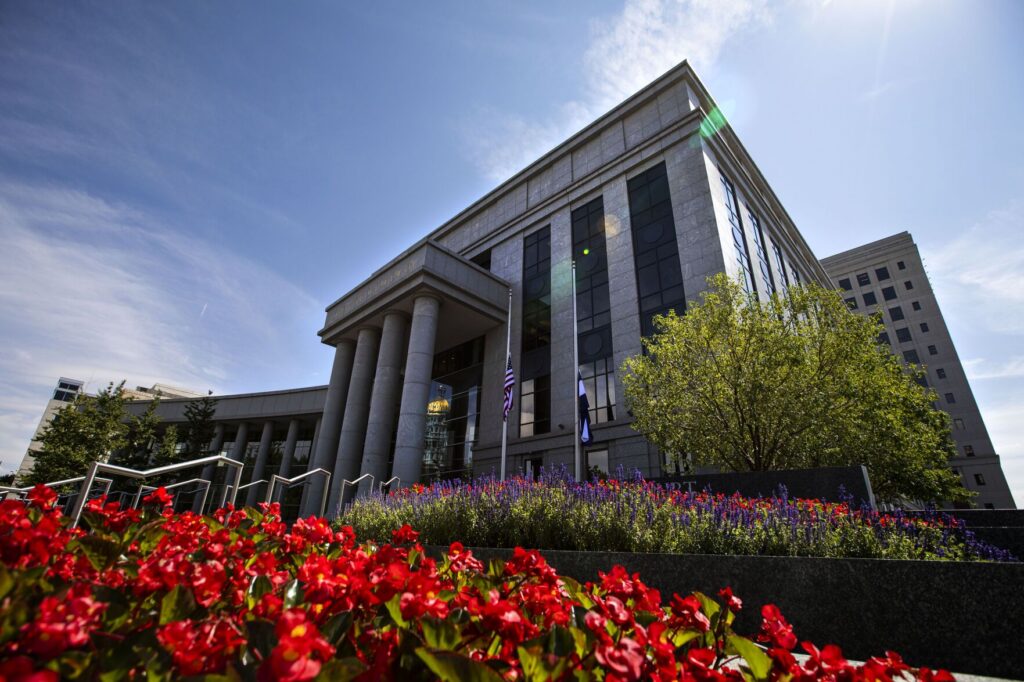
Light illuminates part of the Supreme Court building Wednesday on Capitol Hill in Washington.
the associated press

Light illuminates part of the Supreme Court building Wednesday on Capitol Hill in Washington.
Last February, the state Supreme Court held a hearing on a proposed change to criminal Rule 24 governing jury selection. As introduced, it would reduce less obvious forms of exclusion that are not explicitly linked to a person’s race — for example, dismissing a juror of color for expressing distrust of police, living in a “high-crime neighborhood,” or having prior contact with law enforcement. The rule would also create restrictions on removing jurors for their demeanor — like when an El Paso County prosecutor dismissed a Black woman who allegedly had a “sour look on her face.”
District attorneys voiced opposition, deriding it as “affirmative action in jury selection” and warning that prosecutors could be afraid to strike jurors of color. Defense attorneys and some trial judges spoke in support, telling the justices about their own examples of bias under the current system.
Rule change on thin ice
With the Supreme Court’s two decisions on Monday, however, the justices appeared to retreat from one of the major components of the rule change. They decided that striking jurors of color for voicing distrust of police was an acceptable, race-neutral explanation.
Justice William W. Hood III listed the other states that have enacted similar rules against implicit bias, but he implied the most viable path for combating discrimination was to abolish “peremptory challenges,” which enable attorneys to strike jurors without giving an explanation — unless there is a Batson challenge.
Justice Monica M. Márquez, writing in a three-justice concurrence, more directly endorsed eliminating peremptory challenges as the right answer. In doing so, she passed the responsibility of addressing discrimination back to lawmakers, who previously asked the court to exercise its rulemaking power to address implicit bias.
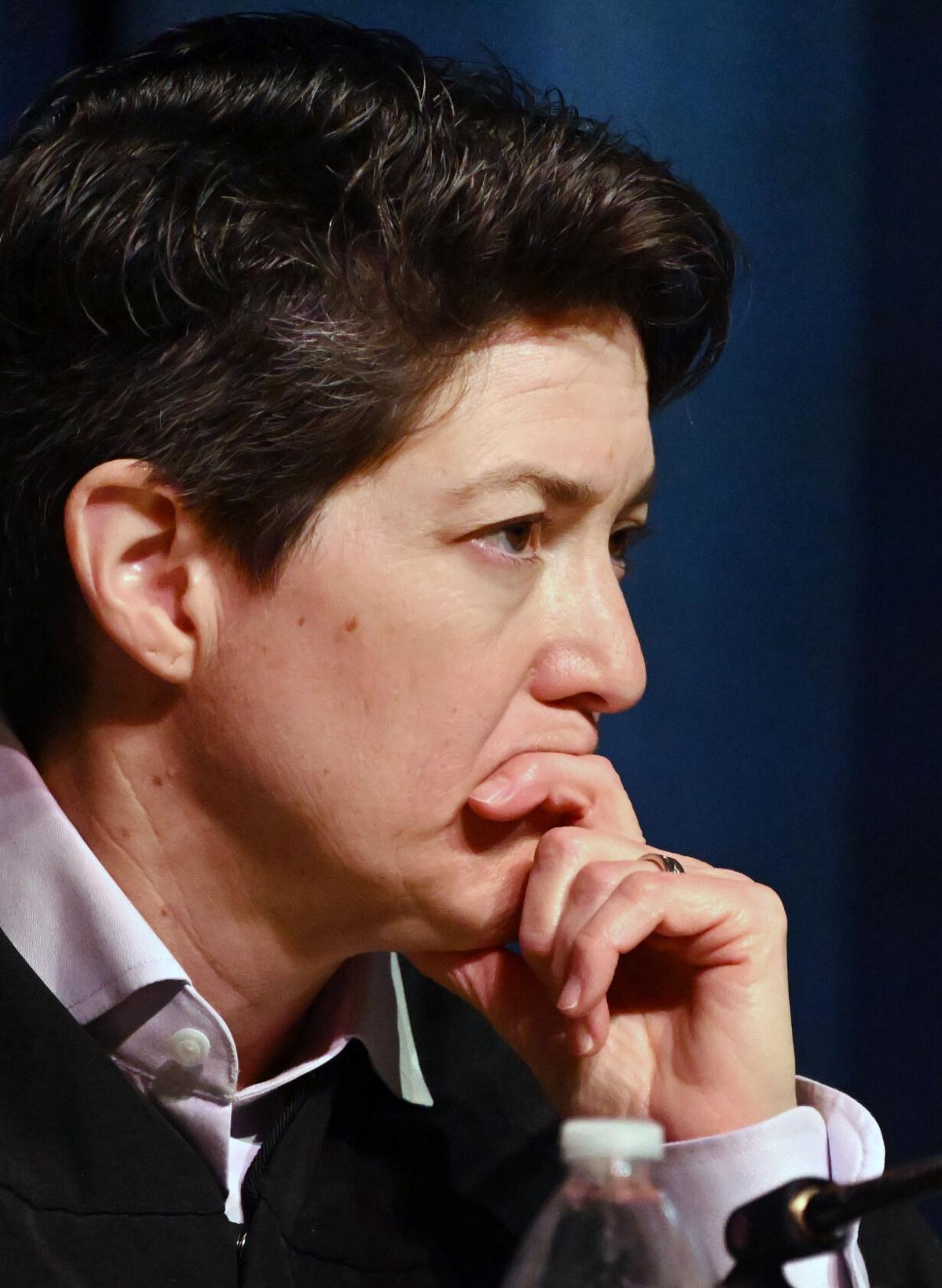
Justice Monica M. Márquez listens during oral arguments at the Colorado Supreme Court's "Courts in the Community" event on May 9, 2024 at Central High School in Pueblo. (Photo by Jerilee Bennett, The Gazette)

Justice Monica M. Márquez listens during oral arguments at the Colorado Supreme Court’s “Courts in the Community” event on May 9, 2024 at Central High School in Pueblo. (Photo by Jerilee Bennett, The Gazette)
The Supreme Court’s finger pointing to the legislature triggered frustration among some proponents of the stalled implicit bias rule change.
“Deferring to the legislature likely means that nothing will change. I am not aware of any state that has, by legislation, eliminated peremptory challenges,” said Robert S. Chang, executive director of the Seattle-based Fred T. Korematsu Center for Law and Equality. “I do not have confidence that a legislature will institute this reform, as legislators will be lobbied by certain attorney associations because many lawyers believe, wrongly, that they are good bias detectors.”
Emma Mclean-Riggs, senior staff attorney at the ACLU of Colorado, cautioned against eliminating peremptory challenges outright, calling them a way for defendants to remove potentially biased jurors even if a trial judge did not believe they should be dismissed for cause.
“The opinions raise some concern that the court may be less likely to pursue implicit bias reform, but our hope is that the court will turn toward directly addressing the rampant racial discrimination in jury selection in our state and immediately use all tools available to address it,” she said. “The court can and should institute the proposed changes to Rule 24.”
‘Easy way out’
Retired Denver District Court Judge Morris B. Hoffman has been a longtime advocate of abolishing peremptory challenges, noting in a 1997 law review article that the U.S. Constitution does not require them and attorneys used them beginning in the Reconstruction era to keep Black citizens off of juries. He attributed the longstanding appeal of peremptory challenges to their role as “a tool to perpetuate the racial purity of juries.”
Hoffman told Colorado Politics he found it “interesting” that a significant portion of Colorado’s Supreme Court appeared to have abandoned the implicit bias rule change to tacitly endorse ending peremptory challenges.
“As for whether that will happen, a year ago I would have said no, not with this extremely progressive legislature,” he said, adding that the influence of trial lawyers would presumably interfere with any abolition attempt. “But if the court continues to refuse to adopt the (criminal rules) committee’s radical approach, that may leave the progressives with no other option than to get behind abolition.”
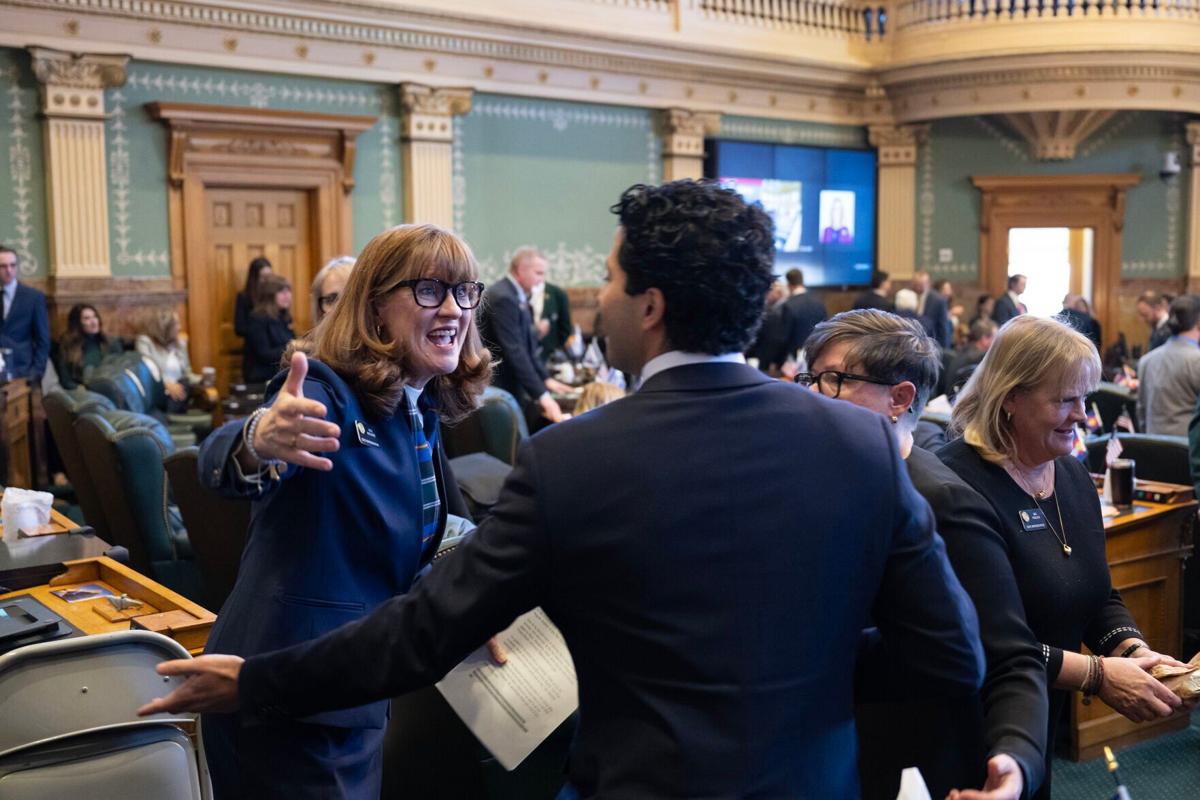
Speaker of the House Rep. Julie McCluskie, left, greets Rep. Manny Rutinel before convening for the first day of Colorado's 2024 legislative session at the Colorado State Capitol building on Wednesday, Jan. 10, 2024, in Denver, Colo.(Timothy Hurst/Denver Gazette)
The Gazette

Speaker of the House Rep. Julie McCluskie, left, greets Rep. Manny Rutinel before convening for the first day of Colorado’s 2024 legislative session at the Colorado State Capitol building on Wednesday, Jan. 10, 2024, in Denver, Colo.(Timothy Hurst/Denver Gazette)
Last month, the Supreme Court heard an appeal out of Weld County, in which a trial judge permitted the prosecution to strike a Hispanic juror who appeared “very disinterested,” even though neither the judge nor the defense endorsed that assessment. During oral arguments, Justice Carlos A. Samour Jr. detoured onto the path of eliminating peremptory challenges, citing the practical difficulties of detecting purposeful racial discrimination in real-time.
“Isn’t the problem with peremptory challenges? We’re trying to guess what’s in someone’s mind, someone’s heart, even when they may not be aware of it, right?” said Samour, who joined Márquez’s concurrence this week suggesting peremptory challenges be abolished. “We’re applying this rule from Batson to a system where, by definition, people are allowed to strike jurors for no reason.”
Akhahenda, the public defender, argued to Colorado Politics that abolishing peremptory challenges is “taking the easy way out.” She said she would prefer the Supreme Court make it harder to remove jurors of color, rather than bless the ability of prosecutors to dismiss jurors whose negative experiences with law enforcement stem from their race — as it did in its recent decisions.
“I do think that the Supreme Court is putting all its eggs into eliminating peremptories rather than doing implicit bias reform,” Akhahenda said. “Implicit bias reform is hard work and it requires confronting and addressing issues of race in a way the judiciary has been reluctant to do.”

Local party leaders, incoming judge among members of judicial performance commission that violated law
Michael Karlik
michael.karlik@coloradopolitics.com
Updated 2 hours ago
A local Democratic leader and 2024 presidential elector. A legislative aide and leader in the Young Republicans. An incoming county court judge freshly appointed by the governor. They are among the eight members of the northeastern Colorado judicial performance commission...
Judge dismisses lawsuit seeking records from Colorado Democratic group
Marianne Goodland
marianne.goodland@coloradopolitics.com
Updated 28 minutes ago
A lawsuit seeking to obtain records from Democratic lawmakers affiliated with a caucus has been thrown out by a Denver District Court judge. On July 17, Judge Ericka Englert dismissed the April lawsuit filed by progressive activist Derrick Blanton, who...
Colorado Springs mother Deborah Nicholls’ murder conviction overturned
Nick Smith
nick-smith@coloradopolitics.com
Updated 21 hours ago
A Colorado Springs mother convicted in 2008 of murdering her three children in a house fire might get a new trial after a judge ruled that prosecutors withheld key evidence that could have impacted the jury’s verdict. Deborah Nicholls, whose...
Colorado court overturns illegal $7,000 restitution order
Michael Karlik
michael.karlik@coloradopolitics.com
Updated 18 minutes ago
Colorado’s second-highest court overturned a Weld County defendant’s obligation to pay more than $7,000 in crime victim restitution on Thursday because a trial judge failed to issue a legally compliant restitution order at the time of sentencing. In Colorado, as...
Appeals court rejects former DougCo commissioner’s legal fee claim
Nicholas Fogleman
nicholas.fogleman@denvergazette.com
Updated 8 hours ago
The Colorado Court of Appeals rejected a former Douglas County commissioner’s bid for reimbursement of attorney fees she incurred while responding to multiple investigations into her conduct. The dispute stemmed from a 2019 anonymous letter sent to county officials alleging...
Appeals court orders second look at Denver Water’s immunity for cyclist’s injury
Michael Karlik
michael.karlik@coloradopolitics.com
Updated 21 hours ago
Colorado’s second-highest court ordered another look at a bicyclist’s negligence lawsuit against Denver Water on Thursday, concluding that a trial judge needed to evaluate the utility’s potential immunity using the state Supreme Court’s new guidance. Joseph A. “Joey” Scott alleged...
Labels, duration not definitive proof of ‘intimate relationship,’ Colorado court rules in domestic violence case
Michael Karlik
michael.karlik@coloradopolitics.com
Updated 1 hour ago
Colorado’s second-highest court clarified on Thursday that the length of a couple’s relationship and the labels they attach to it are not conclusive evidence of whether it is an “intimate relationship” that can give rise to a domestic violence prosecution....

Colorado AG urges Supreme Court to let Boulder climate lawsuit proceed
Marissa Ventrelli
marissa.ventrelli@coloradopolitics.com
Updated 1 day ago
Colorado Attorney General Phil Weiser has filed a court brief with the U.S. Supreme Court in a lawsuit brought by Boulder city officials seeking to hold oil companies liable for their environmental impact. The case began in 2018, when the...
10th Circuit says landowner cannot sue ex-Routt County judge for statements in decision
Michael Karlik
michael.karlik@coloradopolitics.com
Updated 2 days ago
A Routt County landowner cannot sue a former judge for his allegedly inaccurate statements in a case where the landowner was not a party, the Denver-based federal appeals court decided on Wednesday. Anne Fitzsimmons, who lives in Germany, owns a...
Defendant’s competency in question in El Paso County case involving slain Army police officer
Nick Smith
nick-smith@coloradopolitics.com
Updated 1 day ago
It will be another 60 days before a 4th Judicial District court determines if a man charged in the shooting death of an Army police officer is competent to proceed in his case. Judge Erin Sokol granted a request Wednesday...