

Federal judge declines to intervene after state ‘intercepted’ Colorado man’s $3.5 million jury award
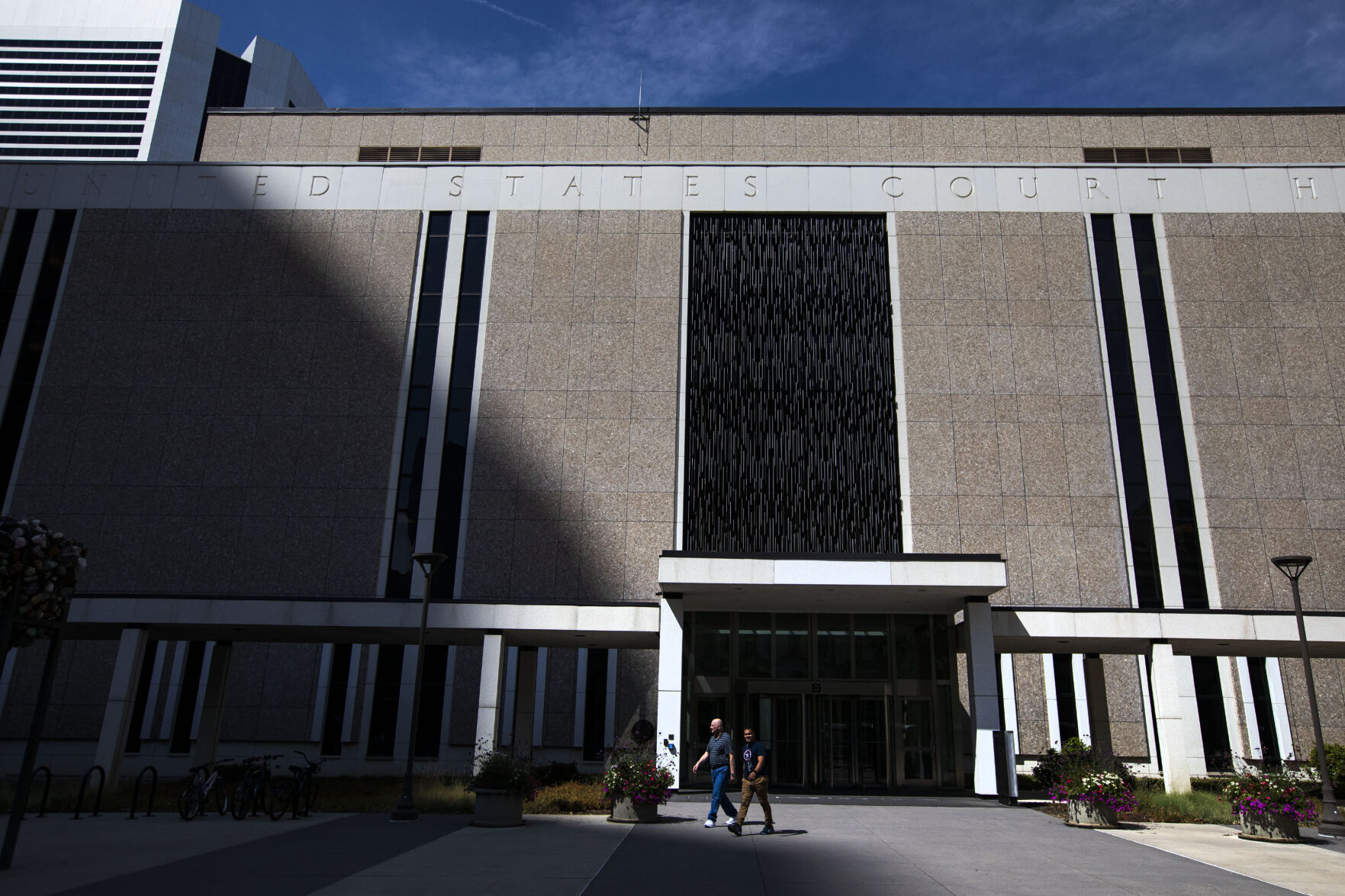
A federal judge on Thursday concluded he did not have the authority to intervene as Colorado performed an “administrative intercept” of the $3.5 million a jury awarded a plaintiff more than a year ago for violations of his rights under the Americans with Disabilities Act.
U.S. District Court Judge S. Kato Crews acknowledged there might be a narrow path for plaintiff Jason Brooks to ask him to enforce the payment, but Crews otherwise found no precedent allowed him to reopen Brooks’ long-running lawsuit to address the state’s allegedly improper diversion of his award.
Brooks even admitted his request rested on shaky grounds in a letter to the judge late last month.
“While your power over this matter is somewhat limited, the Defendants cannot be permitted to steal this judgment and prevent any pre-deprivation due process afforded me through the constitution,” he wrote.
Brooks was incarcerated in the Colorado Department of Corrections after pleading guilty to multiple counts of securities fraud in 2010. Brooks suffered from ulcerative colitis that required him to use the bathroom upwards of 15 times per day. While imprisoned, he sought a reasonable accommodation for his disability under the ADA, in the form of being able to go to the cafeteria at the first opportunity so he could consistently plan his bathroom breaks.
Instead, the department offered him an adult diaper. As a result, jurors heard evidence that Brooks missed “thousands of meals” between 2012 and 2018 to deal with his incontinence around meal times, in addition to experiencing “stabbing pain” and defecating on himself.
Jurors awarded him $3.5 million in late 2022, nine years after Brooks first filed suit. Last month, Crews rejected the government’s challenge to the award.

However, the parties reappeared in Crews’ courtroom after Brooks filed an emergency motion to address his payment being “intercepted” by the state. Brooks’ attorney elaborated that his client’s underlying criminal case carried a $5.1 million restitution order to his victims, but it was improper for the 19th Judicial District in Weld County to unilaterally stake a claim to the jury award.
“I’m not so sure that this case, that is now closed, continues to exist for purposes of giving me jurisdiction to be involved in all of the collection efforts that Mr. Brooks might want to avail himself of,” Crews responded.
Kevin D. Homiak, a lawyer representing Brooks, argued the fact that Brooks’ jury award stemmed from violations of the ADA, a federal law, provided Crews with a “hook” to get involved again.
“I understand this is a novel hearing,” Homiak conceded.
“It’s a novel theory for which you have not cited anything to me that suggests there’s support for the theory,” Crews interjected.
The Colorado Attorney General’s Office clarified that the state issued a check for Brooks’ jury award on March 26. Almost immediately, the 19th Judicial District “administratively intercepted” the payment to satisfy his 14-year-old crime victim restitution obligation.
“The 19th Judicial District, being the arm of the State of Colorado to which Mr. Brooks’s debt is owed, is authorized to collect restitution,” wrote Assistant Deputy Attorney General Andrew M. Williams, representing the corrections department.
A spokesperson for Colorado’s judicial branch declined to provide comment on behalf of the 19th Judicial District due to the ongoing dispute.
“Should Mr. Brooks seek a remedy in this case,” Williams told Crews at the April 4 hearing, “it is appropriate in state court under state statutes.”
Crews acknowledged a Colorado law gives anyone whose property is affected by a “spurious document” the ability to file a petition for review in federal court. However, Crews pointed to a 2016 decision of the U.S. Court of Appeals for the 10th Circuit, which found state law cannot be the source of a federal court’s jurisdiction.
Consequently, Crews declined Brooks’ request to intervene. He left the door open for Brooks to file a separate motion asking him to enforce the monetary judgment, which would trigger another round of arguments.
The case is Brooks v. Colorado Department of Corrections.

Schoolchildren’s presence at child sex-related trial did not harm Arapahoe County defendant, appeals court says
Michael Karlik
michael.karlik@coloradopolitics.com
Updated 5 hours ago
Colorado’s second-highest court decided on Thursday that the presence of a group of schoolchildren on the first day of a child sexual exploitation trial did not violate an Arapahoe County defendant’s constitutional right to a fair trial. Prosecutors charged Jerry...
Appeals court cites week-old Colorado law to reinstate child neglect case at child, father’s request
Michael Karlik
michael.karlik@coloradopolitics.com
Updated 1 hour ago
Colorado’s second-highest court invoked a new state law for the first time on Thursday and reinstated a child neglect case that both the child and her father wished to reopen. House Bill 1227 took effect on Aug. 12, reversing a...
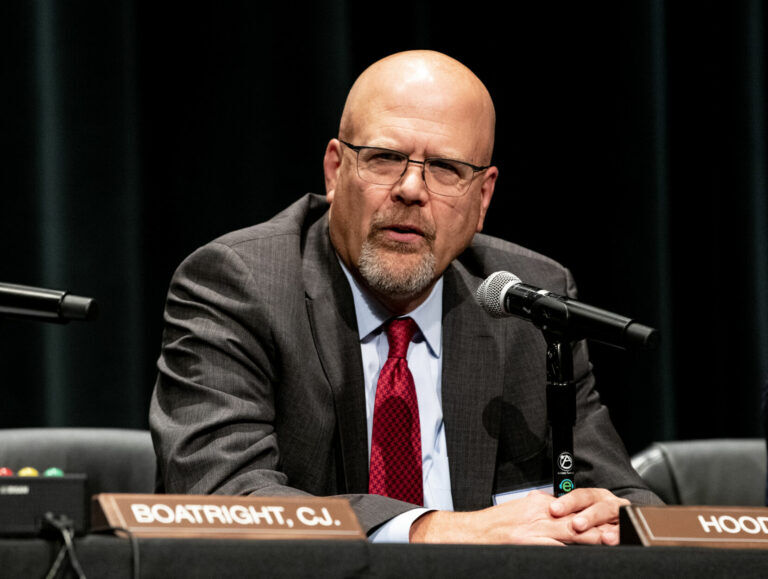
Colorado Supreme Court names William Hood as next chief justice
Michael Karlik
michael.karlik@coloradopolitics.com
Updated 1 day ago
The Colorado Supreme Court has selected Justice William W. Hood III to be the next chief justice, the judicial branch announced on Friday. Hood will succeed Chief Justice Monica M. Márquez, who took over the role in July 2024. “I...

Appeals court upholds Park County trophy hunting conviction
Michael Karlik
michael.karlik@coloradopolitics.com
Updated 1 day ago
Colorado’s second-highest court clarified on Thursday that a defendant may stand convicted under the state’s trophy hunting laws if he abandons a bear carcass but returns later to remove the meat. Under Colorado law, it is a felony to detach...

Judge grants partial injunction to GEO in fight against state health inspection law
Kyla Pearce
kyla.pearce@gazette.com
Updated 2 days ago
A judge ruled Thursday that The GEO Group does not have to follow parts of a new state law requiring more frequent health and safety inspections at the U.S. Immigration and Customs Enforcement processing center in Aurora. Under the order...

Parker man faces 20 years to life for serial sexual assaults
Nicholas Fogleman
nicholas.fogleman@denvergazette.com
Updated 2 days ago
A 25-year-old Parker man who sexually assaulted three women in 2025 pleaded guilty Wednesday and will serve 20 years to life in prison. Javier Rodriguez-Andrade pleaded guilty to charges stemming from three sexual assaults involving women ages 19 to 24. ...
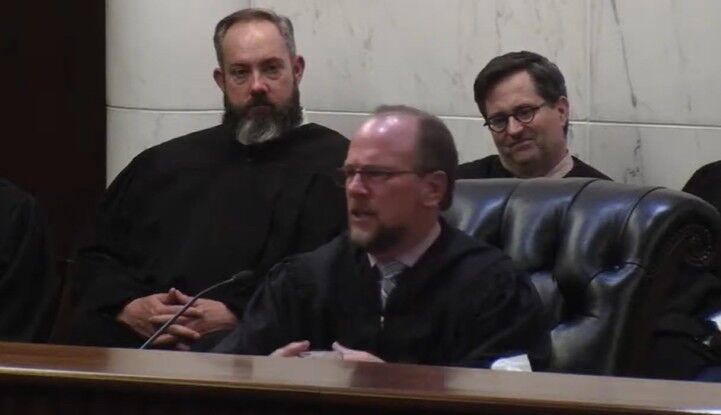
Divided appeals court upholds warrantless DNA collection in Colorado cold case, cautions of government overreach
Michael Karlik
michael.karlik@coloradopolitics.com
Updated 2 days ago
Colorado’s second-highest court upheld the warrantless collection of a suspect’s DNA from a discarded soda can as constitutional on Thursday, while warning about potential abuse of DNA privacy in the absence of further guardrails. By 2-1, a three-judge Court of...
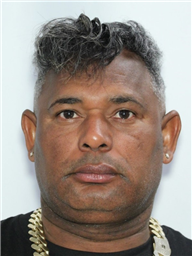
Man charged in Northglenn homicide of wife
Matt Kyle
matt.kyle@denvergazette.com
Updated 2 days ago
A man has been formally charged with murder and burglary relating to a homicide last week in Northglenn. Alexei Munive-Rodriguez, 48, was arrested Sunday after he was at large following the homicide, which occurred Friday. Police were dispatched around 10:30...

10th Circuit grants immunity to officers for fatal Manitou Springs shooting
Michael Karlik
michael.karlik@coloradopolitics.com
Updated 2 days ago
The Denver-based federal appeals court ruled on Wednesday that responding officers from Manitou Springs and El Paso County cannot be held constitutionally liable for shooting and killing a man after a 20-minute standoff. Wilford Deweese allegedly pulled out a gun...
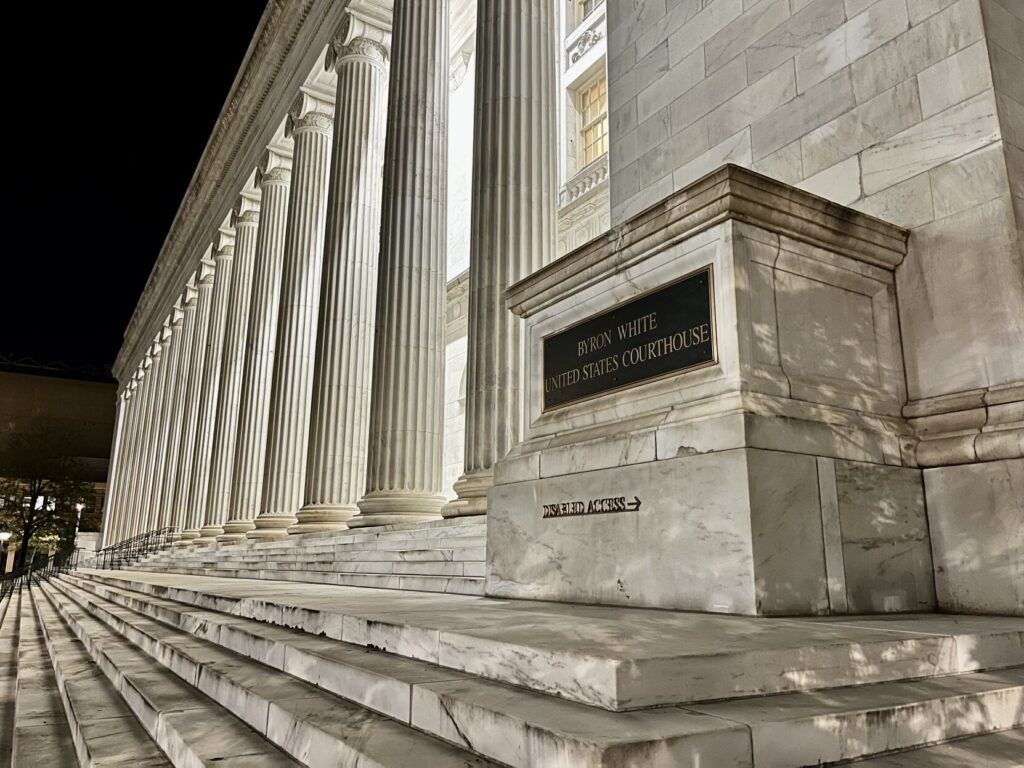
10th Circuit rejects invitation for full-court review of tax-avoidance case
Michael Karlik
michael.karlik@coloradopolitics.com
Updated 3 days ago
The Denver-based federal appeals court declined to reconsider the standards for holding entities liable for their tax-avoidance schemes, with a majority of judges voting against full-court review on Monday. In April, a three-judge panel of the U.S. Court of Appeals...
PREV
PREVIOUS

Biden to speak with Netanyahu for first time since Israeli airstrike killed 7 aid workers
President Joe Biden is expected to speak by phone with Israeli Prime Minister Benjamin Netanyahu on Thursday for the first time since an Israeli airstrike killed multiple people working with Chef Jose Andres’s World Central Kitchen in Gaza. Officials with the Israel Defense Forces have accepted responsibility for the seven humanitarian aid workers killed while […]
Federal judge declines to intervene after state 'intercepted' Colorado man's $3.5 million jury award
A federal judge on Thursday concluded he did not have the authority to intervene as Colorado performed an “administrative intercept” of the $3.5 million a jury awarded a plaintiff more than a year ago for violations of his rights under the Americans with Disabilities Act. U.S. District Court Judge S. Kato Crews acknowledged there might […]