

Colorado House lawmakers grapple with 2024-25 state budget
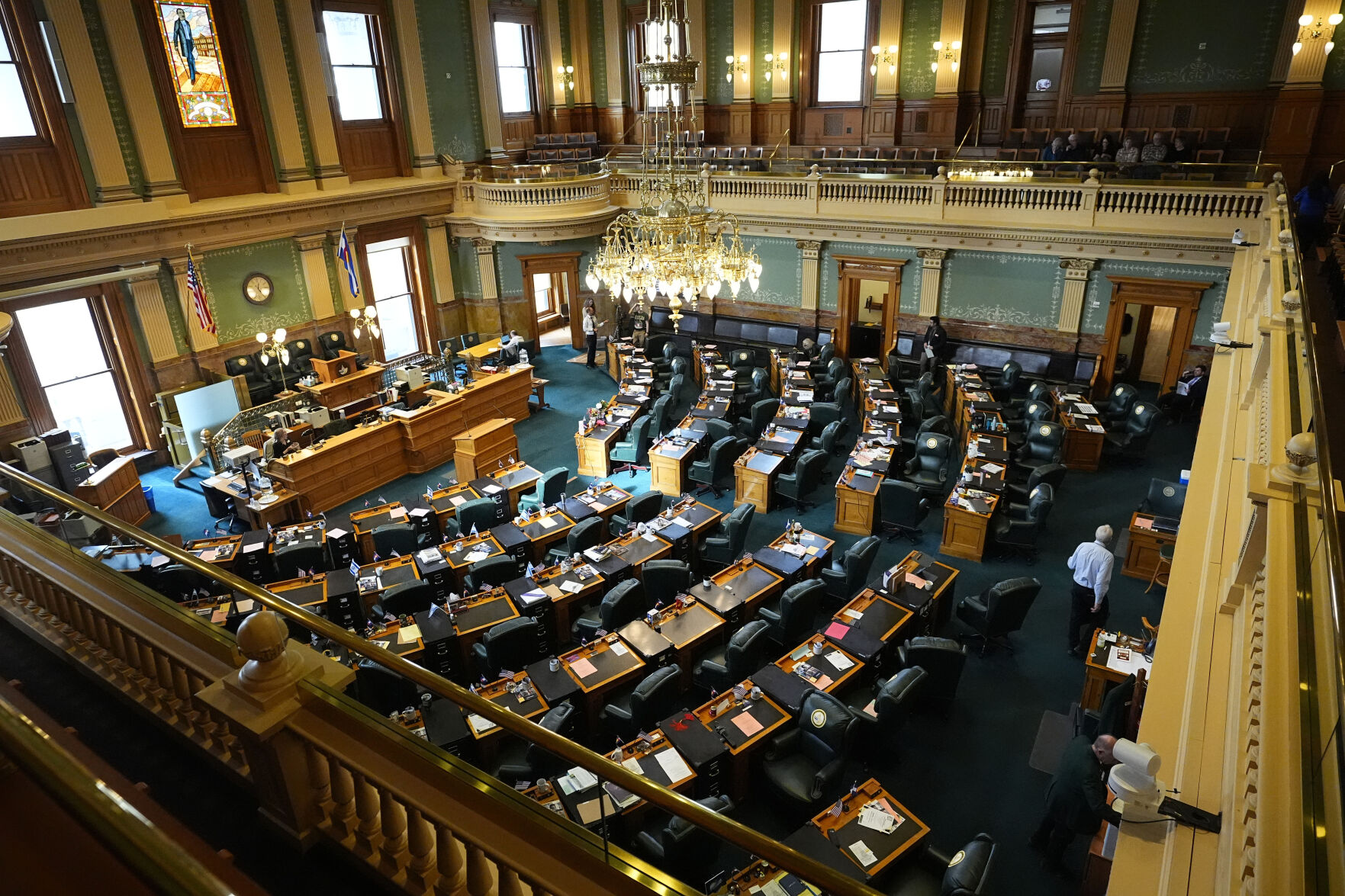
Colorado House lawmakers on Thursday spent their day wrestling with the state’s 2024-25 budget, and there was plenty to fight about.
Lawmakers have begun reviewing the state’s spending plan for the next fiscal year in the face of tight revenues and a budget deficit – even as policymakers are pushing for hundreds of millions of dollars in funding requests. All told, the draft budget for fiscal year 2024-25 expects to spend $40.6 billion – $2 billion more than last year, driven by bigger allocations for health care, a significant expansion in the state’s workforce and more money for schools seeing increased enrollment of immigrant students.
The fight in the House started with some of the measures that accompanied the budget.
In particular, the attempt to use severance tax dollars to plug the hole in the state budget didn’t go over well with Republicans.
House Bill 1413 would make a series of transfers totaling $69.3 million from severance taxes, which come from oil and gas, to the general fund budget.
Those revenues are used to mitigate oil and gas activity in the local communities that are affected by the industry. It also funds activities for the Colorado Water Conservation Board, the Division of Parks and Wildlife, the Colorado Avalanche Information Center and other related agencies.
“This is local government,” said Rep. Lisa Frizell, R-Castle Rock, in advocating for a “no” vote on the measure.
The use of severance tax dollars to plug up budget shortfalls is nothing new; lawmakers started sweeping funds out of the severance tax accounts 20 years ago.
Due to fluctuations in oil and gas prices, there’s been years when there wasn’t enough tax revenue to cover the grants that cover those mitigation activities. But that hasn’t stopped lawmakers from dipping into those funds in better years.
The amendment to leave the severance tax revenue alone didn’t succeed.
Lawmakers also tackled bills that would spend money. House Bill 1401 gives Denver Health $5 million to cover its ongoing financial woes. The hospital ran a $100 million shortfall last year, largely attributable to unreimbursed care at $136 million – and a $22 million gap the previous year, with $120 million in unreimbursed care.
The legislature provided $5 million last year to address the 2023 shortfall.
The fight over charter schools also showed up in the budget package. House Bill 1394 repeals the Mill Levy Equalization Cash Fund, which funds institute charter school operations. The bill instead requires the legislature to put general fund or state education fund dollars directly toward institute charter schools.
Rep. Tammy Story, D-Evergreen, who sponsored a bill to make major changes to charter schools, argued against the bill and in favor of an amendment offered by Rep. Jennifer Parenti, D-Erie, that would take the state education fund out of the bill.
Story noted the policy change addressing the charter school funding took place in last year’s school finance act, which she called a huge shift that she claimed was snuck into last year’s bill, “hoping nobody sees it.”
Not so, responded House Minority Leader Rose Pugliese, R-Colorado Springs.
Pugliese said the policy came forward last year through legislation and was signed into law by the governor.
The amendment received no support from Republicans and more than a few House Democrats. Parenti withdrew the amendment.
The main spending measure, House Bill 1430, which contains the $40.6 billion state budget for 2024-25, saw 89 amendments proposed by lawmakers on both sides of the aisle.
The amendments focused largely on just a few areas: corrections, education and human services.
A handful addressed local projects and programs in lawmakers’ districts, such as school buses, tap fees or the Bent County jail, which has had an escape problem, according to Rep. Ty Winter, R-Trinidad.
None of the amendments was successful.
The first amendment to win approval was a bipartisan idea submitted by Pugliese and Rep. Matthew Martinez, D-Alamosa, to take $2 million from the state education fund to add to the Department of Education’s ninth grade success grant program.
An amendment to move $1.5 million from the marijuana cash tax fund to create a marijuana entrepreneur cash fund in the governor’s office, sponsored by a trio of Democratic lawmakers, also won approval.
Among the lengthier debates arose on an effort by Rep. Javier Mabrey, D-Denver, who is an eviction attorney, to take money from a rural prosecution fellowship program in the Department of Higher Education and move it to an immigrant legal defense fund in the Department of Labor and Employment.
Rural lawmakers, including Rep. Marc Catlin, R-Montrose, said the money helps young attorneys move into prosecution jobs in rural counties.
Mabrey countered the fellowship money has not been fully used and a required report, due five years ago, was never submitted as required by law. The amendment, which moved $356,000 in general funds, passed.
Meanwhile, a bipartisan amendment from Reps. Brandi Bradley, R-Roxborough Park and Junie Joseph, D-Boulder, takes $200,000 in general funds from the Department of Human Services. While the amendment didn’t identify what that would be used for, Joseph said it would fund a bill she and Bradley are sponsoring on language access for children and families in the child welfare system.
The annual attempt to put more money into the Tony Grampsas Youth Services Program – an amendment that surfaces virtually every year – took $450,000 in general funds out of the auto theft prevention authority in the Department of Public Safety, along with $2 million in general fund dollars. Out of that $2 million, $1.55 million goes to Grampsas; the rest goes to a 2023-24 grant cycle in the human services agency.
The amendment did not identify a source for those general fund dollars – Bacon told Colorado Politics it could come from the “set-aside,” the dollars the budget holds back for legislation that is moving through the process.
That “set-aside,” however, is only $22 million, and $3 million is already committed to sunset bills that renew programs and statutes.
But the largest commitment was an amendment to put $6.1 million in general funds into senior services in the Department of Human Services.
Reps. Mary Bradfield, R-Colorado Springs and Mary Young, D-Greeley, said the programs haven’t seen an increase in seven years.
Lawmakers also tried two amendments to put more money toward paying ranchers who have lost livestock to the state’s new wolf population.
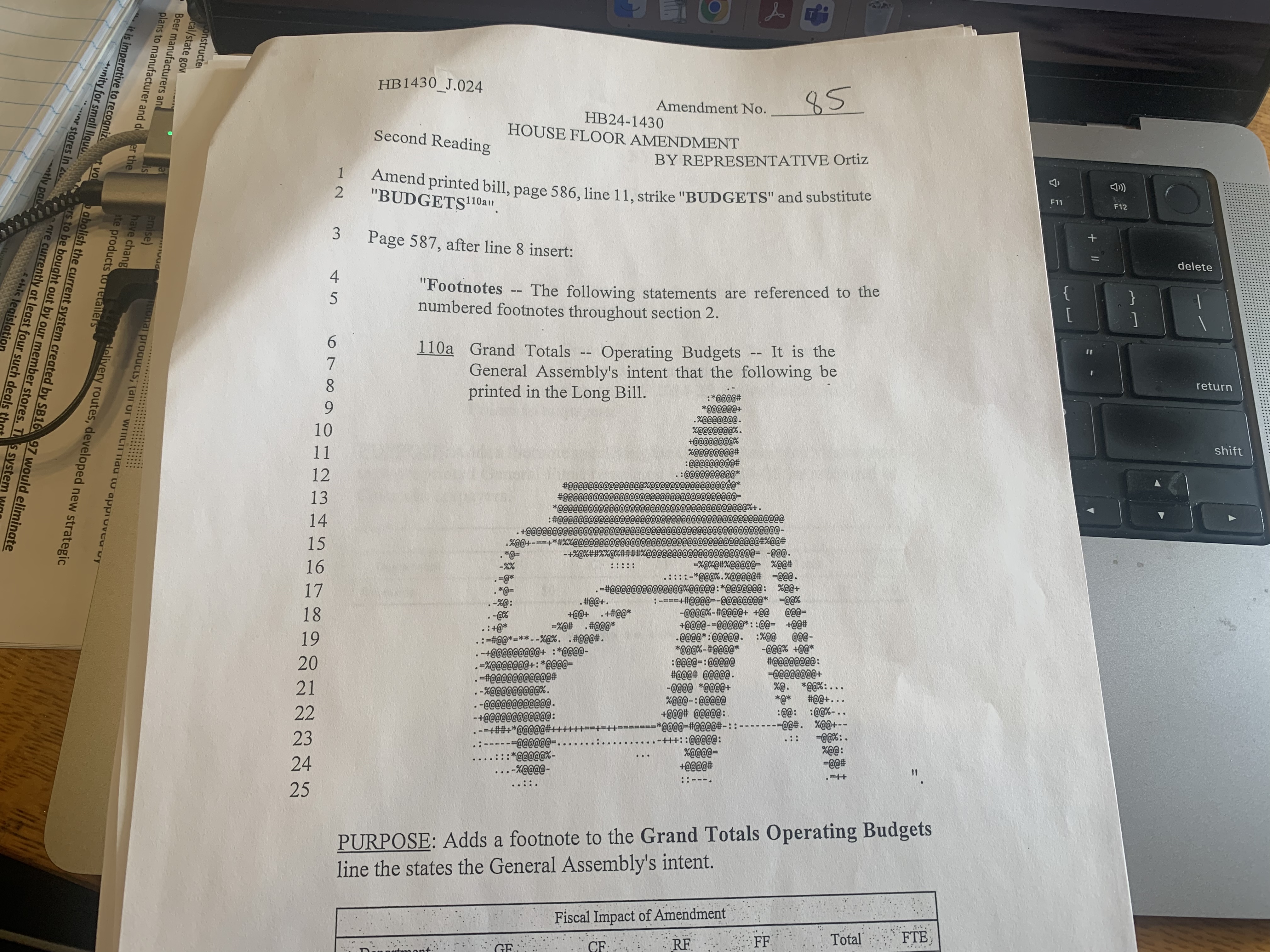
One of the last amendments of the day came from Rep. David Ortiz, D-Centennial, who is in a wheelchair. He said he’d work for his district until the “wheels come off.” He then withdrew the amendment.
marianne.goodland@coloradopolitics.com
Meanwhile, Rep. Scott Bottoms, R-Colorado Springs, attempted an amendment to reduce the legislative session from 120 days to 90 days, which he said was done to help the JBC.
By day’s end, the House had adopted more than a dozen amendments that would require at least $10 million in general funds not already committed to the budget.
The budget and its accompanying bills will be in front of the House on Monday for a final vote.
The bill then goes back to the Joint Budget Committee, which will strip off all the amendments and send a “clean” un-amended bill to the Senate, and the process starts anew – starting with a balanced budget.

luige.delpuerto@coloradopolitics.com


Colorado business confidence improves but still pessimistic
Bernadette Berdychowski
bernadette.berdychowski@denvergazette.com
Updated 4 hours ago
Halfway into the year, business confidence across Colorado has improved but is still negative, a new report found. The Leeds Business Confidence Index, a measurement of how business leaders across Colorado feel about the future of the national and state...
Xcel franchise renewal clears first Denver City Council committee hurdle
Scott Weiser
scott.weiser@gazette.com
Updated 1 day ago
More than $180 million a year in franchise fees, infrastructure relocation savings and undergrounding funds would continue flowing to Denver under a proposed 20-year franchise agreement with Xcel Energy. It cleared a major City Council hurdle Tuesday, while adding new...

Colorado’s haze lawsuit tests coal plant closure | ANALYSIS
Scott Weiser
scott.weiser@gazette.com
Updated 4 days ago
Colorado is asking a federal appeals court to overturn the U.S. Environmental Protection Agency’s decision to reject the state’s plan to reduce haze at national parks and wilderness areas. At the center of the fight is a straightforward but difficult...

Colorado chamber: 2026 legislative session marked ‘significant progress’ for business
Marissa Ventrelli
marissa.ventrelli@coloradopolitics.com
Updated 1 week ago
This year’s legislative session produced some big wins for the state’s business environment, according to the Colorado Chamber of Commerce’s annual report. The report measured the progress in the chamber’s legislative agenda across policy areas like labor and employment, technology...
Rep. Jeff Crank thinks Democrats are too focused on Trump, not enough on Colorado Springs | Vince Bzdek
Vince Bzdek
vince.bzdek@gazette.com
Updated 2 weeks ago
For U.S. Rep. Jeff Crank, who’s unopposed in the Republican primary for the 5th Congressional District but the main target of both candidates in the lively Democratic primary, the big question in the midterms is not who will stand up...

Grand Junction roundtable spotlights public access while Interior faces scrutiny over targeted land sales
Scott Weiser
scott.weiser@gazette.com
Updated 2 weeks ago
U.S. Health and Human Services Secretary Robert F. Kennedy Jr. and Interior Secretary Doug Burgum joined Bureau of Land Management Director Steve Pearce in Grand Junction Wednesday for a roundtable focused on linking public land access to improved physical activity...
Flat or graduated income tax? Colorado groups push dueling measures for November election
Marissa Ventrelli
marissa.ventrelli@coloradopolitics.com
Updated 3 weeks ago
Colorado voters could face two opposing income-tax measures on the November ballot, with the dueling campaigns seeking to advance proposals that would take the state in sharply different fiscal directions. One initiative seeks to replace Colorado’s flat income tax with...
Colorado governor signs bill requiring pollution controls, cost reporting for extended coal operations
Scott Weiser
scott.weiser@gazette.com
Updated 3 weeks ago
Gov. Jared Polis signed into law a bill in reaction to orders from the U.S. Department of Energy to keep older coal units online. The federal government’s instructions applied to Craig Unit 1 in Colorado, one of five coal units...

A tale of two debates | Vince Bzdek
Vince Bzdek
vince.bzdek@gazette.com
Updated 4 weeks ago
Ballots go out Monday as the June 30 state primary elections bear down on us. As a result, it is suddenly the season of proliferating political debates, and there have been some doozies already. I had the chance to see two very...

As Colorado’s population growth slows, some metro counties see losses
Mark Samuelson Special to The Denver Gazette
mark.samuelson@denvergazette.com
Updated 1 month ago
Population growth in Colorado, which had helped drive the region’s burgeoning economy over recent years, has slowed markedly, with some counties in metro Denver experiencing losses, according to a new report. From 2024 to 2025 the state added just 33,151...