

Colorado lawmakers advance expansion of ‘rape shield’ law
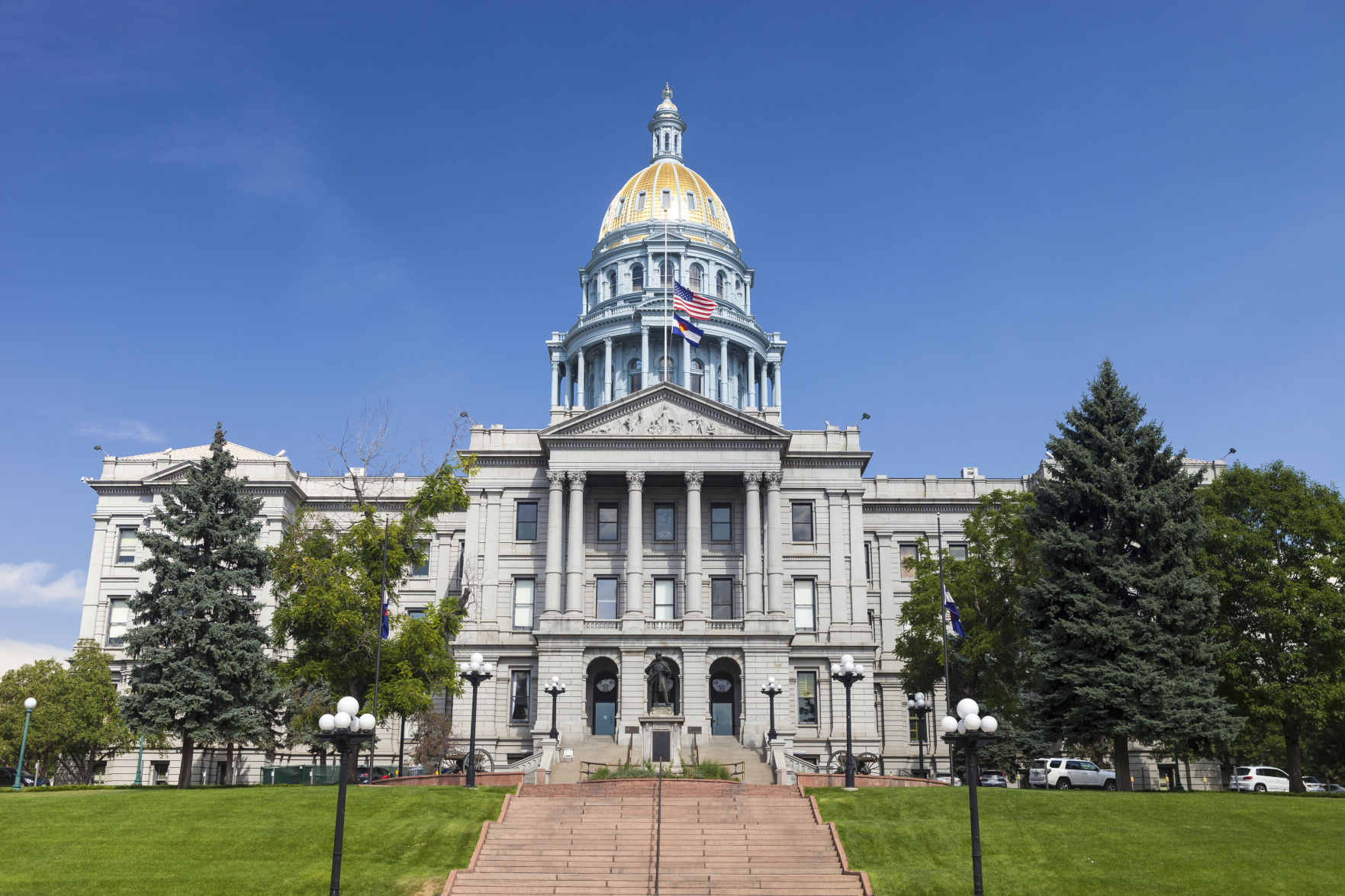
A panel of House lawmakers has advanced legislation that seeks to expand protections provided to sex assault plaintiffs in criminal trials.
Under the current law, evidence of a victim or witness’s prior or subsequent sexual conduct is presumed irrelevant — unless it involves the defendant. House Bill 1072 seeks to eliminate this exception and expand the law to prohibit a victim’s clothing or hairstyle from being used as evidence of consent.
Supporters argued it would help eliminate victims’ fear of being blamed for what happened, while critics raised worries that the protections go too far and infringe upon a defendant’s constitutional right to present a comprehensive defense.
Supporters: Hairstyle, clothing or past relationship doesn’t mean consent
At the heart of the proposal is the concept called “rape shield” law, which, broadly speaking, limits a defendant’s ability to introduce the sexual history of an accuser as evidence during trial. In Colorado, the statutes presume that evidence of a victim’s sexual conduct is irrelevant, except for past or subsequent sexual conduct with the defendant.
“When a person is is sexually assaulted, they should feel confident that they can seek justice through a fair process,” said Rep. Shannon Bird, D- Westminster, who sponsored the legislation. “This shouldn’t require the victim to be subject to public shaming, open discussion of the victim’s past and unrelated private affairs, or disparagement of their reputation, all of which can be painful, retraumatizing and damaging to a victim’s mental health and current relationships.”
Bird added: “Too often, evidence of what the victim was wearing, their hair style, and whether the victim had a relationship with the accused is used to make the case that the victim consented to sexual activity and that therefore there was no assault.”
In pushing for the legislation, Bird referenced two cases: the first occurred in 2016, when a woman accused her partner of sexual assault. His defense team argued that because she had consented to sexual conduct with him in the past, it implied consent to all subsequent encounters. And, in a separate case two years later, a man claimed that the seven-year-old child he was accused of assaulting was “enticing” him due to her clothing choices.
Bird argued that the reason reporting rates for sexual assault are only 10% is partially due to victims’ fears of being blamed for what happened to them.
“We should be free to wear what we want,” she said. “We should be free to style our hair as we want and not fear that we will be sending a message that we consent to sex. Our bodies are our own and not for another to take.”
Bird’s co-sponsor, Rep. Lisa Frizell, R- Castle Rock, expressed shock that discussions like this needed to be had in 2024: “This should be so far in our rearview mirror that it shouldn’t even be an issue.”
Frizell said rape “shield laws” help prevent victims from being re-traumatized during court proceedings and that the expansions outlined in the bill could potentially encourage more victims to come forward.
“This will really help increase the prosecution of sexual offenders and improve access to justice for victims,” she said.
Senior Assistant Attorney General Grant Fevurly, who testified on behalf of the Attorney General’s Office in support of the bill, said the bill does not prevent a defendant from having the opportunity to present a “complete” defense.
Maggie Conboy of District Attorney Beth McCann’s office highlighted the challenging nature of prosecuting sexual assault cases due to the lack of external witnesses or conventional evidence. She noted that defendants may falsely accuse victims of lying about prior assaults, undermining the victims’ credibility in court.
“House Bill 1027 doesn’t infringe on a defendant’s right to cross-examine. It doesn’t prevent them from mounting a rigorous defense, where there’s been a legitimate false claim,” she said. “Instead, it is simply a screening device. The defendant must establish by a preponderance of evidence that the prior reports were knowingly false and in good faith. That is an eminently reasonable standard to ask a defendant to go through before we balance.”
Defense attorneys: bill violates defendants’ rights
Several legal experts argued that the legislation poses the potential to violate the rights of defendants.
What should or should not be included as relevant evidence must be up to the judge, argued criminal defense attorney Carrie Thompson.
“The government should not be able to weaponize rape shield rules to prohibit inquiry into false accusations that are primarily indicative of dishonesty rather than sexual behavior, because that is disingenuous application of the rape shield rule and serves none of its primary purposes,” she said.
Christopher Decker, an attorney who specializes in sex crime cases, argued that the bill actually makes the litigation process less safe for victims.
He specifically raised concerns about a provision in the bill that deems previous false accusations of sexual assault irrelevant. According to him, courts had already dismissed this concept in the late 1970s, when “rape shield” statutes were initially implemented nationwide.
John Pineau, an attorney and president of the Gilpin County Bar Association, said false accusations occur and can have severe consequences. He noted that in child custody disputes, the rate of false reports of sexual assault increases six-fold.
Pineau argued that the existing exceptions in the “rape shield” law are sufficient, and introducing more could raise the risk of wrongful convictions for defendants in cases like those he represents.
“Sex offense is a weapon, and in order to defend themselves from that weapon, my clients need the facts,” he stated.
The House Judiciary Committee adopted several amendments, including adding a legislative declaration with background information on the “rape shield” law and clarifying that a victim’s clothing is only prohibited from being used as evidence of consent. The bill was also amended to say one proven false accusation is enough to be considered evidence, rather than several, as the bill previously stated.
While all committee members agreed that someone’s clothing or hair style should never be interpreted as evidence of consent, several were apprehensive about the implications the bill could have on defendants’ rights, especially in the case of false reporting.
“We forget that there are people who utilize the system to deceive and harm people,” said Rep. Leslie Herod, D- Denver. “False reporting is very real, and we have to make sure that we’re striking a balance in allowing for the knowledge that that does happen.”
Ultimately, all members of the committee voted in favor of the bill, with the exception of Rep. Judy Amabile, D-Boulder.
Amabile said the bill is difficult for her, as she is an advocate for victims of sexual assault but does not believe the bill will increase reporting.
“I don’t think that incarcerating more people and putting them in prison for longer and all of the really intensely harsh punishments that we have put in place are working to protect women,” she said. “I feel like we’re barking up the wrong tree here, and I don’t know how we fix that, but this isn’t doing it.”


Grand Canyon flooding threatens economy that’s still recovering from a fire | OUT WEST ROUNDUP
Ernest Luning
ernest.luning@coloradopolitics.com
Updated 3 days ago
ARIZONA Flooding slams park’s economy Deadly flooding at the Grand Canyon is damaging the area’s economy, with a washed-out pipeline severing the South Rim’s water supply and shutting down lodging at the popular tourist vista for an indefinite period. The...

Immigration reporting measure fuels debate over Colorado’s role with ICE
Marissa Ventrelli
marissa.ventrelli@coloradopolitics.com
Updated 7 hours ago
A coalition of advocacy groups and several district attorneys rallied outside the Colorado Capitol on Thursday to oppose a ballot measure that, if approved by voters in November, would require state and local law enforcement to cooperate with federal immigration...

Colorado Politics Calendar Sept. 14-20
Rachael Wright, Special to Colorado Politics
rachael.wright@coloradopolitics.com
Updated 4 days ago
CoPo’s weekly political calendar will help you find political and public-policy events throughout Colorado. It includes candidate and issue campaign events, public policy meetings, court hearings, state and local party conventions, assemblies, debates, rallies, parades, speaking engagements, traveling dignitary appearances,...
The African roots of three Colorado leaders | SONDERMANN
Eric Sondermann
eric-sondermann@coloradopolitics.com
Updated 3 days ago
Colorado’s political transformation is measured in many ways. A once reliably red state (with asterisks) became purple and is now a rather deep blue. For better or worse, probably the latter, power is ever more consolidated along the Front Range...
Federal judge green-lights civil trial against ex-Fort Collins DUI officer
Michael Karlik
michael.karlik@coloradopolitics.com
Updated 2 days ago
A federal judge ruled on Thursday that Fort Collins’ former “DUI officer” will face a civil trial for allegedly investigating a motorist for impaired driving without any reasonable suspicion to do so. In recent years, several people arrested by Officer...

Denver police reopen 13 sex assault cases after retesting Missy Woods’ CBI work
Jenny Deam
jenny.deam@gazette.com
Updated 7 hours ago
Thirteen previously closed Denver sexual assault cases have been reopened after the city’s crime lab retested DNA evidence once analyzed by former Colorado Bureau of Investigation forensic analyst Yvonne Woods. A police spokesperson told The Denver Gazette the once-closed cases...

Ballot measure aims to shift Colorado sporting goods tax revenue to land, water and wildfire projects
Marissa Ventrelli
marissa.ventrelli@coloradopolitics.com
Updated 23 hours ago
Colorado voters this November will decide whether to direct a share of sales tax revenue from sporting goods — including bicycles and skiing equipment — toward land and water conservation, wildfire prevention and expanding outdoor recreation. Supporters say the measure...

Colorado Supreme Court suspends Mesa County judge pending misconduct investigation
Michael Karlik
michael.karlik@coloradopolitics.com
Updated 1 day ago
The Colorado Supreme Court suspended Mesa County Court Judge Michael J. Grattan on Thursday amid a misconduct investigation. The court’s Sept. 10 order gave Grattan 21 days to explain why his paid suspension should not continue through the end of...

Trump honors the fallen of the 9/11 terrorist attacks during Pentagon speech
Mabinty Quarshie
mabinty-quarshie@coloradopolitics.com
Updated 2 days ago
President Donald Trump and first lady Melania Trump honored the roughly 3,000 Americans killed during the Sept. 11, 2001, terrorist attacks during a ceremony at the Pentagon. The event marking the 25th anniversary of the deadliest attack on American soil...
Colorado Supreme Court changes course, dismisses case about special district bonds
Michael Karlik
michael.karlik@coloradopolitics.com
Updated 1 day ago
The Colorado Supreme Court declined on Friday to decide a dispute between a large-scale Commerce City development and the various districts financing it, after initially showing interest in the ongoing case. Colorado has roughly 2,800 special districts, which are local...
PREV
PREVIOUS

US Supreme Court rules for Trump in disqualification case; Colorado residents to cast ballots on Super Tuesday | WHAT YOU NEED TO KNOW
Today is March 5, 2024, and here’s what you need to know: Colorado voters finish casting ballots today in the state’s presidential primary, joining 15 other states and a territory voting on Super Tuesday. In place since the late 1980s, it’s called Super Tuesday because it’s the busiest day on the primary election calendar, with […]

Colorado eyes expansion of 'right to repair' law, Dave Williams draws fire from fellow Republicans, lawmakers advance bills on name changes | WHAT YOU NEED TO KNOW
Today is March 4, 2024, and here’s what you need to know: A proposal in the Colorado House could see a major expansion to the state’s “right to repair” laws, notably in the area of electronic equipment, such as mobile phones and other devices. House Bill 1121 would expand the state’s right to repair laws […]